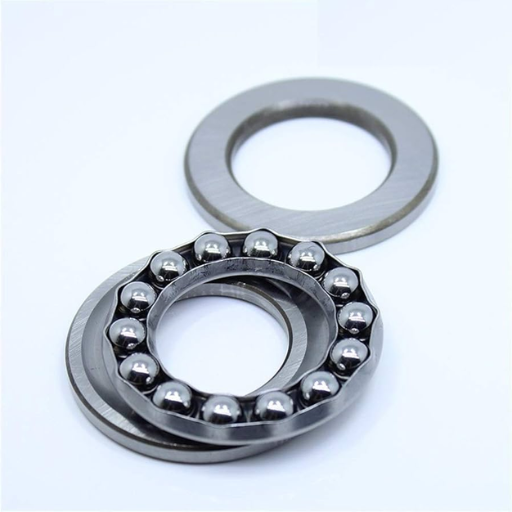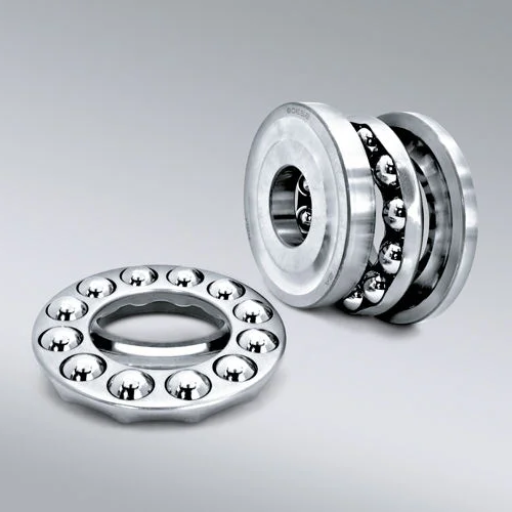
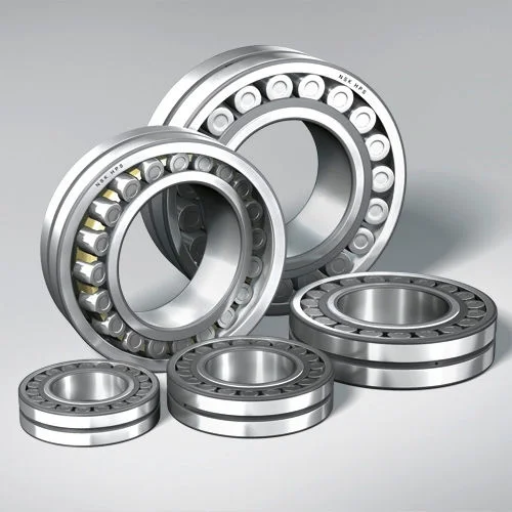



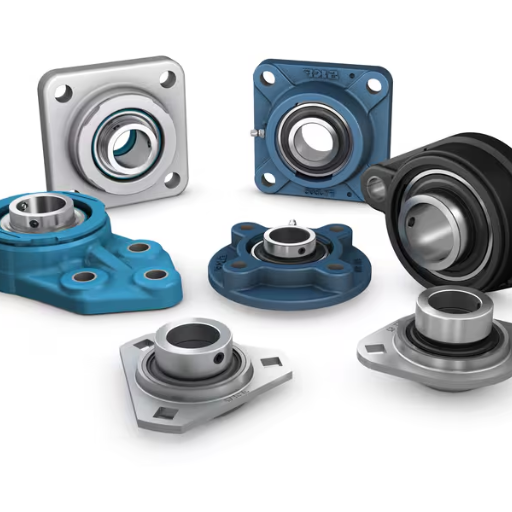
Bearings play a critical role in mechanical systems, serving as essential components that support rotational or linear movements while minimizing friction and wear. Among the many types of bearings available, ball bearings and flange bearings are two commonly used variations, each with distinct characteristics and applications. This article aims to provide a comprehensive comparison between these two types of bearings, examining their design, functionality, and practical use cases. By the end of this post, readers will gain a clear understanding of how ball bearings and flange bearings differ, as well as insight into selecting the right option based on specific mechanical requirements.
What Is a Ball Bearing?
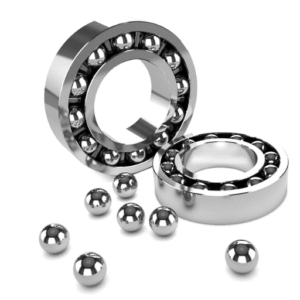
A ball bearing is a type of rolling-element bearing that uses spherical rolling elements (balls) to maintain the separation between bearing races. Its primary function is to reduce rotational friction and support radial and axial loads in a system. The balls within the bearing allow for smooth motion by minimizing surface contact, which reduces energy loss from friction. Typically composed of steel or ceramic materials, ball bearings are widely used in applications ranging from machinery to automotive systems due to their efficiency, durability, and versatility in handling variable load conditions.If you are looking for more information about the difference between a ball bearing and a flange bearing go here right away
How Do Ball Bearings Reduce Friction?
Ball bearings reduce friction by utilizing small, spherical rolling elements (balls) that decrease contact between moving surfaces. Unlike flat surfaces that generate significant friction due to direct rubbing, the balls roll within a smooth, lubricated raceway, converting sliding friction into rolling friction, which is much lower in magnitude. This design minimizes energy loss and wear by distributing loads evenly across the balls and reducing surface deformation. Additionally, the lubrication within the bearing further reduces friction by creating a thin film that prevents direct metal-to-metal contact, enhancing efficiency and lifespan.
What Are the Components of a Ball Bearing?
Ball bearings are composed of several key components that work together to reduce friction and support rotational motion. The primary elements include the inner and outer rings (also known as races), which provide the track for the rolling elements. The rolling elements, typically precision-engineered steel or ceramic balls, minimize friction by facilitating smooth rolling motion. A cage or retainer separates the balls evenly to maintain spacing and prevent collision. Finally, seals or shields are often installed to protect the internal components from contaminants such as dirt and moisture, as well as to retain lubrication within the bearing.
Common Industrial Applications of Ball Bearings
Ball bearings are integral to numerous mechanical systems across a wide range of industrial applications due to their ability to reduce friction and support dynamic and radial loads efficiently. Below are some of the most prevalent applications along with relevant technical parameters:
- Electric Motors
Ball bearings are widely used in electric motors to support both the radial and axial loads of the rotor. For standard industrial motors, bearings typically operate at speeds in the range of 1,500 to 3,000 RPM and can withstand temperatures up to 300°F (150°C). Bearings with low-noise and vibration levels (e.g., ABEC-3 or ABEC-5 precision ratings) are often required.
- Automotive Industry
Applications include wheel hubs, gearboxes, and alternators. Automotive ball bearings must endure high-speed rotation, heavy dynamic loads, and temperature extremes (-40°F to 392°F or -40°C to 200°C). Typical specifications include a high load capacity and resistance to wear.
- Aerospace Equipment
Aerospace systems, like turbines or control mechanisms, rely on lightweight, high-precision ball bearings. These bearings must operate reliably under extreme conditions such as high altitudes, vibrations, and wide temperature ranges. Materials like ceramic hybrids are often used to reduce weight and increase durability.
- Industrial Machinery
Ball bearings are employed in conveyor systems, pumps, and compressors. Such applications may require load capacities of up to several thousand pounds (specific to system design) and lubrication systems optimized to minimize wear during continuous operation.
- Medical Devices
High-precision ball bearings are essential for equipment like MRI machines, ventilators, or surgical tools. These bearings must deliver silent operation, precision, and long lifespans. Technical parameters often include biocompatible materials and minimal radial runout.
- Renewable Energy Systems
Wind turbines utilize ball bearings to manage heavy axial and radial loads while optimizing energy efficiency. Bearings in this sector often require corrosion resistance and the ability to handle slow rotational speeds combined with high loads.
By aligning ball bearing specifications with the demands of their intended applications, industries ensure enhanced performance, cost-efficiency, and reliability in their mechanical systems.
Exploring the Concept of a Flange Bearing
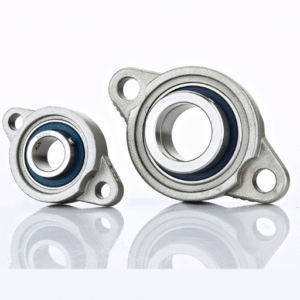
A flange bearing is a specialized type of bearing designed to provide reliable support for rotating shafts while simplifying mounting in mechanical systems. Unlike standard bearings, flange bearings incorporate a flange—an extended lip or rim—that allows for secure attachment to a mounting surface. This design is particularly advantageous in applications where compactness and alignment precision are critical.
Flange bearings are available in a variety of configurations, including two-bolt and four-bolt designs, to match the specific structural requirements of different systems. They can accommodate both radial and axial loads, ensuring smooth operation across a diverse range of industrial applications. The materials used in flange bearings often include high-grade steel or composite materials to provide durability, corrosion resistance, and minimal maintenance.
By carefully selecting the appropriate flange bearing type and size for a given application, engineers can enhance operational efficiency, reduce downtime, and extend the life of mechanical systems.
What Makes Flange Bearings Unique?
Flange bearings are unique due to their ability to accommodate both radial and axial loads while providing stable mounting options within mechanical systems. Their integral flange, typically set at a 90-degree angle to the bearing axis, allows for secure attachment to a surface, simplifying installation and ensuring alignment. This feature makes them highly suitable for applications where space constraints or precision positioning is critical.
Technically, flange bearings are often designed with materials such as high-grade steel, cast iron, or thermoplastics to meet varying performance requirements, ensuring durability and resistance to corrosion. Additionally, many flange bearings include self-aligning capabilities, which automatically compensate for any misalignment during operation, enhancing efficiency and reducing wear. Common technical parameters include load ratings (e.g., static and dynamic loads), bore diameters (typically ranging from 12mm to 100mm for standard sizes), and operating temperature thresholds (up to 250°F [121°C] for most high-grade material options). These characteristics collectively make flange bearings a versatile and reliable choice for industrial machinery, automotive systems, and other mechanical applications.
How Do Flange Mounted Bearings Work?
Flange mounted bearings work by securely housing and supporting a rotating shaft while maintaining precise alignment within a mechanical system. Their design incorporates a flat, flanged surface that allows easy mounting to a structure, ensuring stability and overcoming misalignment issues. Inside the bearing, rolling elements like balls or rollers minimize friction between the rotating shaft and the stationary housing, facilitating efficient motion. The integration of seals or shields helps protect the bearing from contaminants and extend its operational life, making them an essential component for smooth and reliable machine performance.
Applications Where Flange Bearings Are Used
Flange bearings are widely used in applications that require precise shaft alignment and support. I can tell you that these bearings are critical in industries such as manufacturing, agriculture, and automotive. For instance, they are frequently implemented in conveyor systems, industrial fans, material handling equipment, and heavy machinery, where they maintain stable shaft positioning while reducing friction. Additionally, these bearings are essential in agricultural machinery like harvesters and tractors to sustain operational efficiency under rigorous conditions. Their versatility and adaptability ensure reliable performance in diverse mechanical setups.
Comparing Flange Bearings Vs. Standard Bearings
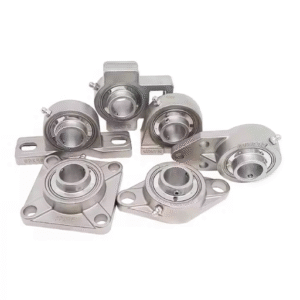
Flange bearings and standard bearings serve distinct purposes in mechanical systems, with differences centered around their design and application. Flange bearings typically feature an integrated flange, which allows for easy mounting and alignment on a surface. This design makes them ideal for situations requiring stability and accurate positioning, particularly in equipment with axial loads or when shafts extend beyond the bearing housing. Standard bearings, on the other hand, lack a flange and are generally used for radial load applications where precise alignment is less critical. While flange bearings offer enhanced versatility for mounting configurations, standard bearings are often simpler and more cost-effective for basic load-bearing tasks. The choice between the two depends on specific operational requirements, load direction, and system design constraints.
Understanding the Bearing Types and Their Uses
When considering bearing types and their uses, it’s crucial to evaluate the specific operational needs of the application. Flange bearings are ideal when alignment precision is necessary, or when a secure mounting solution is required due to axial loads or multi-directional force. Standard bearings, on the other hand, are best for straightforward radial load applications that don’t demand additional support or complex installation. The decision ultimately depends on the system’s design parameters, load conditions, and budget. For the most effective choice, I would carefully analyze these factors in line with the intended mechanical function.
Differences in Load Capacity and Friction
From my analysis, the primary differences between load capacity and friction in bearings arise due to their design and material composition. Bearings designed for higher load capacities, such as roller bearings, typically feature elongated contact surfaces, which distribute force more evenly. Conversely, ball bearings excel in reducing friction due to their point-contact design but often have lower load capacities under heavy axial or radial loads.
Key technical parameters to consider include static load rating (C₀), dynamic load rating (C), and coefficient of friction (μ). For example, roller bearings may have a static load rating exceeding 10,000 N, while ball bearings typically range from 2,000 to 5,000 N, depending on size and material. The coefficient of friction for ball bearings might fall around 0.001–0.005, whereas for roller bearings, it may vary slightly higher due to increased contact area. Selecting the appropriate bearing involves balancing these parameters against operational requirements, such as speed, load direction, and environmental conditions.
When to Choose Flange Bearings over Others
When deciding whether to use flange bearings over other types, I prioritize applications where mounting simplicity and alignment are critical. Flange bearings are ideal when I need to support rotating shafts that pass through surfaces, especially when the structure requires a strong, stable mounting point. They excel in scenarios where both axial and radial loads need to be managed efficiently, such as in conveyor systems, agricultural machinery, or industrial equipment. Additionally, I consider flange bearings when the operating environment involves misalignment or vibration, as their design often accommodates these challenges effectively.
Factors to Consider When Choosing Flange Bearings

Load Capacity and Type
When selecting flange bearings, it is crucial to evaluate the load requirements, including both radial and axial loads. The bearing must be designed to handle the expected forces without premature wear or failure.
Material and Durability
The operating environment dictates the material choice for flange bearings. Corrosion-resistant materials like stainless steel or zinc-plated steel are ideal for harsh or moisture-prone environments, while standard materials may suffice for indoor use.
Misalignment Tolerance
Consider the level of shaft misalignment the system may experience. Self-aligning flange bearings are essential in applications where slight misalignments are anticipated.
Operating Temperature
The bearing’s material and lubrication must withstand the application’s temperature range. High-temperature bearings or specific lubricants may be necessary for extreme conditions.
Installation and Maintenance
Ease of installation and maintenance should align with operational needs. Bearings with pre-lubrication and simple mounting designs can reduce downtime and improve efficiency.
Speed Ratings
Verify the maximum rotational speed of the flange bearing to ensure compatibility with the application’s operational speeds. Bearings designed for high-speed applications typically feature enhanced precision and lubrication systems.
Importance of Bearing Housing and Its Material
The bearing housing plays a critical role in providing support, alignment, and protection for the bearing, ensuring it operates efficiently under specified load and environmental conditions. The choice of material directly impacts the housing’s durability, thermal performance, and resistance to corrosion or wear.
- Material Selection:
Common materials include cast iron, ductile iron, and steel:
-
- Cast Iron: Known for high compressive strength, suitable for general-purpose applications.
- Ductile Iron: Offers enhanced tensile strength and ductility, ideal for dynamic or high-load environments.
- Steel: Offers exceptional strength and is often used in heavy industrial applications. Stainless steel variants provide superior corrosion resistance for harsh environments.
- Thermal Conductivity:
Materials with high thermal conductivity, such as aluminum alloys, can dissipate heat effectively and are preferable in applications with elevated operational temperatures.
- Load-Bearing Capacity:
The housing must withstand radial and axial loads without deformation, ensuring precise bearing alignment. Select housings rated for loads exceeding your operational requirements, considering application-specific dynamic and static load ratings.
- Environmental Resistance:
For environments exposed to moisture, chemicals, or abrasive particles, corrosion-resistant materials and surface treatments (e.g., powder coating, anodizing) should be prioritized.
The proper selection of housing material ensures operational reliability, extends bearing life, and minimizes maintenance downtime.
Evaluating Specific Requirements for Applications
When evaluating specific requirements for applications, several key factors must be assessed to ensure optimal performance, reliability, and efficiency. Below are concise guidelines addressing application-specific considerations alongside relevant technical parameters:
- Load Capacity
The dynamic and static load ratings directly determine the ability to withstand operational forces. For most industrial-grade applications, the dynamic load rating should align with the expected operational force and shock loading, utilizing safety factors of 1.2 to 1.5. The static load rating must exceed the peak static forces, typically by at least 20%, to avoid deformation.
- Speed Ratings
Rotational speed is a critical parameter, often expressed in revolutions per minute (RPM). Bearings for high-speed applications require precise tolerances and low-friction materials. For instance:
-
-
- Standard bearings handle speeds up to approximately 3,000 RPM.
- High-precision bearings with ceramic elements can operate efficiently at speeds exceeding 10,000 RPM.
-
- Environmental Conditions
The operational environment dictates the need for specific materials and design enhancements:
-
-
- Temperature Range: Select lubricants and materials rated for the application’s operating temperatures. For example:
-
- Standard steel bearings are suitable for -20°C to 120°C, while heat-treated alloys can endure temperatures up to 250°C.
- Contaminants: For exposure to dust, chemicals, or moisture, sealing solutions like labyrinth seals and corrosion-resistant coatings (e.g., stainless steel, ceramic coatings) should be included.
-
- Precision and Alignment
Misalignment tolerance is essential for applications with dynamic shaft deflections. Self-aligning bearing types or flexible housing designs can compensate for minor alignment errors of up to 3° without compromising functionality.
- Maintenance and Life Expectancy
Calculate the expected lifespan (L10 life) using standard equations derived from ISO 281. Enhanced designs, such as sealed bearings or those with automated lubrication systems, reduce maintenance frequency and extend operating life. For critical applications, predictive maintenance technology (e.g., vibration or temperature monitoring) is recommended.
By effectively balancing these parameters, the appropriate components for a given application can be selected to optimize performance while reducing maintenance and operational risks.
Impact of Axial and Radial Loads on Selection
Axial and radial loads critically influence the selection of components, as they determine both the type and specification of the required part. From my experience and backed by industry insights, axial loads act parallel to the axis, while radial loads act perpendicular. Bearings, for example, are specifically designed to accommodate these forces differently—angular contact bearings handle combined axial and radial loads efficiently, while deep groove ball bearings are optimized for predominantly radial loads. Proper assessment of these forces ensures reliability, minimizes wear, and prevents premature failure of the system.
Understanding Types of Flange Bearings

Flange bearings are categorized based on their design and application requirements, primarily into three types: two-bolt, three-bolt, and four-bolt flange bearings. Two-bolt flange bearings are compact and suitable for light to moderate loads, providing easy installation and alignment. Three-bolt flange bearings offer enhanced stability and are commonly used in uneven load conditions, ensuring balanced support. Four-bolt flange bearings, on the other hand, deliver maximum strength and rigidity, ideal for heavy-duty applications where both axial and radial loads must be effectively managed. Selecting the appropriate type depends on factors such as load capacity, operating conditions, and alignment demands.
Key Features and Applications of Flange Bearing Types
Flange bearings are designed to provide reliable support for rotating shafts while accommodating various mounting and alignment requirements. Below is a detailed comparison of the most common types:
- Two-Bolt Flange Bearings
These are compact and versatile, making them suitable for applications requiring moderate load capacities. Their design allows for easy installation and a secure fit. They are commonly used in conveyor systems, light machinery, and agricultural equipment. However, their lower stability compared to other types may limit their use in heavy-duty applications.
- Three-Bolt Flange Bearings
Known for their ability to handle uneven load conditions, three-bolt flange bearings are often implemented in systems subject to variable stress. The triangular configuration provides improved stability and load distribution, particularly in confined spaces where a larger flange design may not be practical.
- Four-Bolt Flange Bearings
Frequently utilized in industrial and heavy machinery applications, these bearings provide maximum strength, rigidity, and durability. The four-bolt design ensures optimal support for both axial and radial loads, making them ideal for high-load environments, such as mining equipment, material handling systems, and manufacturing plants. Their robust construction also contributes to prolonged service life under demanding operating conditions.
Each flange bearing type has distinct advantages, and the choice should consider specific factors, including load requirements, alignment tolerance, environmental conditions, and maintenance accessibility. Proper selection ensures system reliability, efficiency, and performance longevity.
Characteristics of Cylindrical Roller Bearings
Cylindrical roller bearings are designed to handle high radial loads with exceptional performance and reliability. Their unique geometry allows for minimal friction and efficient operation at high speeds. These bearings typically consist of inner and outer rings with a cage holding cylindrical rollers in place, ensuring uniform load distribution. They are commonly used in applications requiring precise alignment and robust load capacity, such as gearboxes, electric motors, and heavy machinery. Depending on the configuration, cylindrical roller bearings can accommodate axial loads in one or both directions, offering versatility for various industrial environments.
Advantages of Needle Roller Bearings in Certain Applications
Needle roller bearings are highly advantageous in applications requiring compact, lightweight, and high-load-capacity solutions. Their slender cylindrical rollers provide a larger contact area compared to traditional ball bearings, enabling them to handle higher radial loads relative to their size. This design ensures efficient load distribution and allows for reduced overall dimensions of machinery.
Key advantages of needle roller bearings include:
- High Load Capacity in a Compact Design
Due to their small diameter-to-length ratio, needle roller bearings can support high radial loads while maintaining a compact design, making them suitable for space-constrained applications such as automotive transmissions, gear pumps, and two-stroke engines.
- Enhanced Efficiency and Low Friction
The rolling elements within needle roller bearings minimize friction during operation, contributing to improved energy efficiency and reduced wear, even under heavy loads or high-speed conditions.
- Versatility in Configurations
Needle roller bearings are available in several configurations, such as full complement or caged types, with or without inner rings. This adaptability allows them to be used in diverse applications depending on load requirements and operating conditions.
- High Rigidity and Precision
Needle roller bearings exhibit superior rigidity, which is crucial for applications requiring precise alignment and high stability, such as robotic joints or aerospace components.
- Cost-Effectiveness in Power-Dense Designs
By enabling downsizing without compromising load-bearing capabilities, needle roller bearings contribute to cost reductions in manufacturing and material use.
Technical Parameters:
- Radial Load Capacity: Depending on the type, needle roller bearings can sustain dynamic loads ranging from 3,000 N to over 1,000,000 N.
- Operating Speed: Typically supports 3,000 to 20,000 RPM, with variations based on lubrication and design.
- Temperature Range: Operates efficiently in environments from -20°F to 300°F (-29°C to 150°C), depending on materials and lubrication.
- Shaft Diameters: Generally available for shaft sizes from 2 mm to 150 mm or more.
Common industries leveraging these bearings include automotive, aerospace, construction equipment, and industrial machinery, where durability, efficiency, and compactness are critical.
Reference Sources
- Flanged Bearings & Different Bearing Types – NMBTC
- What is the Difference Between Ball Bearing Inserts and Flange Bearing Inserts – LDK Bearings
- Guide to Choosing Flange Bearings: Types, Applications & More – HiBond
- The Beginner’s Guide to Flange Bearing – Monroe Engineering
- Flange Bearings – What You Need To Know – Bearing Centre
Frequently Asked Questions (FAQs)
Q: What is the primary difference between a ball bearing and a flange bearing in industrial bearings?
A: The primary difference lies in their design and application. Ball bearings are designed to reduce friction between moving parts, typically in rotary or linear motion. Flange bearings, on the other hand, feature a flanged housing that allows them to be mounted perpendicular to the mounting surface, providing support for specific application needs.
Q: How does a flanged ball bearing differ from a standard ball bearing?
A: A flanged ball bearing includes a flange on the outer race which helps in positioning and mounting, providing additional support for applications where precise alignment is required. This feature is particularly useful in a wide range of industries where mounting holes are needed for secure attachment.
Q: What are the advantages of using a flange bearing in industrial applications?
A: Flange bearings offer several advantages, such as easy installation due to the mounting holes, capability to handle heavy loads, and suitability for specific applications requiring stable alignment. They are also available in a variety of flange sizes and materials, including non-corrosive flange bearings for environments like food processing.
Q: In what scenarios would a flange bearing be preferred over other types of bearings?
A: A flange bearing is preferred in scenarios where the load is perpendicular to the mounting surface, requiring additional support and alignment. They are ideal for applications involving heavy loads or where maintenance or bearing replacement is challenging.
Q: What is the function of the outer race and inner race in a flanged ball bearing?
A: In a flanged ball bearing, the outer race is the stationary component that is mounted to the housing, while the inner race rotates with the shaft. Together, they facilitate smooth motion and reduce friction in the assembly.
Q: Can flange bearings handle both radial and axial loads?
A: Yes, flange bearings are designed to handle both radial and axial loads. Their construction allows them to support heavy radial loads while the flange provides stability for axial forces, making them versatile in industrial applications.
Q: Are flange bearings suitable for food processing applications?
A: Yes, flange bearings are suitable for food processing applications, especially when made from non-corrosive materials. Their design allows for easy cleaning and maintenance, ensuring compliance with hygiene standards in such environments.
Q: What maintenance is required for flange bearings?
A: Maintenance for flange bearings typically involves regular inspection for wear and tear, lubrication to ensure smooth operation, and replacement of any worn components. Proper maintenance helps prolong their lifespan and ensures optimal performance.
Q: What are some common mounting options for flange bearings?
A: Common mounting options for flange bearings include using mounting holes to securely attach the bearing to a surface. The variety of flange designs, such as different flange sizes and configurations, allows for flexibility in installation to suit specific application requirements.