


Choosing the right bearing can significantly influence machinery and mechanical systems performance, efficiency, and life span. Out of the various types of bearings used, needle bearings and ball bearings are the most popular because each has distinct features and benefits. But which one is right for your application? In this blog, we will tell you the main differences between needle and ball bearings, including their designs, capabilities, and uses. If you are considering optimizing a system or starting a new project, this article will support you in making the right choice to enhance the reliability and efficiency of the equipment.
What is a Ball Bearing and How Does It Work?
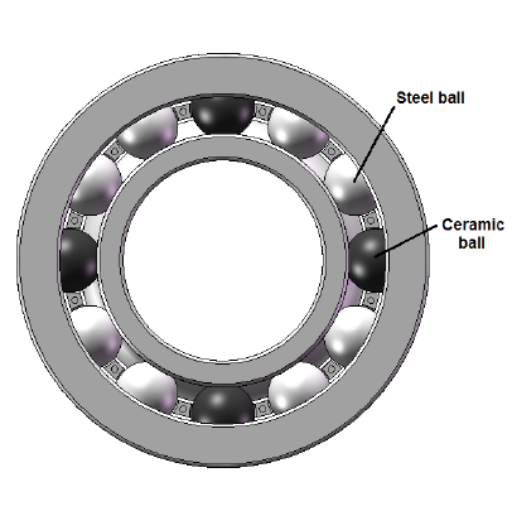
A ball bearing is one of the most popular rolling-element bearings. A ball bearing employs tiny spherical balls to serve as spacers that minimize friction between two moving elements. Ball bearings enable rotational or linear movement between components. A ball bearing allows a shaft or a wheel to spin smoothly. Radial and axial loads may also be supported while smooth rolling motion is achievedо A rolling element bearing is composed of an inner ring and an outer ring, a set or a plural number of balls, and a cage that spaces and retains the balls. Ball bearings can be found in all kinds of machinery, automobile parts, and devices owing to the reduction of friction achieved along with performance improvement. Ball bearings are easy to make and can be adapted almost easily to different applications.
Basic Design of a Ball Bearing
Ball bearings serve diverse purposes and, as with any other product, they are built to fit a particular need. Each firearm is likely to possess, at minimum, four fundamental components: an inner ring, an outer ring, balls, and a cage. The inner ring is installed on the rotating shaft and acts as a path for the balls to roll along, while the stationary outer ring provides a covering shell for the ball to roll around the outside. The balls reduce the friction when rolling, which is better than sliding, between the inner and outer. More robust chrome steel, stainless steel, or ceramic is used to manufacture ball bearings, to increase their eye fatigue and wear resistance. They are manufactured under close tolerances, in some cases measured in microns, to ensure proper functioning. They should withstand reasonable loads without permanently deforming, these limits are called the load ratings of the ball bearings which include dynamic (applied during rotation) and static (applied at rest) loads. A single-row deep groove ball bearing, the most common type, can support radial loads of several kilonewtons depending on size and design.
Furthermore, lubrication prevents friction and heat within a ball bearing, operating most effectively for an extended period. Low-temperature and high-speed functions have specially designed oil and grease lubricants. Modern innovations also aim at improving the seal systems that keep the interior of the bearing safe from performance-degrading dust and moisture.
In automotive, aerospace, or manufacturing sectors, ball bearings are required for accurate and fast-paced work, making them essential components. The reliability and continual innovation of ball bearings alongside their remarkable versatility has made them a trusted component in mechanical systems.
Types of Ball Bearings
Ball bearings have been made in many types to meet their specific application needs in almost every industry. Some of their types, properties, and typical uses are given below:
1. Deep Groove Ball Bearings
Because of their adaptability and capability to support both radial and axial loads, deep groove ball bearings are among the most popular types in use. In these bearings, the outer and inner rings have deep grooves which aid in reducing friction, thus augmenting their straightforward design. These bearings are often utilized in electric motors, gearboxes, and other domestic appliances. As per some recent reports, deep groove ball bearings are gaining preference in applications that require high speed, and low maintenance activities during operation.
2. Angular Contact Ball Bearings
Angular contact ball bearings allow the simultaneous application of radial and axial loads, that is, they include the combined load. Since the angle of contact of the balls with the rings is rather unique, they can be used in high-speed and highly accurate applications like machine tools and robotic systems. Such bearings are not only more durable but also capable of performing in harsh conditions due to advancements in material technology.
3. Self Aligning Bearings
For the cases of shaft misalignment, self-aligning ball bearings would be the optimal solution. These bearings have an outer ring that comprises a double row of balls together with a common spherical raceway and can therefore accommodate angular misalignment. The bearings find usage in industries that deal with systems having alignment oscillations like conveyor systems or machinery used in agriculture. Recent data suggests their increasing usage can be attributed to reduced wear and tear, which extends the mechanical system’s life.
4. Thrust Bearings
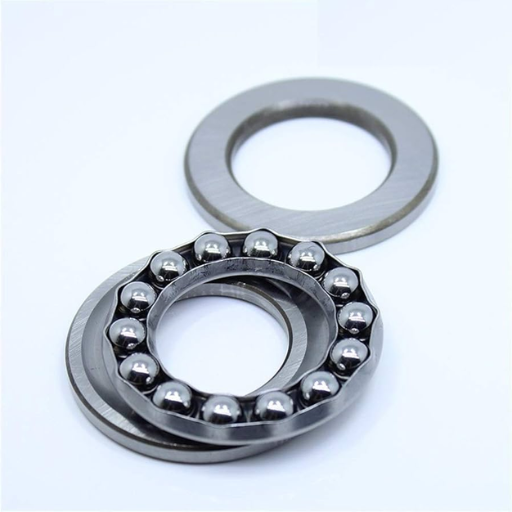
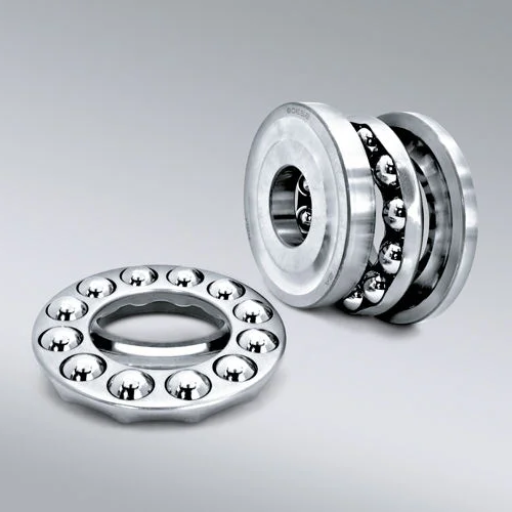
Thrust bearings are meant to bear axial loads and are used in applications where speed is low. Their primary application lies in the steering column of automobiles and with thrust washers. The bearings are offered in a single-direction or double-direction configuration giving flexibility in load control. Newer thrust ball bearings produced owing to advancements in manufacturing technologies tend to have greater load-carrying forces and therefore, perform better in compact systems.
5. Ceramic Bearings
A relatively new development in the field of bearings is ceramic ball bearings. Unlike conventional steel bearings, these have rolling elements made of ceramic components like silicon nitride. Therefore, these can be used at greater speeds, with less friction, and heat much better. They are more common in use for aerospace and medical inhalers/other equipment where operation in extreme conditions is required.
With further research and development, the scope of bearings is rapidly increasing with growing industrial requirements, as each type of ball bearing has its specific advantages tailored to their uses.
Applications Where Ball Bearings Are Used
The importance of ball bearings is undeniable in industries such as manufacturing, automotive, and aerospace because of their ability to handle friction, radial, and axial loads. For instance, in the automotive industry, ball bearings are integral components of gearboxes and engines as well as wheels. They help ensure the smooth and efficient functioning of vehicles. A recent analysis of industry automotive ball bearing dynamics estimates the market will expand substantially as a result of new developments with electric vehicles and enhanced fuel economy standards.
The aerospace sector is another important application ball bearings are used. These include parts such as jet engines, landing gear, and navigational systems. These components are subjected to the harshest conditions of the highest stress and extreme temperatures as well as severe vibration. Hybrid ceramic bearings demonstrate superior engineering alongside the materials used, as the effect of these properties is demonstrable to precision. Indications are there will be a considerable increase in the demand for aerospace-grade ball bearings due to future advancements in aviation technologies.
Moreover, the bearing industry is extremely vital in the manufacture of different medical devices and apparatus used in health care. They are used in surgical instruments, medical imaging equipment, and even in robotic surgery systems which all require very high reliability, quiet operation, and accuracy. The newer techniques for performing surgery through small incisions have increased the demand for advanced bearings used in modern healthcare machinery.
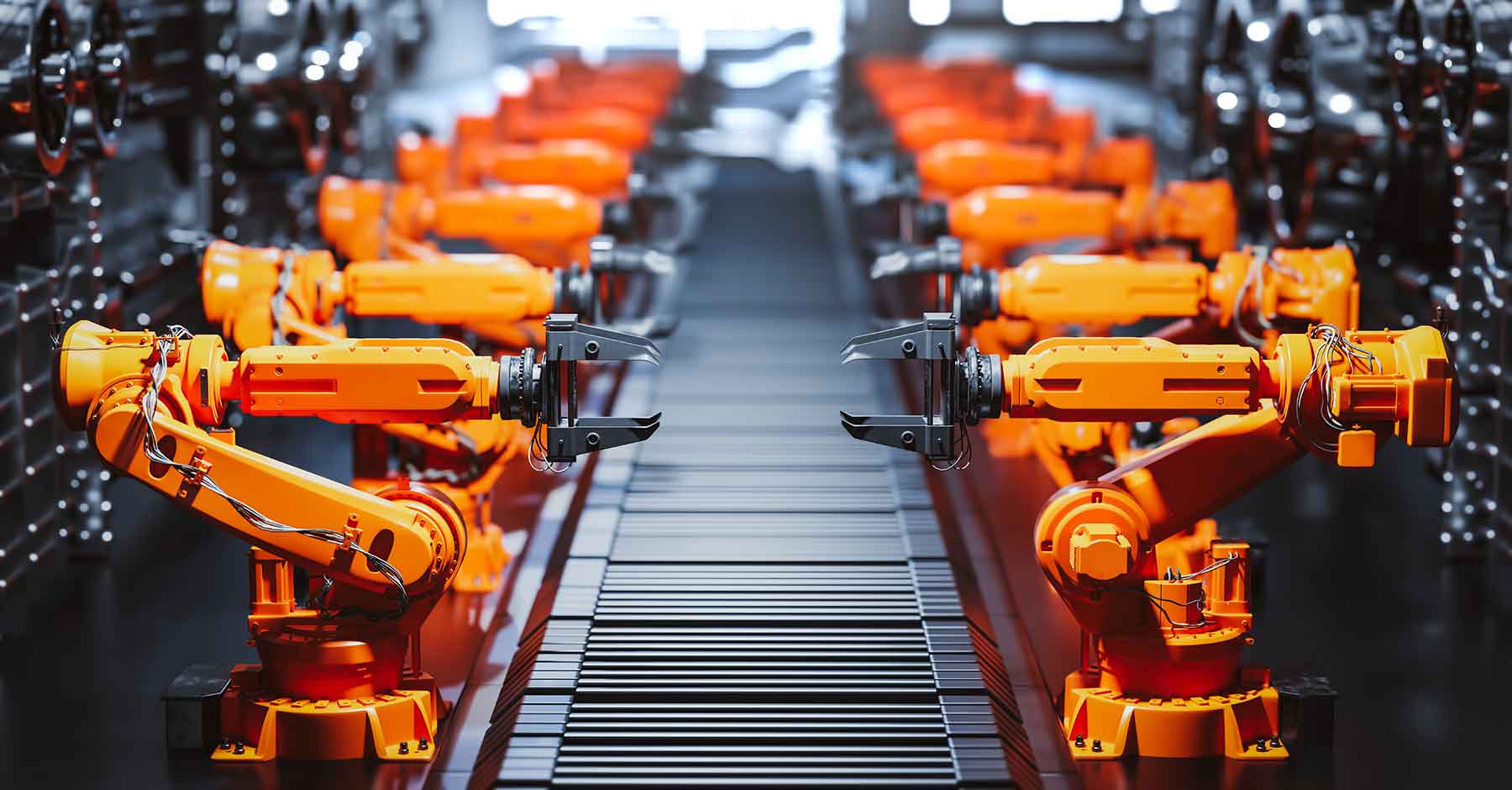
Robotics, manufacturing machines, and even conveyor belts are all included in industrial machinery, which comprises another major field of application. Ball bearings facilitate the smooth motion of machine elements, improving productivity. Automated systems and smart factories are now a conventional approach, resulting in a noticeable increase in the application of ball bearings within factory settings.
As a last point, ball bearings play a very important role in providing a clean source of energy such as in the case of wind energy, because the wind rotor blades and gearboxes can withstand harsh conditions and bear shaft loads, ensuring durable capability and effectiveness in supporting world initiatives to promote clean energy.
The diverse nature of modern technologies poses never (increasing) challenges to ball bearings but at the same time allows to expand and strengthen their domains in life. This reality adds value to ball bearings as educational and scientific investigation tools because of the wide and ever-expanding fields and problems to be studied.
Exploring Needle Bearings and Their Functionality
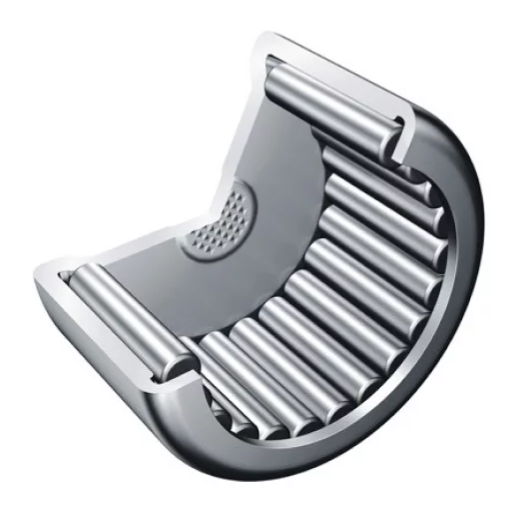
Needle bearings are classified as a type of roller bearing having slender cylindrical rollers longer than their diameter. This makes it possible to load them with very high loads due to their compact design. They are best suited for spaces where size is restricted, balancing with high-speed performance. They are widely used in the automobile, industrial, and aerospace industries since needle bearings support radial loads quite well. Needle bearings lower the level of friction therefore providing better efficiency in mechanical systems, particularly because of their small cross section.
Typical Structure of a Needle Bearing
A needle bearing contains eight components, each designed to provide maximum structural efficiency and simplicity, while also offering strength. These components include:
1. Inner Ring: An inner ring provides one rolling surface with a raceway for the rollers. Sometimes the inner ring is omitted in cases with shafts serving as raceways which removes several parts in the design making it lighter.
2. Outer Ring: The outer ring protects the rolling elements and also holds the outer raceway. The outer resists deformation through hardening the way it is exposed to the elements. It is sometimes produced with flanges for guiding the rollers depending on the design.
3. Needle Rollers: A type of cylindrical roller whose length is larger than its diameter, thus providing high load capacity within a compact form factor. The rollers are produced with close tolerances to minimize friction.
4. Cage (Retainer): The retainer cage holds the needle rollers maintaining both radial and axial spacing, preventing any rolling contact between them. This saves a lot of space, reduces friction, and increases the life span of the bearing.
The most recent changes focus on improving the bear-beaten cage’s strength-to-weight ratio by using materials such as stainless steel and synthetic polymers. Also, many needle bearings are now designed to accommodate higher rotational speeds along with proprietary lubrication and heat resistance.
Types of Needle Roller Bearings
Different designs of needle roller bearings exist to accommodate specific applications and their unique operating conditions. Here are the main types of needle bearings described in detail:
1. Drawn Cup Needle Roller Bearings
This type of bearing has an outer cylindrical ring cup, as well as a needle roller, but the cup is formed from thin-walled steel. This increases the compactness and load-carrying capability. They come with open or closed ends and in automotive applications are used for the gear pumps and transmissions. Their size is compact which is important for the overall equipment size.
2. Solid Needle Roller Bearings
Solid needle roller bearings consist of an outer ring that is machined and ground, with a corresponding needle roller set of high precision. They are known to have high life and also the equipment sustaining high radial loads such as construction equipment or industrial machinery. Some additional versions have holes for adding oil, making maintenance easier.
3. Thrust Needle Roller Bearings
Thrust needle roller bearings are tailored for specialized axial loads and incorporate needle rollers within a retainer. These bearings are very common in cases where space is a premium but the need for axial load capacity exists, like in the automotive transmission and differential systems. Recent improvements to these bearings have included the use of heat-resistant materials and sophisticated lubricating systems to improve their performance at high speeds and temperatures even further.
4. Combined Needle Roller Bearings
These bearings permit both radial bearing and axial bearing within one unit, thus permitting them to sustain a more complex loading configuration. Their utilization is common in robotics, machine tools, and aerospace where there is a need to control radial and axial loads at the same time. The combined needle bearings are lightweight and easy to install due to their compact design.
5. Caged Needle Roller Bearings
Caged needle roller bearings are designed with a cage to hold the rollers in the correct position which helps to reduce friction and wear. This results in better roller guidance and allows the bearing to operate at higher rotational speeds. These bearings are common in works that require high reliability under severe conditions such as high-speed machinery or automotive engines.
Advancements in Roller Bearings Needles
Needle roller bearing technology is now being adapted to improve reliability, operational speed, and service life. Newer coatings of surface, especially ceramic and carbon-based films, offer better protection against wear and corrosion. Moreover, self-lubricating systems reduce the maintenance workload to further increase their use in machinery situated in remote or difficult-to-maintain areas. Evidence suggests that modern modifications can increase the operating life of needle roller bearings by about 30%, which is beneficial for many applications.
Advantages of Using Needle Bearings
The comprehensive advantages presented by needle bearings offer great value to many industries. Their compact design is one of the primary benefits. Needle bearings can manage radial loads efficiently even under limited space, further improving high-placed efficiency. This particular advantage is greatly suited for automotive transmissions, aerospace components, and industrial machinery.
The ability of needle rollers to further friction and wear also serves as a key advantage. Due to its surface area, needle rollers are capable of providing a larger contact area. Research indicates that reliance on needle bearings improves energy efficiency and compared traditional types of bearings by almost 20%. This reduced cost greatly enhances operational costs.
The introduction of needle bearings with further improved lifespan branches out from advanced micromachining and manufacturing improvements. The addition of sharp alloys and lubricated materials tailored specifically to harsh conditions and extreme environments greatly improves durability. Data suggests that these innovations are also capable of reducing maintenance intervals by 40% which is incredibly useful in critical operations.
The industry also appreciates needle bearings due to their functionality. They are a ‘must-have’ in areas that require precision and dependability because they can operate efficiently even under mercilessly high speeds and temperatures. Needle bearings remain a popular choice in numerous severe engineering applications because, they offer an optimum blend of performance, life, and compact design.
Bearing vs: Comparing Performance and Efficiency

Choosing a type of bearing involves looking at its performance features. Moreover, performance and efficiency are two vital aspects that are heavily based on the nature of the application. In comparison to other bearings, needle types have a greater overall radial load capacity and are more efficient in friction, making them a better option for compact spaces. On the other hand, ball bearings outperform needle types in applications requiring support for both radial and axial load due to their lower rotational speed. Achieving optimal performance requires that selection is based on the type of load, space available, and operational speed among other factors.
Key Differences in Bearings Are Designed
Bearings are designed and customized for their specific applications and they also take into consideration the performance, accuracy, and operational requirements. Take, for example, ball bearings which have a wide range of uses. They are best suited for systems where there is both radial and axial loading. In addition, these types of bearings can achieve and maintain smooth performance at high speeds which makes them useful in electric motors and conveyor belts. Conversely, roller bearings are used in applications where heavier radial loads are experienced due to the greater surface area contact. These are very useful in the mining and construction industry.
Needle bearings, another crucial type, are unmatched in applications that have spatial limitations. As these bearings are narrow, cylindrical, and elongated, they can efficiently withstand high radial loads while taking up less space. At the same time, thrust bearings are specifically designed to support axial loads and are used in many automotive and marine applications, especially with the rotating shaft and gear systems.
When choosing a bearing, two of the most important factors are load capacity and operational speed. For example, ball bearings depend on their size and material; they typically support loads in the range of several thousand pounds. Roller bearings can endure even larger capacities under heavy-duty conditions. Moreover, the composition of the bearings’ material whether it be steel, ceramic, or polymer is equally important as it affects the bearing’s strength, resistance to high temperatures, and ability to resist corrosion. Every bearing type serves a specific purpose, and knowing their distinct features guarantees that all of them can perform their tasks in different industrial settings.
Performance in High-Load Applications
Bearings created for high-stress applications bearings require incredible strength because of the stress they are subjected to. Take, for example, the popularity of spherical roller bearings in Canada’s construction and mining industries, where operators value them for their ability to manage radial and axial loads simultaneously. These bearings are made from steel, which is classified as high-grade, as the alloys used in their construction enable them to handle over 20,000 pounds of static load for some configurations and function under extreme shock and misalignment.
Both construction and transport processes deeply rely on tapered roller bearings. With modern advances in engineering, these bearings have also been shown to support combined axial and radial loads during high-speed operation, although misalignment remained an issue. Enhancements in material coatings, internal geometry, and other features resulted in reduced operating friction, which, in tandem with lower loads, increased the capacity of these bearings by a 30% surge.
Ceramic bearings have established an appeal among high performers owing to their ultra-light weight and unmatchable heat resistance. These bearings are preferred in Aerospace Engineering and other high-temperature fields as their degrading points far exceed already extreme temperatures of 1,800 degrees Fahrenheit. Innovative material combinations and novel designs have allowed manufacturers to stretch the boundaries of their products—in this case, bearings—for use in extremely demanding environments.
Noise and Maintenance Considerations
Bearings are assessed not only on their life span and effectiveness but also on the operational noise and maintenance required. Low-noise bearings are needed in medical technology, electric vehicles, and robotics industries where excessive sounds could be immoderately disruptive. These bearings are specifically crafted to reduce noise levels and vibration during operation, thus maximizing operational effectiveness and overall efficiency.
Under each class, the rest capsule also varies. Sealed bearings, for example, do not require maintenance since they are pre-lubricated and sealed from dust and moisture. On the contrary, shielded and open bearings will require a periodic surge of lubricants and cleaning for them to avoid poor performance and premature wear. Some studies indicate that proper lubrication under a preventive maintenance strategy across all types including low-friction bearings can increase a bearing’s life by 300%.
The latest advancements in monitoring systems enable real-time analysis via the constant monitoring of vibration, temperature, and load through sensors. These systems aid in diagnosing problems before they occur, thus optimizing uptime and maintaining industrial reliability in critical operations that require precision. Proactive strategies towards noise and maintenance issues enable businesses to optimize long-term operational performance while minimizing bearing replacement and system repair costs.
The Role of Roller Bearings in Various Applications
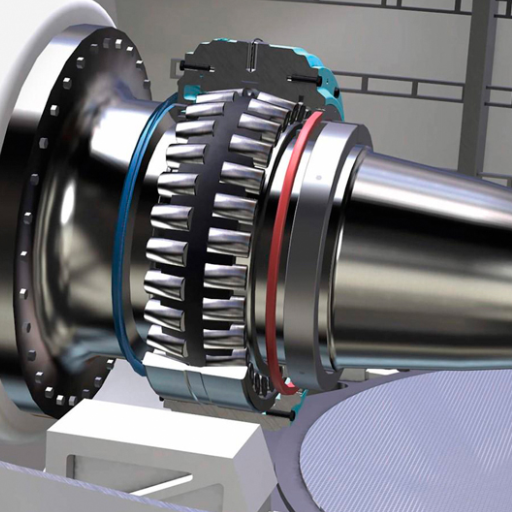
Roller bearings serve an important function in industries that require the sustained application of significant loads over considerable periods. Their reliability and durability make them widely adopted across automotive, construction, and manufacturing industries. Roller bearings enhance operational efficiency by minimizing friction, which reduces energy expenditure and prolongs machinery lifespan. Due to their exceptional ability to withstand radial loads, roller bearings are often utilized in conveyor belts, gearboxes, and other heavy-duty machinery.
Special Type of Roller Bearing
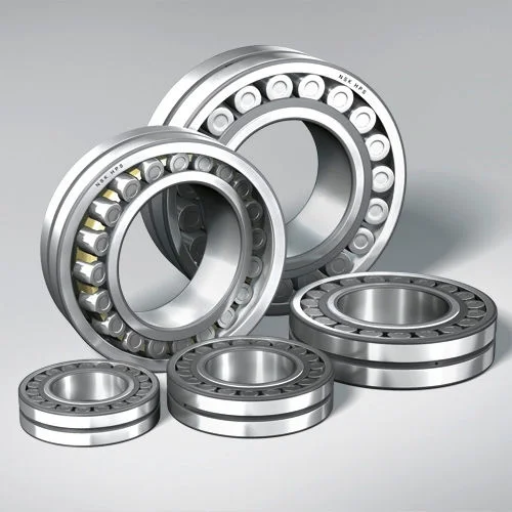
Spherical roller bearings are a specific kind of roller bearings that bear heavy industrial load while also compensating for misalignment between the shaft and the housing. Like other roller bearings, these are also made of an outer ring with a spherical raceway, an inner ring with two raceways that are set at an angle to the axis of the bearing, and barrel-shaped rollers. With these features, spherical roller bearings can bear both radial and axial loads at the same time which allows them to operate under adverse conditions like shaft deflection or mounting inaccuracies.
The latest developments of these spherical roller bearings offer greater reliability while still providing higher performance under tougher working conditions. For instance, several models employ specially designed steel alloys, enhanced steel cutting glasses and sophisticated methods, which undergo deep conditioning processes to endure extreme abrasion and fatigue. Special coatings alongside advanced lubrication units designed for lower maintenance increase service intervals (). Such conditions are commonplace in the mining, construction, or paper industries where equipment constantly suffers from heavy loads and changing positions.
As recent industrial sources indicate, one notable performance improvement in spherical roller bearings is the reduced power loss of up to 30% from frictional loss, achieved through a lower friction design. Innovations further include self-lubricating capabilities, which help protect the bearing from self-contained dirt and contamination, as well as improved sealing systems that ensure reliability in dirty environment exposure. These features enhance the reliability of spherical roller bearings and make them important for improving the efficiency and durability of machines in many industries.
Benefits of Versatile and Durable Roller Bearings
Enhanced Load-Carrying Capacity
As one of the essential features of versatile and durable roller bearings, radial and axial load-carrying capacity has further remarkable weight-bearing capabilities. Advanced spherical roller bearings or modern roller bearings are built to perform smoothly even with hefty loads. For example, new developments in material science such as heat-treated steels and specially designed coatings enhance the resistance to load for rolling bearings by nearly 20% for the bearing’s lifespan in high-stress applications, thus, enduring high-stress multi-user scenarios.
Performance and Efficiency for Speed
The performing efficiency at high speeds is another feature durable roller bearings are recognized for. These bearings are manufactured with such precision that frictional losses are reduced to an absolute minimum which improves energy efficiency. Research indicates advanced surface finishes and rolling elements with better geometrical configurations may offer as much as 15% improvement in operational efficiencies, which is vital for some sectors like automotive and aerospace.
Durability in Challenging Conditions
Modern roller bearings are designed for very difficult places of work such as extreme heat or cold, heavy contamination, and corrosive environments. Special anti-corrosion processes and new sealing techniques result in wear and tear resistance making them useful for mining, construction, and marine engineering. These features accomplish lower passive maintenance or service.
Cost-Effectiveness Over Time
Even though roller bearings have higher initial costs, their longevity, combined with lower maintenance expenses, makes them an economically wise choice in the long run. Moreover, some modern bearings are designed to endure for up to 50% longer than traditional ones, reducing idle time and maintenance in industries, which improves productivity further.
Wide Range of Applications
The adaptation of roller bearings is applicable in numerous fields due to their flexible nature. From industrial equipment and wind energy systems to EVs and automation systems, their flexibility guarantees optimum results in every sector. Furthermore, the ability to modify operational-specific requirements makes these bearings even more globally favorable, positioning them as a critical part of contemporary machinery.
Commonly Used Roller Bearings
Roller bearings are available in different types, each suited for particular requirements in a mechanical system. Given below are some commonly used roller bearings along with their features and applications:
1. Cylindrical Roller Bearings
Cylindrical roller bearings have radial load capacity which makes them suitable for use in high-speed and heavy-load applications. This makes them useful in electric motors, turbines and gearboxes. Recent advancements have increased their precision and efficiency which has reduced the energy loss during industrial activities.
2. Tapered Roller Bearings
This type supports both axial and radial loads separately. These roller bearings are used widely in the automotive industry in wheel hubs as well as power construction equipment. As per industry data, tapered roller bearings are rugged and have an increased load-carrying capacity as well as added durability even in harsh operating conditions.
3. Spherical Roller Bearings
Able to self-align and thus, compensate for any misalignment, spherical roller bearings can operate in heavily loaded and vibrated environments due to their high strength. They find extensive application in mining and in equipment for material handling as well as in wind turbines. Advances in seals and lubrication methods have made these bearings more durable in harsh surroundings.
4. Needle Roller Bearings
A needle roller bearing has a small form factor and is well suited for use in places where weight and volume must be minimized. In addition to automotive transmissions, these components are used in pumps and in aerospace. Other recent developments have further improved their performance in high-speed operations due to new materials and optimized designs.
5. Thrust Roller Bearings
Thrust roller bearings can support very high axial loads, which makes them useful in cranes, marine propulsion systems, and industrial presses. New methods for manufacturing these bearings have increased the ability of the bearings to withstand high pressures, allowing use in critical, heavy-duty operations.
Specific performance criteria are addressed with each type of roller bearing to optimize the functionality within each sector. Continuous developments and refinement of roller bearings ensure their relevance in supporting modern mechanical systems.
Needle Bearing vs Ball Bearing: Which One to Choose?

The application criteria will dictate if needle bearings or ball bearings will be used:
- Needle Bearings: Best suited for applications that involve a compact architecture along with possessing a high load-bearing capacity. Best for confined spaces with heavy radial load expectations, such as automatic transmissions or gear pumps.
- Ball Bearings: Best for applications needing high rotational speeds, lower friction, and more precise movements. Commonly used in electric motors and fans, as well as other equipment needing smooth and efficient rotation.
Identifying the requirements of your machine in terms of workload, physical dimensions, and moving velocities will guide you to choosing the right option between needle and ball bearings.
Comparative Analysis of Needle Bearings and Ball Bearings
Load Capacity: Due to their larger surface contact area, needle bearings excel at handling radial loads which is useful in compact spaces. Ball bearings are more suited for moderate loads but provide higher speeds at lower friction.
Space Efficiency: Ball bearings help reduce friction and increase smoothness during operation but require more space. Needle bearings are more compact which makes them suitable for confined spaces.
Speed Capability: For high-speed operations, ball bearings outperform their counterparts by a notable margin, allowing for greater efficiency and quieter operation. Slower moving machinery on the other hand uses needled bearings as the speed is not critical.
Durability: Needle bearings still provide high precision and low maintenance along with added durability for heavy-duty, frequently varying load applications. Ball bearings do best when put into precise, high-speed situations but require higher maintenance to keep lasting long.
Application Suitability: For high-precision applications with a need for speeds coupled with low friction, use ball bearings. For high-load, compact, and low-speed applications, choose needle bearings.
Disadvantages of Ball Bearings
Ball bearings have a wide variety of applications due to their great efficiency; however, some limitations impact their functionality depending on the context.
1. Constrained Load Capacity: Ball Bearings are not usually able to sustain severe weights because heavy loads can lead to the deformation of balls or races. For applications that need heavy radial loads to be managed, needle bearings and other alternatives work better.
2. Sensitivity to Misalignment: Aligning the shaft and casing perfectly is critical for achieving optimal functioning of ball bearings since they do not tolerate any sort of misalignment. Even slight shaft misalignment results in uneven load distribution, wear amplification, and reduced bearing lifetime.
3. Noise and Vibration: Ball bearings are noisy and vibrate under high-speed and poorly lubricated conditions. In cases where silence is a prerequisite, this feature proves to be unfavorable.
4. Lubrication Precision: To attain the strongest performance from ball bearings, precise maintenance and scheduling of lubrication are important. In the absence of lubrication or lubrication with debris, overheating and escalated wear will undoubtedly take place while also shortening efficiency and lifespan.
5. Temperature Limits: Ball bearings struggle to withstand extreme heat. The expansion of material in contact with the heat, along with soft lubrication, will make demanding environments impossible to cope with.
Given these constraints, using ball bearings may not be suitable in situations with high loads, potential for misalignment, or severe environmental factors. There may be better options available, such as needle or roller bearings.
Choosing the Right Bearing for Your Application
To pick out a bearing that best fits an application, several considerations must be made: the bearing’s operational load limit, speed of use, alignment, temperature limits, and the bearings’ surroundings. As an example, ball bearings fit best with cases that need low friction, high speed, and moderate load since they perform best under those conditions. However, roller bearings like cylindrical and tapered roller bearings perform better under heavy axial or radial loads due to having a greater contact area and sustaining greater load.
Bearings’ environmental surroundings are also highly influential. For use in extreme temperatures, advanced hybrid materials make ceramic bearings that outperform steel bearings, as it is a known fact that ceramic bearings withstand 1,800°F, making steel bearings far inferior in applications requiring high temperatures.
In environments that are dirty or corrosive, stainless steel or sealed bearings are far more durable. Durability is a strong point for stainless steel bearings, as they do not rust or corrode. Sealed designs further limit contamination because external particles cannot access the bearing. Additionally, the use of advanced systems of lubrication improves bearing lifespan while making it less necessary to perform maintenance in the future.
Meeting the needs of a given task with a specific bearing type, material, or design is important in achieving efficient and reliable operation. Effect selection of bearing type and design—optimal performance can be achieved through monitoring and maintenance as well as right selection and regular upkeep without stopping programs.
Reference Sources
-
Optimization of Needle Roller Bearing Design Using Novel Hybrid Methods:
- Focuses on optimizing the design of needle roller thrust bearings to reduce frictional torque.
- Highlights the advantages of needle bearings in specific applications requiring compact designs and high load capacities.
- Methodology includes hybrid optimization techniques and analysis of roller motion under varying conditions.
-
Tribological Characteristics of Needle Bearings:
- Examines the tribological performance of needle roller bearings, emphasizing their frictional characteristics.
- Provides insights into the unique design of needle bearings and their suitability for high-load, low-speed applications.
- Methodology involves empirical testing and analysis of frictional torque in needle bearings.
-
Mechanical Power Losses of Full-Complement Needle Bearings of Planetary Gear Sets:
- Investigates power losses in full-complement needle bearings used in planetary gear systems.
- Compares variations in needle bearing designs, including caged and full-complement configurations.
- Methodology includes experimental testing and modeling of power losses under different operating conditions.
- If you are looking for more information about Deep Groove Radial Ball Bearings – Amigo go here right away
Frequently Asked Questions (FAQs)
Q: What are the main advantages of needle bearings compared to ball bearings?
A: Needle bearings are designed to handle higher load capacities in a compact design compared to ball bearings. They reduce friction and wear on the bearing by distributing the load more evenly across the bearing races. This makes them suitable for applications where space is limited, but a high load capacity is required.
Q: How do needle bearings reduce friction compared to roller bearings?
A: Needle bearings reduce friction by using a series of small cylindrical rollers, which have a larger contact surface compared to the spherical elements of ball bearings. This design allows for smoother operation and less noise than other bearings.
Q: In what applications are needle roller bearings particularly suitable?
A: Needle roller bearings are suitable for applications that require compact design and high load capacity, such as automotive transmissions, gearboxes, and pumps. They are ideal for situations where the bearing must directly bear the bearing load in a limited space.
Q: What is the difference between radial needle bearings and radial ball bearings?
A: Radial needle bearings use cylindrical rollers to carry load, which allows them to handle higher loads in a smaller package. Radial ball bearings, on the other hand, use balls as rolling elements, which typically results in lower load capacity but smoother operation.
Q: How do needle bearing vs roller bearing designs impact their performance?
A: Needle bearings are a type of roller bearing with long, thin rollers. This design allows them to handle higher loads than other types of roller bearings, such as cylindrical or spherical rollers, while maintaining a compact size. This makes them ideal for high-load, space-constrained applications.
Q: What are the main advantages of ball bearings compared to needle bearings?
A: The main advantages of ball bearings include their ability to handle both radial and axial loads with less noise and vibration. Ball bearings are also typically easier to maintain and have a longer lifespan in applications subjected to lower load conditions.
Q: What are thrust needle bearings designed for?
A: Thrust needle bearings are designed to handle axial loads, which are loads parallel to the axis of the shaft. They include a needle roller and cage assembly that allows them to support high thrust loads while minimizing wear on the bearing.
Q: How does the operation of needle bearings compare to other types of rolling bearings?
A: Needle bearings operate with a lower profile and higher load capacity relative to their size than other types of rolling bearings, such as ball bearings. They achieve this by using elongated cylindrical rollers that directly bear the bearing load, providing efficient load distribution.
Q: What is included in a needle bearing design that makes it effective for high-load applications?
A: A needle bearing design typically includes a needle roller and cage assembly, which helps to maintain the alignment of the rollers while reducing friction and wear. This design allows the bearing to support heavy loads and operate effectively in constrained spaces.