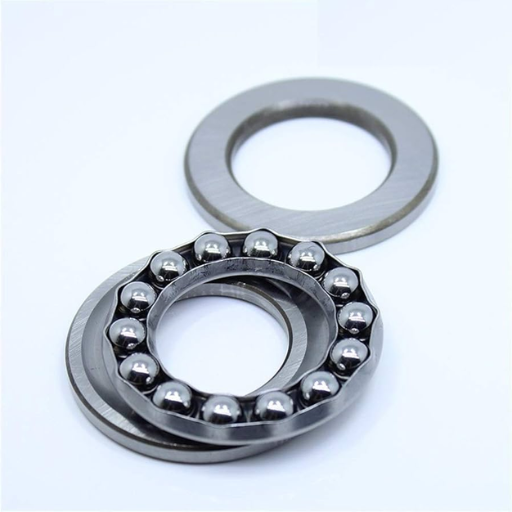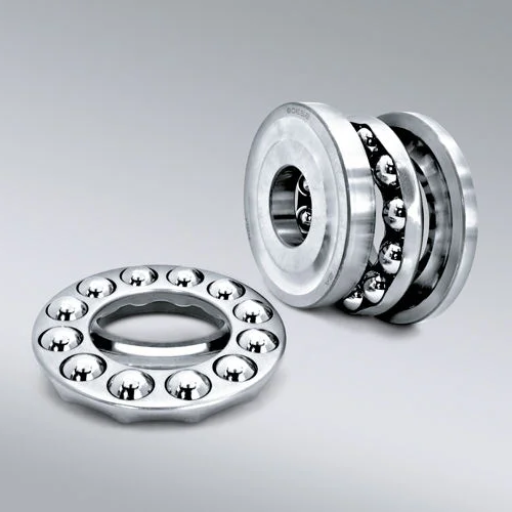
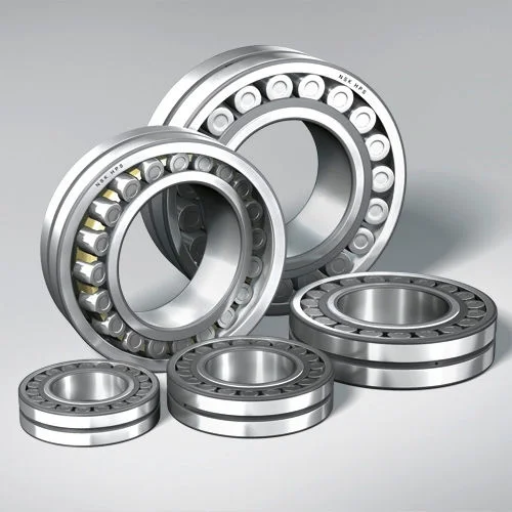



Picking the correct bearing for your application requires knowing the differences between deep groove ball bearings and angular contact ball bearings. Each kind of bearing has its importance in various fields, such as automotive and manufacturing, but their differences in design and functionalities mean that they excel in different scenarios. This guide hopes to explain the features and uses of the two bearing types, helping with their identification and selection by the intended purpose. From these explanations, engineers and technicians along with other inquiring minds will be able to use the content to their advantage while working on performance optimization projects.
What is an Angular Contact Ball Bearing and How Does It Work?

Angular contact ball bearings can handle radial and axial loads simultaneously, which makes them unique. They consist of an inner and outer ring, a set of rolling balls, and most importantly, a contact angle. The contact angle enables them to support easier axial loads in one direction while managing radial loads. They are preferable in the automotive, aerospace, and manufacturing industries where precision and high-speed operation are indispensable. The angular contact ball bearing is greater in demand because it ensures enduring efficacy and dependability in operations that need constant recalibration and exactitude.
Understanding the Contact Angle in Detail
Bearings are designed with unique features; for example, the contact angle in angular contact ball bearings is essential to their effectiveness. It is the angle of contact of the balls rolling along a raceway and a line perpendicular to the bearings axis. This angle determines the bearing’s ability to handle axial loads. The higher the contact angle more the axial loads that can be supported while lower contact angles are suited for optimized performance, faster speeds, and reduced friction.
As an example, the bearings have contact angles of 15°, 25°, and 40° which are typical. Each angle is suited for specific applications. The contact angle of 15 ° enables efficient high-speed operation, making it ideal for applications such as machine tool spindles while a 40° angle excels in managing heavy axial loads, as seen in pumps or gearboxes. Research has also shown that selecting the right contact angle is crucial for mitigating wear and maximizing bearing life because it so fundamentally influences the force ratio on the rolling elements. This ensures the bearing functions under different operating conditions precisely balancing robust strength, high speeds, and efficient operations.
How Does an Angular Contact Bearing Handle Radial and Axial Loads?
Simultaneous radial and axial loads are angular contact bearings’ specialties because of their one-of-a-kind design. Their versatility for dynamic applications is unmatched. Driving radial and axial forces depends on how high or low the contact angle of the bearing is. A smaller contact angle of 15 degrees is beneficial for lowering speed friction and enhancing speed, especially at lower axial loads. In contrast, higher degrees like 25 or 40 degrees are more efficient for greater axial load capacity applications.
Optimized stiffness and stability ensure vibration and deformation elimination during peak operation. These depend on applying proper preload. Harnessing adequate preload yields stability and alignment under several external loads. Preloaded angular contact ball bearings outperformed non-preloaded ones by 25% at combined load tests, demonstrating substantial optimization.
Managing complex load profiles works well for these bearings when organized in pairs or sets, like back-to-back (DB) face-to-face (DF) or tandem (DT). An example is back-to-back arrangement, where they exhibit reliable rotation while sustaining high moment load torque in a compact space.
Information collected throughout the industry shows how these bearings are integrated into various applications. Angular contact bearings, for instance, provide minimal friction and heat for turbines and precision load balance in spindles and grinding tools. Also, modern material technologies enable certain bearings to withstand wear and tear and rough conditions, increasing older bearings’ life expectancy by 30%. These advancements illustrate the importance of precision and reliability across multiple industries.
Applications of Angular Contact Bearings
Angular contact bearings are popular contact bearings because they can handle mixed radial and axial loads. Some of their uses are listed below:
Aerospace Industry: In aircraft, these bearings can be found in the engines and landing gears. They provide precision and reliability for high-speed rotations and varying axial loads during flight operations.
Automotive Sector: These types of bearings can be found in gearboxes, clutches, and vehicle wheels and aid in sustaining the critical performance criteria while smoothing operation during harsh conditions such as heat, vibration, and other factors.
Machine Tools: Precise, balanced loads and low operational noise are especially critical when dealing with high productivity and tool life. That’s why high-speed spindles, grinding tools, and CNC machines use angular contact bearings.
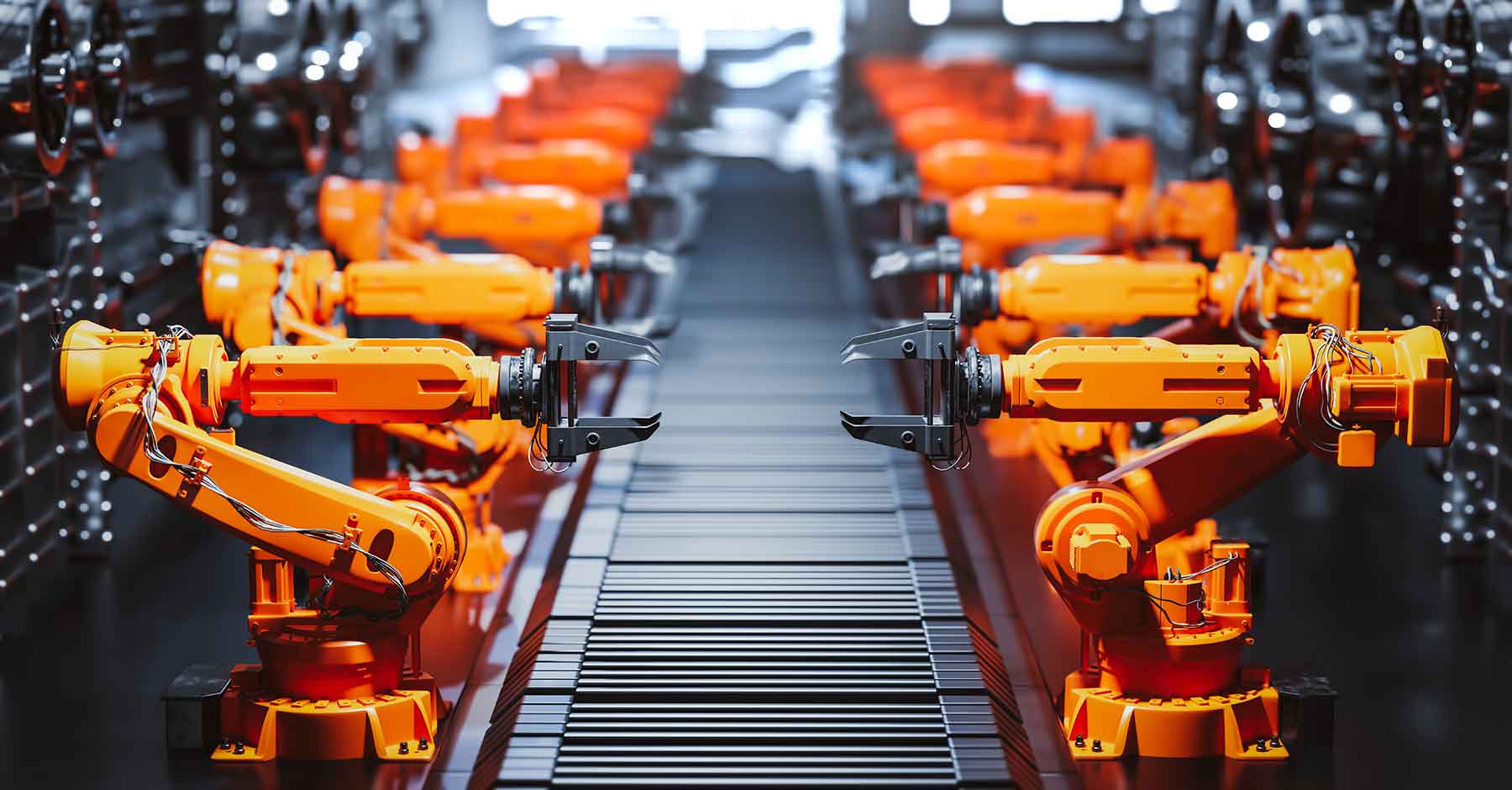
Robotics: Modern automation technology relies on strong load-bearing capabilities with precise rotational motion; robotic arms and joints incorporate angular contact bearings for this purpose.
Renewable Energy: The heavy axial loads and continuous rotation over time make it necessary to include angular contact bearings in wind turbine gearboxes.
Medical Equipment: Dental drills, imaging devices, and surgical instruments depend on angular contact bearings for smooth functionality and precision required to perform critical operations.
Electric Motors and Pumps: They work reliably and efficiently because of their capability to handle electric motor shafts and industrial pump systems with high speeds and axial forces.
Railway Systems: Angular contact bearings help in the movement of train wheels and axles by managing combined loads and preventing rapid wear, therefore ensuring safe and long-term rail operations.
This broad scope of applications showcases the ingenuity and importance of angular contact bearings in contemporary engineering and industrial technology. Further development of materials and ongoing improvements in design continue to create additional fields.
Exploring the Deep Groove Ball Bearing and Its Applications

Because of their flexibility and efficiency, deep groove ball bearings are one of the most common kinds of bearings. They are meant to help both radial and axial loads while rotary motion is occurring at high speeds. Electric motors, home appliances, automotive parts, and industrial machines are some examples of their applications. They are used in numerous industries due to their straightforward design, low maintenance, and capacity to respond to various load types.
Key Features of a Deep Groove Ball Bearing
- Capability to Handle Radial and Axial Loads
Deep groove ball bearings can bear radial loads (to the shaft’s perpendicular) and axial loads (along the shaft) simultaneously. Their ability to serve multiple functions makes them ideal for many applications.
- High-Speed Operation
Deep groove ball bearings can withstand radial or axial loads while simultaneously rotating. The versatility allows it to be used in most domains.
- Simple and Compact Design
The compact structure of deep groove ball bearings provides convenience for integration into different kinds of machinery and equipment while saving space.
- Durable and Long-Lasting
High-quality deep groove ball bearings are made of great materials and engineered precisely. This provides excellent durability and increases the period before maintenance is required.
- Low Maintenance Requirements
Due to their shields or seals, some deep groove ball bearings are defended against contamination which enhances their overall reliability and reduces maintenance requirements.
- Reduced Noise and Vibration Levels
Because of the flawless workmanship of these bearings, they not only achieve quieter operation but also significantly reduce vibration levels.
- Wide Range of Sizes and Variants
Deep groove ball bearings can be obtained in different dimensions as well as materials and configurations which suit the needs of many industries and uses.
- Cost-Effective Solution
Deep groove ball bearings are a popular choice for many industries because of their economic advantages, dependability, precision, and durability.
All of these attributes combined reinforce why deep groove ball bearings are among the most utilized bearings worldwide.
Handling Radial Load with Deep Groove Ball Bearings
Deep groove ball bearings are expertly built to withstand large radial loads which are force loads that are perpendicular to the shaft. Such construction consists of the inner and outer race of the bearing which has a unique geometry so that the load will be distributed uniformly to the contact surface. For example, most deep groove ball bearings of the correct size can support radial loads ranging anywhere from a couple of kilograms up to a few tons based on size as well as material properties.
The load-withstanding capability of bearings has always been improved in modern technology and is even further refined with the contribution of new bearing manufactury score. These days, with the high quality of steel and ceramic materials deep groove ball bearings, are made of, there is decreased friction as well as increased durability to heavy loads. It is reported that deep groove ball bearings have up to thirty percent lesser wear rates than before the model when put through conditions of standard test conditions and optimized under preset parameters.
Aside from the fact that radial loads need to be managed alongside lubrication and upkeep. Adding premium-grade lubricants improves heat removal and friction making operational life far greater than moderate bearings even with tough tasks. Correct installation and servicing of the bearings also contribute to improved results. Lack of proper alignment and lubrication results in loss of capacity and premature failure over time. So best practice alongside bolt servicing ensures added trust in radial load response.
Typical Uses of Deep Groove Ball Bearings
Because of their versatility and capacity to accept both radial and axial loads, deep groove ball bearings are among the most frequently used bearings. Their effectiveness, dependability, and capability to withstand high-speed and high-precision conditions make them preferred in various industries and machinery.
- Automotive Industry
Deep groove ball bearings form a vital part of the automobile industry and are used in the wheel hub, transmission assemblies, and electric motors in automobiles. Their value comes from the fact that they reduce friction, support axial and radial loads, and allow the smooth operation of automotive systems.
- Industrial Machinery
In industry, these bearings are extensively used in machinery like conveyor machines, industrial pumps, and machine tool spindles. They do not require a lot of maintenance, work well in high-speed conditions, and help increase productivity as well as reduce outages.
- Home Appliances
Because of their small size and quiet operation, deep groove ball bearings are preferred for use in appliances. They can be found in washing machines, ceiling fans, and vacuum cleaners where they increase the performance and durability of appliances during extended usage.
- Aerospace Industry
Used in the gyroscopes and other aircraft control systems, these bearings sustain critical aerospace functions. Their robust industrial strength ensures reliability in this safety-critical industry.
- Renewable Energy
Those emitters are also crucial to wind turbines and solar tracking devices. Their reliability during oscillating loads and extreme weather conditions helps meet the growing customer needs for renewable energy.
New market study reports indicate that the worldwide deep groove ball bearing market is expected to expand considerably due to heightened industrial automation and the need for energy-efficient equipment. These factors demonstrate the continuing relevance of this type of working part in many fields.
The Difference Between Angular Contact and Deep Groove Ball Bearings

The foremost distinction between angular contact and deep groove ball bearings is how each one of them deals with the load of a rotating shaft. While deep groove ball bearings can support some axial load, their main function is to bear radial loads. Vertical loads placed on the axle shaft get support from numerous small axial grooves incised in the bearing race. This means that the radial loads will permit some minimal axial thrust.
Subsequently, deep groove ball bearings are used individually. Because axial forces are multidirectional, angular contact ball bearings are usually set or paired to accommodate these forces, and ample thrust can be put on them in both directions. Because of this, machine tools are also able to use them seamlessly. Without them, common components such as motors and even conveyors tend to use deep-groove ball bearings.
Comparing Radial and Axial Load Capacities
In applications involving the use of ball bearings, radial and axial load-bearing capacities are radial and axial load bearing capacities is critical. A radial load capacity is defined as a bearing’s characteristic to withstand forces that act perpendicular to its shaft or axis of rotation. Whereas, the axial load capacity refers to the forces acting along the shaft or the rotation axis. Deep groove ball bearings have great radial load capacity owing to their deep and uninterrupted raceway groove configuration. This makes them fit for electric motors and pumps, which mostly use radial loads. Also, they can accept small axial loads both ways two-way axial loads.
They are better for mixed load, radial and axial, for single bearings. Angular contact ball bearings are designed specifically to endure combined loads of both types, radial and axial, more efficiently, particularly if they are placed in matched pairs or sets. The angle at which they are loaded has been contacted with the shaft of the bearing. Premium-grade angular contact bearings can accept axial load much more deep groove bearings. some high-performance models manage to sustain axial forces up to 50% greater under the same conditions than deep groove bearings.
Another vital difference is in how they manage the load direction. While moderate axial loads can be taken up by deep groove ball bearings, angular contact ball bearings accommodate unidirectional or multidirectional axial loads depending on their configuration. Because of this, they are crucial in fields that require high precision coupled with great durability, including robotics, machine tools, and automotive gears. Knowing these differences is critical for optimally selecting the bearings for ensuring machinery or equipment durability and operating efficiency.
Structural Differences: Inner Ring and Outer Ring Designs
Functionality and application versatility of angular contact ball bearings is greatly influenced by the designs of the inner and outer rings. The inner ring rotates with the shaft, while the outer ring is fixed in place to carry the load. A critical design feature is the contact angle which is the angle between the load direction and the line between the ball and raceway. This determines the bearing’s axial load ability.
Those are the most common single-row configuration which achieves the best performance at high speeds with moderate loads, and double-row configuration which is more rigid and able to handle larger axial and radial loads. Also, the precise machining of the inner and outer rings ensures \freedom from friction and heat, enabling uniform movement which is vital for rotating parts, even those that have minimal clearances.
These rings are usually manufactured from high-carbon chrome steel, as they guarantee a long working life and an extensive operating range. With the addition of modern coatings or even heat treatment, those rings will perform even more efficiently in really tough environments with large loads and corrosive materials.
For example, the data suggest that angular contact ball bearings with a 15° contact angle are optimal for high-speed applications, while those with a 25° or greater contact angle perform best in moderate-speed, high-load scenarios. These differing configurations of the inner and outer ring make it possible to customize these bearings to suit the specific needs of different industrial applications.
When to Use Angular Contact vs Deep Groove Bearings?
When it comes to choosing angular contact or deep groove ball bearings, requirements of the application such as load direction, speed, and misalignment are critical factors. When there’s a need to attend to high axial and radial loads at the same time, angular contact bearings are the best choice.They can cope with axial loads in one direction – or in some configurations both directions – while achieving superlative rotational speeds. For example, single-row angular contact bearings are common in machine tools and pumps owing to their precision together with stability under combined loads.
Alternately, deep groove ball bearings are less precise but more adaptable to varied applications with radial loads. They are best for moderately axial loads to be pushed in either direction. The lower friction offered by deep groove ball bearings, along with their ability to misalign, renders these bearings perfect for electric motors, appliances, and gearboxes. Comparatively simpler in design, these bearings also outdo angular contact ones in RPMs providing the edge in high-speed operations with relatively light load.
While choosing the type of bearing to be used, factors such as operational load, required speed, and alignment must be considered. For instance, in areas like automotive or aerospace, Angular Contact Bearings are heavily relied upon because they master the mixed load situation. On the other hand, Deep Groove Ball Bearing proves to work well in general purpose machines because of their low cost, and high efficiency in terms of durability and load capacity.
Understanding Radial Ball Bearing and How It Relates to Other Bearings

Radial Ball Bearings support radial loads bearing perpendicular force to the axis of rotation. They do not support major axial loads like a specialist bearing such as an angular contact bearing. They can be applied in various places like electric motors or even fans and pumps due to their simplicity and high efficiency and do carry some axial load, although not as much as other types.
When moderate speeds and loads are a consideration, radial ball bearings outperform other bearings in general applications. For more severe axial loads, angular contact bearings or tapered roller bearings may be more appropriate. Radial ball bearings are a pragmatic option for numerous industries where accuracy, affordability, and long-lastingness are paramount.
What Is a Radial Ball Bearing?
A radial ball bearing is a rolling-element bearing that supports radial loads. These radial bearings are made up of an inner ring, an outer ring, a number of steel or ceramic balls situated between the two rings, and a cage. These components are meticulously crafted so that the bearing rotates smoothly, friction is minimized, and the load is distributed evenly across the bearing.
Electric motors, automotive systems, engineering systems, as well as home appliances all make use of radial ball bearings. As per the most recent findings, they usually have a performance speed range of 30,000 RPM based on size and material, in addition to being able to endure radial loads anywhere between a couple of pounds to a thousand. Moreover, enhanced designs add seals or shields to block dust and contaminants, thereby increasing the operational life of the bearing.
The low coefficient of friction is one of the main benefits of using radial ball bearings and usually falls between 0.001 and 0.005. This is highly dependent on the lubrication and materials used. This feature enhances efficiency by reducing energy and heat waste. Furthermore, radial ball bearings are produced according to many other industry standards like ISO and ABEC, which ensure accuracy and dependability in precision manufacturing.
Comparing Radial Bearings with Deep Groove and Angular Contact
Like radial bearings, deep groove ball bearings and angular contact bearings also perform similar functions within a mechanical system, although they have individual mechanical functions. Deep groove ball bearings and radial bearings have different primary mechanical functions. Radial bearings are best suited to taking radial and axial loads at the same time. They are very precise, have low friction, and long life span which makes them perfect for general purposes such as in electric motors and gearboxes.
Deep groove ball bearings, a type of radial bearing, are produced for radial and axial loads. Their versatility comes from a deeper groove design due to an improvement in load-carrying capability where axial loads in both directions can be undertaken. Relatively more recently, deep groove ball bearings are used in high-speed applications because of the low noise and vibration they support, even in tough situations. These are used in automotive alternators, HVAC systems, and even household appliances.
At the same time, angular contact ball bearings are designed specifically for supporting applications with very high axial load requirements, especially when coupled with radial loads. The raceways of angular contact bearings have been set at an angle which allows them to secure the force transmission better than straight designs. They perform excellently under tight tolerances with high precision and stiffness, for example on high-speed spindles of machine tools and aerospace mechanisms. Angular contact bearings are often used in paired arrangements which allow them to withstand complex directional loads as well as maintain balance in the system.
An overview of operational parameters shows differences. The load angle of angular contact bearings (usually falls between 15° and 45°) has certain benefits regarding the axial force, while deep groove ball bearings have a centered load configuration which is suitable for radial applications. These deep groove bearings have more or less the same speed capabilities. Angular contact bearings usually have a higher speed ability when they are used in pairs or properly lubricated.
Advanced engineers and designers have to consider bearing type, which requires them to anticipate loads, their magnitude, rotational speeds, lifespans, and working environments. Choosing the correct structure will significantly improve the performance and dependability of complex, precise mechanical systems.
The Role of Radial Load and Axial Load in Different Bearings
In terms of mechanics, choosing appropriate bearings for a given application is directly influenced by radial load and axial load considerations. Radial load entails the force exerted tangentially to the shaft, whereas axial load is force that is directed tangentially in the same axis as the shaft. Different bearing types handle these loads in varying capacities, and understanding their specific characteristics ensures proper functionality and durability in machinery.
Take deep groove ball bearings, for example. They are among the most commonly used due to their ability to support both radial and moderate axial loads, and their application in high-speed and low-noise operations. In comparison, angular contact ball bearings are better suited to deal with combined loads, which is the presence of radial and axial loads at the same time. The higher the axial load support capability of these bearings, the higher the contact angle (up to 25 degrees) of the bearing designed to do so.
Due to their conical shape, tapered roller bearings can uniquely support heavy combined loads. The rollers’ angle assists in axial load application, along with radial load application, which is the reason they are used in automotive wheel hubs, gearboxes, and industrial machinery. On the other hand, cylindrical roller bearings are best used for purely radial loads, with very minimal axial load capability. These are often used in high-rigidity electric machines like motors and turbines.
Service life and performance are enhanced by using ceramic bearings since they lower energy losses by almost 30% in high-speed machinery. This data is based on the latest industrial applications. Unlike standard steel bearings, advanced ceramic hybrid bearings can endure higher speeds and temperatures while generating less friction and reducing drag.
The optimal balance of radial and axial load considerations for certain types of bearing defines the efficiency, dependability, and longevity of mechanical systems. There is constant progress in physics and engineering disciplines which broadens the levels of burden geometric control with bearings in many areas of human activity.
Choosing the Right Type of Bearing for Your Application
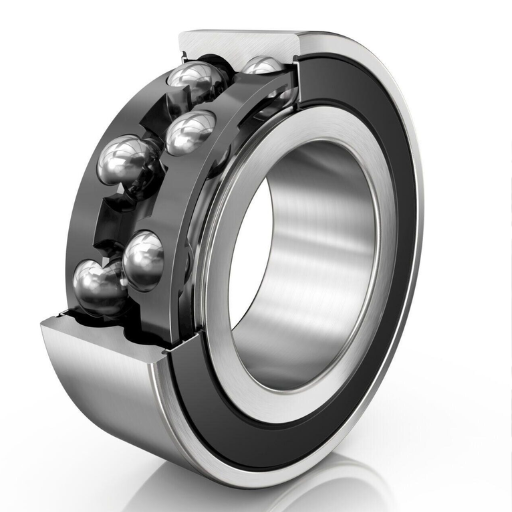
When choosing the right bearing for an application, it is very important to take into consideration the following three aspects:
- Load Type – Identify if the application has a predominately radial load, axial load, or a mix of both. If the load is purely radial, radial ball bearings will do well. However, for higher axial loads, angular contact or tapered roller bearings are much more effective.
- Operating Conditions – Take into account speed, temperature, and environmental conditions. For example, bearings used with high speed need to be more precise, while in harsh environments usually need sealed or shielded bearings to prevent contaminants from entering.
- Durability and Maintenance – Selected bearings should be aligned with the required maintenance and durability level. While some bearings require minimal maintenance and have a long lifespan, others need regular lubrication.
With proper attention to detail and using bearing manufacturer guidelines like the catalog, optimum operational bearings will be achieved.
Factors to Consider: Load, Speed, and Environment
In considering load, it is important to analyze radial and axial loads separately. Radial loads are applied perpendicular to the axis of rotation and axial loads are applied parallel to the axis of rotation. Each type of bearing has a given capacity for loading, and meeting the requirements of the application is critical for efficient bearing operation. For example, thrust bearings are more useful for significant axial load applications while spherical roller bearings are more useful for supporting high radial loads. Wrong selection will cause excessive wear and wasteful use of resources.
Another critical factor is speed since it also will change the required lubrication for the bearings. Speed also determines the type of lubricating oil used, with high-speed applications requiring light oils. high-speed applications like angular contact ball bearings use lighter more precise oils because they need less friction and cooler lubricating oil. More so, the type of bearing used also determines how fast the unit can spin and how much heat generated will be withstood, such as ceramic versus steel. Manufacturers usually state maximum performance and safety limits, and exceeding these is detrimental for both.
A combination of environmental conditions greatly impacts bearing performance, for example, overheating may dramatically impact lubrication viscosity and material strength. Special materials and coatings are utilized to fortify bearings against overheating in industrial ovens, for instance. Cold environments likewise require specific care, as cold-tolerant lubricants help mitigate the risk of seizure. Additionally, dusty or wet environments require sealed or shielded bearings that stave off contaminants that may cause corrosion and reduction of efficiency.
When working with proper manufacturers as guides, bearing selection can be optimized for reliable operation simply by balancing load, speed, and environmental factors. Bearings can be designed using advanced materials to accommodate even the most complex operational demands, which makes the provided options limitless.
Balancing High-Precision Needs with Cost
To ensure a balance between precision requirements and costs, combining the operational needs and financial limits of the application should be considered. The manufacturing costs of high-precision bearings and components are usually expensive due to the advanced materials, tighter tolerances, and innovative designs that they incorporate.
An analysis of the operational considerations, including load-bearing capacity, rotational speed, and environmental conditions, is equally fundamental. Take aerospace and robotics, for instance—the precision required is so great that the implementation of advanced options, such as ceramic or hybrid bearings, would undoubtedly have a drastic positive impact. Recent reports show that when compared to traditional steel alternatives, ceramic bearings can reduce friction by up to 50% which enhances efficiency, thus prolonging longevity. Still, these would have to be justified in lower maintenance and downtime during equipment servicing over the life cycle for the value derived from having lower maintenance expenses during servicing.
For less demanding applications, on the other hand, economic options tend to dominate the sphere. A hybrid approach that includes standardized solutions utilizing conventional materials provides lower reliability at a greater value optimally tailored for sectors with moderate precision demands.
Achieving balance includes in-depth cost-benefit analysis. Considering total lifecycle costs such as maintenance, operational efficiencies, and possible downtime ensures that the components selected meet performance standards and provide value that surpasses the investment made. Moreover, buoying some smart engineering with technical simulations also helps in optimizing the solutions eliminating over-engineering and reckless spending.
Exploring Various Types of Bearings and Their Benefits
Types of Ball Bearings
Due to their adaptability, ball bearings are among the most used bearing designs. They can support radial and axial load simultaneously. Ball bearings comprise spherical rolling elements that assist in minimizing the amount of friction arising from the contact of moving components. With low noise and high-speed operation, ball bearings are ideal for applications ranging from electric motors to conveyors and fans. Further technological changes have upheld their performance and durability, like the addition of heat-reducing and wear-resistant ceramic balls. Data suggests that in high-speed applications, the lifespan of ceramic ball bearings is nearly five times that of steel ones.
Types of Roller Bearings
Roller bearings (with cylindrical, tapered, or spherical rollers) have a greater capacity to sustain loads as compared to ball bearings and are particularly adept at sustaining large radial loads. For instance, tapered roller bearings are widely used in automotive hubs and industrial machinery because of their ability to efficiently handle thrust and radial loads. The figure of their usage is augmented with the recent reduction of the wear rates and improved energy efficiency offered by the polymer-coated rollers due to the reduced rolling friction of these bearings.
Thrust Bearings
Thrust bearings are custom-made to accommodate axial loads only. They are present in automotive systems such as the transmission and steering, to aid free spinning and balance. Modern thrust bearings now incorporate newer materials, such as composite polymers or thrust bearings which are high-grade steel. Available data suggests that the usage of these materials has increased the thrust bearings ‘ bearing capacity by up to 30% as compared to previous designs. This proves thrust bearings are now more reliable and cheaper under demanding conditions.
Needle Bearings
Needle bearings are a type of roller bearings that have a longer slender shape. This makes them suited for high loads while saving space. Their compact construction makes them beneficial in places with minimal fitting space, like gearboxes, pumps, and compressors. Other areas that benefit from advanced treatment of more of the components which include careful cutting and heat treatment of parts also result in an improved performance of 15%, adding increased durability and reduced maintenance for customers.
Magnetic Bearings
The use of magnetic bearings is a step forward in bearing technology. It employs the use of magnetic fields to suspend the load, eliminating mechanical contact which decreases wear and extends service life. These types of bearings are slowly being adopted by operators of high-speed turbines, in aerospace, and other fields because of their zero-friction operation. The addition of active magnetic control further increased reliability, although studies indicate traditional mechanical bearing systems incur 50% more maintenance costs.
Plain Bearings
Plain bearings, or bushings, are often used in low-speed, high-load applications like construction and other machinery. They feature a simple structure without rolling elements. The use of self-lubricating materials, such as polytetrafluoroethylene (PTFE), has improved their performance by lowering friction and without the need for lubricant. This makes these advancements have nearly doubled in operational lifespan and reduced downtime in industrial usage.
Spherical Bearings
Spherical bearings manage angular misalignment for oscillating applications, such as hydraulic cylinders or joints on heavy machinery. Today’s spherical bearings use advanced surface coatings and seal designs to prevent contamination, ensuring smoother operation. Research indicates modern designs have a 20% greater load-handling capacity than older models.
Knowing the features and advantages of various bearing types enables an engineer or designer to make informed decisions that match the needs of their applications and improve productivity while minimizing operational costs over time.
Reference Sources
-
Investigation of Drag and Churning Losses on Tapered Roller Bearings:
- Explores drag and churning losses in various bearing types, including deep groove ball bearings and angular contact ball bearings.
- Highlights differences in performance under specific operational conditions.
- Methodology includes experimental and simulation-based analysis of bearing losses.
-
Friction Properties and Distribution Rule of Lubricant Film of Full Ceramic Ball Bearing:
- Investigates the friction properties and lubricant film distribution in deep groove ball bearings.
- While primarily focused on ceramic bearings, it provides insights into lubrication performance that can be compared with angular contact bearings.
- Methodology involves experimental analysis of lubricant film behavior under varying conditions.
-
A Comparative Experimental Study on Fault Diagnosis of Rolling Element Bearings:
- Compares fault diagnosis techniques for rolling element bearings, including deep groove ball bearings.
- Focuses on acoustic emission and soft computing techniques for identifying faults.
- Methodology includes experimental testing with concealed deep groove ball bearings and analysis of diagnostic methods.
- View Deep Groove Radial Ball Bearings for sale – Amigo for More Details
Frequently Asked Questions (FAQs)
Q: What are the primary differences between deep groove ball bearings and angular contact ball bearings?
A: The key differences lie in their design and applications. Deep groove ball bearings are the most common type of rolling bearing and are designed to bear radial and axial loads in both directions. Angular contact ball bearings, on the other hand, are designed to bear radial and axial loads, but in one direction only, with a larger degree of contact angle, which allows them to handle higher axial loads.
Q: How does the outer ring groove affect the performance of deep groove ball bearings?
A: The outer ring groove in deep groove ball bearings allows them to accommodate misalignment and reduce friction. This design feature contributes to their versatility and efficiency in handling both radial and axial loads, making them one of the most common types of ball bearings used in various applications.
Q: What is the significance of the friction coefficient of the deep groove ball bearings?
A: The friction coefficient of the deep groove ball bearings is crucial in determining their efficiency and performance. A lower friction coefficient means the bearing can operate at higher speeds with less energy loss, making them suitable for applications requiring high-speed rotations.
Q: How does the contact angle affect the load capacity of angular contact ball bearings?
A: The contact angle in angular contact ball bearings determines the load they can bear. A larger contact angle increases the axial load capacity, allowing these bearings to support greater axial forces. Different contact angles are chosen based on the specific load requirements of the application.
Q: When should one use double row angular contact ball bearings?
A: Double row angular contact ball bearings are used when a single bearing is insufficient to handle the combined radial and axial loads. These bearings provide greater load capacity and rigidity, making them suitable for applications requiring both axial and radial load support with limited space.
Q: Are deep groove ball bearings suitable for high-speed applications?
A: Yes, deep groove ball bearings are suitable for high-speed applications due to their low friction and ability to handle both radial and axial loads effectively. Their design minimizes energy loss and heat generation, making them an ideal choice for various high-speed machinery.
Q: What are the typical applications of angular contact ball bearings?
A: Angular contact ball bearings are typically used in applications where both radial and axial loads need to be supported, such as in automotive, aerospace, and industrial machinery. They are ideal for precision bearings in high-speed and high-load scenarios.
Q: How do the two types of bearings compare in terms of load support?
A: Deep groove ball bearings can bear radial and axial loads in both directions, making them versatile for many applications. Angular contact ball bearings are designed to bear radial and axial loads in one direction, with the ability to handle higher axial loads due to their larger contact angle.
Q: Why are deep groove ball bearings considered a common type of rolling bearing?
A: Deep groove ball bearings are considered a common type of rolling bearing because they are versatile, cost-effective, and suitable for a wide range of applications. Their ability to bear radial and axial loads and operate at high speeds makes them a popular choice in various industries.
Q: What factors should be considered when choosing between these two types of bearings?
A: When choosing between deep groove ball bearings and angular contact ball bearings, consider the load type and direction, speed requirements, and space constraints. Deep groove ball bearings are preferred for applications with combined radial and axial loads in both directions, while angular contact ball bearings are ideal for high axial loads and precision applications.