


Bearings are crucial parts of many machines because they allow smooth movement and reduce friction. Deep groove ball bearings and standard ball bearings are two of the most commonly used types of bearings. At first glance, they might look alike, but differences in the two bearings can alter performance, efficiency, and suitability for the application. This article focuses on the most important differences between these two bearings to highlight their characteristics and assist you in making the right choice for your particular requirements. Engineers or not, the procedure of using bearings could be fascinating, and this blog would help all readers learn more about it.
What is a Deep Groove Ball Bearing?

Usually, a rolling-element bearing alongside other structures like a shaft is used to support radial and axial loads. This type of bearing is called a deep groove ball bearing. As the name implies, it includes an outer ring, an inner ring, a set of steel balls, and a cage that guarantees the correct spacing of each ball. The grooves are deep which gives the bearing an edge over ball bearings in terms of speed and load capacity. The result is faster operations with reduced loading. Deep groove ball bearings have applications in electric motors, household appliances, and automotive components. The main reasons are their efficiency, durability, flexibility and ease of use.
Characteristics of Deep Groove Ball Bearings
- High Load Capacity
Deep groove ball bearings are structured to bear both radial and axial loads simultaneously, which makes their application widely versatile. They provide consistent and reliable performance even when subjected to high operational loads. For example, certain bearings are designed with optimized structures and made from premium materials which enable them to sustain thousands of pounds of load depending on its size and type.
- High-Speed Performance
Deep groove ball bearings are capable of being spun at exceedingly high rotational speeds. Their frictionless motion provided by the precision-engineered parts in seamless alignment ensures no loss of motion and transfer of work, with some variants being able to exceed 30 thousand revolutions per minute (RPM).
- Low Friction and Energy Efficiency
The energy expended in the use of these bearings is more efficient due to the reduced energy consumption. The majority of modern deep groove ball bearings are produced with advanced friction-reducing lubricants, coatings, and other systems improving overall energy efficiency and lifespan.
- Durability and Wear Resistance
High-grade steel alloys used in combination with modern sealing methods give these bearings a formidable resistance to wear and tear. Some designs have been made specifically to endure destruction from extremely high temperatures, dust-clogged surroundings, or moisture inundations.
- Noise and Vibration Reduction
With the use of electric motors and equipment alongside precision machinery, deep groove ball bearings undergo fundamental alterations within their structure. These bearings enable devices to work with reduced noise and vibration levels, leading to the emergence of modern precision manufacturing processes.
- Standardized Dimensions
International organizations like ISO and ABEC have set forth standardized systems that provide a wide range of various sizes of deep groove ball bearings to meet the intended requirements. These standards ease the compatibility of the bearings within different machines and help facilitate their maintenance replacements.
Organized systems of proportions and specifications comprise other organizations, besides ISO and ABEC, having set educational institutions for deep groove ball bearings, the devices can be placed in various types of machinery for maintenance, or even changes and replacements to be done easily.
- Temperature Resistance
Modern constructions of primary deep groove ball bearings routinely incorporate heat-resistive components. The bearings effectively operate under unusually high physical environments that may go beyond 300°F (150°C) in specialized settings.
As explained, the reliability deep groove ball bearings offer various industries makes them the leading components that are widely dependable for numerous applications and confirm multidimensional uses.
Applications and Uses of Deep Groove Ball Bearings
Deep groove ball bearings have a wide range of applications across numerous industries, thanks to their versatile design, durability, and efficiency. Below is a detailed list of their common uses and areas of application:
- Automotive Industry
- Kew wheels, transmissions, and alternators.
Aid the smooth politics of critical box components in gearboxes and axles.
Endure high-vehicle speeds and variable loads in both passenger and commercial vehicles.
- Industrial Machinery
- An essential item in electric motors, pumps, and conveyor systems.
Support large-scale industrial machinery by relieving heavy radial and axial loads.
Possesses low-friction properties and is suitable for high-speed machinery.
- Household Appliances
- Used in washing machines, refrigerators, air conditioners, and fans.
Provides for quiet operation over the life of the unit while in a compact size.
- Aerospace Industry
- Engines, turbines, and control systems.
Expected to extreme temperatures whilst performing high demands.
- Medical Devices
- Supporting elements in imaging devices, surgical, and laboratory instruments.
Delivers precision for smooth movement in sensitive medical apparatuses.
- Agricultural Equipment
- Found in tractors, harvesters, and irrigational equipment.
Handles dirt, moisture and heavy loads in rugged working environments.
- Construction Industry
- Used in cranes, excavators and other heavy machinery.Geared towards withstanding difficult vibration and impact conditions.
- Marine Applications
- Located in navigational systems, propulsion systems, and onboard equipment.Corrosion-protected and operating in humid or saline environments.
- Renewable Energy
- Used in wind turbines and solar tracking systems.
Ensure reliability under fluctuating loads and harsh outdoor weather conditions.
- Sports and Leisure Equipment
- Used in bicycles, skateboards, and exercise machines.Movement withstanding high loads and prolonged use in Leisure equipment.
All of these applications show how versatile and useful deep groove ball bearings are in the life of modern civilization, technology, and industry. Their design is subject to changes to fulfill more and more complex needs from all kinds of spheres.
Advantages of Using Deep Groove Ball Bearings
The various advantages offered by deep groove ball bearings make them an important part of many industrial applications. Some of their key benefits are elaborated below.
- Versatility Across Applications
Because of the simple and effective design, deep groove ball bearings can take both radial and axial loads. This enables their usage in a wide range if applications such as automotive engines, home appliances, and several other industrial machinery.
- Low Friction and High Efficiency
These bearings are specially developed to have low friction which provides smooth operation and improved energy efficiency. For example, studies show that friction reduction in rotating parts can improve system efficiency by 30%, thus consuming lower power and enhancing operational life spans.
- Durability and Longevity
Deep groove ball bearings made out of good quality steel or ceramic have a considerable resistance to wear and tear, thus are highly durable. Some models are designed to operate reliably for tens of thousands of hours, even while running at high speeds or under heavy loads.
- Wide Range of Operating Speeds
Deep groove ball bearings are suitable for wide ranges of rotating speeds while still maintaining stability at those speeds. For example, the bearings in high-performance equipment can reach up to 100,000 RPM and thus, can be tailored for demanding applications.
- Compact and Cost-Effective Design
The deep groove ball bearings have low manufacturing costs which aid in budget-sensitive projects. Their minimal space consumption and maximum performance are beneficial to all types of machines.
- Ease of Maintenance
Deep groove ball bearings are low-trouble maintenance devices that best suit industrial work by saving time and money. A few of the sealed types come pre-lubricated which cuts out further maintenance altogether.
- Noise and Vibration Reduction
Machinery noise and vibrations greatly reduced with the use of these bearings. The added benefits are ideal for use in devices where vibrations and noise are unwanted, such as electric motors and household appliances.
The aforementioned listed benefits are formidable, however, the reliability and dependability of deep groove ball bearings are unmatched.
How Does a Ball Bearing Work?
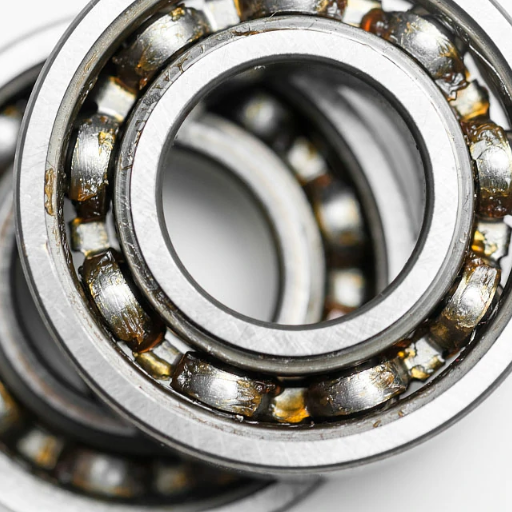
Ball bearings operate by placing smooth, spherical balls between two surfaces and reducing the friction between moving parts. The shaft makes the inner ring rotate, while the outer ring does not turn, or move in a different direction depending on the application. The balls roll in specially designed grooves which enables them to move smoothly while also managing the load uniformly. The design of most ball bearings ensures minimal wear and energy loss. This makes ball bearings efficient in supporting rotational or axial movement in various machines and devices.
Basic Structure of a Ball Bearing
A ball bearing primarily consists of four key components: the inner ring, the outer ring, the balls, and the cage or separator. The inner ring is fitted on a rotating shaft and is capable of turning, while the outer ring is usually mounted within a housing and does not turn, rotates freely depending on the application. The balls are put between those two rings and are made either of steel or ceramic. The spherical parts aid in smooth motion by ensuring that friction is minimal. Meanwhile, the cage positions the balls such that the spaces between them are equal. A further reduction in friction, and therefore wear, is accomplished by preventing direct contact between the balls.
Modern ball bearings are crafted to meet specific operational requirements and are classified according to their load-bearing capacity. A common example is the Deep Groove Ball Bearing (DGBB), which is now widely applied owing to its flexibility to support both radial and axial loads. DGBB’s enduring popularity can be attributed to the fact that they can withstand high speeds and are found in a wide range of applications from electric motors, to automotive parts, and household appliances. Studies show that nearly 80% of ball bearings used around the world are deep groove ball bearings. Angular contact ball bearings are equally efficient but are specifically tailored for use where there is a combination of radial and axial loading.
Advances in Material sciences developed the hybrid and ceramic ball bearings. The lightweight, increased hardness, and improved heat-resistance of ceramic balls in comparison to steel means that they can be used in high-speed and precision equipment such as aerospace systems or medical devices. Research shows that the use of ceramic bearings can increase the service life of the equipment by 40% relative to standard steel bearings. An equally important factor is the lubricant, where grease or oil is used to form a thin film that minimizes contact between the metals extending bearing life and therefore productivity.
From transportation and industrial gear to electronics and renewable energy, ball bearings are crucial to countless sectors. Their evolution continues to enhance the durability, energy efficiency, and operational reliability of bearing applications.
The Role of Radial and Axial Load in Ball Bearings
Every ball bearing is created to travel with relatively simple radial and axial loads. Radial load is the force slanting to the shaft which can either be weight or centrifugal force. Axial load is a force parallel to the shaft. Usually caused by thrust or pressure acting along the rotation axis.
Due to technological advances, ball bearings can now withstand both radial and axial loads at the same time. This combination increases the trustability of the part in many mechanical and industrial fields. For example, deep groove ball bearings are radial ball bearings with the highest radial load capacity, while angular contact ball bearings can take axial loads in large amounts. Other constructions like double-row angular contact bearings can work under simultaneous radial and axial loads of different magnitudes and directions.
Data indicates that the capacity of a ball bearing to manage these forces is impacted by the material’s strength, lubrication, and the precision of the manufacturing tolerances. For instance, in high-speed machinery, chrome steel and ceramic are some of the materials used because they are durable and resist deformation under heavy loads. New developments in material science and bearing design make it possible for modern ball bearings to withstand greater loads and longer service life, even in harsh conditions.
Ball bearings with these preset loads also require proper alignment, system temperature, and maintenance to perform optimally. Too much or too little alignment, auxiliary heat, or unserviced lubricants lead to lowered load-carrying capacity, increasing failure probability. But when properly maintained and paired with appropriate selection, ball bearings improve system efficiency, lower energy requirements, and provide dependable operation throughout numerous industries.
Common Ball Bearing Types and Their Functions
Ball bearings have many types, each one intended for a certain application and operational features. Given below are some of the most commonly used ball bearings with their corresponding features.
1. Deep Groove Ball Bearings
Deep groove ball bearings are the most popular type of ball bearings. Electric motors, household appliances, automotive components and all other applications require these bearings, as they enable rotary and axial movements. These bearings run efficiently in high speeds and do not need frequent maintenance. For instance, research shows that deep groove ball bearings that are well maintained can rotate over 15,000 rpm.
2. Angular Contact Ball Bearings
Angular contact ball bearings are best suited for combined loads involving axial and radial forces at the same time. They are widely used in high-speed applications such as machine tool spindles and pumps. Single-row angular contact bearings can support thrust load in one direction whilst double-row designs add stability. Due to their construction, they can survive heavy loads and temperatures exceeding 300°F.
3. Self-Aligning Ball Bearings
Self-aligning ball bearings work well with applications with shaft or housing skewing, or shaft misalignment. The bearings possess an outer ring with a spherical raceway that enables the inner ring together with the balls to self-align. The agriculture and the paper manufacturing industries make use of self-aligning ball bearings self-aligning because of their durability and resiliency in variable conditions.
4. Thrust Ball Bearings
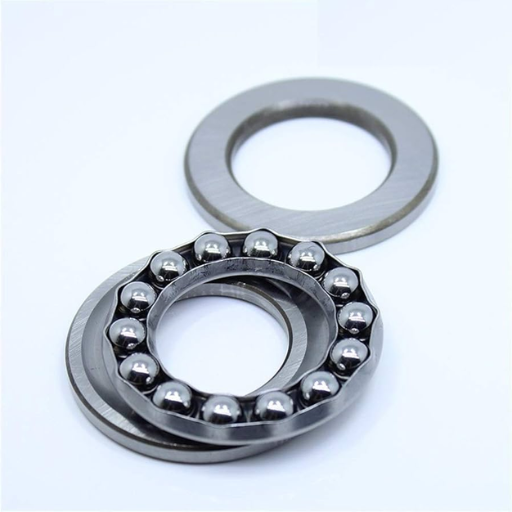
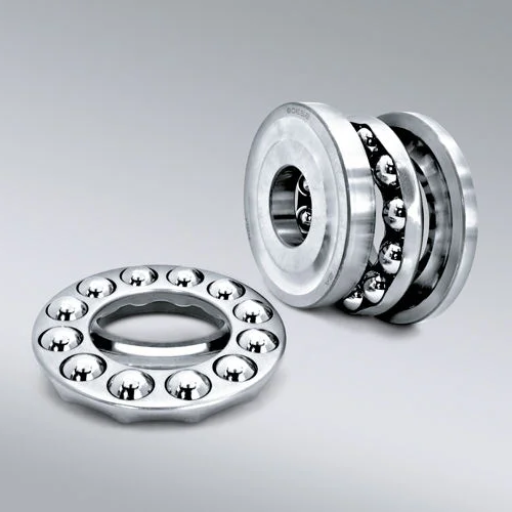
Thrust ball bearings are used to support high axial loads at low speeds. They can be seen in the automotive steering systems, crane hooks, and gearboxes. These bearings comprise a washer-shaped raceway used for smooth and axial operation under static or oscillating loads.
5. Miniature Ball Bearings
Miniature ball bearings are used for critical space and weight applications where their performance is exceptional. They are embedded Within medical instruments, robotics, electronics, devices, and more. Miniature ball bearings deliver precise performance in compact designs with outer diameters of 1mm. These bearings are lightweight but strong relative to their size.
6. High-Temperature Ball Bearings
High-temperature ball bearings are designed to withstand the effects of heat in places like furnaces or chemical processing plants. Made with distinctive materials like ceramic or stainless steel, these bearings demonstrate reliable operation at temperatures exceeding 500°F and still retain remarkable durability as well as reduced maintenance intervals.
Choosing the right type of ball bearing is critical for application optimization to reduce costs and downtime. By learning the distinct features and benefits of each bearing, industries can improve system reliability.
Comparing Deep Groove Ball Bearings and Ball Bearings

Deep groove ball bearings can perform with radial and axial loads simultaneously. With greater efficiency, they maintain high operational effectiveness. Their configuration incorporates deep raceway grooves for high speed, deep load distribution, and effortless structural support. However, ball bearings are a broad category that includes bearings designed for different applications which include: angular contact, thrust and self-aligning bearings.
The difference marks versatility. Other types of Deep groove ball bearings are not customized for different load and alignment factors. Other types of ball bearings do. They are specialized for distinct load factors and alignment specifics. Their selection is made based on precise requirements. Deep groove bearings are best under conditions where high-speed operations and simple load control are prerequisites.
Key Differences Between Deep Groove and Other Ball Bearings
- Load Handling Capabilities
Although deep groove ball bearings are radially loaded optimally, they can also handle some amount of axial load. Angular contact ball bearings have a greater capability to receive axial loads and are ordinarily placed single or in pairs to accept oppositely directed loads. This class of bearings is used where higher thrust is necessary, for example in the spindles of machine tools, thrust bearings are more appropriate.
- Alignment Flexibility
Self-aligning ball bearings can neutralize misalignment due to shaft deflection and mounting error while deep groove ball bearings require perfect alignment. This characteristic makes self-aligning bearings most preferable for applications with alignment issues, for example, paper mills or conveyor belts.
- Speed Performance
Friction and design factors contribute to the effortless rotation characteristic of deep groove ball bearings hence their high speed capabilities. In comparison to thrust ball bearings which are good at absorbing axial loads but tend to underperform at high speeds due to their geometric designed shape which is load-centric.
- Durability and Maintenance
Deep groove ball bearings are usually simple in design and require little to no maintenance, granting them a long lifespan in general-purpose applications. In comparison, the use of ceramic hybrid ball bearings, which have steel rings and ceramic balls, excels in durability and heat resistance within harsh environments like high-speed motors and aerospace equipment.
- Applications and Use Cases
Due to the versatility of deep groove ball bearings, they are commonly found in day-to-day machines, household devices, and automotive systems. Other specialized ball bearings, however, like four-point contact bearings are set aside for specialized industrial applications such as robotics or turntables where accurate axial and radial load distribution to be applied is crucial.
Deep grooves and other types of ball bearings differ greatly, which is why knowing the load conditions, speed parameters, and operating environment is key in achieving optimal performance and life cycle.
Performance in Radial and Axial Direction
Ball bearings can generally accept radial and axial loads simultaneously, but the splits of these loads may affect their operation. Using the example of a deep groove ball bearing, it performs best when predominantly radial loads are applied, although some moderate overt axial loads can be supported due to its structure. These bearings, therefore, find application in electric motors, pumps, and other household appliances.
For greater demands involving axial loads, angular contact ball bearings are more appropriate because they are built to withstand high axial loads in one direction. Typical applications include high-speed turbines, machine tool spindles, and automotive gearboxes where precision and axial alignment stability are essential. Data from industry studies indicates that it is not uncommon for angular contact ball bearings to support three times greater axial than radial load, bearing some specific configurations.
The performance of the bearings in combined load scenarios—when both radial and axial forces are applied simultaneously—depends greatly on the contact angle of the bearing. For example, angular contact bearings with larger contact angles tend to be better in coping with greater thrust loads for slower rotational speeds. Dynamic load ratings per bearing which measure the capacity of the bearing at different speeds and combinations of loads with offers for different operational requirements are already done by some suppliers.
When to Choose a Deep Groove Ball Bearing Over Other Types
The versatility of deep groove ball bearings makes them one of the most commonly used bearing types. They excel in scenarios with both radial and axial loads, even at high speeds. Their basic construction consists of a series of deep raceway grooves that facilitate low friction while performing at demanding workloads.
Durability is one of the most important criteria to be considered in high-speed applications and deep-groove ball bearings meet this criteria. Industry data suggests that under specific arrangements up to 37,000 rpm may be rotationally achieved if constructed from grade II materials and properly lubricated, making these bearings preferable for electric motors, home appliances, automotive systems, etc.
Moreover, their low servicing needs and efficient operation with limited lubrication give them an advantage in situations where frequent servicing is impractical. For instance, sealed deep groove ball bearings are designed to keep contaminants such as dirt and moisture out, making them ideal for harsh or unpredictable environments.
Another consideration is restricted space. Deep groove ball bearings are lightweight and compact, which is ideal for applications with limited space, such as robotics or miniature machinery. For example, in small electric fans, these components help maintain consistent performance while minimizing energy consumption due to reduced size and friction loss.
Finally, these bearings are affordable and achieve dependable performance over prolonged use. This advantage makes them popular across several industries such as manufacturing and renewable energy systems. Providing a proper selection based on load, speed, and operational environment renders deep groove ball bearings essential for applications demanding efficiency and long-term reliability.
Exploring Deep Groove Radial Ball Bearings

Deep groove radial ball bearings are the most frequently employed type of bearing due to their effectiveness and flexibility. These bearings are primarily meant for radial loading; however, some axial loading in either direction can also be accommodated. Their design is rather simple, comprising an inner ring, an outer ring, a ball set, and a cage, giving them a robust yet ‘easy to care for’ construction as well as a long life. Because of these features, these bearings can be used in high-speed applications and are common in the automotive industry, household appliances as well as machinery. These bearings are quite reliable and have a low friction performance.
Understanding Radial Load in Bearings
In simplistic terms, radial load is the mechanical force acting perpendicular to the rotating axis of a bearing. For reliable operation of the bearing, this form of load should also be considered from the performance and life span perspective. Ball bearings are made specifically in a manner that enables them to deal with radial loads without much friction.
The ability of a bearing to endure radial loads is characterized by its dynamic and static load ratings. The dynamic load rating represents the upper limit of the load that can be imposed on a rotating bearing without shortening its operational life. The static load rating, on the contrary, states the maximum load that a stationary bearing can support without sustaining irreversible structural changes.
As an example, small bearings with a 20 mm outer diameter will generically withstand dynamic loads between 5-10 kN (kilonewtons), while many other larger, industrial bearings can withstand well over 100 kN. The range demonstrates the breadth of their applicability from lightweight to heavy-duty machinery. Their reliability is further boosted by modern materials and exacting construction which increases the bearings’ load-bearing capabilities.
To avoid performance inefficiency, excessive wear, or failure, the appropriate selection of a bearing with radial load capability is essential. Moreover, speed, lubrication, and operating environment also impact the actual loadable bearing utilization during its lifetime.
The Function of Deep Groove Radial Ball Bearings in Machinery
Deep groove radial ball bearings have a significant impact on numerous machinery applications in order to support the shaft rotating freely with minimum friction as well as wear and tear. They can withstand radial and axial forces which makes them useful in electric motors, conveyors, fans, pumps, automotive components, and more. Their construction is straightforward, yet powerful which provides reliability under various operational conditions.
The advancement of material science has developed new methods on how to improve the performance of deep groove radial ball bearings. The addition of ceramic or hybrids increased the plate’s ability to resist heat and perform well, allowing for optimal functionality at high speeds. Furthermore, the modernized seals now offer improved protection from dust and loss of lubricant, leading to an increase in service life.
Research indicates that contemporary deep groove radial ball bearings are capable of coping with loads of several thousand pounds relative to their size and design, alongside specialized applications with rotational speeds exceeding 10,000 RPM. Optimal lubrication is still a major factor since it can improve torque, energy efficiency, and operational noise by as much as 30% even when under high-stress conditions. These are some of the many innovations manufacturers are looking to incorporate to meet the growing demand for performance and reliability in commercial and industrial machinery.
Differences in Deep Groove Radial Ball Bearing Arrangement
Construction and design features of deep groove radial ball bearings differ greatly in efficiency and address specific applications and performance needs. Generally, these bearings are split into groups according to internal configuration, load capacity, and sealing arrangements.
Single-Row vs. Double-Row Bearings
Still, the most popular type is simple single-row deep groove ball bearings which efficiently multitask both axial and radial loads (moderate) while rotating at high speeds. For applications with greater radial load demands, double-row deep grove ball bearing serves as a better solution due to more efficient load distribution with the extra row of balls.
Sealed and Shielded Variations
Contained bonded to one or both sides of the bearing, ribbon shields, and even metals restrict the entrance of dust and moisture. This makes sealed-shaped bearings ideal for rugged and adverse environments. Shielded bearings, made using metals, give moderate protection against contaminants while providing high rotational areas but do not contain dust as efficiently.
Standard vs. Expanded Internal Clearance
Bearings with standard internal clearance high temperatures relations are not ideal, but expanded clearance fits greater thermal misalignment. Expanded bearings are better in conditions exposed to high temperatures or when significant shaft deflection is expected.
Load and Speed Ratings
According to industry specifications, deep groove ball bearings can typically operate with radial loads of up to 40% of their rated capacity, while operating at over 70% of the speed the manufacturer lists as “limit”. Advanced engineered bearings, featuring optimized material and design, have further increased these limits.
There is a constant improvement in design options within this class to achieve greater durability and longevity of the bearing while reducing maintenance costs. During arrangement selection, attention to load criteria, the environment, and operational speeds needs to be balanced for optimal performance.
How to choose the right ball bearing type
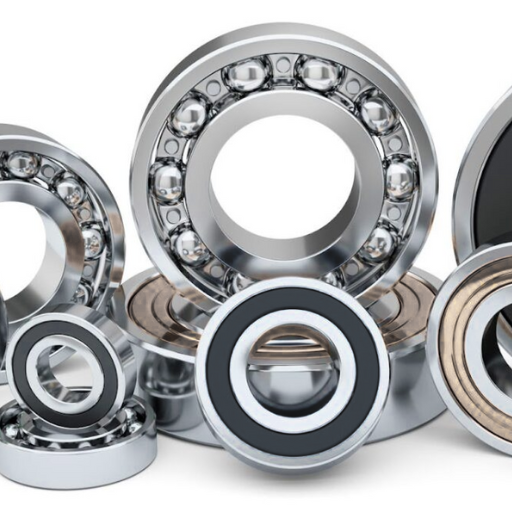
Before you make a selection, consider the following factors which are crucial in choosing the appropriate type of ball bearings:
- Load Type and Capacity: Identify how the load will be applied; is it radial, axial, or both? Pick bearings that can sustain the specified load and bear the load capacity.
- Operating Speed: How fast is the application? Deep groove ball bearings, for example, are generally used in high-speed applications because of their low friction.
- Environmental Conditions: What is the surrounding conditions such as temperature, humidity, and contaminants? Dirty and harsh environments call for sealed or shielded bearings.
- Space and Size Constraints: Confirm that the bearing dimensions satisfy the performance criteria while fitting into the design space.
- Predicted Life and Maintenance: Choose bearings with low maintenance requirements to increase dependability and long-term reliability.
- Cost and Availability: Balance performance and budget by selecting a bearing that meets all critical requirements without unnecessary features.
With these considerations in mind, you will be able to select the most applicable ball bearing type for your requirement.
Factors to Consider When Choosing a Ball Bearing Type
- Material Composition
The material of the ball bearing decides its performance and durability of it significantly. Bearings are usually made of chrome or stainless steel due to their strength and resistance to corrosion. However, increasingly popular for high-speed applications are ceramic ball bearings due to their lighter weight and lowered friction. For critical applications, a hybrid bearing consisting of steel races and ceramic balls is often used as it provides an optimal balance.
- Load Capacity and Type
Knowing what type and how much load the bearing will experience is important to understand. Bearings typically support three load types: radial, rotary (thrust), or a mixture of both. For mixed loads, deep groove ball bearings are the most suitable, while high axial loads are better handled by angular contact bearings. According to research data, deep groove ball bearings can bear static radial loads ranging from 2000-5000 lbs depending on the size of the bearing.
- Operating Speed
Rotary speed criteria have a direct impact on rolling bearing selection. Low friction features such as precision-grade bearings like tight tolerances, tailored speed lubrication, and designed for low friction greatly aid high-speed applications. Advanced bearing speed stability has been improved by as much as 40% due to enhanced operating temperature control.
- Temperature Tolerance
Bearings operating under extreme conditions require special materials and lubricants that can work within a broad range of temperatures. For instance, ceramic bearings stand intact at over 1,800°F, while steel bearings might begin to deform. Assess the operating environment’s temperature scope to guarantee the best performance.
- Sealing and Protection
Moisture, dust, and other external contaminants require effective sealing. Open, shielded, and sealed bearings are available, with sealed bearings providing the highest level of protection, although they do result in slightly reduced rotational speeds. Contamination remains the main culprit of over 70% of premature bearing failure, placing a strong emphasis on proper sealing techniques.
- Lubrication Standards
Maintenance becomes less frequent as modern synthetic greases allow extending lubrication intervals by 50% versus traditional mineral oils. To counteract friction, wear, and heat which directly shorten the lifespan of bearings, proper grease lubrication is vital, especially when stationary machines are involved. Oil, on the other hand, is better suited for high-speed environments.
- Precision and Tolerances
The needs of the aerospace and robotics sectors require precision-grade bearings such as ABEC-7 or ABEC-9 that can withstand extreme accuracy, enabling them to meet the tight tolerances needed. Additionally, their rotational capability is enhanced further under load due to smooth, vibration-free rotation facilitated by the strengthened design aiding in increasing the endurance and hindering the oscillations during the rotation.
- Environmental Impact
These days, sustainability matters even more than before. Eco-friendly bearing manufacturers prioritize the use of materials that can be recycled, energy-saving production methods, and designs that reduce waste at every stage of a product’s life. Choosing eco-friendly bearings helps reduce the environmental footprint.
Considering these factors enables the industry to purchase ball bearings that improve the performance of the equipment as well as reduce its downtime and operational costs over the equipment’s life span.
Comparing deep groove ball Bearings and Roller Bearings
Choosing between roller bearings and deep-groove ball bearings requires understanding the two types of bearing designs, their characteristics, and their applications. They are a kind of rotary bearing with a relatively simple structure, as they seat the balls in the grooves for the inner and outer rings. This enables them to take radial loads and moderate axial loads in both directions. Their most common use is in applications where high-speed rotation is required, like electric motors, household appliances, and automotive parts.
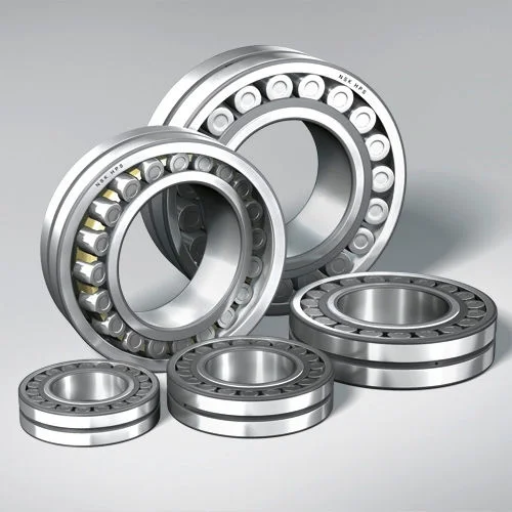
Roller bearings differ from the former in that instead of balls, they use cylindrical rollers which increase the area of their contact with thereway. This improvement makes roller bearings able to have greater radial loads than ball bearings. Because of their high strength and ability to withstand heavy loads, they are widely used in heavy-duty applications like conveyor systems, industrial machines, and construction machinery.
The speed ratings are another critical point of difference. The majority of deep groove ball bearings have higher speed ratings which makes them ideal for applications with high speed and low load; the minimal friction present between balls and raceways gives these bearings the upper hand. In opposition, Roller Bearings while having the ability to handle higher loads, operate at lower speeds because of the greater internal friction that comes from using surfaces with enlarged contact areas.
The research examines differences in endurance across conditions. For instance, roller bearings perform exceptionally in applications experiencing misalignment or shock loads because of their higher tolerance. Economically, deep groove ball bearings are often more efficient for standard applications and provide extended operational life under consistent radial alignment and radial load.
As such, the decision between these two bearings relies on the specific application needs, including but not limited to load type, operational velocity, and ambient environment. A thorough evaluation of such parameters enables industries to attain the desired performance and value with the selected bearing.
Understanding Ball Bearing Load and Radial Force
Ball bearings have been uniquely crafted to withstand various forms of mechanical stress, with the main ones being radial loads and axial loads. As indicated in the name, radial load is the force acting parallel to the cross-section of a shaft and axial load is the force operating parallel to the shaft itself. The design of the ball bearing, as well as the materials used in manufacturing it, and the lubrication used will all affect how a ball bearing performs under these loads.
Conventional ball bearings are made to deal with a more advanced scenario of combined loads. This means that radial and axial forces act at the same time, and it is very common in industrial and mechanical systems. An example to illustrate this is deep groove ball bearings which are fairly adept in the management of both types of load. Recent studies suggest that the load-carrying ability of these bearings is also dependent on the type and temperature of lubrication used. Bearings are very sensitive to operational speed too. When the speed is too high, the force application pattern changes which may result in overbearing wear if not appropriately managed.
There is evidence that optimal alignment along with sufficient lubrication can greatly increase the usable lifetime of ball bearings in high radial load settings based on the compression test performed. For instance, in standardized testing conditions, well-aligned bearings with proper lubrication outperformed their misaligned counterparts by over 50% when measured in time between failures.
Choosing ball bearings requires paying attention to the load direction, the magnitude of the load, and the operating surroundings. For operations under heavy load, or environments that require variable speeds, hybrid bearings that incorporate steel rings and ceramic rolling elements are suggested due to their decreased wear ratios and lower handling under many conditions.
Reference Sources
-
Investigation of Drag and Churning Losses on Tapered Roller Bearings:
- Explores drag and churning losses in various bearing types, including deep groove ball bearings and angular contact ball bearings.
- Highlights differences in performance under specific operational conditions.
- Methodology includes experimental and simulation-based analysis of bearing losses.
-
An Experimental Comparison of Permanent Magnetic Bearing and Deep Groove Ball Bearing:
- Compares the performance of deep groove ball bearings with permanent magnetic bearings.
- Focuses on parameters like friction, load capacity, and operational efficiency.
- Methodology involves experimental testing under controlled conditions to evaluate performance metrics.
-
The Measurement and Analysis of Ball Motion in High-Speed Deep Groove Ball Bearings:
- Investigates ball motion in high-speed deep groove ball bearings and compares it with theoretical models.
- Highlights discrepancies between experimental results and existing theories.
- Methodology includes high-speed testing and motion analysis of bearing components.
- If you are looking for more information about Deep Groove Radial Ball Bearings – Amigo go here right away
Frequently Asked Questions (FAQs)
Q: What is the difference between deep groove ball bearings and standard ball bearings?
A: Deep groove ball bearings are a type of ball bearing designed to handle both radial and axial loads with high precision. While standard ball bearings are typically used for lighter loads, deep groove ball bearings can bear radial “deep groove” loads due to their construction, making them suitable for higher-speed applications.
Q: How does an angular contact ball bearing differ from a deep groove ball bearing?
A: The primary difference between angular contact ball bearings and deep groove ball bearings lies in their load-bearing capabilities. Angular contact bearings are designed to handle combined loads (both radial and axial) but are optimized for higher axial loads due to their design, which allows for a greater point of contact on the bearing ring.
Q: What are the advantages of using a single row deep groove ball bearing?
A: Single row deep groove ball bearings are advantageous due to their high load capacity, ability to accommodate misalignment, and suitability for high-speed operations. They are versatile and ideal for applications requiring minimal maintenance.
Q: Why might one choose a double row angular contact ball bearing?
A: Double row angular contact ball bearings are chosen for their ability to handle higher radial and axial loads compared to single row bearings. They provide better stability and are often used in applications where space is limited, yet load requirements are high.
Q: What role does the bearing designation play in selecting the right bearing?
A: The bearing designation is crucial as it provides detailed information about the bearing’s type, size, and performance characteristics. Understanding the designation helps in selecting the appropriate bearing for specific applications, ensuring optimal performance and longevity.
Q: Can deep-groove ball bearings be used in high-speed applications?
A: Yes, deep-groove ball bearings are well-suited for high-speed applications due to their design, which allows for smooth operation, reduced friction, and efficient load handling. Their ability to bear radial loads makes them ideal for such environments.
Q: What are radial bearings, and how do they fit into bearing assemblies?
A: Radial bearings, including deep-groove ball bearings, are designed to support radial loads perpendicular to the shaft. In bearing assemblies, they provide support and facilitate the smooth rotation of components, making them essential in various mechanical systems.
Q: How do tapered roller bearings compare to deep groove ball bearings?
A: Tapered roller bearings are designed to handle both radial and axial loads but are more suited for heavy-duty applications, whereas deep groove ball bearings are preferred for light to moderate loads with high-speed operation. The choice between them depends on the specific load and speed requirements of the application.
Q: What factors should be considered when choosing precision bearings?
A: When choosing precision bearings, factors such as load capacity, speed requirements, bearing material, and environmental conditions should be considered. Proper selection ensures optimal performance, reliability, and longevity of the bearing in its intended application.
Q: Why might a bearing assembly fail, and how can this be prevented?
A: Bearing assembly failure can occur due to inadequate lubrication, improper installation, overloading, or contamination. Preventive measures include selecting the correct bearing type, following proper installation procedures, regular maintenance, and ensuring a clean operating environment.