


Deep groove radial ball bearings stands out as one of the critical mechanical components that integrate efficiency with flexibility and strength. These critical parts can be seen in myriad industries and applications, ranging from automotive systems and industrial machines to even household items. But what makes them so critical and how do they operate? This article seeks to explain the mechanics, advantages, and multiple applications of deep groove radial ball bearings to both enthusiasts and professionals. It doesn’t matter whether you are a professional engineer or just an individual interested in how modern technology works; this piece will shed some light on these mechanical wonders. So, let us examine what is their construction, how they operate, and why are they pivotal to numerous activities on the planet.
What is a Deep Groove Ball Bearing?
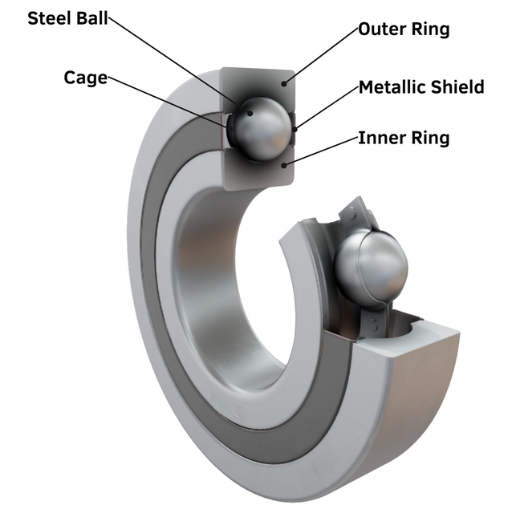
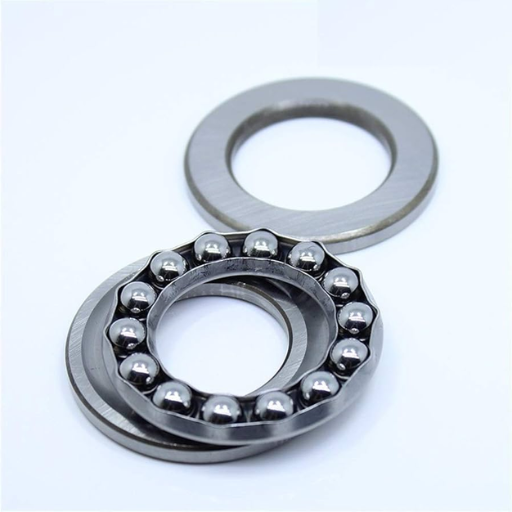
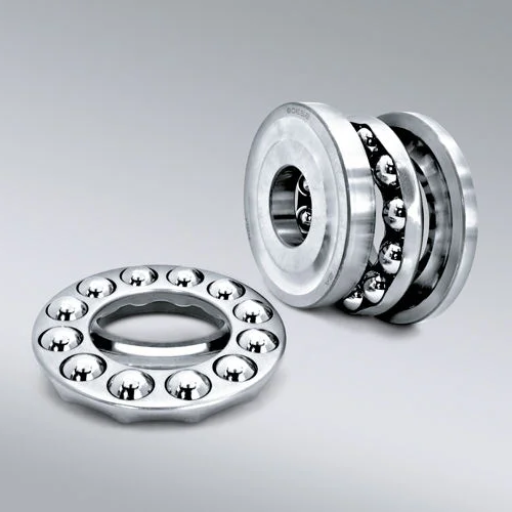
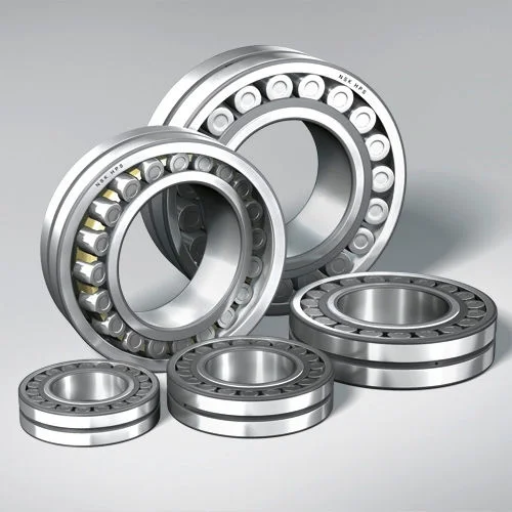
A deep groove radial ball bearing is a self-rolling element bearing that provides support for radial loads in both directions and axial loads in one direction simultaneously. It consists of an inner and outer ring, which includes a set of steel balls interspaced by a cage. The absence of frictional interfaces within the bearing allows friction to be minimized. These bearings find application in various fields due to their simple construction and high reliability along with speed and high durability. They are crucial parts of machines, home appliances, industrial equipment, and other devices.
Definition of a Deep Groove Ball Bearing
A deep groove radial ball bearing is one of the most common types of rolling bearings which is capable of radial and axial loads very efficiently. The deep groove ball bearing is referred to as “self-aligning” for more advanced types of balls because it has an inner and outer ring, steel balls, and a sleeved cage to ensure bearing rotation and ball spacing.
Deep groove ball bearings have become well known for their application versatility as well as their adaptability feature. They provide precisely engineered reduced friction and higher speed capabilities when compared to other types of bearings. The structure of this bearing allows for optimal contact and movement of the balls which increases load capacity.
Due to various industry needs, these bearings are produced in different specifications. For example, standard sizes range from 3mm to 600mm bore diameter based on the specific application. In certain applications with advanced lubrication, the bearings can operate more than 20,000 RPM. Furthermore, using specially designed high-carbon chrome steel or ceramic coupled with non-corrosive coatings enables longer operational periods.
From the automotive and aerospace industries to household appliances, deep-groove radial ball bearings are used in numerous applications. For instance, these bearings are central components in electric motors, transmissions, pumps, and conveyor systems owing to their strength and performance capabilities under harsh conditions. Moreover, improved sealing technology has greatly enhanced their reliability in terms of contamination and grease leakage.
Due to their performance, durability, and cost-effectiveness, these bearings remain indispensable to modern engineering. With constant advancements in design and materials, these bearings continue to serve as a critical solution for aligning the rotating components of machinery across the globe.
Key Characteristics and Features of Deep Groove Ball Bearings
- Simple Design: These bearings possess a unique and adaptable structure that guarantees effortless mounting and interfacing with diverse pieces of equipment.
- High Load Capacity: These types of bearings are deep grove radial balls and are able to bear both radial and axial loads making them ideal for heavy-duty uses.
- Low Friction: Its frictional losses are reduced which improves the operational efficiency and decreases the temperature on the bearings making it last longer.
- High-Speed Capability: They have high speed capabilities which makes them suitable for uses that need quick and steady movement as well as constant rotational speeds.
- Enhanced Sealing Options: Modern engineering incorporates additional protective seals or shields that block the entrance of dust, dirt, and moisture making these bearings more reliable in harsh operating environments.
- Quiet and Smooth Operation: These bearings provide the benefit of low levels of noise, and vibration, and exceptional rotational smoothness which is crucial for silence-sensitive applications and high-end precision machinery.
- Material Versatility: They are manufactured from the most reliable materials such as stainless steel and ceramic to respond to certain conditions and improve corrosion resistance.
- Standardized Dimensions: These bearings are made within certain criteria which makes them so accurate that they can be considered to be universal. This eliminates the need for modification and unification in various industries.
- Cost-Effective Solution: The ease with which deep groove radial ball bearings are installed, how effortlessly they can be maintained, and their lifetime makes them one of the best options in the market.
- Long Service Life: Their structural integrity, efficient lubrication, as well as lower friction, ensure continued performance and reliability over an extended period.
Applications and Uses in Various Industries
Deeper groove radial ball bearings are crucial components in various industries due to their multi-functional design along with their adaptability. Common uses of these bearings along with their branches are listed below:
- Automotive Industry
These bearings are integrated in the rest radial systems within wheels and electric motors. Some of these are electric, hybrid as well as traditional vehicles. Moreover, increased fuel economy along with reduced emissions are the benefits of electric vehicles powered by these bearings and motors due to low friction torque.
- Aerospace
They are installed in jet engines, landing gears, and other subsections. Adverse environmental conditions are taken into consideration with the help of innovative technology to improve material and design, specifically for deep groove bearings.
- Consumer Electronics
Bearings are also used in small electric motors of fans, washing machines, and air conditioners. The user’s experience is largely improved through the use of these bearings since they operate quietly, last for a long, and run at a high speed.
- Healthcare Equipment
Other medical devices like imaging machines and laboratory devices depend on deep groove bearings for quiet and accurate operation, free from vibrations which is essential for these medical devices.
- Agricultural Equipment
These bearings are essential to tractors, tillers and harvesters for smooth operations under high loads and also in dusty agricultural environments. This is required to enhance agricultural efficiency.
- Rail and Transportation
The radial ball bearings of the deep groove type, which are used in rail bogies and drive systems, must be capable of sustaining large loads effortlessly while enabling ease of maintenance and expanding the public transportation systems’ maintenance-free service intervals.
Through servicing these heterogeneous industries, deep groove radial ball bearings help achieve multifunctional adaptability which is highly sought after in global competition for efficiency, cost, and operational performance.
How Does a Deep Groove Ball Bearing Function?
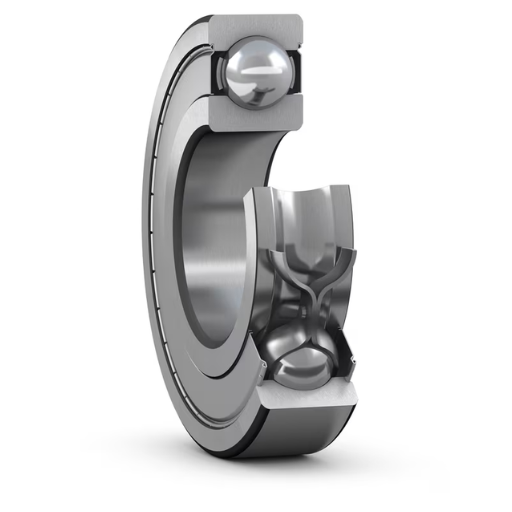
A deep groove radial ball bearing operates by supporting both radial and axial loads while reducing the friction between moving parts. The bearing has an inner ring, outer ring, balls, and a cage. For both the inner and outer rings, when a load is exerted, the balls rotate in the grooves of the rings; this results in even load distribution and also rotational facilitation. The cage maintains proper spacing and motion in the balls’ rotation. The construction allows the bearing to be operational at very high speeds with minimal damage and energy expenditure.
Principles of Radial Load Handling
Radial load handling is defined as the capability of a bearing to sustain loads perpendicular to the bearing axis, The radial load is vital for the functionality of ball bearings. Radial load processing efficacy is a function of material quality, the accuracy of the machining operations involved, and the bearing’s configuration. The modern ball bearing is designed so that radial loads are applied to the contact surface uniformly and therefore lowers the load on the bearing, prolonging its useful life.
For standard deep groove ball bearings, the radial load capacity is dependent on the bearing’s size and its application. Bearings range from a few hundred pounds for smaller bearings to several thousand pounds for industrial-grade models. The spatial distribution of loads on the balls and the raceway guarantees dynamic stability for long and frequent operations, even under high-speed or rapidly changing conditions. Heat dissipated as a byproduct of radial loads is further alleviated by modern lubrication methods, improving efficiency, effectiveness, and overall performance.
The application of high-grade steel and ceramic materials together with other designs has been proven through research and testing to significantly bolster radial load capacity by increasing strength and wear resistance. Improved innovations in bearing seals greatly aid the radial load by stopping debris damage while also providing adequate lubrication for smooth operation thus lowering failure risks. Ball Bearings develop into components that are crucial in devices after these advancements in design and technologies are implemented, in particular systems used in automotive engineering and industrial machinery.
Differences Between Radial and Axial Loads
Radial and axial loads are bearing system forces that put constraints on the use and selection of bearings. Radial loads are those which act tangentially to the axis of rotation. Ousting or pulling forces on a bearing’s face also attack radial loads. They are encountered in processes like conveyor rollers or wheel hubs wherein side-to-sided loads are prominent. This occurs as the overwhelming majority of forces are applied side-to-side relative to the center of the bearing. Formerly referred to as thrust loads, axial loads are those which act parallel to the axis of rotation. They are usually encountered in applications such as vertical pumps or screws, where push and pull work along the shaft’s long direction.
It is important to choose bearing units with balanced and controlled load distribution to minimize excessive wear and tear over time. For example, modern ball bearings have sophisticated designs and materials that enable them to handle both radial and axial loads. Bearings with deep grooves tend to have a higher radial load-carrying capacity because they have greater contact with the radial axle. Thrust ball bearings and angular contact bearings have a higher capacity for parallel loads and thus perform better for axial loads. Deep groove ball bearings cap radial load from 200lbs (90kg) to over 2000lbs (907kg) depending on dimensions and material while thrust ball bearings designed for axial loads support over 1500lbs (680kg) depending on design.
A clear understanding of the differences and correct bearing selection contributes significantly to accomplishing the desired improvement to fuel efficiency and reliability while controlling maintenance costs and associated expenses over time. Timely changes can be integrated for associated with higher efficiency without compromising the operational safety for high-speed and precision tasks.
The Role of the Outer Ring in Functionality
The outer ring of a bearing needs to ensure optimal performance and longevity of roadwork across different applications. It serves as the stationary part that interfaces with the housing or casing so that the inner ring or rolling elements can turn under load. The outer ring is often high-grade steel or even ceramics, and so these materials will impact its strength, wear, and durability.
For example, studies have shown that bearings with tailored geometries for the outer ring can lower friction by 30 percent. This is important from the energy savings point of view as energy is consumed and heat is generated. In addition, outer rings which are precision machined optimize the distribution of loads which is critical for some applications that experience radial and axial loads simultaneously. This is a highlight in high-speed machinery where the load imbalance causes vibration, and noise, and rapidly accelerates aging.
Recent developments have also looked at corrosion-protective outer ring coatings for specific bearings and performance requirements in extreme environments. As an illustration, in a humid or chemically aggressive environment, the lifespan of bearings can be extended by up to 50% with the use of nano-composite coatings. Enhanced manufacturing processes for the outer ring will improve reliability and efficiency for an increasing range of industries and mechanical systems.
What are the Different Deep Groove Ball Bearing Types?
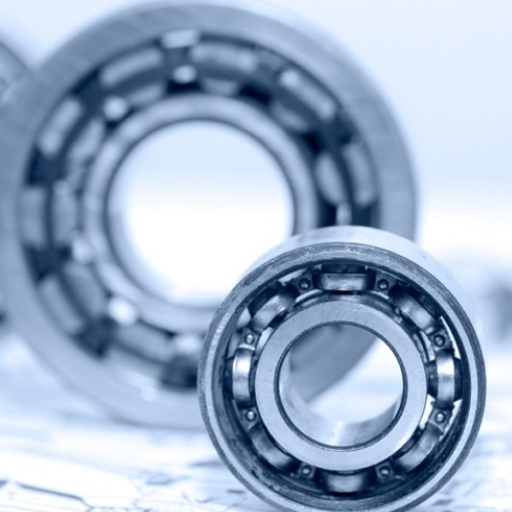
- Single-Row Deep Groove Ball Bearings
They are the most common and used types of ball bearings as they can effectively manage radial and axial loads. Their simple construction allows for high operational speeds.
- Double-Row Deep Groove Ball Bearings
They have more robust applications primarily because their design incorporates two rows of balls which increase their load-carrying capacity compared to single-row bearings.
- Sealed or Shielded Bearings
The operational life of these bearings is longer than that of the unsealed bearings because they can retain lubricant and withstand contamination from dust or moisture due to the provided seals or shields.
- Ceramic Ball Bearings
Their lightweight and resistance to heat and wear make them ideal for high-performance and high-temperature applications, especially ceramic ball bearings which are made of ceramics.
- Miniature and Instrument Bearings
Used in medical equipment, robotics, and instrumentation, these are some of the most focused and precision-engineered miniature bearings.
Comparison Between Single Row Deep Groove Radial Ball and Double Row Deep Groove Ball
1. Structure and Design:
Single row Deep groove radial ball bearings have one row of rolling elements and are made for simple and versatile applications. They can support radial and axial loads, but only within moderate limits. On the other hand, double-row deep groove ball bearings have two rows of rolling elements. With this item, load capacity is enhanced and this structural design makes double-row bearings more applicable to operations that require heavier loads compared to operations using single-row bearings.
2. Load Capacity:
The load capacity of the bearing affects directly the field of its application. Single-row deep groove bearings usually do the radial and axial work with the light to moderate range well. However, double-row bearings do heavy-duty applications as they are designed to bear about 1.5 to 2 times the load of single-row bearings of similar dimensions.
3. Axial Load Handling:
Both types can handle axial loads. However, single-row deep groove bearings are limited in this area. Double-row deep groove bearings are more efficient in this area because of their extra row of rolling elements which provides improved stability and higher efficiency in axial load handling in both directions.
4. Space Requirements:
Single-row bearings can be used in places with limited axial space owing to their compact size when compared to other bearing types. Double-row bearings are wider than single-row bearings, and although they take up more space, the performance they provide in applications where space is not an issue is far superior.
5. Limitations of Operation Velocity:
Single-row bearings tend to outperform the others in speed capabilities because of their simplistic structure. They also have the lowest friction of all options, double row bearings will outperform some applications, but when compared to single row, double row will always fall short because they are built stronger and have more balls.
6. Uses:
Single-row deep groove bearings are popular among manufacturers of electric motors, household appliances, and automobiles because of their low cost. Due to their better performance in load-bearing capabilities, double-row bearings are preferred in machinery with large workloads such as gearboxes, pumps, and heavy industrial machines.
7. Service Life and Servicing Requirements:
An individual’s lifespan is stated to be dependent on the load placed on it, its speed, and maintenance. Though both have been noted to have a rough servicing schedule, double rows tend to outlast others due to sharing the load better. Usually, it depends on the application and the working conditions.
8. Cost Efficiency:
For general purposes, single-row bearings are easier to obtain and purchase, which makes them cost-efficient. Although more expensive, double-row bearings are used in more demanding environments, justifying their cost for specialized applications.
This illustrates the need for appropriately choosing a bearing type concerning an application, which requires balancing the load requirements with available space, budgeting, and other considerations.
Understanding Angular Contact and Rolling Bearings
Angular Contact Bearings
Angular contact bearings are used in equipment that requires both axel and radial loads to be handled simultaneously. The speed at which the equipment is meant to work, radial loads, and combined loads, are determined by the design of these bearings. The contact angle, typically ranging anywhere from 15 to 40 degrees determines not only the angle within which the axial load can be maintained but also impacts other factors. Greater contact angles mean increased axial load support, while a smaller direction of approach could imply the limits on radial load support which would be expected to be low.
They can be found in equipment with high-speed functions such as machine tool spindles, pumps, and electric motors. Among the modern additions to ceramic rolling elements of these bearings is low friction which minimizes overall weight and increases efficiency. research suggests that these modern enhancements can increase the life of the bearing set by up to 30% in challenging settings.
Rolling Bearings
Rolling bearings make up one of the most common and universal types of bearings in use today. These bearings feature an array of interposed rolling elements like balls and rollers, placed within inner and outer rings for frictional reduction. These bearings can sustain substantial radial and axial loads. Ball bearing, cylindrical roller bearing, spherical roller bearing and tapered roller bearing are all examples with minor differences based on application and load bearing capacity.
Industry data suggests that cylindrical roller bearings are particularly popular with heavy-duty users such as those employing them in industrial gearboxes and wind turbines because of their superb durability and load-bearing capacity. Ball bearings, on the other hand, are popular for their operating precision and high speed for use in household appliances, automotive mechanisms, and precision instruments.
Both types of angular contact and rolling bearings require adequate lubrication and maintenance for efficient performance over a long period of time. Research indicates that the lack of ideal lubrication causes more than 50% of bearing failures, suggesting that constant monitoring and inspection along with the right lubricating oils tailored towards increasing life-spans make a difference.
Advantages of Standard Deep Groove Ball Bearings
Standard Deep Groove Ball Bearings have become one of the most versatile and common types of bearings used, giving a wide range of advantages for various applications. The straightforward structure of these bearings permits proper and efficient functioning, as well as, radial and axial load management with ease. Features deep groove bearings known for their ability to withstand very high speeds which makes them important in use cases such as electric motors, fans, and other similar machine components.
One of the important features of using deep groove ball bearings is the lower coefficient of friction. This directly translates to lesser energy wastage and heat produced while functioning. It has also been noted that Deep Groove Ball Bearings aid in improving energy productivity by up to almost 30% which is greatly favorable for the environment. Even during rough conditions, their life spans are well documented, especially with the right amount of high-quality lubrication which reduces the need to frequently replace them and considerably cuts down maintenance costs.
The bearings also minimize noise and vibration which along with the previously mentioned features, make them perfect for use in appliances and other sound-sensitive devices. Their sealed or shielded variants increase protection from contaminants like dust and moisture, improving dependability in difficult conditions. These features contribute to why Standard Deep Groove Ball Bearings are used across different industries ensuring high performance and durability.
How to Choose the Right Deep Groove Ball Bearing?
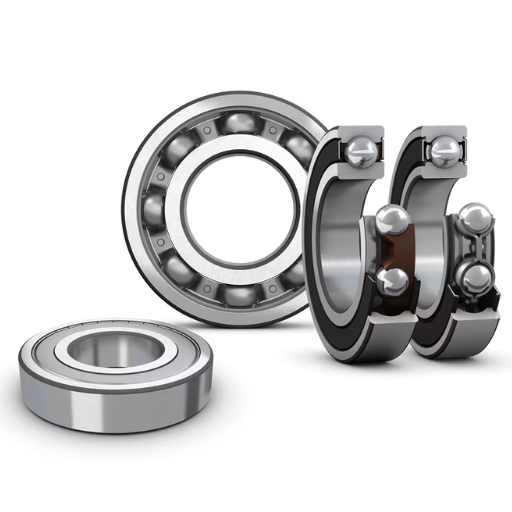
Choosing the correct deep groove radial ball bearing requires knowing exactly what your application needs. Check the following criteria:
1. Load Type and Capacity
Identify the kind of load the bearing has to support – radial, axial, or a mixture of both. Check the bearing’s load capacity and make sure it is in line with the expectations of your application.
2. Speed Requirements
Look at the speed limitations of the bearing and check if it will work well on the operating speeds needed in your setup.
3. Material and Durability
Assess the place of work – temperature, each, and the possibility of being contaminated. Seals and bearings materials should be tailored for such conditions.
4. Size and Fit
Check the bearing’s size and make sure it integrates with your assembly system without any functional issues.
5. Maintenance Needs
Maintenance-wise, go for pre-lubricated or sealed options if your application can afford it, otherwise, consider others.
After going through these points it should be easier to find a reliable deep groove radial ball bearing that will serve the purpose for a long period. Always remember to check the manufacturer’s specifications for further information.
Factors to consider in Deep Groove Ball Bearing design and selection
- Load Capacity and Distribution
Deep groove radial ball bearings can accommodate radial and axial loads simultaneously. Review the load limit specifications given by the manufacturer and check if they meet the minimum requirements of your application. As an example, single-row deep groove ball bearings usually offer sufficient support for moderate load applications but double-row configurations offer greater support and improved longevity.
- Material Selection
The inner and outer races, together with the balls used in the bearing, have an impact on the lifetime and performance of the bearing. For these purposes, standard designs use chrome steel which is hard and does not wear easily. In cases where the environment is highly corrosive, stainless steel or ceramic bearings are more suitable because they resist moisture and chemicals better.
- RPM and Temperature Ratings
Speeds and operating temperature have to be matched with the bearing to ensure proper functioning. Higher than recommended settings can result in functional problems or shortened lifespan. For machinery with high speeds of operation, focus on bearings with improved lubrication and heat treatment of components to avoid overheating. Some modern designed bearings can maintain smooth operation at more than 30,000 RPM depending on the specifications.
- Lubrication Systems
Bearing functioning correctly and lasting as long as possible both require thorough lubrication. Be sure to oil or grease the bearing according to its purpose. For minimal maintenance, choose convenience in the form of greased-for-life bearings. Higher performance or precision machinery may require periodically lubricated bearings. Consider extreme temperatures and environmental conditions when selecting lubricant.
- Sealing and Protection
Bearings with shields or seals protect against hostile pollutants like dirt, dust, and muck. In scenarios where there is exposure to tough environments, sealed bearings are more useful, while clean, controlled surroundings work better with open bearings. New seal constructions now further reduce bearing friction while protecting the bearing and retaining performance efficiency.
- Precision and Noise Levels
Rotating machinery used in precise tasks such as machining, robotic systems, and medical tools requires high precision. P2 and P4 grade bearings are recommended due to their enhanced accuracy. Appliances and office equipment need bearable noise levels, further adding to precision demands. Products meeting these requirements can be identified through certifications like ISO 492 or other quality standards which ensures specified precision demands.
- Environmental Considerations
The current industrial trends focuses more on eco-friendly designs. There is an increasing demand for bearings with greater energy efficiency, like those that have friction-reducing coatings or materials that provide a longer service life with less environmental damage. These considerations are crucial in sectors striving to meet their sustainability milestones or reduce energy consumption in operations.
Understanding these factors in detail will make you better prepared to maximize the selection of bearings while ensuring the application will meet the long-term reliability and performance requirements. Always validate your needs with the prevailing standards, industry practice, and ensure your needs against the information in the technical data sheets for best results.
Importance of Deep Groove Ball Bearing Arrangement and Type
The configuration and classification of deep groove radial ball bearings are essential in maintaining the efficiency and reliability of mechanical systems. These bearings are specially made to bear radial loads in addition to moderate axial loads in either direction, making them useful in the automotive, aerospace, and manufacturing industries.
Performance ranging from moderate to optimal requires proper arrangement. A perfect example is single-row deep groove ball bearings which are best fitted for space-constrained applications with high speed requirements due to their low friction and virtually quiet operation. On the other hand, double-row designs provide greater load-carrying capacity and are therefore suited for heavier-duty applications.
Industry research indicates that deep groove ball bearings are unmatched by others in terms of the load-to-size ratio. Deep groove ball bearings have geometric features that enable certain applications to achieve an astounding efficiency of 99%. Other data suggest that for maximum lifespan, bearings require lubrication as it reduce wear and operating temperatures. For instance, fully sealed bearings with integrated lubrication can outlast open versions by up to 50% in heavily contaminated environments.
Furthermore, picking the bearing materials with care improves performance within particular parameters. Steel bearings are usually made from chrome steel or stainless steel which are both corrosion resistant and durable. Additionally, hybrid bearings that use ceramic balls have lower rolling resistance, achieving speeds of 30 percent higher than conventional steel-based designs.
With the proper type and arrangement selection, the system can run with very little maintenance for a long time while delivering reliable mechanical performance, even under harsh conditions. These parameters along with routine checks, avoid breakdowns, lowers energy use, and increase equipment lifespan. All technical documents outline the design requirements, so adjust the arrangement to ensure that it meets operational criteria.
Evaluating Deep Groove Ball Bearing Loads and Sizes for Specific Applications
When choosing a specific deep groove radial ball bearing for an application, it is very important to carefully consider the load constraints, operational speeds, and the working ambient environment where the bearing will work. A bearing is meant to accommodate radial or perpendicular loads to the shaft true to bearing type, and also axial or thrust loads that are along the shaft length. It is also equally important to arrive at the equivalent dynamic load for applications needing a combination of both, lest the performance and service life suffer.
The bearing’s size and dimensions are some of the most crucial aspects of its load-carrying capacity. Take, for example, larger bearings which generally have higher radial and axial load capacity which makes them more suited for heavy-duty workings. On the other hand, smaller bearings are better suited to compact high-speed systems. Smaller bearings are also ideal for space-constrained applications. A bearing’s internal clearance, type of cage material, and lubricant used should also be finely tailored to fill the gap between requirement and application.
Standard deep groove radial ball bearings support speeds of roughly 5,000 RPM to 100,000 RPM depending on the design and material used. For more specialized needs, such as those facing high temperatures or corrosive attacks, some manufacturers provide high-spec versions with enhanced sealing, pre-lubrication, or components such as Stainless Steel and Ceramic.
Why are Deep Groove Ball Bearings Widely Used?
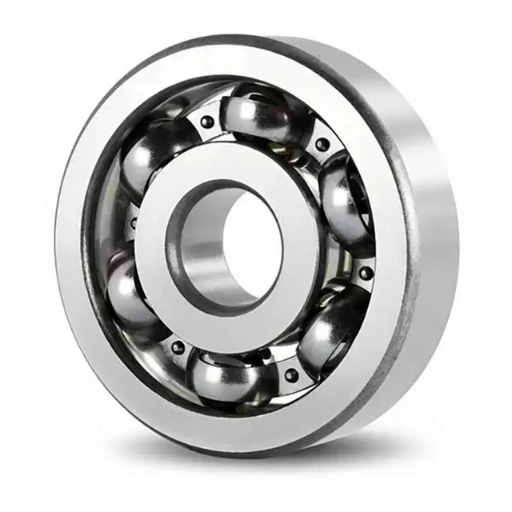
The high versatility of deep groove radial ball bearings applications alongside their efficiency, and durability make these parts widely used. They can handle both radial and axial loads which enables a wide variety of applications. Their simple design enables them to achieve high speeds with low friction which makes any motor operate smoothly and with minimum energy loss. Furthermore, dey groove ball bearings are simple to install, require little upkeep, and are inexpensive which makes them a favorable selection throughout various sectors from automotive to machinery and electronics.
Advantages and Benefits of Deep Groove Ball Bearings Over Other Bearing Types
Compared to other bearing types, deep groove radial ball bearings outperform others due to their design and features. They have one of the highest combined radial and axial load capabilities of any other bearing type, which enhances versatility. Additionally, they provide lower friction, making energy transfer easier and operational heat lower. This increases the life expectancy and the dependability of systems.
More recent advances in precision engineering and material science deepen these bearings’ reliability. Modern deep groove radial ball bearings can be made out of steel or even high-grade ceramic which increases their resistance to corrosion, extreme temperatures, and even wear. An example of this would be ceramic ball bearings which are lightweight and quieter than their counterparts, making them ideal for high-sensitivity rotating equipment used in medicine, aerospace technology, and other devices.
These bearings also possess the ability to be used effectively in both dry and lubricated conditions which aids industries that face maintenance or contamination problems. Alongside their flexible operational envelopes and resistance to contaminants, they also have low installation and maintenance needs, translating to reduced costs in large-scale manufacturing and continuous operation industries.
The studies and industrial data show that deep groove radial ball bearings have speed ratings up to 30% higher than those of cylindrical roller bearings or angular contact bearings of a similar size. This makes them preferred candidates for mounting in electric motors and in extremely efficient conveyor systems. Their compact design also allows for space-efficient integration, which is critical in modern machinery.
Deep groove radial ball bearings remain highly popular for a wide variety of industrial and commercial applications because they combine excellent efficiency extreme operational reliability and durability under heavy loads and harsh environments.
Durability and Performance in Various Conditions
Deep groove radial ball bearings are widely known for their capability to preserve performance within a wide spectrum of radial loads and speeds. The materials used in the construction of these bearings, such as chrome or stainless steel, offer exceptional toughness and resistance against wear and corrosion.
Advancements in lubrication technologies also contributed to improving the lifespan of deep groove ball bearings. For example, specialized lubricants enable smooth operation at elevated speeds and temperatures, providing stability in performance up to around 350°F (175°C). Also, well-sealed bearings eliminate exposure to external contaminants, which increases the lifespan and reliability in tough environments.
As noted in industry research, performance data confirms high and low-speed adaptability as well as the ability to withstand radial loads from a couple of pounds up to several tons while meeting the bearing’s dimensions and design. For small bearings, used in industrial machinery, certain rotational speeds exceed 10,000 RPM. Larger variants can also bear significant radial and axial loads in heavy-duty equipment like cranes and turbines.
The profound radial ball bearings’ features are critical in numerous industries such as automotive, aerospace and manufacturing because of their ability to maintain optimal performance even in harsh conditions. Their dependable and sophisticated engineering ensures minimized downtime, reducing operational costs while increasing productivity.
Cost-Effectiveness and Availability in the Market
Deep radial positive bearings, like all other types of ball bearings, are known for their reasonable price and availability which makes them economical for many industries. Their design is standardized which results in mass production and lower production costs without lowering quality. The value of the global bearings market is growing, and in 2022 it was approximately one hundred forty billion dollars due to the American automotive industry, the wind energy sector, and the industrial machinery market.
Leading manufacturers employ new innovative methods to aid cost efficiency without sacrificing quality. Their availability by local distributors, as well as global supply chains, guarantees access for businesses in high-demand sectors. Their accurate lifespan prediction coupled with low maintenance makes them appealing in the bearing market as they are multifaceted and cost-efficient.
Reference Sources
-
Friction Properties and Distribution Rule of Lubricant Film of Full Ceramic Ball Bearing:
- Examines the friction properties and lubricant film distribution in full ceramic deep groove ball bearings.
- Focuses on bearings made of silicon nitride ceramic material, highlighting their performance under different service conditions.
- Methodology includes experimental analysis of friction and lubrication characteristics.
-
Dynamical Modeling and Dynamic Characteristics Analysis of a Coaxial Dual-Rotor System:
- Analyzes the dynamic behavior of a coaxial dual-rotor system supported by deep groove ball bearings.
- Highlights the role of these bearings in ensuring stability and reducing vibration in rotor systems.
- Methodology involves dynamic modeling and simulation of rotor-bearing interactions.
-
Statistical Investigation of the Fatigue Life of Deep-Groove Ball Bearings:
- Investigates the fatigue life of deep groove ball bearings through statistical analysis.
- Addresses discrepancies in the ball-bearing industry regarding fatigue life predictions.
- Methodology includes long-term fatigue testing by multiple manufacturers.
-
A CFD Investigation of Lubricant Flow in Deep Groove Ball Bearings:
- Uses computational fluid dynamics (CFD) to study lubricant flow in deep groove ball bearings.
- Explores how bearing geometry and operating conditions affect fluid flow and lubrication efficiency.
- Methodology involves CFD modeling and analysis of two-phase oil flow.
- For more in-depth information you should view from Top Deep Groove Radial Ball Bearings Manufacturers in China – Amigo
Frequently Asked Questions (FAQs)
Q: What are single row deep groove ball bearings?
A: Single row deep groove ball bearings are the most commonly used type of ball bearings. They are designed to accommodate radial loads and moderate axial loads in both directions. They consist of an inner ring, an outer ring, a cage, and a set of balls.
Q: How do deep groove ball bearings support loads?
A: Deep groove ball bearings are designed to support both radial and axial loads. The design of these bearings allows them to handle a high level of radial load while also being capable of supporting moderate axial loads in either direction.
Q: What is the design of bearing arrangements for deep groove ball bearings?
A: The design of bearing arrangements for deep groove ball bearings typically involves considering the mounting space, load conditions, and operating environment. The bearings can be used in matched pairs or as single units, depending on the application’s requirements.
Q: How does the bearing designation system work for deep groove ball bearings?
A: The bearing designation system for deep groove ball bearings provides information about the bearing’s type, size, and design. It usually includes a series of letters and numbers that indicate the dimensions of single row deep groove ball bearings, as well as any special features.
Q: What are the characteristics of a single row standard deep groove ball bearing?
A: A single row standard deep groove ball bearing is characterized by its simple design, durability, and ability to support radial loads and moderate axial loads. These bearings offer excellent performance in a wide range of applications.
Q: How do you choose the right deep groove ball bearing for an application?
A: Choosing the right deep groove ball bearing involves considering factors such as load capacity, speed, bearing seat dimensions, and operating conditions. It’s important to select a bearing that matches the specific requirements of the application.
Q: What advantages do deep groove ball bearings offer compared to other types?
A: Deep groove ball bearings offer several advantages, including their ability to accommodate radial and axial loads, their versatility in various applications, and their relatively simple design, which allows for easy maintenance and installation.
Q: How are row deep groove ball bearings different from angular contact ball bearings?
A: Row deep groove ball bearings are designed primarily for radial loads and can handle moderate axial loads, whereas angular contact ball bearings are specifically designed to handle higher axial loads. The contact angle in angular contact bearings allows them to support greater axial forces compared to deep groove ball bearings.
Q: What role does the cylindrical bearing seat play in bearing performance?
A: The cylindrical bearing seat is crucial for ensuring the proper alignment and stability of the bearing within the housing. A well-designed bearing seat helps prevent misalignment and uneven load distribution, which can affect the bearing’s performance and lifespan.