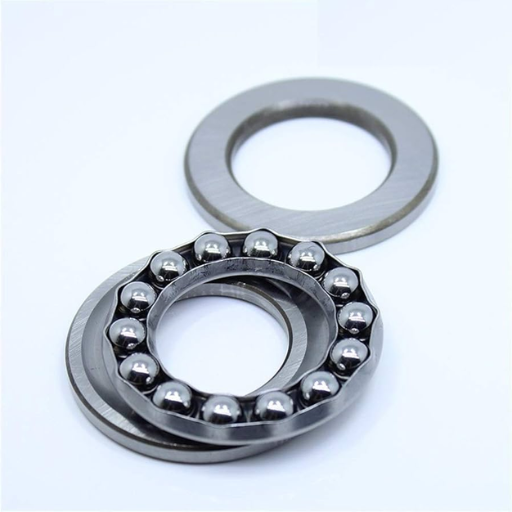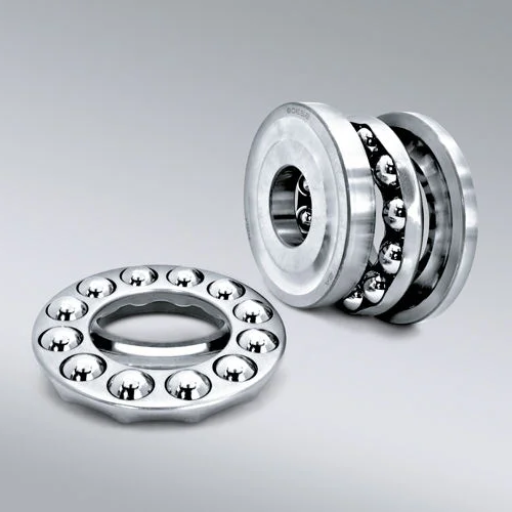
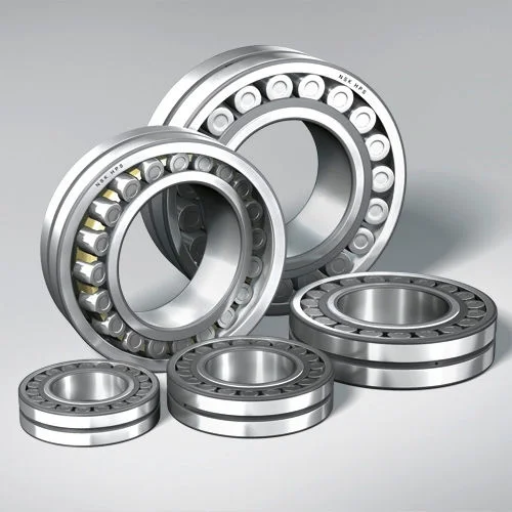



Bearings are critical components in mechanical systems, designed to reduce friction between moving parts and provide smooth rotational or linear motion. Among the many types of bearings available, radial and angular contact bearings are two of the most commonly used variations. This article provides a detailed comparison of these bearing types, examining their structural differences, operating principles, load-handling capabilities, and common applications. By understanding these distinctions, engineers and technicians can make informed decisions when choosing the appropriate bearing for specific machinery or operating conditions.
What Is a Radial Bearing?

A radial bearing is a type of rolling-element bearing designed to support loads that are perpendicular to the shaft’s axis, known as radial loads. These bearings consist of an inner ring, an outer ring, a cage, and rolling elements such as balls or rollers. Radial bearings are widely used in applications where high rotational speeds and minimal friction are required, such as in electric motors, automotive wheels, and industrial machinery. Their efficient load distribution and smooth operation make them essential for ensuring stability and performance in radial load-focused systems. If you are looking for more information about radial bearings vs. angular contact bearings go here right away
Understanding Radial Load
Key Factors in Understanding Radial Load
Radial load refers to the force exerted perpendicularly to the axis of rotation in a mechanical system. This type of load is the primary focus in components such as bearings, where it dictates the capacity of the bearing to handle forces applied at right angles to the shaft. The magnitude of radial load impacts the life span, efficiency, and functionality of these components and is critical in selecting the appropriate bearing type for a given application. Proper lubrication, material selection, and design considerations tailored to the required load capacity and operating conditions are essential for optimal performance and durability.
Applications of Radial Bearings
Radial bearings are utilized across a wide range of industries due to their ability to support radial loads effectively. Their primary applications include:
- Automotive Industry
Radial bearings are extensively used in vehicle wheel hubs, transmissions, and engines, where they accommodate high-speed rotations and variable radial loads. Key parameters:
– Rotational Speed: Up to 10,000 RPM (depending on design).
– Temperature Range: -40°F to 300°F (-40°C to 150°C), considering adequate lubrication.
- Industrial Machinery
Commonly implemented in pumps, motors, and conveyor systems, radial bearings support heavy-duty operations with sustained radial forces. Key parameters:
– Load Capacity: Ranges from 1,000 lbs to over 10,000 lbs (dependent on bearing size and material).
– Shaft Diameters: Typically 20 mm to 150 mm.
- Aerospace Engineering
Radial bearings in the aerospace sector manage high-performance conditions, including extreme temperatures and dynamic loads in engines and rotor systems. Key parameters:
– Operating Speed: Up to 25,000 RPM.
– Temperature Tolerance: -65°F to 500°F (-54°C to 260°C).
- Electric Motors
Widely employed in fan motors, generators, and small appliances, radial bearings enhance efficiency by minimizing friction. Key parameters:
– Radial Load Limit: 50 Newtons to 500 Newtons for smaller electric motors.
– Lifespan Expectancy: Approximately 20,000 operating hours with proper maintenance.
- Renewable Energy Systems
Radial bearings are critical in wind turbines and hydroelectric generators, where they handle cyclical radial loads and harsh environmental conditions. Key parameters:
– Load Capacity Per Bearing Set: Often exceeds 100 kN.
– Corrosion Resistance Coatings: Essential for prolonged exposure to moisture and salt.
Selecting the correct radial bearing depends on the application-specific requirements, including operational speeds, load capacities, and environmental factors. Accurate parameter evaluation ensures system reliability and long operational life.
Advantages of Radial Ball Bearings
- High Load-Carrying Capacity
Radial ball bearings are capable of handling both radial and axial loads efficiently, making them versatile for a wide range of applications. Typical load capacities exceed 100 kN, depending on the size and design.
- Low Friction Coefficient
Featuring a low friction coefficient (often 0.001–0.003), radial ball bearings ensure minimal energy loss, reducing heat generation and improving overall performance of mechanical systems.
- Durability and Longevity
With advanced materials such as high-grade bearing steel and corrosion-resistant coatings, these bearings demonstrate excellent wear resistance and extended service life, even in harsh operational conditions.
- Smooth Operation at High Speeds
Radial ball bearings are engineered to operate at high speeds, with some designs supporting rotational speeds exceeding 10,000 RPM, ensuring reliability in dynamic systems.
- Corrosion and Environmental Protection
Protective surface treatments, including zinc-nickel plating or polymeric coatings, provide enhanced resistance to moisture, chemicals, and electrolytic reactions, allowing usage in extreme environments.
- Versatile Design Options
Available in a variety of configurations (e.g., single-row, double-row, sealed or open designs), radial ball bearings can be tailored to specific mechanical and operational requirements to optimize system performance.
These technical advantages underscore the suitability of radial ball bearings for diverse industrial machinery, automotive components, and precision equipment applications.
What Is an Angular Contact Bearing?

An angular contact bearing is a type of rolling element bearing designed to support combined loads—where both radial and axial forces act simultaneously. Unlike radial ball bearings, angular contact bearings have asymmetrical raceways, which enable them to handle axial loads in one direction with greater efficiency. The contact angle, typically ranging from 15° to 40°, determines the load-carrying capacity and stiffness of the bearing. These bearings are commonly used in high-speed applications, such as machine tool spindles, pumps, and gearboxes, where precise axial and radial alignment is critical.
How Angular Contact Bearings Handle Load
Angular contact bearings handle load through their unique design, which incorporates angled raceways that facilitate the transmission of both axial and radial loads. The angle of contact, specified by the bearing design, determines the balance of load-handling capabilities; higher contact angles enhance the bearing’s ability to support axial loads, while lower angles improve radial load capacity. This makes them ideal for applications requiring simultaneous load management. Additionally, these bearings are often used in pairs or arrangements such as tandem, back-to-back, or face-to-face to accommodate bidirectional axial loads or boost overall system rigidity, ensuring optimal performance in dynamic, high-precision environments.
Applications for Angular Contact Ball Bearings
Angular contact ball bearings are widely utilized across various industries due to their ability to manage combined radial and axial loads, high-speed operation, and precision performance. Common applications include:
- Aerospace: Used in jet engines, helicopter rotors, and landing gear, where high precision and reliability under axial and radial loads are critical.
- Machine Tools: Essential for spindles, milling machines, and lathes requiring high stiffness and accuracy at high rotational speeds. Bearings with high contact angle configurations (typically around 25°-40°) are often employed for greater axial load support.
- Automotive Industry: Found in gearboxes, clutches, and wheel hubs to handle the dynamic forces of acceleration, cornering, and braking.
- Pumps and Compressors: These bearings ensure durability and performance under varying loads in systems requiring extended operational lifespans.
- Power Generation: Commonly used in turbines and alternators, where stability, long life, and resistance to extreme conditions are necessary.
- Robotics: Provide precision motion control and high rigidity in robotic joints and mechanisms to ensure accurate positioning.
Technical Parameters for Selection and Application
- Contact Angle Options: 15°, 25°, or custom angles for specific applications, balancing axial and radial load capacities.
- Material: High-grade steel or ceramic options for high-speed and high-temperature operations.
- Speed Capability: Grease-lubricated bearings typically operate at speeds up to 25,000 rpm, while oil-lubricated varieties can exceed 50,000 rpm.
- Load Ratings: Axial and radial load ratings vary by design but are typically specified between 5 kN to 150 kN based on the size and application.
Careful consideration of operating conditions, lubrication, and arrangement is essential to achieve optimal performance and longevity of angular contact ball bearings in any application.
Benefits of Angular Contact Bearings
Angular contact ball bearings offer numerous advantages in a wide variety of applications due to their unique design and performance characteristics:
- High-Speed Capability: Their optimized internal geometry allows for efficient performance at high rotational speeds. Grease-lubricated bearings can operate up to 25,000 rpm, while oil-lubricated options may exceed 50,000 rpm.
- High Load-Carrying Capacity: These bearings are designed to support both axial and radial loads simultaneously, with load ratings typically ranging from 5 kN to 150 kN, depending on the specific bearing series and size.
- Precision and Accuracy: Angular contact bearings with high precision grades (e.g., ABEC-7 or P4) minimize runout, making them ideal for applications requiring accuracy, such as CNC machines or robotics.
- Durability and Long Lifespan: When paired with proper lubrication and maintenance, these bearings are capable of withstanding significant stress, ensuring a long operational life even under demanding conditions.
- Compact Design: Their ability to accommodate combined loads while maintaining a smaller footprint makes them suitable for space-constrained designs.
These attributes, combined with material advancements like ceramic rolling elements or steel alloys, further enhance their application potential for industries such as aerospace, automotive, and manufacturing.
How to Choose the Right Bearing for Your Needs?
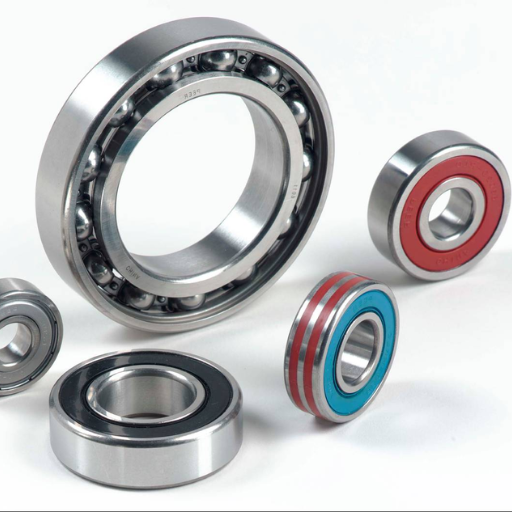
Key Considerations for Selecting the Right Bearing
- Load Requirements: Identify the type and magnitude of loads the bearing will need to support, such as radial, axial, or a combination of both. This ensures the bearing can handle the specific stresses of the application.
- Operating Speed: Evaluate the desired rotational speed. High-speed applications may require specialized bearings like angular contact or hybrid ceramic bearings for optimal performance.
- Environmental Conditions: Assess factors like temperature, contamination, humidity, and exposure to corrosive substances. Bearings with appropriate seals, coatings, or materials can mitigate environmental challenges.
- Lifespan and Durability: Consider the expected operational life of the bearing under typical usage. Ensure the material and lubrication meet the durability requirements of the application.
- Space Limitations: Determine the available installation space. Compact bearings, such as thin-section or needle roller types, are ideal for restricted designs.
- Precision and Tolerance: For applications requiring high accuracy, such as robotics or aerospace, select bearings with tight tolerances and precision-grade classifications.
By systematically evaluating these factors, you can identify the optimal bearing that aligns with your operational and performance needs.
Comparing Radial and Angular Performance
|
Parameter |
Radial Bearings |
Angular Contact Bearings |
|---|---|---|
|
Load Direction |
Primarily radial loads |
Radial and axial loads |
|
Axial Load Capacity |
Limited |
High |
|
Speed Capability |
Moderate to high |
High |
|
Misalignment Tolerance |
Good |
Limited |
|
Applications |
Motors, conveyors, machinery |
Robotics, aerospace, precision machinery |
|
Precision Levels |
Standard to moderate |
High precision |
|
Durability |
High under radial stress |
High under combined stress |
|
Installation Considerations |
Simple setup |
Requires proper alignment |
|
Cost |
Generally lower |
Typically higher |
Considerations for Axial Loads
When evaluating bearings for axial load applications, I focus on their capacity to handle unidirectional or bidirectional forces efficiently. Angular contact ball bearings are my go-to choice for significant axial loads due to their ability to support high thrust forces when combined with radial loads. However, their installation requires precise preload settings to ensure optimal performance and prevent misalignment. On the other hand, radial ball bearings manage light to moderate axial loads well but aren’t ideal for high-thrust scenarios. My recommendation always leans toward understanding the load distribution, speed requirements, and alignment conditions before making a selection, as these factors heavily influence performance and longevity.
Impact of Preload on Bearing Selection
Preload in bearings is a critical factor that directly impacts their performance, reliability, and service life. It refers to the predetermined force applied to eliminate internal clearance and ensure tight contact between the rolling elements and raceways. Proper preload is essential for applications requiring high precision, rigidity, and minimal vibration. However, excessive preload can lead to increased friction, heat generation, and premature wear, whereas insufficient preload may result in unwanted clearance and reduced operational accuracy.
Selecting the optimal preload requires a balanced approach, considering factors such as operating speed, load conditions (radial and axial), temperature changes, and desired longevity. For instance, angular contact bearings often operate with a defined preload to enhance stiffness and support combined loads, while deep groove ball bearings typically require minimal or no preload. Additionally, preload can be applied through methods like spring loading or axial adjustments during assembly.
Incorrect preload settings are a common cause of bearing failure, leading to misalignment, excessive noise, and reduced performance. To mitigate such risks, manufacturers often provide guidance on preload ranges tailored to specific applications. Regular monitoring and maintenance also help maintain correct preload throughout the bearing’s lifecycle, ensuring optimal functionality and extended durability.
What Are the Differences Between Radial Ball Bearings and Angular Contact Bearings?
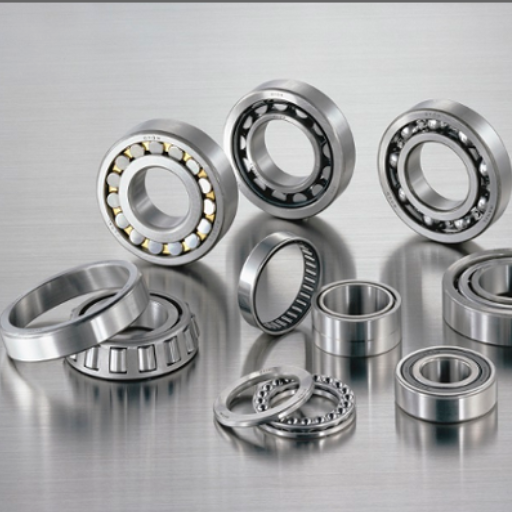
Radial ball bearings and angular contact bearings differ primarily in their design and load-handling capabilities. Radial ball bearings are designed to support primarily radial loads, though they can handle limited axial loads. Their geometry consists of deep grooves, which enable smooth rotation and are ideal for high-speed applications with minimal noise and vibration.
On the other hand, angular contact bearings are specifically engineered to handle significant axial and radial loads simultaneously. The inner and outer raceways of angular contact bearings are designed with an angular displacement, allowing them to accommodate axial forces in one direction. These bearings are commonly used in applications requiring high precision and rigidity, such as machine tool spindles and high-performance motors. Additionally, angular contact bearings often require specific preload settings to achieve optimal performance, whereas radial ball bearings typically do not demand such stringent configurations.
Performance Under Radial and Axial Loads
Angular contact ball bearings exhibit distinct performance characteristics under radial and axial loads due to their internal geometry and contact angle. These bearings are specifically designed to support combined loads, with their ability to handle axial loads increasing proportionally with the contact angle. For instance, a contact angle of 15° allows moderate axial load capacity, while a 25° or 40° angle significantly enhances axial load-handling capability.
Under radial loads, the load distribution within the bearing shifts to accommodate the angular contact geometry, leading to lower radial load capacity compared to standard radial bearings. To ensure optimal operation, it is critical to maintain correct preload settings, as insufficient preload may result in vibration and wear, while excessive preload can cause increased friction and heat generation.
Key Technical Parameters:
- Contact Angles: Common angles include 15°, 25°, and 40°, corresponding to varying axial load capacities.
- Limiting Speeds: Dependent on bearing size and lubrication, typically ranging from 3,000 rpm to over 30,000 rpm.
- Preload Settings: Light, medium, or heavy preload, depending on the application’s precision and rigidity requirements.
- Load Ratings: Specific to the bearing model, with dynamic loads often ranging between 10 kN and 100 kN.
Selecting bearings with appropriate specifications is vital for achieving durability and performance under combined load conditions.
Durability and Maintenance Needs
To ensure optimal durability, bearings should be selected and maintained based on operational parameters and environmental conditions. Key aspects to consider include:
- Lubrication Requirements: Proper lubrication is critical to minimize friction and wear. Depending on operating temperatures and speeds, use grease with a viscosity range of 15 cSt to 400 cSt at 40°C or oil systems with suitable additives and thermal stability.
- Seal Integrity: Effective seals prevent contaminants like dirt, dust, and moisture from entering the bearing housing. High-performance seals should sustain operating temperatures between -40°C and 120°C.
- Operational Life Expectancy (L10 Life): Bearing life can be estimated based on the L10 rating, calculated considering static and dynamic load ratings. A well-maintained bearing may achieve 50,000 hours of operation under nominal conditions.
- Inspection Intervals: Bearings should be inspected periodically for signs of pitting, spalling, or overheating. Standard intervals range from 3,000 to 10,000 operational hours, depending on the application.
- Alignment and Installation Precision: Ensure alignment within 0.01 mm to avoid uneven loading, which significantly reduces lifecycle performance.
By adhering to these maintenance practices and monitoring the technical parameters listed, the reliability and longevity of bearings under complex load conditions can be maximized effectively.
Common Problems with Bearings and How to Solve Them

Misalignment
Problem: Improper alignment during installation leads to uneven load distribution, excessive wear, and premature failure.
Solution: Use precision alignment tools and ensure proper installation within the recommended tolerances (e.g., 0.01 mm).
Insufficient Lubrication
Problem: Lack of lubrication causes increased friction, overheating, and expedited wear of bearing surfaces.
Solution: Implement a routine lubrication schedule using the correct lubricant type and quantity recommended by the manufacturer.
Contamination
Problem: Dirt, debris, or moisture ingress can degrade bearing performance and lead to corrosion or abrasive damage.
Solution: Install effective sealing systems, store bearings in clean environments, and handle them with care to prevent contamination.
Overloading
Problem: Bearing loads exceeding design specifications result in deformation or stress-related damage.
Solution: Conduct thorough load analysis and utilize bearings rated for the specific operational conditions.
Vibration and Noise
Problem: Excessive vibration and noise may indicate imbalance, misalignment, or internal bearing damage.
Solution: Perform vibration analysis to identify the root cause, address alignment issues, and replace damaged components as necessary.
By addressing these issues systematically, bearing performance can be optimized, minimizing downtime and promoting operational efficiency.
Identifying Bearing Failure
To identify bearing failure effectively, I focus on key indicators such as unusual noise, excessive vibration, elevated operating temperatures, and lubricant analysis. High-pitched squealing or grinding noises often signal wear or insufficient lubrication. Increased vibration levels typically point to imbalance, misalignment, or surface damage on the bearing elements. Elevated temperatures can indicate friction caused by inadequate lubrication or overloading, while analyzing lubricant for contamination or particle presence provides insight into wear. By systematically assessing these factors, I can diagnose issues accurately and take proactive measures to prevent further damage.
Preventing Torque Issues
To prevent torque issues, I focus on ensuring equipment is installed and aligned properly, since misalignment often leads to unnecessary strain and uneven torque distribution. Regular calibration and maintenance of tools that generate or measure torque, such as wrenches or motor systems, are critical to sustaining accuracy and performance. Additionally, monitoring load conditions and ensuring they stay within equipment specifications helps avoid overloading that could cause torque inconsistencies. I also rely on real-time data collection through sensors to identify anomalies early, enabling me to address potential issues before they escalate.
Reference Sources
- Radial Ball Bearings vs Angular Contact Ball Bearings – PIB Sales
- Radial Ball Bearings Versus Angular Contact Ball Bearings – GMN Bearing USA
- What’s the Difference Between Radial and Angular Contact Bearings? – Cane Creek Help
- What Are the Differences Between Bearings? – Koyo Bearings
- Deep Groove Radial or Angular Contact Bearings in Bottom Bracket – Bike Forums
Frequently Asked Questions (FAQs)
Q: What is the primary difference between radial and angular contact bearings?
A: The primary difference lies in their design and application. Radial bearings are designed to support a radial load, while angular contact bearings can handle both radial and axial loads in both directions.
Q: How do deep groove bearings fit into the discussion of bearings vs angular contact bearings?
A: Deep groove bearings are a type of radial bearing known for their ability to handle higher speed and support a radial load efficiently, whereas angular bearings are better suited for applications requiring support for axial loads in both directions.
Q: When are angular contact bearings a better choice over radial bearings?
A: Angular contact bearings are a better choice when the application involves both radial and axial loads, especially in situations requiring high precision and the ability to maintain alignment under heavy loads.
Q: What role do tapered roller bearings play in the context of bearings?
A: Tapered roller bearings are used in machinery where there is a need to handle heavy loads and side loading, offering a design that can manage both radial and axial loads effectively.
Q: How important is the right preload in angular contact bearings?
A: The right preload is crucial in angular contact bearings as it enhances their ability to maintain precision and extend their lifespan by reducing vibration and distributing the weight of the load evenly.
Q: Are there specific applications where radial bearings are preferred over angular bearings?
A: Radial bearings are preferred in applications where the load is primarily radial, such as in lower-speed machinery and simpler applications where axial loads are minimal.
Q: What are some common applications of angular contact bearings?
A: Angular contact bearings are commonly used in applications like mountain bike wheels, Shimano cranks, and other high-speed or high-precision machinery where axial loads in both directions are present.
Q: How do wheels manufacturing companies like Wheels Mfg utilize bearings?
A: Wheels manufacturing companies, such as Wheels Mfg, utilize bearings to ensure smooth rotation and durability in components like wheels mfg bb, focusing on precision and the ability to handle various load types.
Q: Why might an enduro mountain bike utilize angular contact bearings?
A: An enduro mountain bike might utilize angular contact bearings due to their ability to handle high-speed rotations and significant axial loads, providing stability and performance needed in rough terrains.
Q: Are spacers necessary when installing bearings in applications like Shimano cranks?
A: Spacers are often used to ensure the correct alignment and preload of the bearings, particularly in precision applications like Shimano cranks, where maintaining accurate positioning is crucial for optimal performance.