


The world of engineering and manufacturing enjoys taper roller bearings which are synonymous with durability, efficiency, and versatility. If you’re involved in automotive, heavy machinery, or any sort of industrial equipment, these bearings are ingrown to ensure smooth and reliable operation. But what makes them of such importance, and how can they augment performance in your applications? This guide explains what tapered roller bearings are, their uses, advantages, and their most important features. By the end, you will understand why these bearings are a widely accepted solution throughout various industries, and how they can improve your projects.
What Are Taper Roller Bearings and How Do They Work?
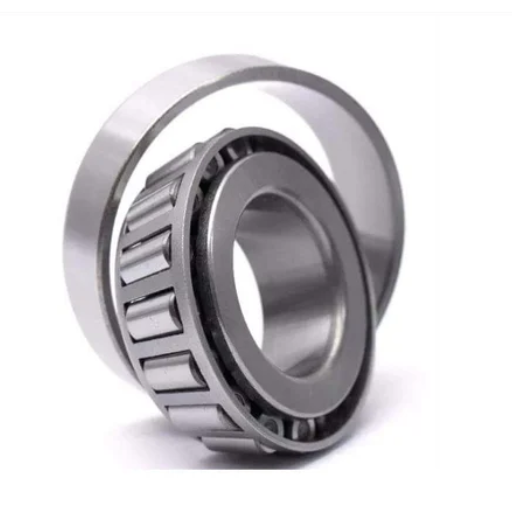
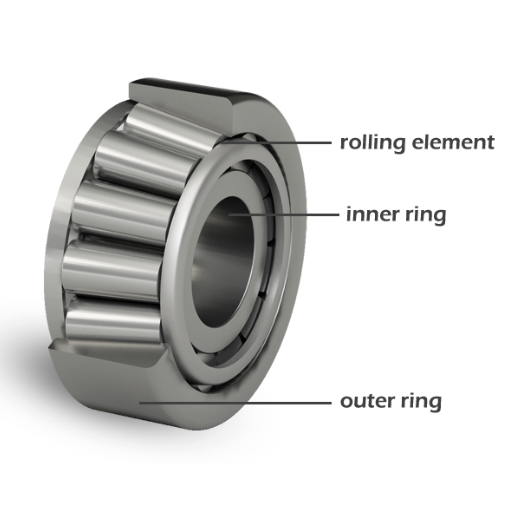
Taper roller bearings are rolling-element bearings that uniquely combine radial and axial load capabilities. Their tapered shape has an inner and outer ring with conical rollers sandwiched in between. Such construction is helpful to evenly distribute loads which makes these bearings ideal for high-load applications. Their efficiency along with their ability to withstand precise alignment and heavy loads makes them widely accepted in automotive, construction, machinery, and other industrial sectors.
Understanding the Tapered Shape and Its Importance
The specially tapered shape of these bearings is key to their performance. The bearing can uphold radial and axial loads simultaneously because the conical rollers are set at an angle. This design mitigates numerous stresses and strains on the parts, greatly minimizing the likeliness of deformation or even wearing due to intense pressure. For instance, some research suggests that tapered roller bearings support radial loads up to 20% more than many cylindrical bearing designs. This makes them extremely useful in severe-duty operations.
Equally critical to the tapered shape is the ability to maintain alignment when loaded. This feature becomes crucial in situations such as automotive wheels, whereby accuracy guarantees functionality and long-term operational efficiency. Innovations in materials and engineering have been further boosting efficiency. The presence of high-strength steel parts and tapered roller bearings’ optimization of lubrication techniques permit them to function at more extreme conditions. Tapered roller bearings can now perform at high speeds and temperatures without increasing energy expenses. These factors, as well as others, substantially improve the dependability and economical usefulness of tapered roller bearings in tough industrial conditions.
The Role of Tapered Rollers in Bearing Functionality
Tapered rollers have a significant influence over the functionality and dependability of tapered roller bearings. The conical shape of these rollers guarantees uniform load distribution for the length of the roller. This feature permits the bearing to radial and axial loads simultaneously, which makes it suitable for automotive, industrial machinery, and heavy-duty equipment.
One of the foremost advantages of tapered rollers is the reduced friction and wear that occurs between moving parts. The steam that comes from the interaction of the roller and raceway is minimized to the lowest possible level. This is especially crucial within the confines of high speeds or heavy loads. Recent studies emphasize that properly designed tapered roller bearings can achieve efficiency rates above 99%, which reduces costs significantly.
In addition, other segments of the industry, alongside the production of tapered rollers, have made further advancements in manufacturing by enabling precision machining and heat treatment processes. These changes result in increased accuracy and material strength which reduces the failure rate and service life. For instance, modern tapered roller bearings can endure load ratings of up to 30% higher from earlier designs, which increases the durability of devices in greater applications such as wind turbines and mining equipment.
The tapered rollers continue to be a vital component for stability, efficiency, and longevity across various mechanical systems, owing to the specific engineering and high-performance materials used.
Comparing Taper Roller Bearings with Other Types of Bearings
Tapered roller bearings are distinctly created to support both radial and axial loads, providing more versatility than other bearing types. Their geometry allows them to sustain combined loads more effectively than ball bearings which are mainly designed for lighter radial forces. For instance, research indicates that tapered roller bearings have better angular contact which increases the load-carrying capacity while lowering stress concentration. This is beneficial for operations that require heavy-duty bearing in construction, automotive and aerospace industries.
Cylindrical roller bearings on the other hand are exceptional for radial load; however, their ability to support axial load is poor, limiting their functionality for multi-directional stability applications. In the same way, spherical roller bearings are great for supporting misalignment and heavy load yet their larger size along with high friction makes them inefficient where space and energy consumption are critical.
In comparison to needle bearings, tapered roller bearings have greater durability as well as load-bearing capacity. While needle bearings have their uses, as they are lightweight and compact, they are primarily structured to fit into tight spaces and will not endure as much stress in heavy or combined loads as other designs would. Further data points show that tapered roller bearings have significantly lower operating temperatures with similar load and speed indicators, which helps to improve bearings’ lifespans and maintenance intervals.
In conclusion, the unwavering reliability and efficiency of tapered roller bearings make them easy to tailor for a wide variety of demanding fields, as their precision engineering and robust construction allow them to expertly handle complex multi-axial load situations.
Key Features of Tapered Roller Bearings You Should Know
- Load Handling Capability
The radial and axial load capacities of tapered roller bearings are optimally utilized in a vast spectrum of heavy-duty applications.
- Enhanced Durability
Due to the tapered roller bearings’ highly robust construction, even the most extreme conditions do not pose a threat to its operational life, thus minimizing the need for frequent replacements.
- High Precision
Tapered roller bearings ensure smooth functioning as well as precise alignment throughout the entire operation cycle.
- Heat Resistance
Optimal functioning in severely challenging environments is guaranteed with tapered roller bearings as they can withstand high temperatures, a common operational requirement.
- Efficient Load Distribution
The tapered shape of the roller bearings permits an even distribution of loads, eliminating unnecessary stress on individual components.
Exploring the Inner and Outer Ring Raceways in Detail
The inner and outer ring raceways of tapered roller bearings are intricately designed to meet the performance requirements of advanced applications. The inner ring raceway provides with the rolling elements, a frictionless and smooth rotation pathway with no friction hot spots around the axial and radial loads. The raceways are usually ground with a high degree of precision to form the geometry of the rolling elements, which provides a contact area of extraordinarily efficient interaction.
The use of high-grade alloys and specialized coatings on the raceways is now possible due to the latest breakthroughs in material science. For example, many manufacturers use case-hardened steel with surface hardness between 58-65 HRC to enhance wear resistance. Furthermore, optimized raceway configurations reduce in-service noise and vibrations, which is an important characteristic for high-speed operations.
The outer ring raceway, which is generally subjected to axial forces, is equally stressed over its depth which ensures that the incurred axial forces are uniformly distributed. This increases the life of the bearing while maintaining the integrity of the system’s stiffness. Recent analytical studies show that a properly configured outer raceway can improve load capacity by 20% over standard configurations.
The inner and outer ring raceways form raceways that achieve the best performance of the bearing. They are critical components of the bearing structure applied in automotive, aerospace, and manufacturing industries. Performance under demanding conditions requires proper lubrication, and ongoing maintenance is critical for sustained optimal functionality.
How Radial and Axial Loads Are Managed
Radial and axial loads are the main forces bearings have to deal with in mechanical systems. Managing these loads properly is essential for the dependability, as well as the efficiency, of machinery. Radial loads are generated as a result of weight and rotational forces within the system. These loads are perpendicular to the shaft of the bearing. Bearings containing ball grooves that are deep such as deep groove ball bearings are proficient in controlling these loads because they permit a high radial force to be sustained during rotation.
Thrust and pressure are some of the forces that generate axial loads, which, as the name suggests, act parallel to the shaft’s axis. Special thrust ball bearings or angular contact ball bearings are designed to manage these circular axial loads well. The angle at which the ball contacts the raceway is specially produced to withstand these forces and sometimes even radial loads.
Improvements in bearing technology have further refined the management of radial and axial loads. For example, double-row angular contact ball bearings can perform both functions at the same time, making them ideal for high-precision applications such as robotics and turbines. Research suggests recent innovations in raceway geometry and material science can increase the total load-carrying capacity by over thirty percent, significantly enhancing performance and durability in extreme conditions.
Correctly positioned bearings in conjunction with high-quality lubricant application guarantee even distribution of radial and axial loads over the bearing surfaces. This not only minimizes component wear but also the possibility of overheating and failure. All of this ensures a longer lifetime of critical parts in high-stress environments.
The Importance of the Cage in Tapered Bearings
The cage in tapered bearings performs the important function of spacing rollers apart and keeping them in the correct position within the bearing so that they rotate smoothly and efficiently. It guides the rollers so that they do not touch each other, which would create friction so that there is no wear, heating, or other adverse effects. Modern cages are manufactured from a variety of materials for specific needs, including high-strength steel alloys, reinforced polymers, or brass.
A pivotal role performed by the cage is load distribution over the rollers which improves bearing performance even in high-load and high-speed conditions. Consider industrial machinery under enormous loads, for example. A good cage design will lower the chances of roller skewing and misalignment, thus keeping the bearing intact. Optimized cage design is reported to provide up to 15–20% greater load-carrying capacity while improving operational efficiency through reduced energy losses. Furthermore, tighter tolerances during the cage’s construction brought about by sophisticated manufacturing technologies ensure better performance about maintenance on non-stationary conditions owing to increased maintenance intervals.
The cage aids in synchronizing the rollers and securing precise alignment, which extends durability while lowering upkeep and downtime. This reduction in operational costs in harsh environments is critical for the automotive, aerospace, and heavy machinery sectors.
Applications of Taper Roller Bearings in Various Industries
The broad usage of taper roller bearings in both industrial and automotive fields can be attributed to their speed capability, radially and axially loading characteristics and durability. They are used in:
- Automotive Industry
Generally used in wheel hub bearings and transmission differentials because of their exceptional load-carrying capacity and operational efficiency.
- Railway Sector
Auxiliary parts of rolling stock axle boxes and parts of locomotives because of reliability at high speeds.
- Aerospace
Used in jet engines and landing gears where extreme conditions and high precision are required.
- Construction and Mining
Used in heavy construction equipment like excavators and cranes for their ability to withstand extreme conditions and large loads.
- Industrial Machinery
Used in conveyors and gear drives where operational reliability and prolonged lifetime are essential.
This shows taper roller bearings have versatile applications in different fields of technology because of their high strength.
Common Uses in Axle and Wheel Bearings
Taper roller bearings are essential to the smooth functioning of axles and wheel systems, most notably in the automotive and heavy transportation sectors. These bearings are capable of both radial and axial loads with great dependability, ideal for vehicles functioning in challenging environments. As an example, they are extensively used in trucks, trailers, and passenger vehicles to create smooth wheel rotation and wheel alignment during high-speed driving or heavy lifting.
As stated by the industry, modern taper roller bearings nowadays are constructed to mitigate friction, therefore lowering fuel usage and improving the durability of fuel-consuming systems. Modern materials such as high-quality steel alloys also increase the durability and resistance to abrasion wear and the axle loads in commercial vehicles that can exceed several tons. Besides, precisely engineered construction provides efficient heat dissipation, an important factor for sustaining operational performance during prolonged work periods and in extreme conditions.
In addition to the mechanical factors, greater age and maintenance of taper roller bearings add to reduced operational costs which benefits fleet operators and manufacturers. Their use in drives and wheel systems illustrates their significant contribution toward enhanced productivity and safety in transport systems.
Utilization in Thrust and Rolling Element Bearings
Both thrust and rolling element bearings are finely crafted to accommodate both axial and radial loads, making them useful in many mechanical and industrial processes. Thrust bearings enable the support of forces parallel with the shaft’s axis; for example, rotating shafts on turbines shaft-driven pumps, and marine propellers. Relatively new advancements in materials science have thrust bearings enabling reliable operation at higher load capacities, extreme temperatures, and dependability in critical systems.
Rolling element bearings(constituted of ball and roller bearings among others) are important to reduce friction between two moving parts of machinery. Recent work has targeted improving the efficiency of load distribution and wear for elements with advanced lubricants and coatings. For instance, an increase in the use of ceramic rolling elements is attributed to their decreased density, increased strength, and corrosion resistance.
As noted in market analysis, tapered roller bearings in this class are one of the most prominent types of bearings because the market has a sustained Compound Annual Growth Rate (CAGR) of about 5% which is driven by their extensive use in the automotive and machinery industries. These bearings provide efficient energy operation in low-maintenance, long-life, and durable systems as well as energy-efficient systems. The concentration of the industry on precision machining and modernized energy-efficient frameworks have enabled both thrust and rolling element bearings to satisfy the needs of sophisticated contemporary equipment in several industries seamlessly.
Specialized Applications in Angular Contact Ball Bearings
Angular contact ball bearings offer a distinctive radial and axial load combination capability making these components crucial in specialized applications. Their unmatched versatility, extreme precision, and high-speed operational capabilities encountered in various industries make them crucial. Major specialized applications and details are provided below.
- Automotive Industry
- Usage: Critical components in clutches, wheel hubs, and vehicular gearboxes.
- Data: Angular contact ball bearings augment transmission efficiency and vehicle performance when operating at high speed.
- Aerospace Sector
- Usage: Jet engines and rotor systems in helicopters utilize these components extensively.
- Data: Lightweight parts with High load bearing capabilities ensure reliability in harsh flight conditions.
- Machine Tools
- Usage: Critical in rotating and machining spindle components during precision machining processes.
- Data: Operational stability and cutting accuracy is enhanced by high-speed, low-vibration performance.
- Medical Equipment
- Usage: Employed in MRI machines, robotic surgical tools, and other sophisticated medical instruments.
- Data: Precision bearings are essential to guarantee smooth operations with intricate motions executed during delicate procedures.
- Renewable Energy
- Usage: Serves as some of the most critical constituents in wind turbines.
- Data: Their ability to withstand simultaneous forces ensures maximal functionality and dependability during any weather condition.
- Railway Applications
- Usage: Applied in traction motors and axle boxes.
- Data: Enhanced to endure harsh conditions for an extended period while supporting heavy loads.
- Industrial Pumps and Compressors
- Usage: Extremely important in systems with demanding, uninterrupted service.
- Data: The bearings, which operate without friction, are motivated by the flow of the working fluid, which rotates them.
The diverse applications of angular contact ball bearings amplify their adaptability as well as their importance in technology development and manufacturing productivity.
How to Select the Right Tapered Bearing for Your Needs
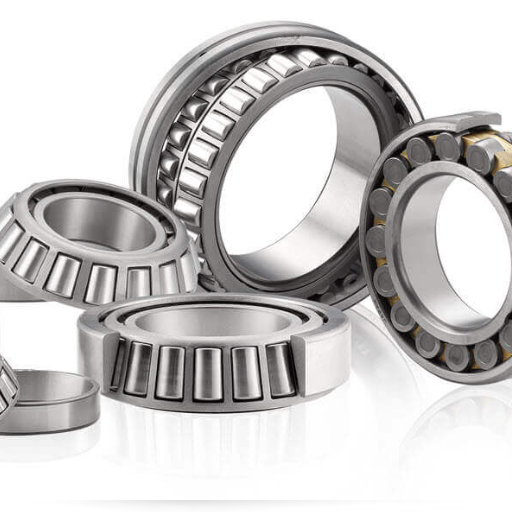
Choosing the suitable tapered bearing demands consideration of multiple factors to function optimally:
- Determine the Load Requirements
Identify whether the combination of radial, axial, or both types of loads is applicable. Purchase a bearing that suits the magnitude and direction of the load.
- Bearings Should Match The Speed Requirements
Assess the speed requirements for the application. Choose a bearing with a speed rating equal to or above said requirement.
- Evaluating The Operating Environment
Analyze and take note of the temperature, moisture, and the presence of contaminants. Get bearings whose materials and seals best suit the environment.
- Check Dimensions And Alignment
Check to ensure the bearing spatial limits match the shaft dimensions. The fit should facilitate ease of alignment and proper installation.
- Assess the expected life and bore characteristics.
Purchase bearings that comply to the structural strength needs for the gap of application requirements.
Bearing selection is simplified by considering all of these points. If further assistance is needed, reach out to a bearing expert to get advice specially tailored to your needs.
Factors Influencing Bearing Life and Durability
1. Load and Stress
Bearings break or wear out far too quickly due to uneven or excessive loads. Failure is more likely to occur when features such as load capacity, alignments, and fits are out of the properly defined range or set in extremes. Research suggests that some degree of proper alignment and fitting can offer load repartition which, in turn, increases bearing efficiency by over forty percent.
2. Lubrication
Friction, heat, and corrosion can be mitigated by proper lubrication which is often used to maintain a healthy lubricating boundary layer. Studies indicate bearing improper use or lack of servicing dreadfully diminutive best practice lacings face a medical lubricate boundary layer servicing. Payable schedule intervals of lubricable boundary layers grease or oil depending on the issue will provide longevity to bearable expectations serviced.
3. Contaminant Exposure
The functional capabilities of the bearing can also be degraded by external particles such as dirt, dust, and debris. Shielding is among the most influential constructions against contamination. Bearings unenclosed in guard shields facing harsh environments and accompanying contaminants appear to dwell around sixty percent detrimental shift operating expectation.
4. Operating Environment
Bearing durability may be affected by extreme temperatures, humidity, and corrosive environments. In particular, increased operating temperatures can worsen lubrication, result in material expansion, and cause moisture to promote rust formation. However, bearings made of stainless steel or those with protective coatings perform better in adverse environments due to their enhanced resistance to corrosive and high-temperature environments.
5. Maintenance Practices
To achieve maximum durability, proactive inspections and maintenance activities are a necessity. Vibration analysis and thermal imaging are some of the most effective methods to detect unanticipated bearing degradation. This research shows that predictive maintenance can also increase bearing lifespan by an estimated 25 percent due to the removal of surprise failures.
Mitigating these factors significantly enhances the reliability and operational life of any bearings used across diverse applications.
Choosing Between Single-Row and Double-Row Tapered Bearings
Understanding the design features and performance of single-row and double-row tapered bearings will help with their application appropriateness.
Single-Row Tapered Bearings:
A single-row tapered bearing can manage a mixed load, meaning it can take on radial and axial thrust forces, in a single direction. Its simplicity in design is beneficial for use in cases with limited space and the need for some specific directional load ability. Single-row tapered bearings find extensive application in automotive wheel hub assemblies, gearboxes, and industrial machinery. Recent estimations indicate that single-row tapered bearings offer high customization levels with the typical dynamic load rating between 12.5 kN to over 3000 kN based on its size and series.
Double-Row Tapered Bearings:
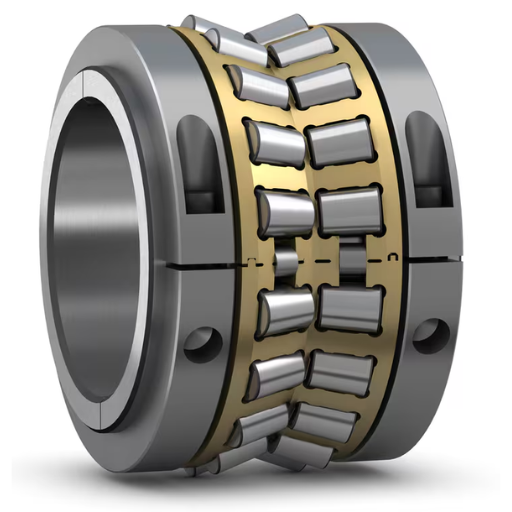
Double-row type tapered bearings are designed to accommodate more severe and complicated loading conditions. These bearings are employed in systems with high demand such as heavy-duty mining equipment, construction machines, and large industrial reducers, owing to the fact that they contain elements capable of supporting loads in the radial and axial direction. Studies indicate that double-row type tapered bearings have about 50% higher combined load capacity than single-row type tapered bearings of the same size, making them well-suited for use where both dependability and performance are required.
Important Factors for Selection:
- Load Requirements: For unidirectional axial loads, single-row bearings are appropriate. However, for more complex oscillating bi-directional axial load patterns, double-row bearings are preferable.
- Space Constraints: Single-row tapered bearings occupy a lesser axial space which is advantageous in constrained configurations.
- Performance and Longevity: Given the evenly distributed bearing loads, double-row bearings perform better in demanding operational conditions which makes them preferable for high-performance applications.
In the end, using single-row versus double-row tapered bearings is a matter of the particular load metrics, dimensional restrictions, and operational expectations. Assessment of the application’s features is essential to make the right choice.
Considerations for Four-Row Tapered Roller Bearings
Scribe the benefits of four-row tapered roller bearings in industrial machinery like rolling mills and large machines, their importance, capabilities, as well as advanced technologies utilized in modern designs.
Heavy duty applications like large industrial machinery, continuous casting machines, and rolling mills use four-row tapered roller bearings as guides because they can endure high radial and axial loads. Bearings increase the performance of operations by providing load distribution which reduces the loads on a particular surface and increases the performance under harsh conditions.
Four-row tapered roller bearings are different from other types because they can simultaneously bear axial and radial loads. This feature enhances stability and precision which are vital in most engineering and mechanical applications. Moreover, vibration dampening features of the unique structure of these bearings improve the smoothness of operation further adding for uninterrupted equipment operation and maintenance.
In terms of the layout, four-row tapered roller bearings offer a compact layout while providing high load-bearing capacity which is crucial to the machines requiring performance without wasting space. Modern designs however ensure machines operate in harsh environments by adding advanced sealing systems to protect from dirt and other harsh substances.
When choosing four-row tapered roller bearings, important factors like load ratings, lubrication standards, and operating speeds should be given utmost attention. These roller bearings are known to work optimally in situations with dynamic axial loads paired with high-speed rotation, as long as the lubricant is matched properly to keep friction and heat to a minimum.
Four-row tapered roller bearings have an unrivaled load distribution, the need for space is compact, and the bearings are designed to last. These factors make them crucial for large-scale industrial activities. Regular servicing and proper alignment are necessary to get the most out of them and maintain consistent performance over time.
Advantages of Tapered Roller Bearings Over Other Bearings
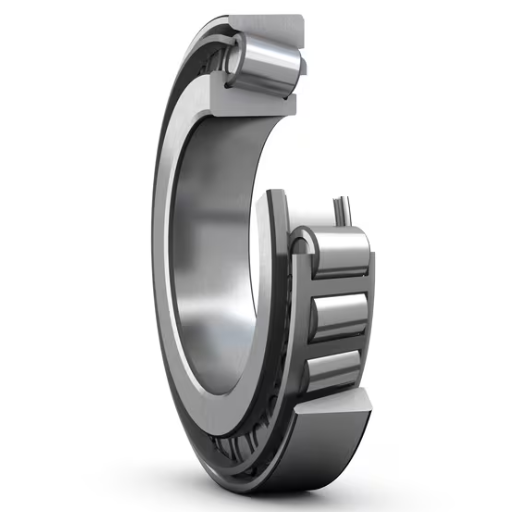
The benefits Tapered roller bearings provide in comparison to different types of bearings are:
- High Load-Carrying Capacity: These roller bearings are ideal when both radial and axial loads need to be applied simultaneously.
- Durability: The tapered design improves bearing durability and lifespan by reducing wear, minimizing misuse injury, and extending use injury.
- Efficiency: Improvement of energy efficiency and a decrease in the amount of heat generated due to reduced friction are some of the advantages they offer.
- Alignment Capability: Stopper performance garanti, tapered roller bearings can tolerate slight alignment discrepancies, ensuring reliability in tough environments.
- Versatility: Can be designed in single, double, and four-row configurations, fulfilling tailored application requirements.
Tapered roller bearings are highly trusted by industries from automotive, heavy machines, and more due to the multitude of advantages acquired from their usage.
Efficiency in Handling Radial and Axial Loads
It is no doubt that tapered roller bearings are designed specifically to deal with radial and axial loads effectively. Roller and race geometry, particularly the cone design, enables tapered roller bearings to provide optimal load distribution, minimizing stress concentration and wear over time. As per the latest industry estimates, tapered roller bearings possess remarkable capabilities of managing axial loads proportional to the tangent of the contact angle, which is quite useful in combined loading applications.
Tapered roller bearings sustain exceptional load-bearing capabilities and durability for heavy-duty applications like wind turbines or mining equipment. It has been demonstrated that these tapered bearings outperform traditional ball bearings in overall system efficiency by 30% due to the significant reduction in friction produced by the rolling elements. Moreover, advancements in material science, in particular the application of high-strength steel and sophisticated coatings, have further improved these bearings’ wear, corrosion, and operational life resistance in harsh surroundings.
Engineering performed rotational heat accumulation calculations and identified reduced values of these parameters during high-speed or high-load operation conditions, enhancing energy efficiency and dependability in the automotive or industrial sectors. Due to all said factors, tapered roller bearings are pivotal for the operational efficiency and reliability of numerous industries.
How They Reduce Friction and Wear
Bearing taper rollers are crafted with great precision to avoid friction and wear by smoothing out loads over all the contact surfaces. This design alleviates premature material degradation and mitigates concentrated stress. The rolling elements set inside the bearings are arranged in a tapered shape, thus encouraging achieving contact with the bearing at a single point. As compared to sliding contacts, this has a much lower friction value.
Bearings are made from new taper roller-bearing materials using modern manufacturing techniques. High-grade steel and ceramic composites are preferred because of their extraordinary hardness, wear, and extreme temperature resistance. Also, specially designed lubricants for taper roller bearings help eliminate friction at a higher scale, which coupled with high speed/higher load conditions helps minimize wear. Research indicates that high-quality lubrication can lower the friction coefficient by 50 percent in taper bearings thereby improving energy consumption and prolonging the working lifespan of components.
Improved construction ensures accurate manufacturing limits which guarantees perfect alignment and reduces vibration thus smoother operation. Studies reveal this can boost a bearing’s operating lifespan by as much as 25 percent within industrial domains. These factors combined are sufficient to point out that taper roller bearings are efficient in removing friction and wear while providing dependability in extreme settings.
Durability and Bearing Life Benefits
Tapered roller bearings are famous for their long service life and operational durability. This is critical in heavy machinery and industrial applications. The Advanced Manufacturing Processes and Thermal AC Treatment of Tapered Roller Bearings (TRBs), for example, enhances resistance to wear and fatigue even in extreme operational conditions. Also, modern lubrication technology is proven to decrease surface wear by 40%, which improves the bearing life.
An equally important factor to the bearings’ durability is the high-grade materials, such as hardened and case-hardened steels, adding to the bears’ ability to withstand heavy impacts and load. The Industrial Machinery Research Study indicates that equipment maintaining tapered roller bearings has 20% lower failure rates compared to other bearing types. In addition, manufacturing precision guarantees load distribution which mitigates premature failure and provides life surpassing expectations in harsh operational environments.
With appropriate maintenance and application, tapered roller bearings TRBs minimize downtime and maintenance costs while extending replacement intervals, providing excellent ROI for TRBs and reliability for standard and high-demand operations.
Reference Sources
-
Implementation of Frequency Response Function on Tapered Bearing Maintenance:
- Explores the use of frequency response functions for maintaining tapered roller bearings.
- Highlights applications in pinion shafts and the identification of defects like scratches in tapered bearings.
- Methodology includes frequency response analysis and defect identification techniques.
-
Current Trends and Applications of Machine Learning in Tribology:
- Discusses the use of machine learning to optimize the roller face/rib contact in tapered roller bearings.
- Highlights applications in predictive maintenance and performance enhancement of rolling bearings.
- Methodology involves machine learning models for classifying and predicting bearing behavior.
-
Dynamic Analysis of a Tapered Roller Bearing:
- Focuses on the dynamic behavior and applications of tapered roller bearings in car wheel bearings and gas turbine main shafts.
- Highlights the challenges in analyzing tapered roller bearings compared to other types.
- Methodology includes dynamic modeling and comparative analysis of bearing applications.
- View Taper Roller Bearings for sale – Amigo for More Details
Frequently Asked Questions (FAQs)
Q: What are tapered roller bearings and how do they differ from other types of roller bearings?
A: Tapered roller bearings are a type of roller bearing that can support both axial and radial loads. Unlike cylindrical or spherical roller bearings, which are designed to primarily handle radial loads, tapered roller bearings feature conical rollers and raceways. This geometry allows them to align with the bearing axis and support a wider range of loads.
Q: What are the main components of a tapered roller bearing?
A: The main components of a tapered roller bearing include the inner ring (or cone), the outer ring (or cup), tapered rollers, and the cage that holds the rollers in position. The cone assembly contains the inner raceways and the rollers, which are oriented at an angle to the bearing axis, allowing them to converge at a common point on the bearing axis.
Q: What are the advantages of using tapered roller bearings?
A: Tapered roller bearings offer several benefits, including the ability to handle combined axial and radial loads, high load-carrying capacity, and durability. Their design allows them to support large forces and provide precise alignment of the bearing assembly. Additionally, they can accommodate misalignment and shaft deflection, making them versatile for various bearing applications.
Q: How do you select the appropriate tapered roller bearing for a specific application?
A: The selection of tapered roller bearings involves considering factors such as the load type and magnitude, speed requirements, operating environment, and the specific alignment of the bearing axis. It’s also important to consider whether a single row tapered or double row tapered configuration is needed based on the load direction and capacity requirements.
Q: In what applications are tapered roller bearings typically used?
A: Tapered roller bearings are used in a variety of applications, particularly where heavy loads and precise alignment are required. Common applications include automotive axle bearings, industrial machinery, gearboxes, and agricultural equipment. They are also employed in high-speed applications due to their ability to reduce friction and heat generation.
Q: What is the difference between single-row and double-row tapered roller bearings?
A: Single-row tapered roller bearings consist of one set of tapered rollers and are designed to handle a combination of radial and thrust loads in one direction. Double-row tapered roller bearings, on the other hand, have two sets of rollers and can manage radial and axial loads in both directions, offering greater rigidity and load-carrying capacity.
Q: How do tapered roller bearings manage axial loads?
A: Tapered roller bearings manage axial loads through the angle of the roller axes relative to the main axis of the bearing. The inclined position of the rollers allows them to support axial forces efficiently, as the load is distributed across the roller axes towards the center of the bearing, converging at a common point on the bearing axis.
Q: What maintenance practices are recommended for tapered roller bearings?
A: Proper maintenance of tapered roller bearings involves regular inspection for wear and damage, ensuring correct lubrication, and monitoring for abnormal noises or vibrations. It is crucial to follow the manufacturer’s guidelines on bearing assembly and disassembly to maintain optimal performance and extend the lifespan of the bearings.
Q: Can tapered roller bearings replace other bearing types in existing machinery?
A: While tapered roller bearings can offer superior performance in certain applications, their suitability as replacements depends on the specific requirements of the machinery. Factors such as load direction, space constraints, and speed must be evaluated. Consultation with an engineer or bearing specialist is recommended to determine if a tapered roller bearing is the appropriate choice.