


For more than a century, tapered roller bearings have been a critical mechanical component that has driven innovation and efficiency across countless industries. These unique bearings stand out because of their ability to handle both radial and axial loads as well as their distinct design. They are vital for the proper functioning of machinery, from automotive to industrial equipment. But how did this brilliant invention come about, and what makes its design so suitable for modern engineering requirements? In this blog post, we will take you on an insightful journey through the history and development of tapered roller bearings while analyzing their construction, operation, and role in modern technology. Whether you’re a curious enthusiast or a seasoned expert, there’s something here for everyone to learn about these astonishing components that quietly power the world around us.
What is a tapered roller bearing and how does it work?

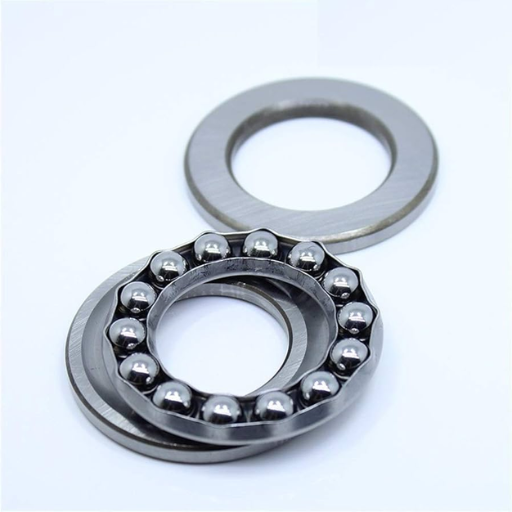
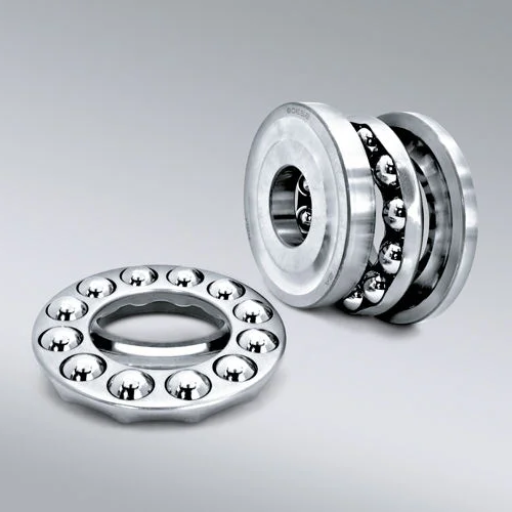
A Tapered Roller bearing is a kind of bearing that has been constructed to support both radial and axial loads. The inner ring (cone), the outer ring (cup), tapered rolling elements, and a cage to hold the rollers together make up four fragments which along with the rolling elements form the spate bearing structure in geometry. A bearing is a cone in shape thus allowing the tapered roller reel bearings to overcome combined loads be it of weight or otherwise. They are used in automotive wheels, industrial machines, and hefty machinery. As with heavier loads placed on top of these bearings, the proper sizing and spacing will yield them to perform excellently, more importantly, these bearings operate by reducing the friction between moving parts, this allowance results in their dependable revolutions. Always be on the lookout for universal and individual components. Make sure that they are operating or subjected to given conditions.
Understanding the tapered roller bearing design
These bearings include features and characteristics that provide them an edge over others when it comes to high-performance activities. One of the major highlights of these bearings is the “Conus” Racerway surface which is C-shaped and thus results in the best combination of radial and axial load which are respectively positive and negative. They can also be put under electric rotary motors, multi-directional wheel drive systems, and cranes.
Strategic material selection is a critical factor in the design of taper roller bearings. For example, high-grade steel like chrome steel is frequently used, as it can withstand high stress and resist wear for long periods. Some new designs improve surface toughness and fatigue resistance further by adding case-carburized materials.
Taper roller bearings are precision-engineered to perform at their best. Modern tapered roller bearings, depending on their size and application, can reach rotational speeds above 5,000 RPM with significant loads. Industry figures suggest that heavy machinery applications can exceed 3,000 kN for load distribution capabilities, demonstrating reliable function in severe environments.
Furthermore, to reduce the negative effects of friction such as heat and wear, tapered roller bearings often incorporate advanced lubrication systems. New designs have also been developed that use optimized crown profiles for better uniform load distribution and lower stress concentrations.
One important component in each of these industries is the tapered roller bearing, whose complex structure, along with innovations in the fields of solid materials and fabrication tolerances, make it one of the most important components They enable unmoving dependability, ruggedness, and reliable operation in extreme conditions.
How do tapered roller bearings reduce friction?
Tapered roller bearings make use of their uniquely designed features and effective operational principles to reduce friction. Their construction permits smooth free rotation of the tapered shape rolling elements and helps maintain optimized contact angles for both radial and axial loadings and motion. This geometry greatly reduces the sliding that occurs between the rolling elements and raceways increase friction.
A critical consideration is the precise alignment of bearing components for friction reduction. Most bearings cannot tackle misalignment because it increases friction and parasitically wastes energy due to unchecked load issues, but tapered roller bearings can do that. Furthermore, some advanced lubrication methods improve the friction hurdle even further. Modern high-performance synthetic lubricants outperform traditional oils in bearing wear and friction reduction, extending operating life.
Research indicates tapered roller bearings can typically achieve friction coefficients of 0.001 to 0.005 under optimal conditions, greatly dependent on the load, speed, and lubrication employed. This makes them well suited for high-performance and smoothing operations in automotive, aerospace, and heavy machinery industries which require energy efficiency in operations and dependability. Even under rigorous environments, these bearings can continue to outperform owing to their high sliding friction capabilities, wear-resistant materials, and precision engineering.
The role of axial and radial loads in tapered rollers
Tapered rollers are made to effectively manage both axial and radial loads simultaneously, from any direction, which is why they are greatly valued in several industries. The configuration of these bearings is such that the conical rollers rest at a rotational angle, which leads to a uniform distribution of loads across the surfaces. Parallel forces acting on the rotating shaft (where axial loads are thrust loads and radial loads are perpendicular) define thrust loads. Complementary inclined raceways work together with the rolling elements to propel large axial loads in one direction while allowing substantial radial loads in a perpendicular direction.
In automobile wheel hubs, tapered roller bearings are fitted to bear radial load due to the weight of the car alongside axial loading due to cornering and braking forces. Engineering sources estimate that such bearings sustain thrust loads of around sixty and seventy percent of the radial load capacity for given operating conditions. The parameters of design, amongst others, limit the angle of contact or the contact area which directly affects the size of the rollers and hence their load-bearing capabilities. Enhanced performance through improved wear, operational life reliability, and reduced costs sustain extended operational lifetimes and are brought about by proper installation and lubrication.
How did the invention of the tapered roller bearing come about?

The deep thinker behind the tapered roller bearing is Henry Timken, who patented it in 1898. Timken understood the complexity of bearings, mainly the one that needed to deal with axial and radial thrust simultaneously. He improved efficiency on heavy applications such as wagon wheels and other machinery. He incorporated his tapered design for smoother operation and better load handling. The innovative bearing spread in popularity across industries and became a foundation for modern machinery improvements.
The story of Henry Timken and his innovation
Henry Timken revolutionized machinery design with tapered roller bearings. In 1901, he founded The Timken Roller Bearing Axle Company based in St. Louis, which spearheaded the production and sale of these bearings. Tapered roller bearings were lifesavers for smooth operational efficiency and durable performance on heavy-duty applications like automobiles and railroads.
As of today, Timken’s company has expanded into an internationally recognized engineered bearing and power transmission products manufacturer, forking out $4.1 billion in revenue as of 2022. Innovations from a century ago, however, are still sustainable in value, this goes to show how the company is excelling. Timken’s engineered bearings also cater to wind turbine renewable energy systems as well as aerospace machinery. With such newfound accomplishments, the company still showcases how foundational breakthroughs put forth in the past markedly improve future technology and industry standards.
The patent for tapered roller bearings and their impact
Tapered roller bearings are crucial components for enabling precision in machinery such as vehicle transmissions, axles, and differentials, and enhancing fuel economies while preventing wear and tear. These were patented in 1898 by Henry Timken, enabling smoother industrial applications by reducing wear and friction.
Industries are greatly utilizing tapered roller bearings due to their promise of reliability and energy efficiency, pushing the global market towards expansion. Early estimates reveal that the market possesses a value of around $10 billion and is expected to grow rapidly in the coming years. Nowadays, these bearings are employed in almost all domains including automotive, heavy machinery, railways, and aerospace, making every industry benefit from streamlined performance and improved durability.
Aside from industrial sectors, other domains depend on these roller bearings too. Take the automotive industry for instance, vehicles depend on tapered roller bearings to enable precision and efficiency while undergoing critical pressure systems and moments, greatly improving fuel economies while minimizing mechanical damage.
Apart from automobiles, these bearings are essential to the renewable energy sector, like in the case of wind turbines where enduring high axial loads guarantees long-term operational efficiency and stability. In rail transport, tapered roller bearings reduce maintenance costs significantly due to their contribution to wear reduction of wheels and providing stable, vibration-free motion. The enduring impact of Henry Timken’s vision continues to be reflected in the bearing’s ability to adapt and serve changing requirements of technologies in contemporary industries to foster more sustainable operations and better operational efficiency.
How Timken and the Tapered Roller Changed Industries
By allowing higher productivity, durability, and efficiency in machinery, Timken’s tapered roller bearings have transformed numerous industries. In the automotive industry, these bearings have helped enhance vehicle performance, for example. Studies show that their particular shape is effective in friction reduction and heat dissipation, resulting in a longer life for the component as well as reduced fuel consumption. This advancement, among other things, generates a new set of challenges in precision and energy optimization for hybrids and electric vehicles.
The rail industry has benefitted as well. Tapered roller bearings are now in widespread use for train wheel assemblies which reduces wear and permits smoother, faster, and safer rides. It is estimated that high-performance roller bearings will extend rail-wheel life by over 60%, creating cost-saving opportunities as well as greater dependability. The wind energy sector has similar results; turbines outfitted with advanced roller bearings dramatically enhance operational capacity and maintenance downtime while increasing yearly energy output.
Additionally, the industrial segment recognizes these bearings are critical for mining and construction equipment. Their stout construction withstands extreme pressure as well as axial loads, thereby reducing disruptions and maximizing operational up-time. Tapered roller bearings, in general, mark Timken’s powerful legacy in supporting both conventional and emerging industries, unrivaled in precision engineering and flexible application.
What are the different types of tapered roller bearings?

Tapered roller bearings are classified based on their characteristic features and usage. The most common types are as follows:
- Single-Row Tapered Roller Bearings
This is the most frequently encountered type. They are built to deal with combined radial and axial loads in a single direction. Various applications in the industry as well as the automotive sector are suitable.
- Double-Row Tapered Roller Bearings
These types are more capable in terms of axial load acceptance in both directions. They are usually intended for use in very strong and precise machinery.
- Four-row Tapered Roller Bearings
Manufactured for extremely demanding conditions, these types withstand extremely high radial loads and find wide application in rolling mills and other harsh industrial settings.
Each application has set requirements for tapered roller bearings such as operational conditions and load limits which determine the exact type used.
Understanding single vs. pairs of tapered roller bearings
Depending on the application’s requirements, tapered roller bearings can be used in singles or pairs. For operations dealing with loads in one direction, a single tapered roller bearing should suffice. These bearings are particularly well suited for combined radial and thrust load applications, provided the system’s alignment and angular rigidity are set.
When used in pairs, tapered roller bearings are optimized to grapple with complex multiple axial loads, for example. The pairing is often done using back-to-back (DB) and face-to-face (DF) configurations which are known to increase rigidity and precision. With back-to-back arrangements, greater alignability and tilting resistance are achieved. In contrast, face-to-face bearing arrangements are selected to offer maximum misalignment accommodation.
When selecting single or paired arrangements, factors such as preload, temperature, and lubrication are critical. Research indicates that paired tapered roller bearings enhanced the reliability of automotive drive hubs, rail, and heavy machinery by extending the equipment lifespan due to reduced friction in dual-direction axial loads. Precise adjustment and installation of bearing pairs are indispensable in eliminating misalignment and achieving sustained performance.
The applications of heavy-duty applications and vehicle wheel bearings
Vehicle wheel bearings, along with other components, are critical in various industries that rely on heavy-duty precision engineering equipment. They require great dependability and longevity. Below is an outline of some of their applications along with additional information.
- Automotive Drive Hubs
Bearings within drive hubs must enable and rotate whilst simultaneously providing load-bearing support. Empirical evidence suggests that the adoption of high-performance tapered roller bearings increases driveline fuel economy and operational efficiency by up to 30% due to reduced friction.
- Railway Systems
Extreme axial and radial loads must be managed by bearings in railway systems. Pairs of bearings in the axle of a rail car have been shown to offer significant advantages with maintenance intervals extended by fifty percent. This leads to reduced downtime, maintenance costs, and improved efficiency.
- Heavy Machinery
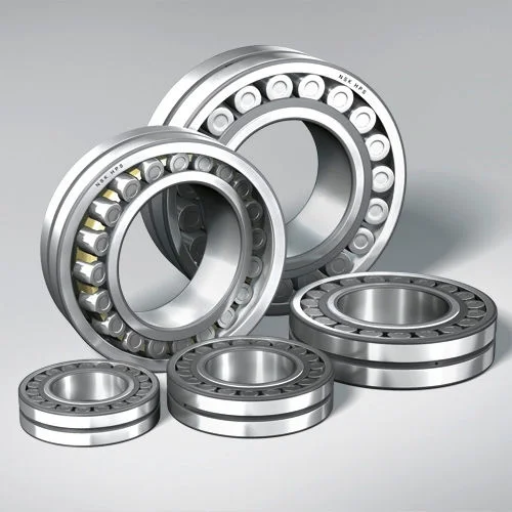
Heavy-duty bearings are employed in construction and mining vehicles and cranes due to their superior load-handling capabilities. For example, the shock and vibrations endured under extreme conditions are withstood by many spherical roller bearings which are widely used for these applications.
- Agricultural Equipment
Bearings used in tractors, combines, and other farming equipment require reliable operation and must endure harsh environments. Performance in agriculture is enhanced with sealed bearings whose lifespan data indicates an increase of up to 40 percent.
- Aerospace Applications
Aerospace bearings must withstand high rotational speeds and wide ranges of temperature. Implementation of advanced ceramic bearings to modernize eliminates significant weight while increasing lifespan, which is essential to modern aircraft designs.
- Wind Turbines
Wind turbines utilize large bearings, often double-row spherical models, to manage significant loads from wind forces. Research highlights that using high-durability bearings can expand turbine lifespans by 25%.
- Marine Industry
Within the marine industry, ship propeller shafts and rudders demand heavy-duty bearings that resist corrosion while minimizing the chance of failure. Advanced bearing technologies are being developed, such as water-lubricated systems for enhanced performance in saline environments.
Through these examples, it is easy to see how wheel bearings impact numerous applications in vehicle and machinery technologies associated with demanding environments.
Differences between roller bearings and ball bearings
While roller bearings and ball bearings have almost the same functions, their designs, operations, and applications differ quite a lot. Recognizing these variations is important in industries and mechanics for picking the most appropriate bearing.
- Design
- In ball bearings, circular rolling parts known as balls are used. They are placed on a spacer which is mounted on two rings: the inner one and the outer one. By using spherical balls, there is contact with a point, hence, rotation can turn with very small friction.Roller bearings may utilize cylindrical, tapered, or needle-shaped rolling elements. They possess line contact with the races, and hence, have a greater load-carrying capacity.
- Load Capacity
- Radial loads as well as light to moderate axial loads are managed efficiently by ball bearings, thus easing workloads on electric motors and household devices. Nonetheless, these bearings are not very efficient at dealing with heavier workloads.Roller bearings can bear both radial and axial load due to the large surface of contact and are used in heavy-duty works like conveyor belts and other industrial machines.
- Speed Capabilities
- It is very easy to optimize ball bearings for high-speed activities since they have very low friction and smoother rolling. This makes them perfect for equipment that needs precision and speed like aerospace parts, where they are mostly used.Due to their load friction, roller bearings have greater contact friction than ball bearings. Therefore, they are best suited for moderate-speed applications.
- Durability and Lifespan
- In terms of enduring long-term rigorous environments, roller bearings are often considered more durable. An example would be tapered roller bearings as they are meant to endure extreme forces in automotive hubs and railway uses.Under heavy loads, ball bearings have a shorter lifespan, but they shine in applications where speed and precision are the most crucial.
- Applications and Use Cases
- Ball bearings are widely used in lightweight machinery, auto parts like wheels, as well as in medical devices. Their sophisticated design and speed make them multifunctional and handy to have.Heavy industrial works like equipment for mining, turbines, and other large rotating machines that need to endure high loads rely on roller bearings.
- Efficiency
For applications that require high-speed rotations, having lower power consumption is very valuable. Therefore, roller bearings are slower but more efficient when the load bearing is perfect. Ball bearings may have an edge over roller bearings in frictional resistance, but they do not exhibit the same value as roller bearings in speed.
Bearing types can effectively be chosen by industries based on operational needs if they incorporate these differences. Such considerations buy performance, reduce cost, and increase the reliability of the system over some time.
Where are tapered roller bearings used?

Tapered roller bearings are extensively used in applications where high radial and axial loads need to be supported. From their extensive usage in the vehicle’s wheel hub, gearboxes, and agricultural machinery, their operating life is marked with durability. Other uses including industrial heavy duties mark their position in the industry as conveyors, mining machinery, general engineering, and also other fields that require dependability to manage extreme loads. It ameliorates difficult working circumstances due to its ability to combine substantial loads.
Common industries and heavy-duty applications
The use of tapered roller bearings is essential in many areas and is designed to fulfill the requirements of harsh applications. A dominant area that makes use of these bearings is the automotive industry because these bearings are used in wheel hubs, transmissions, and differentials. Research shows a great portion of the global automotive market relies on tapered roller bearings, largely because the world’s production of automobiles and commercial vehicles is on the rise.
In the agriculture sector, these bearings are widely used in tractors as well as in combine harvesters and other equipment which can be exposed to hard working conditions. Their dual ability to bear radial and axial loads makes them efficient for prolonged and intense use. An example is the constant demand that the agricultural machinery manufacturing industry has for these parts.
Mining operations depend heavily on specialized equipment that incorporates tapered roller bearings into crushers and conveyor systems. Bearings for these applications must withstand challenging service conditions as well as provide sustained high load capacity and durability. The demand for mining equipment is growing, which in turn increases the need for these bearings.
Tapered roller bearings are also used in the wind energy sector, where they withstand the tremendous weight from the rotor in the wind turbine hubs and gearboxes. There is an increasing need for wind energy systems worldwide. As a result, there is a steady increase in the demand for wind energy project-specific bearings as well as for tapered roller bearings that are engineered for extreme endurance.
Tapered roller bearings are extensively used in construction along manufacturing industries as they serve numerous industrial machinery functions. Their rugged adaptability allows them to be effective in areas that require great precision and complete dependability. With advanced innovation in bearing capabilities, new fields are now incorporating these bearings further strengthening the demand for tapered roller bearings worldwide.
The role of tapered roller bearings in vehicle wheel bearings
Tapered roller bearings are extremely important for the operation of vehicle wheel bearings, especially for cars, trucks, and trailers. Concerning bearing cars and vehicles, these bearings support radial and axial loads at the same time, which is very imperative for the smooth flow of the vehicle and rotation of the wheels. The inclined surfaces of the tapered rollers greatly improve contact and distribution of the load which is very useful in the driving, cornering, or loading stresses of the vehicle.
Concerning recent developments in the field of science and engineering, the durability and efficiency of tapered roller bearings have greatly improved over time. The use of high-grade steel alloys along with proper machining of the parts leads to lower wear, longer service life, and better energy efficiency which is very important for modern vehicles. There are studies that claim modern tapered roller bearings are capable of reducing friction by 30% when compared to older models which greatly enhances the fuel and emission efficiency of the vehicle.
With the current developments in electric vehicles (EVs) and sustainability, tapered roller bearings have met the automotive industry halfway. For example, these bearings now have new lubricant technologies as well as advanced shapes that accommodate the high torque and performance EVs require. This versatility guarantees that tapered roller bearings sustain their position as the leaders in automotive wheel bearing technology, safety, dependability, and operational efficiency adaptable to numerous automobile categories.
Why bearings are designed for specific axial and radial load capacities
To ensure high performance, reliability, and durability of bearings in different applications, they are designed to operate with specific axial and radial load limits. An axial load is a linear force that moves parallel to the shaft while a radial load is perpendicular to the axle. The loads that any bearing can withstand are pre-defined, hence a bearing type is configured to endure a stipulated set of these force vectors based on the needs of the application.
As an example, automotive applications benefit from tapered roller bearings because they efficiently combine axial and radial load handling. Additionally, the deep groove ball bearings are constructed to accept radial loads; however, they may accept some axial loads under particular conditions. Industry data suggests that tapered roller bearings have an axial-to-radial load ratio of three to one, depending on the construction and materials used, maintaining control within extreme operating conditions.
Undesired overheating, excessive wear, and equipment failure are prevented when bearings are designed for precise load calculations, thus safeguarding machinery and operational safety. Furthermore, advanced modeling CAD software and new materials, such as ceramic hybrids, enable bearing manufacturers to design components capable of withstanding elevated speeds, temperatures, and high forces. Such technologies enhance operational efficiency and performance within a multitude of industries, including aerospace and automotive.
Why are tapered roller bearings preferred over other types of bearings?
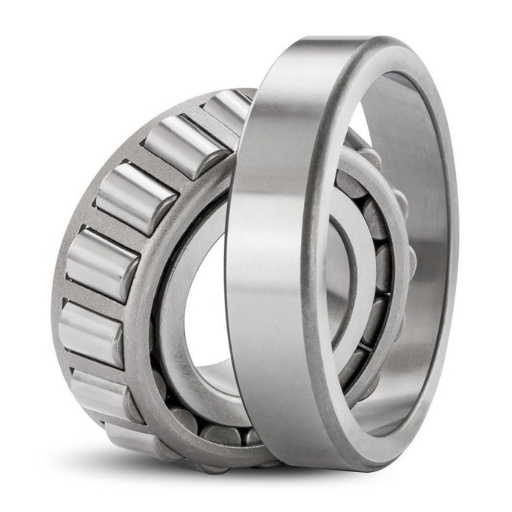
Tapered roller bearings are more advantageous than other types of bearings because they capably manage radial and axial loads simultaneously. Besides, their construction has angled rollers and raceways, so these bearings provide better load distribution alleviating the intensity of the impact on the bearing and its performance when operating in a heavy-duty environment. Furthermore, they provide better alignment as well as low friction which improves efficiency and extends the operating life in difficult working conditions. Because of these characteristics, they are ideal for sectors that need dependable and resilient bearing systems.
The friction-reducing benefits of tapered roller bearings
The design of tapered roller bearings is such that it drastically reduces friction and therefore, suitable for use in industrial applications that require high performance. Their conical shape enhances the rolling action which directly translates to reduced energy loss due to friction. With this design, wear and tear is reduced, helping to maintain smooth functioning even with elevated speeds.
Research shows that tapered roller bearings can provide an impressive friction reduction of up to 30% when compared with the more conventional cylindrical bearings. This is possible due to enhanced load distribution, sophisticated lubrication systems that eliminate metal-to-metal contact, and modern manufacturing processes that improve surface finish and overall material quality, thus reducing the friction coefficients.
These advancements profoundly impact industries like automotive and heavy machinery. For instance, in automotive applications, the tapered roller bearings’ fuel efficiency is improved with reduced resistance from fuel-consuming drivetrain components. Likewise, those in manufacturing equipment experience low friction and enduring toughness, resulting in precise, energy-efficient extended operations.
These bearings further offer excellent performance when managing combined radial and axial loads, providing dependability in harsh environments. With less energy spent, tapered roller bearings help save on operating costs in addition to operational efficiency due to lower temperature maintenance and reduced energy waste.
Comparing spherical roller bearings and tapered roller bearings
Both spherical roller bearings and tapered roller bearings differ in terms of their applications. A proper understanding of the difference between the two bearings simplifies choosing any of them for mechanical or engineering purposes.
Handling Capability of Loads
Mining, construction, and manufacturing industries are suited for spherical roller bearings that support radial loads, as well as handle deformation and misalignment. Shafts or supports often deflect in operation, but the roller bearings can still function due to their self-alignment ability. Tapered roller bearings accept radial and axial loads; however, selected bearings are preferred for specific applications such as automotive wheel bearings, and gear units, and where combined loads must be used, as they are able to mechanically manage both types of loads.
Design and Composition
Spherical roller bearings comprise two rows of roller having a common spherical outer raceway, while tapered roller bearings have conical raceways. Roller taper for tapered raceways are arranged or set to meet at a common apex. Through this special configuration, the bearings enjoy better thrust load while retaining high-speed performance and stability.
Performance and Applications
Spherical roller bearings are widely used in heavy industrial machinery such as conveyor belts and vibrating screens due to their ability to perform under harsh conditions and withstand impact loads. Unlike tapered roller bearings, which excel in applications that require precision, such as in the transmissions and axle assemblies of vehicles, these bearings are designed to handle precision applications and offer smoother operation during variable-speed applications.
Temperature and Efficiency
The efficiency of spherical roller bearings is linked directly to the tolerable levels of temperature they are subjected to. These bearings have an advantage since their design minimizes friction when a load is applied which in turn lowers heat generation. Due to the nature of the contact surfaces, tapered roller bearings are more efficient in energy transfer, but can encounter slightly elevated heating at high speeds or misalignment. Correct lubrication and alignment are key to durability and efficient operation for both types of bearings.
Material Durability and Maintenance
Both types of bearings are made from good quality steel and require constant maintenance not to wear and tear. As they are self-aligning, spherical roller bearings need less attention than tapered roller bearings which require meticulous alignment and installation to increase intervals between maintenance.
Selecting the appropriate bearing is dependent on the operational needs, which include the type of load, alignment conditions, and environmental settings. Both the spherical and tapered roller bearings are essential for the effective and dependable functioning of machines in different fields.
The importance of radial and axial load handling in design
Effective management of radial and axial loads is crucial in the operation and design of machinery components such as bearings. Perpendicular to the shaft is the radial load and parallel to it is the axial load. Maintaining the proper balance of these loads is a prerequisite to ensuring the stability and reliability of any mechanical system.
With regard to radial load handling, bearing shape and material strength greatly influence a system’s design. For example, deep groove ball bearings are used widely in high-speed machines with mostly radial load applications. A properly constructed system will achieve optimal load sharing which reduces damage and extends the service life of machine parts.
Proper selection of components that can apply and withstand forces parallel to the axis is critical in axial load handling. For example, thrust bearings or tapered roller bearings can withstand large amounts of axial pressure. In these high-stress situations, additional materials such as hardened steel or ceramic coatings are applied to improve the strength and resist abrasion.
Failure, inefficiency, and increased maintenance costs are symptoms that premature failure of radial and axial loads can cause. Axial misalignment in a gear system can result in an additional energy loss of 20%, and excessive radial forces can decrease a bearing’s lifespan by more than 30%. Conducting a thorough load analysis and simulations is crucial during the design stage in order to predict performance and enhance reliability.
Integrating both load types into the design considerations fosters reliability and increases efficiency while minimizing downtime and reducing long-term costs which fosters competitive advantage across multiple industries.
Reference Sources
-
- Provides a historical overview of rolling bearings, including tapered roller bearings.
- Discusses the evolution of bearing designs, from wooden rollers in carts to modern tapered roller bearings.
- Methodology involves a historical review of bearing types and their applications over time.
-
Evolution of Rolling Bearing Technology:
- Reviews the technological advancements in rolling bearing systems, including the development of tapered roller bearings for carriages and railway wheels.
- Highlights key milestones in the history of bearing technology, such as the introduction of tapered designs in 1907.
- Methodology includes a chronological analysis of bearing innovations and their impact on industry.
-
Advanced Condition Monitoring of Tapered Roller Bearings, Part 1:
- Focuses on the construction and monitoring of tapered roller bearings to detect wear and debris.
- Discusses the role of advanced sensing techniques in understanding bearing construction and performance.
- Methodology involves experimental analysis of bearing condition monitoring systems.
- If you are looking for more information about Taper Roller Bearings – Amigo go here right away
Frequently Asked Questions (FAQs)
Q: What are tapered roller bearings and why are they essential in various applications?
A: Tapered roller bearings are rolling element bearings designed to support both radial and axial forces. Their unique tapered design allows them to handle high loads and makes them essential in applications such as car and vehicle wheel bearings.
Q: How do tapered roller bearings differ from other types of roller bearings?
A: Tapered roller bearings differ from other types, such as cylindrical roller bearings, by having tapered raceways and rollers. This design allows them to support both radial and axial forces, apart from other types that typically support only one type of load.
Q: Can you explain the construction of tapered roller bearings?
A: Tapered roller bearings consist of an inner and outer ring raceways, with rollers that are tapered so that the conical surfaces of the raceways and the roller axes intersect at a common point on the main axis of the bearing.
Q: Why are tapered roller bearings often used in pairs?
A: Tapered roller bearings are used in pairs to effectively manage combined loads, as one bearing manages radial loads while the other handles axial loads, ensuring efficient load transfer and stability.
Q: What role does the central axis of the bearing play in its functionality?
A: The central axis of the bearing is crucial as it aligns the motion of the cones and ensures the rollers rotate smoothly, transferring the load evenly across the surfaces of the raceways.
Q: How has the history of tapered roller bearings evolved?
A: Tapered roller bearings have a significant place in bearing history. The Timken Roller Bearing Company, founded by Henry Timken, was instrumental in their development, showcasing their versatility and ability to support various applications.
Q: What makes tapered roller bearings versatile in different industries?
A: The versatility of tapered roller bearings comes from their ability to support high loads, manage both radial and axial forces, and their adaptability in different mechanical environments, making them a preferred choice for bearing manufacturers.
Q: How do tapered roller bearings manage the motion of the cones?
A: The motion of the cones in tapered roller bearings is managed by the alignment of the tapered raceways with the bearing axis, ensuring smooth rotation and load distribution.
Q: What specific applications commonly use tapered roller bearings?
A: Tapered roller bearings are commonly used in car and vehicle wheel bearings, industrial machinery, and anywhere there is a need to manage combined radial and axial forces efficiently.