



Bearings play a critical role in the functionality of countless machines and mechanical systems, from automotive engines to industrial equipment. Among the most common types are roller bearings and ball bearings, each designed to handle specific loads and perform under different conditions. This article aims to provide a comprehensive comparison between these two essential bearing types, focusing on their construction, operating principles, applications, advantages, and limitations. By understanding the differences between ball bearings and roller bearings, readers will gain valuable insights to aid in selecting the most suitable option for their specific mechanical requirements.
What Are Roller Bearings and How Do They Work?
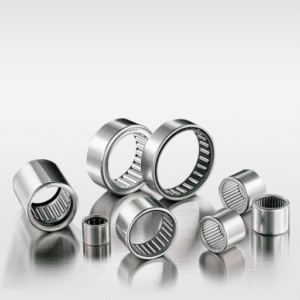
Roller bearings are a type of rolling-element bearing designed to carry heavy radial and axial loads while minimizing friction. They consist of cylindrical or tapered rolling elements placed between an inner and outer raceway. The rollers rotate as the shaft moves, distributing the load over a larger surface area compared to ball bearings, which enhances their load-carrying capacity. Roller bearings work by allowing the rollers to maintain consistent, smooth contact with the raceways, thereby reducing wear and enabling efficient operation under varying conditions and high loads. Their design makes them ideal for applications requiring durability, precision, and the ability to handle both dynamic and static loads effectively. If you are looking for more information about roller bearing vs. ball bearing go here right away
Types of Roller Bearings
- Cylindrical Roller Bearings
These bearings utilize cylindrical rollers, which are ideal for high radial load applications. Their design allows for high-speed operations, particularly when paired with low friction coefficients. Commonly used technical parameters include:
-
-
- Radial load capacity: Up to 30 kN (kilonewton) depending on size.
- Speed rating (Grease lubrication): Up to 10,000 RPM.
-
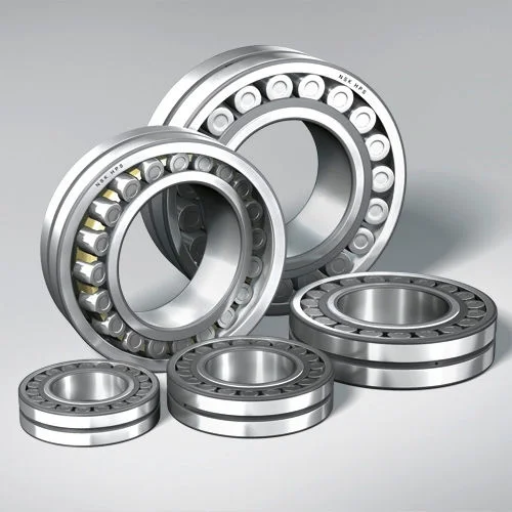
- Spherical Roller Bearings
Spherical roller bearings can handle both high radial and axial loads, even under misalignment or extreme conditions. They are suitable for heavy-duty and shock-load applications. Key parameters include:
-
-
- Radial load capacity: Typically up to 500 kN.
- Misalignment tolerance: ±1.5°.
-
- Tapered Roller Bearings
These bearings are designed to handle combined axial and radial loads efficiently. Their tapered structure ensures optimal load distribution, making them ideal for automotive and industrial machinery. Technical parameters include:
-
-
- Combined load ratio (Axial/Radial): 2/3.
- Speed limit (Oil lubrication): Up to 5000 RPM.
-
- Needle Roller Bearings
With a smaller cross-section, needle roller bearings are perfect for applications requiring compact designs with high load capacities. They are commonly used in automotive transmissions and compressors. Parameters include:
-
-
- Radial load capacity: Between 3 to 14 kN.
- Shaft diameter range compatibility: 5 mm to 100 mm.
-
Each type of roller bearing is optimized for specific technical demands, ensuring operational reliability and performance across diverse industrial applications.
Applications of Roller Bearings
Roller bearings are utilized in a wide range of applications where load handling and rotation precision are critical. I would highlight their use in industries such as automotive, aerospace, manufacturing, and energy. For example, they are integral in wheel hubs, gearboxes, jet engines, and turbines to ensure smooth motion and reliability under high-stress conditions.
Key Technical Parameters:
- Dynamic load ratings: Range from 10 to 600 kN, depending on bearing size and material.
- Operating speed: Up to 20,000 RPM for high-performance applications.
- Temperature tolerances: -20°C to 150°C for general designs, with some specialized bearings extended to 250°C.
- Lubrication requirements: Oil or grease dependent on application to reduce friction and wear.
By selecting the correct bearing type and maintaining proper operational parameters, roller bearings enable efficient, long-lasting performance in demanding environments.
Advantages of Roller Bearings
Roller bearings offer several technical and performance benefits, making them a preferred choice in mechanical applications across diverse industries:
- High Load-Carrying Capacity: Roller bearings are designed to handle heavy radial and axial loads efficiently, due to the line contact between the rollers and the raceways, which increases the load distribution. This feature makes them suitable for applications like heavy machinery, automotive systems, and industrial gearboxes.
- Reduced Friction and Heat Generation: By minimizing rolling friction, roller bearings enhance overall efficiency while reducing wear and heat development during high-speed operations. For example, tapered or cylindrical roller bearings are capable of maintaining smooth performance at speeds up to 20,000 RPM depending on the lubrication method and application.
- Durability under Adverse Conditions: These bearings excel in harsh environments, with many models offering temperature tolerances between -20°C and 150°C, with specialized high-performance types extending up to 250°C. They can also be manufactured with corrosion-resistant materials or coatings to withstand exposure to moisture, chemicals, and contaminants.
- Application Versatility: Roller bearings are available in a wide range of configurations including cylindrical, tapered, spherical, and needle roller types. This variety allows engineers to select the most suitable design for dynamic loads, misalignment requirements, or space constraints within the system.
- Extended Service Life: Advanced manufacturing processes and optimized lubrication systems, such as synthetic oil or low-friction grease, contribute to the extended operational lifespan of these components. Proper maintenance and monitoring, such as through vibration analysis and temperature checks, further improve reliability.
By combining these advantages with proper design selection, lubrication, and maintenance, roller bearings not only enhance system performance but also reduce downtime and long-term costs in demanding operational scenarios.
How Do Ball Bearings Function and Where Are They Used?
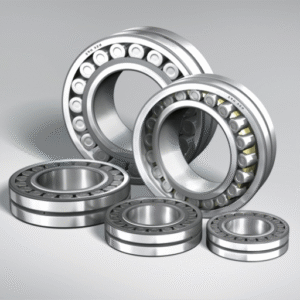
Ball bearings function by reducing rotational friction and supporting radial and axial loads. They achieve this by utilizing spherical balls that roll between an inner and outer ring, which minimizes contact and friction between moving parts. This simple yet effective mechanism allows for smooth motion and efficient energy transfer.
Ball bearings are widely used across various industries due to their versatility. Common applications include automotive components, such as wheels and engines, industrial machinery, electric motors, and household appliances. Their ability to handle high speeds and precise motion makes them crucial in both heavy-duty and everyday systems.
Types of Ball Bearings
- Deep Groove Ball Bearings
These are the most commonly used type of ball bearings. They are designed to handle both radial and axial loads, making them suitable for high-speed applications. Technical parameters typically include:
-
-
- Load Direction: Radial and Axial
- Speed Limit (RPM): 3,000 – 10,000 (varies by size/material)
- Applications: Electric motors, gearboxes, household appliances.
-
- Angular Contact Ball Bearings
These bearings are designed to support combined loads, where axial load capacity is determined by the contact angle. They are ideal for applications requiring high precision and rigidity. Key parameters include:
-
-
- Contact Angle: 15°, 25°, or 40°
- Speed Rating (RPM): 5,000 – 20,000
- Applications: Pumps, turbines, machine tools.
-
- Self-Aligning Ball Bearings
These bearings feature a double-row design that allows for misalignment of the shaft and housing. They are suitable for applications with shaft deflections or mounting inaccuracies. Relevant parameters are:
-
-
- Misalignment Capacity: Up to 3 degrees
- Load Type: Light radial loads and limited axial loads
- Applications: Textile machinery, conveyors, agricultural equipment.
-
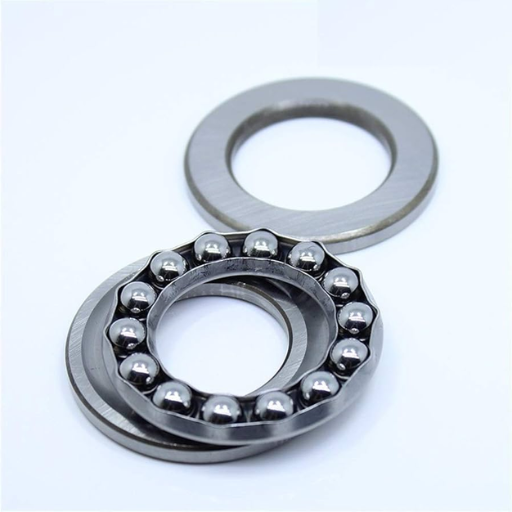
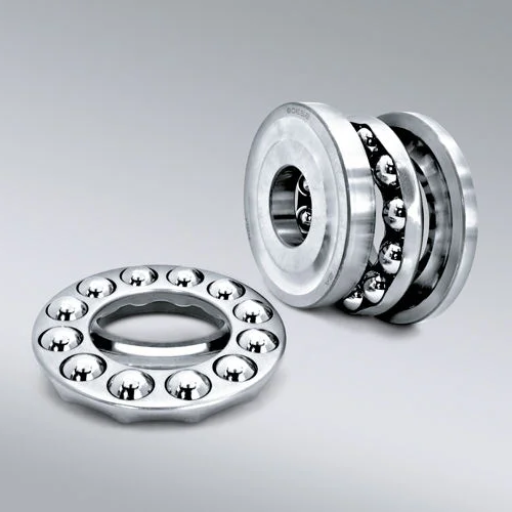
- Thrust Ball Bearings
These are specialized for axial loads and provide smooth, noise-free operation at moderate speeds. They are not recommended for radial loads. Technical considerations include:
-
-
- Maximum Axial Load (kN): Generally low to moderate
- Speed Rating (RPM): 1,000 – 8,000
- Applications: Precision instruments, automotive systems.
-
- Ceramic Ball Bearings
Constructed with ceramic material (e.g., silicon nitride), these bearings offer high durability, low friction, and superior performance under high temperatures. Key characteristics are:
-
-
- Operating Temperature Range (°C): -200 to 800
- Speed Limit (RPM): Up to 50% higher than steel bearings
- Applications: Aerospace, medical instruments, semiconductors.
-
Each type of ball bearing is engineered for specific use cases and technical constraints, ensuring optimized performance and reliability. Selecting the appropriate type involves understanding load requirements, speed, alignment tolerance, and environmental conditions.
Common Uses for Ball Bearings
Ball bearings are commonly used in applications where reducing friction between moving parts is critical. I see them frequently employed in industries such as aerospace for high-precision navigation systems, in medical instruments for enhancing accuracy and reliability, and in semiconductor manufacturing equipment to support high-speed, cleanroom-compatible operations. Their versatility and durability make them integral to ensuring efficiency and longevity in these advanced systems.
Benefits of Ball Bearings
From my perspective, the benefits of ball bearings are numerous and span across various technical applications. First, they are designed to significantly reduce friction between moving components, which minimizes wear and tear, thereby extending the service life of machines. They also enhance mechanical efficiency by transferring loads smoothly, which is crucial in high-speed operations. Ball bearings can handle both radial and axial loads, making them adaptable to dynamic and versatile conditions.
Key technical parameters that contribute to these benefits include load ratings (dynamic and static, measured in Newtons), rotational speed limits (measured in revolutions per minute, RPM), and material properties such as hardness and resistance to corrosion. These parameters ensure that ball bearings can operate effectively in demanding environments, including high temperatures, excessive loads, and exposure to contaminants.
What Are the Key Differences Between Ball and Roller Bearings
When selecting industrial components that ensure smooth and efficient motion within machinery, the choice between ball and roller bearings often comes into focus. Both are essential in reducing friction and managing loads, yet their design, functionality, and applications can vary significantly. Understanding these differences is critical for engineers and maintenance professionals aiming to enhance system performance, optimize durability, and reduce operational costs. This article will explore the fundamental distinctions between ball and roller bearings, providing insight into their unique characteristics, advantages, and ideal use cases, empowering you to make informed decisions for your mechanical systems.
Load-Carrying Capacity: Comparing Radial and Axial Loads
Understanding the load-carrying capacity of bearings requires an evaluation of both radial and axial loads, as these forces dictate the suitability of a bearing for specific applications. Radial load acts perpendicular to the shaft, while axial load (or thrust load) acts parallel to the shaft. The capacity of a bearing to handle these forces depends on its design, contact angle, and rolling element configuration.
- Ball Bearings are optimized for applications involving moderate radial and axial loads. With a smaller contact area, they can operate effectively at high speeds but are less suited for heavy or shock loads. The ability to handle axial loads is particularly prominent in angular contact ball bearings, where the contact angle enhances axial load capacity.
- Roller Bearings, designed with a line contact between rolling elements and raceways, provide superior radial load support compared to ball bearings. Their larger contact area allows them to excel in applications with high radial loads. However, their axial load capacity varies:
-
- Cylindrical Roller Bearings can handle high radial loads but have limited axial load capabilities unless designed as a thrust version.
- Spherical Roller Bearings manage both high radial and moderate axial loads, making them ideal for misalignment-sensitive applications.
- Tapered Roller Bearings provide a balanced capacity, supporting both significant radial and axial loads due to their conical geometry and angled contact surfaces.
Technical Parameters for Load Ratings:
When selecting a bearing, the following metrics help define its load performance:
- Dynamic Load Rating (C): Determines the bearing’s capability to endure dynamic (moving) loads over a defined lifespan. For instance, a tapered roller bearing may have a dynamic load capacity ranging from 10,000 N to 2,000,000 N based on its size and design.
- Static Load Rating (C₀): Indicates a bearing’s ability to withstand static forces without deformation. Cylindrical roller bearings often exhibit static load ratings exceeding 20% higher than that of ball bearings of equivalent dimensions.
- Contact Angle (α): Relevant to axial loads, particularly in angular contact or tapered roller bearings, where larger angles (e.g., 15° to 45°) provide increased axial load tolerance.
- Limiting Speeds (nₗim): Reflects the maximum operational speed under specific loads. Ball bearings, for example, demonstrate limiting speeds that can exceed 10,000 RPM in high-precision applications.
By systematically analyzing radial and axial load requirements, operational conditions, and the above parameters, engineers can determine the most appropriate bearing type for reliable and efficient performance.
Friction and High Speeds: Ball Bearings Vs. Roller Bearings
|
Key Point |
Ball Bearings |
Roller Bearings |
|---|---|---|
|
Contact Type |
Point contact |
Line contact |
|
Friction Level |
Lower friction |
Higher friction |
|
Speed Capability |
Suitable for high speeds |
Limited to moderate speeds |
|
Load Capacity |
Handles moderate radial and axial loads |
Higher radial load capacity |
|
Heat Generation |
Less heat at high speeds |
More heat due to friction |
|
Suitability for Misalignment |
Less tolerant of misalignment |
More tolerant of misalignment |
|
Durability Under Shock Loads |
Less durable under shock loads |
More robust under shock loads |
|
Preferred Applications |
Precision equipment, high-speed tools |
Heavy machinery, conveyor systems |
|
Maintenance Requirements |
Low maintenance needs |
Regular lubrication required |
Design and Structure: Roller vs. Ball Bearings
|
Key Point |
Roller Bearings |
Ball Bearings |
|---|---|---|
|
Load Type |
Handles radial and axial loads well |
Best for radial loads |
|
Contact Area |
Larger contact area |
Point contact area |
|
Speed Capability |
Suited for moderate to lower speeds |
Ideal for high-speed applications |
|
Vibration Tolerance |
Less effective in reducing vibrations |
Better at handling vibrations |
|
Alignment Tolerance |
Limited alignment flexibility |
Better alignment adaptability |
|
Friction Level |
Generates higher friction |
Operates with lower friction |
|
Durability |
Stronger under heavy and shock loads |
Performs well under moderate loads |
|
Noise Level |
Higher noise levels |
Operates quieter |
|
Maintenance |
Requires regular lubrication |
Needs less frequent maintenance |
|
Preferred Applications |
Industrial, heavy-duty machinery |
Precision instruments, automotive uses |
When to Use Roller Bearings vs. Ball Bearings?
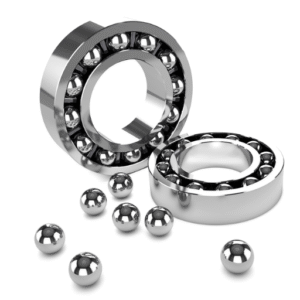
The choice between roller bearings and ball bearings depends on the specific requirements of the application. Roller bearings are generally preferred for heavy load conditions and applications where high radial loads are present, such as in industrial machinery, conveyors, and large motors. Their design allows for greater contact area, making them ideal for withstanding more significant forces. On the other hand, ball bearings are better suited for high-speed applications with lighter loads, as their spherical rolling elements minimize friction and enable smooth rotation. Examples include precision instruments, household appliances, and automotive components. Additionally, ball bearings are effective when both radial and axial loads are present, whereas roller bearings are more efficient in handling radial loads exclusively.
Choosing the Right Bearing for Specific Applications
Selecting the appropriate bearing requires a detailed analysis of the operational conditions, including load type, speed, temperature, and environmental factors. For heavy-duty applications, such as machinery in industrial or mining settings, spherical roller bearings are favored for their ability to handle both high radial and axial loads effectively, even under misalignment. Conversely, if the application demands high-speed performance, cylindrical roller bearings are ideal due to their lower friction and enhanced rotational precision.
For axial-heavy applications, such as thrust-oriented installations, tapered roller bearings offer superior load-carrying capabilities and stability. Environmental considerations, such as exposure to dirt, moisture, or extreme temperatures, may necessitate sealed or specialized coatings to ensure reliability and longevity. The bearing material and lubrication further play a crucial role in performance, with steel and ceramic bearings often being chosen based on specific operational demands.
Modern advancements make it essential to consult manufacturer specifications and industry standards to ensure the optimal match of bearings to your application, minimizing the risk of failure and maximizing efficiency.
Considering Heavy Load and High-Speed Requirements
When addressing heavy load and high-speed requirements, I focus on selecting bearings that combine high load capacity with exceptional durability and precision. For heavy loads, bearings with optimized load distribution, such as spherical or cylindrical roller bearings, are ideal due to their ability to handle axial and radial stresses. For high speeds, I prioritize bearings designed with low friction and enhanced thermal stability, like angular contact or hybrid ceramic bearings, which offer superior performance and efficiency under demanding rotational speeds. Additionally, I carefully evaluate lubrication systems to reduce wear and overheating, ensuring peak operational reliability. By analyzing manufacturer data and adhering to relevant industry standards, I ensure the chosen solution meets both load and speed demands comprehensively.
Understanding Radial and Axial Loads in Different Bearings
Radial and axial loads in bearings refer to the forces acting perpendicular and parallel to the shaft, respectively. I assess these forces based on the application requirements, factoring in operational conditions such as speed, vibration, and misalignment. Bearings like deep groove ball bearings are ideal for handling primarily radial loads, while angular contact bearings excel at managing combined radial and axial loads. For heavy axial loads, I consider thrust bearings or specialized tapered roller bearings. My approach involves cross-referencing technical specifications from trusted resources and aligning them with the system’s load profile to achieve optimal performance and longevity.
What Are the Types of Roller Bearings and Their Uses?
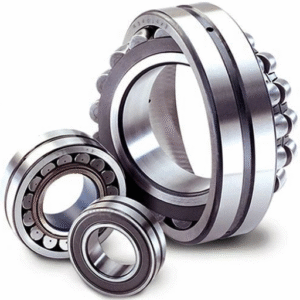
Cylindrical Roller Bearings
Cylindrical roller bearings are designed for high radial load capacities and operate efficiently at moderate to high speeds. They are often used in applications such as electric motors, gearboxes, and rolling mills, where radial loads are predominant.
Spherical Roller Bearings
Spherical roller bearings can accommodate both high radial loads and moderate axial loads, with the added advantage of self-alignment capabilities. These are commonly employed in heavy-duty machinery such as mining equipment, paper mills, and conveyors where shaft misalignment is a concern.
Tapered Roller Bearings
Tapered roller bearings are suitable for handling combined radial and axial loads. Their versatility makes them ideal for automotive applications like wheel hubs, as well as heavy industrial machinery where precision and durability are critical.
Needle Roller Bearings
Needle roller bearings have a smaller cross-section compared to other roller bearings, making them suitable for applications with limited space. They are widely used in automotive transmissions, pumps, and compressors due to their high load-carrying capacity and compact design.
Thrust Roller Bearings
Thrust roller bearings are designed to handle significant axial loads and are commonly used in applications such as cranes, turbines, and gear systems. They provide reliable support in systems requiring unidirectional or multi-directional axial load management.
Exploring Cylindrical Roller Bearings
Cylindrical roller bearings are engineered to manage high radial loads and operate at high speeds, making them an essential component in various industrial and automotive applications. These bearings feature rolling elements that are cylindrical in shape, reducing friction while providing excellent load-carrying capacity. Their design is particularly advantageous for applications where thermal expansion of shafts is a concern, as they generally permit axial displacement due to their separable components.
Key configurations include single-row, double-row, and multi-row designs, each suited to specific application requirements. Single-row cylindrical roller bearings are commonly used in electric motors and gearboxes because of their efficient performance in high-speed conditions. Double-row and multi-row designs, on the other hand, are ideal for heavy machinery and high-load scenarios due to their increased load capacity.
Additionally, these bearings are available with different cage materials, including steel, brass, and polyamide, each selected based on operational conditions such as temperature, load, and speed requirements. The versatility and durability of cylindrical roller bearings make them crucial in industries like steel production, wind energy, and material handling systems.
Understanding Spherical Roller Bearings
Spherical roller bearings are specifically designed to manage radial loads and significant axial loads in both directions, making them well-suited for applications where misalignment or shaft deformation occurs. They feature two rows of rollers with a shared spherical raceway in the outer ring, allowing the bearing to accommodate angular misalignments efficiently. Commonly utilized in industries like mining, paper manufacturing, and marine propulsion systems, these bearings demonstrate exceptional performance in high-load and vibration-prone environments. Their design promotes durability and reduces operational friction, ensuring reliability under challenging conditions.
An Overview of Tapered Roller Bearings
Tapered roller bearings are designed to handle both radial and axial loads, making them highly versatile in a range of applications. Their construction includes an inner and outer ring with tapered raceways and tapered rolling elements, which effectively distribute loads and reduce stress concentrations. These bearings are commonly used in automotive, industrial gearboxes, and heavy machinery due to their capacity to withstand high loads and axial forces. Additionally, their adjustable clearance and optimized design enhance precision and efficiency in applications requiring alignment and load management.
Reference Sources
- Tameson: Ball vs Roller Bearings – Discusses the main types of bearings and their applications.
- IBT Inc: Ball Bearings vs. Roller Bearings – Explains the key differences and suitability for various applications.
- PIB Sales: Roller Bearings vs. Ball Bearings – Provides detailed insights into the structural and functional differences.
- PIB Sales: Roller Bearings vs. Ball Bearings – Highlights the rolling element differences and their impact on performance.
Frequently Asked Questions (FAQs)
Q: What’s the difference between ball bearings and roller bearings?
A: Ball bearings and roller bearings are both types of bearings used to reduce friction and support loads. The primary difference lies in their design and load capacity. Ball bearings use spherical balls to maintain separation between the bearing races, whereas roller bearings use cylindrical rollers. Roller bearings are often used for higher load capacities, while ball bearings are used for lighter loads and higher speed applications.
Q: When are roller bearings preferred over ball bearings?
A: Roller bearings are preferred when the application requires handling higher loads and providing greater load capacity. They are often used in industrial settings where durability and strength are essential. Roller bearings also tend to have less friction than ball bearings in heavy-duty applications.
Q: How do thrust bearings differ from radial ball bearings?
A: Thrust bearings are designed to handle axial loads, which are parallel to the shaft, while radial ball bearings are designed to handle radial loads, which are perpendicular to the shaft. Thrust bearings are often used in applications where axial stability is crucial, whereas radial ball bearings are used to support rotating shafts and reduce friction.
Q: What applications are ball bearings commonly used for?
A: Ball bearings are commonly used in applications that require low friction and high-speed operation. They are often found in electric motors, fans, and hard drives. Ball bearings are designed for lighter loads but offer smooth and efficient operation, making them ideal for precision devices.
Q: Can roller and ball bearings be used together in a single application?
A: Yes, roller and ball bearings can be used together in a single application to take advantage of their respective strengths. For example, a system might use roller bearings to handle heavy radial loads and ball bearings to manage axial loads or high-speed rotation.
Q: What are double row ball bearings, and when are they used?
A: Double row ball bearings consist of two rows of balls, offering greater load capacity and rigidity than single row designs. They are used in applications where space is limited but higher load capacity is required, providing a compact solution with enhanced performance.
Q: How do industrial roller bearings differ from standard roller bearings?
A: Industrial roller bearings are designed for heavy-duty applications and can handle extreme loads and harsh environments. They often feature reinforced materials, larger sizes, and specialized designs to meet the demanding requirements of industrial machinery and equipment.
Q: Are there specific conditions where ball or roller bearings are preferred?
A: Ball bearings are preferred for high-speed applications with lighter loads, while roller bearings are favored for low-speed applications with heavier loads. The choice between ball or roller bearings depends on the specific requirements of the application, including load, speed, and operating environment.
Q: What maintenance do roller and ball bearings require?
A: Both roller and ball bearings require regular maintenance to ensure optimal performance. This includes lubrication to reduce friction and wear, as well as periodic inspections to check for signs of damage or wear. Proper maintenance extends the lifespan and efficiency of the bearings.