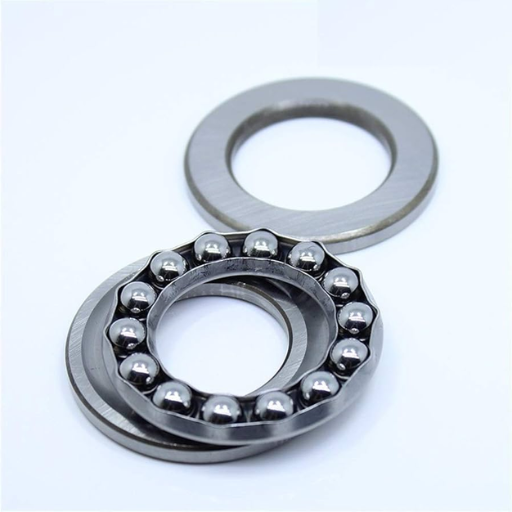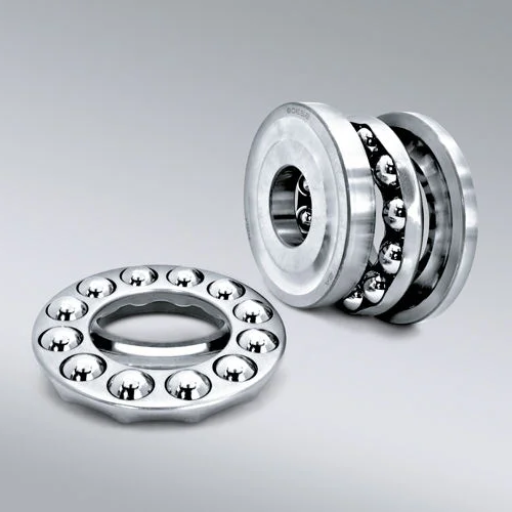
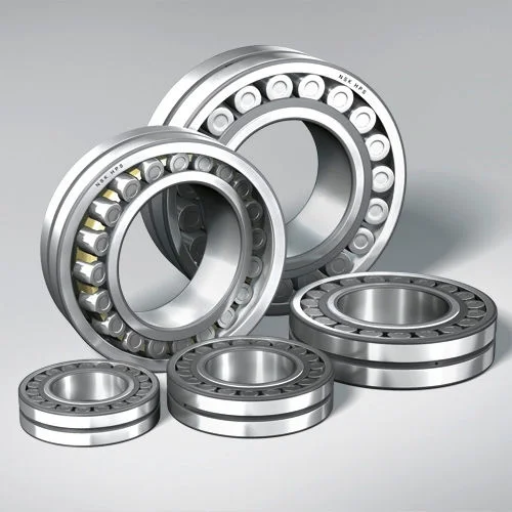



Making the right selection of a bearing is central to achieving the best performance, longevity, and efficiency of your machinery. Two of the most common forms are roller bearings and angular contact ball bearings which have unique constructions, benefits, and applications. Which one is appropriate for you? This article explores the main differences, pros, and best applications for both types of bearings. If you are dealing with a high-load industrial situation or need precision machinery with absolute accuracy, we will explain what you need to think about to make the right choice. Keep reading as we explain everything about split roller bearings and contact ball bearings.
What are the Key Differences Between Angular Contact Bearings and Tapered Roller Bearings?
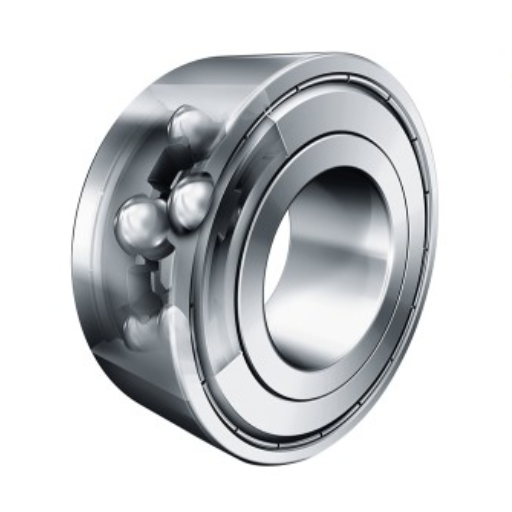
The primary difference between angular contact bearings and tapered roller bearings lies in their design and applications. While angular contact bearings can support both radial and axial loads, the degree to which they support axial load is reliant on the contact angle. They excel in applications requiring high speeds and precision, like machine tools. Tapered roller bearings, however, are better suited for slower speeds.
Load handling is often required in different automotive and industrial applications due to factors such as efficiency and endurance. However, both factors are dependent on the specific operational requirements of the system in place.
Understanding the Contact Angle in Angular Contact Bearings
In angular contact bearings, the bearing spacing or contact angle is integral to the bearing’s load capacity and is defined as the angle formed between the line joining the points of contact of the ball and raceways with a perpendicular plane to the bearing axis. Supporting axial loads maximally, larger contact angles are ideal for applications where there is a radial load in conjunction with the axial load of the bearing.
Different bearings supplied in the market are offered with 15°, 25°, or 40° contact angles and serve different performance requirements. For example, 15° is best for high-speed applications due to its lower friction and heat generation. 25° or 40° are better angles for high support of axial load. Most of the time, the manufacturer’s custom designs will serve specific needs to provide equilibrium between operational stability and efficiency.
Another aspect affected by contact angle is precision. Smaller angles yield higher rotational accuracy, advantageous for high-speed turbines or machining tools, while large angles are better suited to machine spindles and automotive gearboxes where higher axial loads dominate.
While choosing an angular contact bearing, engineers must think about the balance that needs to be made between bearing speed and load capacity. Data shows that increasing the contact angle will almost always reduce the maximum rotational speed because of greater friction, but it greatly increases the ability to bear the buckling axial force. Understanding these dynamics ensures proper bearing selection for optimized system performance.
The Role of Taper Rollers in Load Distribution
Taper roller bearings radial and axial loads in mechanical systems with the highest efficiency. The unique construction of these bearings, which possess conical rollers and raceways, enables them to bear and distribute the load over a much wider surface area which reduces the strain on the parts and increases the component life. This is particularly beneficial in environments where there are combined loads, as in automotive wheel hubs, gearboxes, or heavy-duty machines, making taper rollers best suited for such applications.
The capability of taper roller bearings to manage load more effectively than other bearings gives them a distinct advantage. For example, taper rollers support axial loads as much as 40% of their total radial load capacity, making them highly effective in challenging conditions. In addition, the roller’s contact angle impacts the bearing’s load share; a steeper angle enhances the bearing’s ability to manage axial loads but may decrease speed capability slightly.
With the development of modern materials and coatings, taper roller bearings can be further optimally designed. The efficiency of operations is improved due to wear and friction reduction brought by high-strength steels and specific surface treatments. For instance, the application of low-friction coatings alone contributes to an energy loss reduction of up to 25%, making taper roller bearings more suitable for applications where energy conservation is crucial.
In addition to these characteristics, taper roller bearings can be tailored according to specific requirements, making them highly customizable. Incorporating advanced materials with ease of adaption and a strong design broadens the ability taper roller bearings have to ensure effective load distribution globally across different industries.
Performance in Radial and Axial Load Conditions
Taper roller bearings are highly preferred when it comes to demanding applications due to their exceptional performance in managing both radial and axial loads. This kind of bearings have tapered raceways that house tapered rollers. The geometry allows these bearings to axial forces, therefore prolonging their operational life. Even radial loads are evenly distributed due to the tapered shape, thus allowing the bearing to outlast other types on the market.
Taper roller bearings are remarkable when it comes to supporting thrust forces which makes them even more useful for industries like automotive, heavy machinery, and construction that deal with these sorts of load conditions. With modern bearings, axial load capacities can range into the hundreds of kilonewtons which is a massive number for tapered bearings.
The use of high-carbon chrome steel stiffens the bearings allowing them to withstand greater energy with lower returns, making these bearings even tougher. Like with other types of bearings, tapered roller bearings also benefit from precision proportional lubrication and curing processes to withstand the challenges posed at high speeds or temperatures. These adaptations provide confidence in reliability no matter the conditions put onto the bearings, reinforcing their combined load capability demands.
How Do Angular Contact Ball Bearings Compare to Roller Bearings in Terms of Load Capacity?
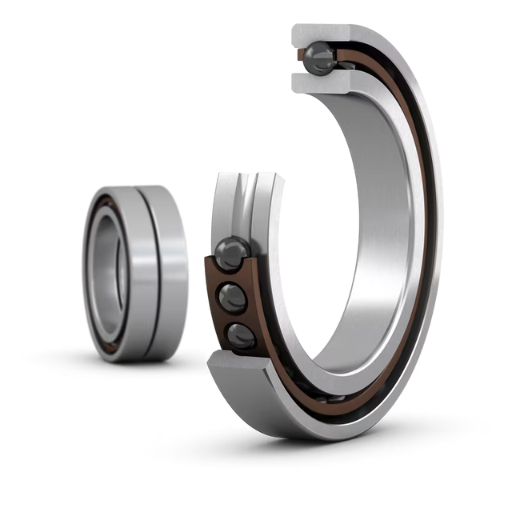
About load-carrying capacity, angular contact ball bearings and roller bearings are quite different. The radial and axial loads acting on angular contact ball bearings are endured simultaneously, but the axial load carried is usually less than that of the roller bearing. Roller bearings have a greater area of contact and therefore, offer support for a heavier load and are more efficient for radial loading. In choosing one of the two, the form and size of the load along with the working environment should be selected for the best result.
The Impact of Rolling Bearing Design on Load Capacity
The most recent changes in the design of rolling bearings have improved their performance in demanding industrial applications. Innovations in material science, such as the development of high-performance ceramics and newer steel alloys, have enhanced the bearing’s load capacity and ability to withstand extreme conditions. Also, more sophisticated bearing shapes like asymmetrical roller profiles and crowned raceways reduce stress concentration, improving load distribution and therefore reliability and performance.
Research suggests that spherical roller bearings which are frequently found in heavy-duty industrial equipment are capable of supporting nearly 3.5 times the static and dynamic loads compared to regular ball bearings. These tapered roller bearings are designed for the extreme axial and radial load requirements of automotive and marine applications.
Lubrication technology is another innovation focus area. Bearings with improved lubrication retention systems show up to a 30% reduction in wasteful wear and heat generation, directly aiding a bearing’s load capacity and lifespan. These examples further underline the need for sophisticated bearing designs tailored to specific load requirements for maximum operational efficiency and ensuring fail-safe system operation.
Comparative Analysis of Contact Area
The area of contact within the bearing defines its load distribution, wear, and life span. This means a bearing with a larger contact area will be able to distribute loads evenly, reducing concentrated stress and minimizing surface fatigue. For example, angular contact ball bearings can efficiently endure combined radial and axial loads because of optimized geometry ensuring efficient contact.
One important indicator that should be looked at is the Hertzian contact stress. Studies suggest increasing the contact area mitigates the Hertzian stress, thus improving bearing sustainability by almost 20% under heavy load scenarios. In comparison, smaller contact area bearings with point contact such as ball bearings have greater stress concentration tell aid accelerated wear in high-load scenarios.
Cylindrical roller bearings, and other line contact designs, have some distinct advantages as noted through comparison testing of various bearing types. These bearings perform exceptionally well under heavy radial loads due to the maximum contact area and operational stability. The critical relation between contact area and load parameters determines the ideal type of bearing for particular industrial and mechanical purposes. This is important for optimal functionality and life span in harsh conditions.
The Effect of Angular Contact Ball Bearing Rings on Performance
Angular contact ball bearings assist machinery performance by supporting the radial and axial loads of the machine. These types of bearings are manufactured with inner and outer raceways set at an inclination concerning each other, hence they can support combined loads more efficiently as compared to radial bearings. The bearing’s ability to sustain axial loads is determined by the contact angle and is usually between 15° and 25°. A higher value of the angle will enable a greater axial load to be sustained.
The durability and efficiency of angular contact ball bearings have been positively impacted by recent advancements in material technology and precision manufacturing. Thermal stress and wear for the bearing are more resistant with high-grade steel and ceramic materials. Studies done on the industrial performance of bearings show that hybrid bearings, which consist of steel raceways and ceramic balls, outperform all-steel bearings by 40% in speed capability and the amount of heat produced.
Furthermore, the operational efficiency of the bearings is influenced by the optimization of the preload. The appropriate use of preload silences vibrations and increases stiffness, thus enhancing precision in robotics and aerospace engineering. For instance, it has been reported that machinery with preloaded angular contact ball bearings has a maintenance-free life which is 20% longer than their counterparts.
Through these insights and appropriate adjustments, angular contact ball bearing rings can meet today’s operational requirements, while providing dependable high performance in intricate systems owing to reliable operational adaptability.
Why Choose Taper Roller Bearings for Your Application?

Customization taper roller bearings are great for applications where there is a demand for high load-bearing capacity. They are well-suited for applications that require efficient handling of combined radial and thrust loads and are frequently used in hefty machinery and automotive tools. The tapered shape allows load to be applied uniformly which diminishes stress and increases performance. Furthermore, these bearings are extremely stable and capable of maintaining accurate alignment under harsh operating conditions which enhances dependability and endurance. For high-load applications that require varying speeds, taper roller bearings are a useful and effective option.
Understanding Axial and Radial Load Capabilities
The radial and axial loads are bearing components that require careful analysis of types of bearing systems and their applications.. An axial load or thrust load is an axial force that is directed along the length of the shaft, for example, thrust loads will push or pull along the axis. In contrast, radial load operates at right angles to the shaft and extends outwards from the rotational axis.
The ability of taper roller bearings to deal with both axial and radial loads effectively and efficiently is a direct result of their special conical shape. In a taper roller bearing, the contact angle influences the axial load-carrying capability; a steeper contact angle gives better axial support. To illustrate, modern taper roller bearings are capable of sustaining radial loads of more than 5,000 Newtons while simultaneously underproducing up to half their radial limit of axial load, under ideal conditions.
Other steps in the advanced methods also augment the load-bearing capabilities of these components. The use of bearing steel alloys with higher fatigue resistance from precision machining allows these bearings to withstand greater loads and operate dependably in harsh environments. A case in point, taper roller bearings in industrial machinery have been observed to sustain reliable operation while experiencing a combination of high-speed and heavy-load operation.
A manufacturer’s specified dynamic and static load ratings must be understood to properly align the performance of a bearing with the demands of an application. Choosing a bearing with an appropriate safety margin enhances dependability while reducing downtime and operational aging – all of which translates to improving efficiency across numerous economic sectors.
Applications Where Tapered Roller Bearing Excels
Tapered roller bearings are designed to handle both radial and axial loads efficiently, making them indispensable in numerous heavy-duty applications. Below is a detailed list of industries and machinery where tapered roller bearings excel:
- Automotive Industry
-
-
- Applications: Wheel hubs, gearboxes, and differentials.
- Details: These bearings support high-speed rotation and heavy loads, ensuring smooth vehicle operation.
- Data: Capable of operating at speeds up to 7,000 RPM with load capacities exceeding 10,000 N, depending on size.
-
- Railway Industry
-
-
- Applications: Axle boxes and traction motor bearings.
- Details: Tapered roller bearings provide stability and durability, enabling railcars to carry substantial loads over long distances.
- Data: Engineered to endure dynamic loads of over 80 kN under high vibration conditions.
-
- Agriculture Machinery
-
-
- Applications: Harvesters, tractors, and tilling equipment.
- Details: Their robust design withstands harsh environmental conditions, including dirt, moisture, and variable loads.
- Data: Designed to handle fluctuating radial loads of 20-50 kN, ensuring long lifespans.
-
- Mining and Construction Equipment
-
-
- Applications: Conveyors, crushers, and excavators.
- Details: These bearings perform reliably under extreme loads and abrasive conditions typically found in mining and construction sites.
- Data: Capable of enduring static load capacities up to 300 kN in heavy-duty settings.
-
- Wind Turbine Systems
-
-
- Applications: Gearboxes and rotor shafts.
- Details: Tapered roller bearings help accommodate high axial and radial forces, ensuring consistent energy output.
- Data: Designed to operate with combined loads of up to 150 kN in renewable energy applications.
-
- Industrial Machinery
-
-
- Applications: Rolling mills, paper mills, and heavy-duty gear systems.
- Details: They ensure precision in high-load, high-speed environments, reducing wear and downtime.
- Data: Effective load ratings can exceed 400 kN for heavy industrial use.
-
By utilizing tapered roller bearings across these applications, industries benefit from enhanced performance, longer equipment lifespans, and increased productivity.
What Makes Angular Contact Ball Bearings Unique?
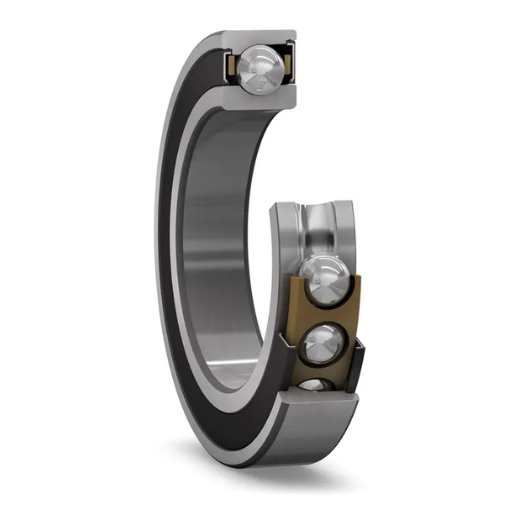
The special characteristic of angular contact ball bearings is the simultaneous support of radial and axial loads. This makes them exceptionally useful. They feature an angled raceway which allows high-speed operation while providing precision under different load conditions. They also have a high thrust capacity for applications where that is necessary. Because of this, they can be used in the automotive, aerospace, and machinery industries.
Benefits of Double-Row Angular-Contact Ball Bearings
Double-row angular-contact ball bearings have distinct features that make them valuable in highly demanding applications. They can combine axial and radial loads on the bearing simultaneously; this increases efficiency and versatility during operation which is different than high-performance machinery. Moreover, the design makes them more rigid than single-row bearings which is useful in applications that require perfect alignment and stability.
These bearings achieve greater capacity of load bearing because of their dual-row structure. For example, they are usually found in car gearboxes and axles where high-load performance is needed. As per the industry norms, contemporary double-row angular contact ball bearings are claimed to function with great efficiency at high speeds with rotational limits of 12,000 RPMs based on their size and design. They also have an exceptional degree of rotary motion due to their heat-leading attributes that lower the chances of overheating, particularly in industrial settings where devices are used for long durations without shutting down.
One other advantage is the need for auxiliary apparatus which makes its compact design very appealing among engineers, allowing huge space savings within a machine. Because of improvements in materials, lubricating technologies, and severe working conditions, these bearings’ longevity, high reliability, and protection increase while harsh conditions decrease the needed servicing. Their remarkable flexibility makes them the basis of choice in aviation, vehicles, and exact machining sectors.
The Role of Spindle Bearings in High-Speed Applications
Every spindle bearing has a crucial role to play in high-speed systems since they guarantee accuracy and stability during operations. The latest spindle bearings make use of sophisticated design features like ceramic hybrid materials used to decrease weight and rotational friction. For example, hybrid spindle bearings with ceramic rolling elements can outperform all-steel counterparts in high-speed settings, as they can attain over 1.5 million dN (bearing diameter multiplied by RPM) rotational speed.
Another equally critical concern in high-speed applications is temperature. These bearings further provide performance smoothing at high speeds with increased grease concentration along with more efficient internal shape lubricating geometries to lower the heat produced. Some spindle bearings have been claimed to retain thermal stability at over 100 degrees Celsius during continuous operation which significantly enhances dependability.
Different from other bearings, all spindle bearings have in common the ability to function reliably under harsh conditions while maintaining precision. The very demanding radial runout of less than 1 micrometer for high-speed spindles makes them essential in machine tooling, semiconductor fabrication, and aerospace engineering. Innovations like these enable unprecedented levels of productivity and precision in work which require high repeatability and reliability.
The Importance of Bearing Axis in Performance
The stability and efficiency of rotating machinery are balanced on the bearing axis. A properly aligned bearing axis aids in minimizing equipment vibration and friction while also maximizing equipment life. Not aligned bearing axes will result in uneven loadings that caustic excessive wear to equipment or lead to catastrophic failure in some high-performance scenarios.
Studies show that precision alignment can improve efficiency by an astounding 15-20% depending on the machine’s operation and the industry’s needs in terms of speed and load. One wonders if in electrical motors, an aligned bearing axis would result in a reduction of external noise and internal power losses. Furthermore, modern technology provides tools for bear axis adjustments with 0.001 inch tolerances such as laser alignment tools.
Precision in bearing axis management has greater significance in Aerospace compared to any other field, this is mostly because vibrations can be magnified greatly in performance and safety. These innovations greatly support these sensitive deadlines in overall bearing axis management, giving machinery the ability to exceed the harshest, most precise, exacting, and reliable demands.
When to Use Double Row vs Single Row Bearings?

Double-row bearings are particularly useful when there is constrained space and the application involves rotary and thrust loads in both directions. They offer more rigid stability and higher load-bearing capabilities than single-row bearings. Conversely, single-row bearings work best in high rotational speed applications with lower load requirements due to their lower heat and friction generation. The decision mainly revolves around the amount of load capacity, available space, and operated speed.
Load Capacity Differences in Double Row Bearings
Double-row bearings have been developed to have greater radial and axial loads than their single-row equivalents. This is made possible by their two-row raceway which provides better load distribution and greater stability. For instance, in real-world use, double-row angular contact ball bearings can support bidirectional axial loading and still maintain high rigidity.
Their increased load-bearing capacity is due to the larger contact angle usually put to use in double-row bearings. This results in the bearings managing a combination of axial and radial forces efficiently. With high-strength steel or the use of ceramic rolling elements, these bearings can withstand extremely harsh industrial conditions. For example, some models support radial forces of over twenty thousand newtons while supporting axial forces of up to fifteen thousand newtons.
To assist engineers in selecting the correct part for their applications, manufacturers provide both static and dynamic load ratings, along with other technical information. In conclusion, double-row bearings found their way into automotive engineering, industrial robotics, aerospace, and many more fields due to their longevity and highly reliable performance durability under varying load conditions.
Comparing Bearing Types for Specific Applications
Selecting the correct bearing type is critical for optimizing performance, reliability, and efficiency in specific applications. Below is a detailed comparison of common bearing types, including their characteristics and typical uses:
1. Ball Bearings
-
-
- Key Characteristics:
-
- Low friction operation.
- Can handle both radial and axial loads (limited axial load capacity).
- Smooth and quiet performance.
- Applications:
-
- Electric motors.
- Household appliances.
- Fans and pumps.
- Performance Data:
-
- Typical maximum speeds range up to 30,000 RPM.
- Suitable for light to moderate loads.
-
2. Roller Bearings
-
-
- Key Characteristics:
-
- High radial load capacity.
- Limited axial load handling capability.
- Durable under heavy and shock loads.
- Applications:
-
- Conveyors.
- Heavy machinery.
- Gearboxes.
- Performance Data:
-
- Can handle up to 50,000 N radial loads.
- Operates effectively at moderate speeds, typically below 10,000 RPM.
-
3. Tapered Roller Bearings
-
-
- Key Characteristics:
-
- Conical design supports both axial and radial loads.
- Excellent for high-load and high-precision environments.
- Applications:
-
- Automotive wheel hubs.
- Gear reducers.
- Aerospace components.
- Performance Data:
-
- Axial load capacity up to 20,000 N.
- Maximum speed range up to 15,000 RPM, depending on size.
-
4. Needle Bearings
-
-
- Key Characteristics:
-
- Thin, cylindrical rollers allow for compact design.
- Effective for high radial loads in limited spaces.
- Applications:
-
- Automotive transmissions.
- Power tools.
- Agricultural equipment.
- Performance Data:
-
- Radial load capacity up to 30,000 N.
- Suitable for low to moderate speeds, up to 8,000 RPM.
-
5. Spherical Roller Bearings
-
-
- Key Characteristics:
-
- Self-aligning capability accommodates shaft misalignment.
- Excellent under heavy radial and axial loads.
- Applications:
-
- Mining equipment.
- Pulp and paper machinery.
- Large industrial fans.
- Performance Data:
-
- Radial load capacity exceeding 80,000 N.
- Operates at speeds up to 5,000 RPM under heavy-duty conditions.
-
6. Thrust Bearings
-
-
- Key Characteristics:
-
- Specially designed to handle high axial loads.
- Minimal radial load capacity.
- Available as ball thrust or roller thrust bearings.
- Applications:
-
- Turntables.
- Propeller shafts.
- Heavy-duty cranes.
- Performance Data:
-
- Axial load capacity up to 50,000 N.
- Speeds vary between 1,000–7,000 RPM based on design.
-
Each bearing type offers specific advantages tailored to particular needs, making it essential to evaluate factors like load direction, speed, environmental conditions, and design criteria before selection.
Cost-Effectiveness of Double-Row Ball Bearings
Double-row ball bearings have marked a reputation for themselves in cost-effectiveness in diverse industrial applications because of their performance metrics. Their rolling element design increased the load capacity of the bearing while still being compact. Furthermore, double-row ball bearings outperform single-row bearings in radial and axial load capacity; therefore, minimizing the number of components required in machinery which makes assembling it quite cost-effective.
One factor to address while calculating double-row ball bearings’ cost efficiency is their lifespan, which is essential. When paired with proper lubrication and sealing techniques, these bearings tend to lower maintenance costs and reduce servicing downtime because the lifespan is much longer. For instance, some studies show that well-manufactured double-row bearings can exceed an operational life of over 10,000 hours in average working conditions. In addition, new advances in materials like high-grade steel and ceramics not only extend life but increase efficiency as well.
Sectors like automotive and manufacturing have embraced double-row ball bearings because of their ability to fulfill performance needs at much lower costs compared to other bearing systems. Recent industry research suggests that these bearings can reduce total expenditures by as much as 20% in low to moderate-load machinery. Double-row ball bearings offer a unique combination of strength, flexibility, low cost, and relative engineering complexity that make them a preferred solution for numerous problems.
Reference Sources
-
Investigation of Drag and Churning Losses on Tapered Roller Bearings:
- Compares drag and churning losses in tapered roller bearings and angular contact ball bearings.
- Highlights the use of ceramic angular contact ball bearings (ZrO2) for specific applications.
- Methodology includes experimental testing of bearing performance under controlled conditions.
-
- Focuses on optimizing the elastohydrodynamically lubricated (EHL) roller face/rib contact in tapered roller bearings for improved energy efficiency.
- Provides insights into the design and lubrication performance of tapered roller bearings.
- Methodology involves geometrical optimization and analysis of EHL contacts.
-
- Discusses the stiffness matrix of angular contact ball bearings and its influence on load distribution in comparison to tapered roller bearings.
- Focuses on applications in offshore wind turbines.
- Methodology includes dynamic analysis of rigid-flexible coupled systems.
-
Film Stiffness Analysis for Angular Contact Ball Bearings Considering Thermal Effect:
- Investigates the film stiffness of angular contact ball bearings and compares it with axial stiffness in tapered roller bearings.
- Highlights the impact of thermal effects on bearing performance.
- Methodology includes thermal modeling and stiffness analysis.
-
Dynamic Analysis of a Tapered Roller Bearing:
- Explores the dynamic complexities of tapered roller bearings in comparison to other bearing types, including angular contact ball bearings.
- Focuses on the geometric and kinematic challenges in analyzing tapered roller bearings.
- Methodology involves dynamic modeling and historical analysis of bearing performance.
- For more in-depth information you should view from Top Angular Contact Ball Bearings Manufacturers in China – Amigo
Frequently Asked Questions (FAQs)
Q: What are the main differences between roller bearing vs angular contact ball bearing?
A: Roller bearings use cylindrical or spherical rollers to support radial and axial loads, while angular contact ball bearings use bearing balls to handle combined loads. The choice between them depends on the specific application requirements.
Q: What is a spherical roller bearing and where is it used?
A: A spherical roller bearing is a type of roller bearing with spherical rollers, designed to handle heavy radial loads and some axial load along the bearing axis. They are commonly used in heavy machinery and industrial applications.
Q: How does a radial ball bearing differ from other types of ball bearings?
A: A radial ball bearing is designed primarily to support radial loads, with deep groove ball bearings being a common type. They are suitable for high-speed applications due to their low friction and are used in a wide range of machinery.
Q: When should one opt for cylindrical roller bearings over ball bearings?
A: Cylindrical roller bearings may be preferred when there is a need to handle higher radial loads and lower speeds compared to ball type bearings. They have a larger contact area between the rollers and raceways, providing greater load capacity.
Q: What are the advantages of using Timken tapered roller bearings?
A: Timken tapered roller bearings offer high load capacity and durability, with tapered raceways that accommodate combined radial and axial loads. They are suitable for applications requiring precise alignment and high shock resistance.
Q: How do tapered roller bearing vs angular contact ball bearing compare in performance?
A: Tapered roller bearings are ideal for applications requiring heavy load handling and durability, while angular contact ball bearings are preferred for high-speed applications due to their ability to handle both radial and axial loads efficiently.
Q: What are the benefits of angular contact ball bearings in high-speed applications?
A: Angular contact ball bearings are beneficial in high-speed applications because they have a high degree contact angle, allowing them to efficiently manage combined loads while maintaining stability and precision.
Q: How does load on the bearing affect the choice between ball or roller bearings?
A: The load on the bearing is crucial in choosing between ball or roller bearings. Roller bearings are generally better for heavy radial loads, while ball bearings are suitable for lighter loads and high-speed applications.
Q: What are the types of ball bearings and their common uses?
A: Types of ball bearings include deep groove ball bearings, angular contact, and self-aligning ball bearings. They are used in various applications like electric motors, pumps, and gearboxes, depending on load and speed requirements.
Q: Why would a roller bearing be chosen for a specific application?
A: A roller bearing may be chosen for its ability to support larger loads and provide greater durability. They have a larger surfaces contact area and are suited for applications where heavy-duty performance is necessary.