


Recognizing tapered roller bearings properly is an important ability for any individual working in sectors that involve the use of machinery and mechanical systems. Properly recognizing and distinguishing various types, sizes, and specifications of roller bearings can, however, be extremely overwhelming. This article will provide you with all the basic information and steps necessary to identify the tapered roller bearings with great confidence. Understanding the details of this article, whether one is experienced in the field or a novice, allows one to make better decisions concerning the use of machines and increases their life. Thus, enhancing the performance and durability of the equipment. So, be prepared to know the most important attributes, pragmatic pointers, and professional opinions that can change one’s approach toward the identification of tapered roller bearings.
What are tapered roller bearings and how do they work?
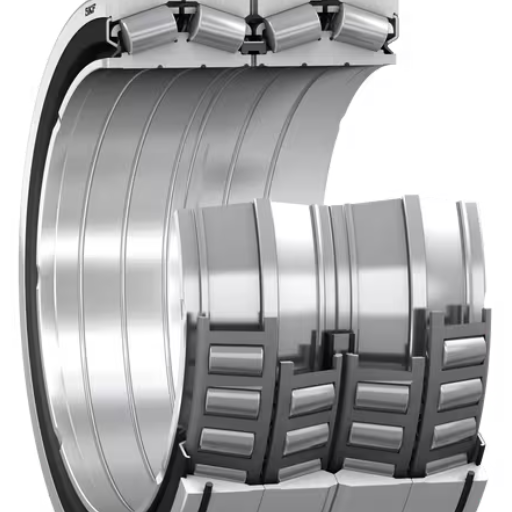
Tapered roller bearings (TRBs) are a type of rolling-element bearing that allows for the support of both radial and axial loads simultaneously. Tapered roller bearings carry an inner and an outer ring, cage, and tapered rollers that are held by the cage in predetermined positions. Tapered roller bearings efficiently achieve combined load balancing to the steady state while preserving stability. Longitudinally allocated loads are described by longitudinal radial loads. They are principally used in parts like automotive wheels and hubs along with industrial gear work machinery where precision and accuracy are fundamental. Tapered roller bearings distribute the load uniformly which minimizes friction and wear, thus providing better performance and longevity of the machinery.
Understanding the tapered shape and its significance
The tapered shape of the rollers and raceways in tapered roller bearings plays a critical role in their design. In so doing the design enhances the efficiency of the roller and raceway interfaces. The significant feature of the shape angle of the taper, has direct implications on the bearing capacity on the ratio of the axial and radial thrust forces which is extremely vital.
For example, bearings with greater taper angles are better suited to higher axial loads and are therefore appropriate for use in automotive wheel hubs, which encounter significant turning and braking forces. Research indicates that the particular shape of these bearings improves load distribution. This design reduces heat generated due to friction by up to 50% compared to conventional bearing designs by optimizing surface contact. Furthermore, the use of advanced materials, such as high-strength steel, has improved the durability and efficiency or tapered roller bearings and thus their performance.
The advantages of the tapered configuration extend beyond load distribution to include stability, reliability, and longevity in complex and demanding mechanically operated systems.
How tapered roller bearings are designed to handle loads
Tapered roller bearings are important in industrial applications because they efficiently manage radial and axial loads simultaneously. These tapered geometry bearings possess rollers and raceways that are shaped as cones, which intersect at an axel bearing point. The cone geometry provides better load distribution for the bearing since it helps distribute the forces applied uniformly across contact surfaces.
With radial loads, the angled shape of the tapered roller bearings allows smooth contact of the rollers to the raceways, which decreases stress concentration and increases the bearing’s performance when used in tough conditions. In the case of axial loads, the bearing’s taper angle is crucial. The steeper the taper angle, the more axial force the bearing can handle, such as in gearboxes and automotive wheel systems.
To determine the capacity of load handling from tapered roller bearings, they are evaluated with dynamic load ratings and static load ratings. Take for instance, some of the most advanced models are said to handle up to 500,000 N newtons dynamic load ratings for heavy machinery and still be considered durable. Modern manufacturing advancements like precision machining or heat treatment processes boost the load-bearing capabilities of these tapered roller bearings. Such innovations prevent excess wear and distortion, thus extending the reliability and lifespan of the bearings under harsh operating conditions.
The role of inner and outer rings in performance
Both the inner and outer rings of a bearing have a crucial impact on its overall performance of bearing, especially on its performance under high loads and high speeds. The shaft is held by the rotating inner ring and the outer ring is held in the housing. Together, they allow for smoother motion and free rolling of the elements within the rings by providing a raceway that reduces friction.
Material science has greatly improved the wear resistance and strength of these rings. Good steels, like 52100 chrome steel, are often used because it is incredibly tough and well-hardened. With these materials, inner and outer rings are capable of supporting tremendous loads. For example, bearings made with such steel can handle over 500 kN of dynamic load without deforming significantly. Moreover, Surface treatments like Nitriding and phosphate coating further improve the durability, decreasing abrasion, corrosion, and other damaging factors.
An additional inner and outer rings’ performance factor is precision machining. It is mostly caused by a tight fit between the rings and the rolling components, which minimizes internal clearance and heat in operation. The strengthened rings undergo enhanced heat treatment where their microstructure is refined such that extreme temperatures can be endured without losing structural integrity and shortening lifespan.
Performance is greatly influenced by the geometry of the rings. Stress concentration within the raceway is mitigated with logarithmic or crowned profiles which also allow for even distribution of stress across the load-bearing surface. This ensures fatigue failure will not happen and increases the lifespan of the bearing even if heavy misalignment exists. It has been proven through extensive testing and simulations that optimization of inner and outer ring geometry has up to 30% increase in operational life, which are necessities for modern bearing systems.
How do you identify bearings by their physical characteristics?

When trying to identify bearings, analyze the following key features:
Shape and Type – Identify the bearing shape as ball, tapered roller, or cylindrical roller, and subsequently classify the bearing type based on its shape and construction.
Size – Internal and external measurements are taken alongside the width measurement considering these dimensions are of utmost importance for indication purposes.
Markings – Look for identification numbers that are engraved or stamped onto the surface of the bearing. Such stamps usually detail information regarding the type, size, and series of the bearing.
Material – Examine the material which is usually steel, ceramic, or some alloy, as it shows the probable application of the bearing and its strength.
Fulfilling the above features of a bearing goes a long way in making certain that its type is accurate as well as its selection for the intended purpose.
Key features of a tapered roller bearing
Tapered roller bearings are exceptionally manufactured to accommodate rotary and axial forces simultaneously, making them very flexible in industrial and automobile uses. Their major characteristics include:
Tapered Geometry– The bearing comprises an inner ring, which is the cone, an outer ring which is the cup, tapered rolling elements, and a cage, which ensures proper spacing. The tapered angle enables the bearing to carry the transverse loads along the length of the rollers, which helps reduce stress and the damage done to the bearing.
Load Capacity– The tapered roller bearings can sustain a greater combination of loads (both axial and radial) than other types of bearings. They are well built to function effortlessly under strenuous conditions such as those found in wheel bearings and in gearboxes.
Precision and Performance– Tapered roller bearings are noted for their rotational precision far above of other bearing types owing to the way that they are purposely built. High precision guarantees enhanced performance, and with less energy required for operations due to reduced friction, it saves on energy consumption.
Durability and Material Composition– Tapered roller bearings are normally made from high-quality steel alloys. They undergo heat treatment, making them more durable and resistant to wear and tear. Some models can also be purchased with special coatings such as black oxide, which improves rust resistance.
Application-Specific Design. The design features of tapered roller bearings offer remarkable flexibility which allows them to be customized for particular uses. A good illustration is in the automotive industry where smaller bearings are used in vehicle wheels while larger ones are employed in heavy machines such as those used for mining.
Standards and Variations. Compliance with industry standards such as ISO or SAE specifications ensures a certain level of reliability and interoperability.
Differences between roller bearings and ball bearings
Roller bearings and ball bearings are fundamental parts of machine systems, but they vary widely in design, use, and operation. Knowing their differences aids in ensuring the right bearing is chosen for particular applications.
1. Design, Load Bearings & Handling
In comparison with roller bearings, ball bearings support radial loads with spherical rolling elements. This enables them to handle light to moderate radial and thrust axial loads. Roller bearings have cylindrical rolling elements which better serve heavy radial loads due to a greater contact area. This design feature enhances the load-carrying capacity of roller bearings compared to ball bearings of the same size. Hence, roller bearings have a greater load-bearing capacity than ball bearings.
2. Contact Area
The area at which the raceway and the rolling elements interact differs due to the shape of the roll. Ball bearings have point contact which gives them lower friction and enables higher speeds. Unlike ball bearings, roller bearings have line contact which enhances load bearing and durability but lowers rotational speeds.
3. Uses
Depending on the precision and efficiency of the bearing, ball bearings can be used in low-load and high-speed applications such as electric motors, fans, and bicycles. Due to higher load and shock handling capability as well as higher durability, roller bearings are mainly used in conveyor belts, gearboxes, and other industrial machinery.
4. Longevity and Performance
The operational life of these bearings depends on the load and speed conditions. Due to the greater contact surface area of roller bearings, they have less stress over time and greater longevity in more demanding applications. On the other hand, ball bearings turn much more freely and at higher speeds, smoother for long periods due to lower friction if the load is moderate.
5. Sizes and Variants
Both ball bearings and roller bearings come in varied sizes and shapes, including deep groove ball bearings, tapered roller bearings and spherical roller bearings. There are options to customize according to industry needs, often with roller bearings being larger and sturdier to suit the heavy equipment and automobile industry.
Key Data Comparisons
Load Bearing Capacity: Roller bearings can handle up to 50% more radial load than an equally sized ball bearing.
Speed Ratings: Roller bearings will function at 10-30% lower speeds than ball bearings under the same conditions.
Temperature Tolerance: More sophisticated designs of roller bearings will withstand lower temperatures than their ball-bearing counterparts making them suitable for harsher climates.
Both types of bearing have their strengths and choosing the right one would depend on the operational requirements, load and the speed of rotation the system uses.
What to look for in the bearing size and diameter
Selecting the right size and diameter of a bearing entails a delicate balance of different factors to ensure high performance and a long lifespan. The bearing size and diameter have a direct impact on the bearing’s load-carrying capacity and the maximum achievable speed. As the size of a bearing increases, its ability to endure radial and axial loads generally increases, but maximum speed may be limited due to increased friction.
In the case of precision applications, bearing fitment requires the inner and outer diameters to coincide with the shaft and housing dimensions so that the fit is snug but not too tight. Incorrectly sized bearings will lead to other problems such as excessive noise, vibration, and accelerated wear. A case in point are standard ball bearings in industrial applications, which are typically within common bore ranges of 10mm to 100mm, and heavy-duty machine tools that often require custom bearings over 200mm.
Load distribution should also be examined in regard to the overall bearing size. Small-diameter bearings reduce inertial forces for high-speed machinery, while larger bearings are preferred for high-load environments. Reference to ISO and ABEC standards s when enhancing tolerances, especially for precision work. Achieving the ideal combination of these three parameters creates a reliable and efficient system.
What are the differences between single-row, double-row, and four-row tapered roller bearings?

Single-row tapered roller bearings can accommodate radial and thrust loads in a particular direction simultaneously and as with other types of bearings, there is a limit to how much force they can sustain. For that reason, they are often utilized in places where only moderate forces are applied like in automotive and industrial equipment.
Due to the existence of two rows of rollers, double-row tapered roller bearings can equally support greater axial and radial loads in both directions. This enables their use in places like equipment and gearbox systems where high load-bearing capacity is a necessity.
Four-row tapered roller bearings are meant for use in areas with exceptionally high radial loads and moderate axial forces. They are commonly located in machinery such as rolling mills which need to be rugged and powerful in operations.
Advantages of single-row tapered roller bearings
Roller bearings with single rows and taper configuration can successfully tackle radial and axial loads effectively which broadens their applicability across multiple fields of industry. Their inherent structure guarantees optimum management of the axial load through the angled raceways and rolling elements that enable better load distribution. This enhances operational dependability and minimizes the need for maintenance.
Some of their best attributes are the large bearing load that can be carried as well as endurance and reliability even in high-speed operation. Research and performance studies also show that single-row tapered roller bearings can sustain extreme ranges of hot temperatures over 120 degrees Celsius, contaminated systems, or poorly lubricated systems. Besides, their compact design helps to save weight and space in the machinery while still providing the desired performance.
These bearings find application in automotive, mining, and industrial machines where better stability, low friction, and long service life is needed. Long-term dependability, cost efficiency, and durability for the user are achieved by incorporating advanced materials and manufacturing by improving the operating life and wear resistance of these modern single-row tapered roller bearings.
Understanding double-row configurations
Compared to single-row configurations, double-row tapered roller bearings are designed to support greater radial and axial loads due to the more effective weight distribution of their dual-row design. These bearings are used for applications that involve high rigidity and load-bearing capabilities, for example: gearboxes, heavy machinery, and railway vehicles.
Something that stands out in double-row configurations is their capacity to withstand combined loads in both directions. This feature proves to be beneficial in cases where stresses change direction and magnitude often or in reverse. Newer materials and heat treatment processes improve the endurance and life-cycle of these bearings, reducing required maintenance and operational hiatus.
Performance data indicates that double-row tapered roller bearings have more than seventy-five percent load rating enhancement compared to previous designs – achieving as much as 35% over earlier designs– and optimized internal geometry decreases heat friction causing smoother operation. These factors lead to improved overall operational energy efficiency in industrial systems and meet the growing demand for eco-friendly standards by different fields.
Applications for four-row designs in heavy machinery
Four-row tapered roller bearings are well-known in the fields of heavy machinery that require a high load capacity and great reliability. These designs are used efficiently in rolling mill equipment which requires support of large radial and axial loads. The four-row configuration has enhanced load capacity which enables them to function well in harsh, vibrating conditions with high rotor speeds.
For example, steel mills have hot and cold rolling processes that require constant operational pressure along with thermal expansion. Four-row designs are ideal in this situation as they generate less heat while having a higher load-carrying capacity. Modern designs have high-precision heat-treated steel which is proven to enhance durability leading to 20% better performance than older bearing versions.
Moreover, these bearings are modified to serve as part of mining equipment like conveyors and crushers which are exposed to heavy contamination and shock loads. The new sealing technologies incorporated on four-row bearings greatly keep dirt from invading the system extending performance while reducing servicing time. The updated geometries and new materials incorporated into these bearings also rose the reliability and uptime of the machines improving productivity in several industries.
How do I measure the inside and outside diameters of Taper Roller Bearings?
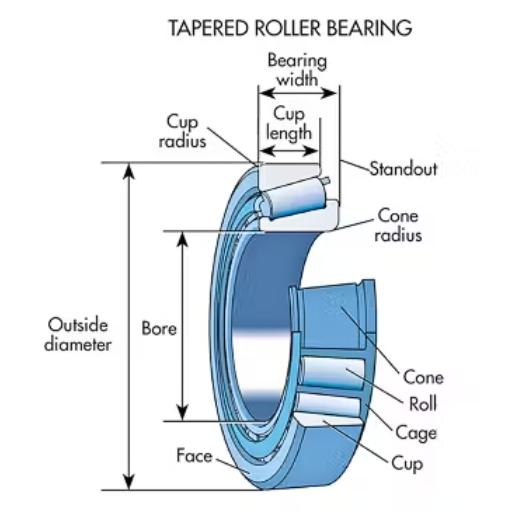
The following points detail the processes for obtaining the inside and outside diameters of taper roller bearings:
- Measuring the Inside Diameter (ID):
- Take a caliper or micrometer and measure the inner race’s width which is the circular opening in the center of the bearing.
The measuring instrument must be tight against the inner edges, so no slack is present during the reading.
- Measuring the Outside Diameter (OD):
- Place the caliper or micrometer at the most outward part of the outer race.
Also, measure the width of the bearing for its outer diameter to be able to measure the outer diameter.
Always review your measurements for any mistakes and make sure to use the correct measuring tools for measurement consistency.
Tools required for accurate measurement
For an accurate measurement of the components of the bearings, the following tools are needed without which the results can vary:
- Calipers
- Calibration of the inner and outer diameters using digital dial or vernier calipers is recommended.
Measuring small parts in a timely fashion is simple and efficient.
- Micrometer
- Measuring the thickness or diameter of parts requires a high degree of precision and this tool caters to that.
In some instances especially with small tolerances, this tool is more precise than calipers.
- Depth Gauge
- Incredibly important in cases where measuring the depth of the bearing housing or grooves needs to be done.
Can be relied upon to measure intricate details as well as provide truthful readings.
- Tape Measure
- Can be employed when component measuring is required to be done quickly, and for rough measurements initially. Most appropriate for rough and less detailed measurements.
- Feeler Gauge
- Used to measure the space between two components.
Commonly used to determine fit or alignment of bearings.
- Dial Indicator
- Used for precise measurement of alignment or small displacements from a set position.
Crucial in diagnosing runout or misalignment problems of rotating bearings.
- Measuring Tape with Metric and Imperial Units
- Useful in switching from one form of measurement to another.
Provides flexibility in standards of measurement.
- Marking Tools (e.g., Scriber, Marker)
- Assists in marking a measurement as a mark or reference for documentation.
Carefully captures all steps done during the measurement process.
- Magnifying Glass
- Assists in thorough checking of small details and readings of precision tools.
Useful for checking clear markings for measurements or defects.
Remember to keep all tools in good working order and check their calibration regularly to increase accuracy in measurements.
Step-by-step guide to measuring the bearing diameter
A systematic approach is crucial if one wishes to achieve precision while measuring the bearing diameter. To have the finest results, make sure to follow these steps:
- Prepare the Area of Measurement Physically
- Clear the workplace of any dirt that can obstruct the measurement process.
Ensure that all tools, such as calipers and micrometers, are clean and in proper working condition, and that they have been set to the correct calibration standards.
- Pick the Correct Tool for the Job
- When measuring external diameters, employ a vernier caliper or an outside micrometer.
For internal diameters, utilize an inside micrometer, a bore gauge, or a telescoping gauge.
- Measure the Outer Diameter (OD)
- Using a bearing, position the caliper or the micrometer used to the outer surface bearing.
While observing roundness, take measurements over the circumference at numerous points. Be sure to record the highest value as the outer diameter.
If the precision is high, the measurements must be taken to a resolution of at least 0.01 mm or finer depending on the tool used.
- Measure the Inner Diameter (ID)
- For internal dimensions, position the measuring apparatus at the center of the bearing’s inner cross-section.
Exercise care when moving the caliper or gauge to reduce any tilting. Take readings at multiple positions.
As before, for accuracy in determining: the center point radius, document the highest measurement.
- Measure the Width
- Use calipers or micrometers to measure the bearing by placing them across the outer sides to check the width.
Consistent bearing width must be checked by rotating the caliper or micrometer while measuring, confirming that no deformations have occurred.
- Analyze the Data Collected
- In analysis, to estimate tolerances, calculations should be made using average values alongside assessing the manufacturer’s documentation or technical drawing.
- Bearings should be preserved
- To ensure the measurement does not apply any excessive force to avoid altering the geometry of the component, handle bearings delicately.
After making the measurements, work on maintaining the tools as well as storing the bearings in a clean condition avoiding the tools getting soiled or damaged.
Obeying these steps will guarantee precise collection of bearing diameter measurements which precision in assembly and operation requires, so long as the gathered values are compared against the stated values for the specified bearing type.
Importance of metric measurements in identifying bearings
Identifying and classifying bearings is made easier by metric measurements due to standardization and accuracy. The metric system provides a standardized framework that allows for collaboration and communication between manufacturers, engineers and technicians around the globe. As an example, bearings measure the inner and outer diameters (or width) in millimeters which allows for compatibility across industries.
Data received recently indicates that the ISO 15 standard, the international guideline for rolling bearings, and boundary dimensions, is mainly in metric measurements. This accuracy is important as some applications, such as high-speed machinery, need tight tolerances. In those scenarios, even a small error could cause operational inefficiencies. In addition, using metric measurements to relate a bearing to its housing or shaft decreases equipment downtime during maintenance, thus improving reliability. Following these measurements results in optimal performance, lower costs, and efficient workflows.
How to differentiate between tapered roller bearings and other types of roller bearings?
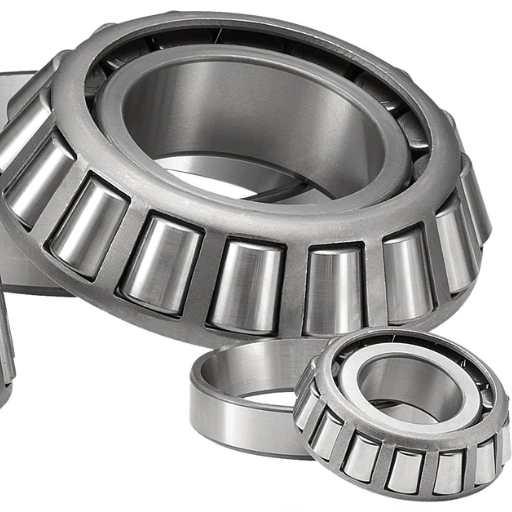
What differentiates a tapered roller bear when compared to other roller bearings is its unique geometry. Tapered roller bearings offer conical-shaped rollers as part of their unique structure, which is inclined to the axis of the bearing. For this reason, tapered roller bearings are capable of simultaneously supporting radial and axial loads, and are therefore useful in applications that require combined load support. Other types such as cylindrical or spherical roller bearings do not have this capability, as tapered roller bearings are able to accommodate larger bound axial forces. Another distinguishing feature of tapered roller bearings is the shape of the inner and outer raceways which are also tapered.
Comparing cylindrical roller bearings and tapered roller bearings
Both tapered and cylindrical roller bearings are used in industry, but each serves different purposes as a result of their unique design and performance features. The longer the roller and raceway contact area, the greater the radial load that can be sustained. Therefore, cylindrical roller bearings are mainly intended to sustain high radial loads. They are not effective in axial load support, but indexed high-speed rotary applications servicing electric motors and turbine shafts take advantage of the high radial speed and low friction provided by these bearings.
On the other hand, tapered roller bearings have an angular contact, enabling them to bear radial and large-magnitude axial loads at the same time. It has been established that where tapered roller bearings are used, cylindrical ones can support considerably less axial load; this is particularly true for oblique load applications such as vehicle wheels and gearboxes.
In terms of overall bearing lifespan, tapered roller bearings are more durable in heavy-duty applications owing to their better contact width. For instance, industry benchmark reports have shown that tapered bearings outperform cylindrical roller bearings by about 30% in lifespan during combined load conditions.
Understanding the unique load-handling capabilities
The tapered roller bearing has a distinct advantage of both radial and axial load handling which makes them useful in applications with blended loads. Its conical shape enables more uniform force distribution on the bearing’s surface area which avails operational life and reduces wear and tear. For example, tapered roller bearings are largely used on wheel hubs in automobile applications to sustain the combination of radial forces and cornering axial forces.
More recently, advancement in material technology and precision manufacturing have further increased their performance. Modern tapered roller bearings are estimated to yield as much as 20 percent greater load capacity than traditional designs due to an optimized bearing geometry. In addition, laboratory test results show that some high-performance models can be up to 10–15 percent faster with heavy load stability achieved at these increased speeds. Such improvements are critical in servicing aerospace, mining, transportation, and other industries where dependability and productivity are essential.
The impact of raceway design on bearing performance
How a bearing’s raceway gets designed impacts its efficiency and durability. An optimally designed raceway enhances load sharing, minimizes friction, and increases the bearing’s life. Improvement of raceway geometry, especially smoothing and precise shaping of edges, has greatly reduced operational noise and wear.
Studies suggest that some new concepts such as logarithmic raceways have added structural durability by reducing contact pressure under high loads by 15 to 20 percent. Efficient lubrication is enhanced by better lubricant film formation which reduces chances of overheating during operation. Railways and turbine manufacturing, industries that operate at high speeds, have seen operational efficiency increase by as much as 12 percent with the use of bearings featuring modern raced profiles.
Such innovations highlight the innovation gap in raced design to satisfy the needs of contemporary industrial applications.
Reference Sources
-
Investigation of Drag and Churning Losses on Tapered Roller Bearings:
- Explores the influence of oil quantity on friction torque in tapered roller bearings.
- Highlights methods to identify frictional losses and their impact on bearing performance.
- Methodology includes experimental studies and numerical simulations.
-
The Dynamics of Tapered-Roller Bearings–A Bottom-up Validation Study:
- Focuses on identifying issues in the dynamic behavior of tapered roller bearings.
- Discusses analytical methods to trace torque and temperature rise in bearings.
- Methodology involves detailed dynamic modeling and validation.
-
- Identifies optimal roller face and rib radii ratios for reducing frictional losses.
- Highlights the importance of geometry in bearing identification and performance.
- Methodology includes geometrical optimization and energy efficiency analysis.
-
Implementation of Frequency Response Function on Tapered Bearing Maintenance:
- Discusses methods to identify tapered roller bearings and detect defects like scratches.
- Highlights the use of frequency response functions for bearing identification.
- Methodology involves experimental analysis and defect identification techniques.
-
Bearing Fault Classification Using Multi-Class Machine Learning (ML) Techniques:
- Explores the use of machine learning to classify and identify faults in rolling bearings, including tapered roller bearings.
- Highlights the potential of ML techniques for accurate bearing identification and fault detection.
- Methodology involves machine learning models and data from rolling bearing test rigs.
- View Taper Roller Bearings Manufacturers in China – Amigo details to get into the details
Frequently Asked Questions (FAQs)
Q: What is a tapered roller bearing?
A: A tapered roller bearing is a type of roller bearing that is composed of inner and outer races with a set of rollers and a cage. The rollers are conical in shape and meet at a common point on the bearing axis, allowing them to support heavy radial and thrust loads.
Q: How does the cage function in a tapered roller bearing?
A: The cage in a tapered roller bearing acts as a retainer, separating the rollers and ensuring they rotate smoothly, preventing the bearing from overheating and maintaining its efficiency under load.
Q: What are the key differences between tapered roller bearings and needle roller bearings?
A: Tapered roller bearings are designed to support heavy radial and thrust loads with rollers that meet at a common point on the bearing axis, while needle roller bearings have long, thin rollers that provide high load capacity in a compact space but primarily support radial loads.
Q: How are tapered roller bearings measured?
A: Tapered roller bearings are measured in metric sizes, with dimensions typically specified in millimetres. Key measurements include the diameter of the bearing, the width, and the contact angle, which affects the load capacity of the bearing.
Q: Can tapered roller bearings support axial loads?
A: Yes, tapered roller bearings are designed to support axial loads in addition to radial loads, thanks to their conical rollers and contact angle, which allow them to manage forces in multiple directions.
Q: What applications commonly use tapered roller bearings?
A: Tapered roller bearings are commonly used in applications that require the support of heavy radial and thrust loads, such as in automobile wheel hubs, gearboxes, and various other machinery.
Q: Are tapered roller bearings separable or non-separable?
A: Tapered roller bearings are generally separable, meaning the cone assembly, which consists of the inner race, rollers, and cage, can be mounted separately from the outer race.
Q: How do you identify the load type a tapered roller bearing can support?
A: The load type a tapered roller bearing can support is influenced by its design, including the contact angle and the size of the rollers. These factors determine the bearing’s capacity to handle radial, axial, or combined loads.
Q: What are the benefits of using tapered roller bearings over ball and roller bearings?
A: Tapered roller bearings offer the advantage of supporting both radial and thrust loads, unlike ball bearings which primarily support radial loads. Additionally, their design allows them to handle heavy loads and operate efficiently under high stress conditions.