


Tapered roller bearings are integral parts of numerous machines and industries because they can handle radial and axial loads simultaneously. If you are in automotive manufacturing, heavy machinery, or industrial equipment, the optimal tapered roller bearing will improve performance, reduce wear, and increase machinery longevity. However, with the multitude of options present, how does one know which bearing is ideal for their application? This guide seeks to provide a structured approach so that you grasp the features, advantages, and critical factors of selection so that your decision works in favor of operational efficiency. Read along to discover how you can unlock the value offered by this incredible machine part.
What Are Taper Roller Bearings and How Do They Work?
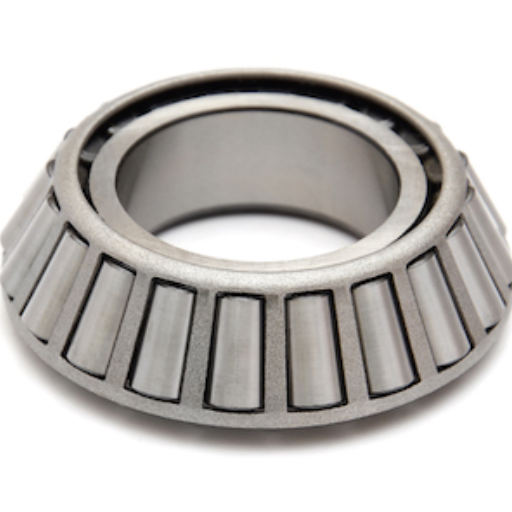
Tapered roller bearings are a type of rolling element bearing that can endure radial and axial forces simultaneously. Their structure consists of an inner ring, an outer ring, tapered rolling elements, and a cage that retains the rollers. This design culminates in uniform contact along the raceways which improves load distribution as well as overall performance, especially in high-stress situations. Due to their high reliability, precision, and capability to withstand heavy-duty loads, these bearings are widely used in automotive wheels, industrial machinery, and gearboxes.
Features of Tapered Roller Bearings
High Load-Carrying Capacity
Because tapered roller bearings can accommodate radial and axial loads simultaneously, they are useful in demanding applications. Their geometry ensures the contact area is high and stress is distributed uniformly along the length of the rollers. This capacity is particularly useful in the automotive and construction industries, where heavy loading is a frequent requirement.
Durability and Longevity
The components of tapered roller bearings are made from steel alloys with distinct carbon attributes, so the parts exhibit wear and fatigue life. This construction guarantees constant operation while experiencing cyclical heavy-duty cycles, thus, maintenance costs and downtime is minimized.
Customizable Design Options
Some manufacturers of tapered roller bearings specialize in producing a range of diameters, tapers, and other features for special orders adding value to certain applications. For instance, readily available single, double, and four-row designs improve flexibility in gearboxes, axles and other stationary equipment.
Heat Resistance
Modern tapered roller bearings can operate at elevated temperatures while retaining physical and performance properties. Specific heat treatments and advanced lubricants further enhance their structural endurance under extreme environmental conditions.
The Framework
Friction in tapered roller bearings is minimized by optimized engineering, which lessens energy waste and noise during operations. This precision enhances the performance of machinery with lower power consumption. The advanced design significantly supports industries like robotics and aerospace, which require precise movements.
The multifaceted attributes of tapered roller bearings allow for their ubiquitous applicability and undeniable significance. They are not limited to a single sector, as they find application in automotive wheel systems, agricultural machinery, mining equipment, and even wind turbines. Their flexibility makes them a go-to choice for engineers tackling diverse, high-demand environments.
With the attributes mentioned above, tapered roller bearings remain crucial in modern mechanical assemblies by providing reliability and efficiency in numerous industrial, commercial, and financial undertakings.
The Unique Design of Tapered Bearings
Tapered roller bearings have a very particular structure where both radial and axial loads are handled efficiently. The inner and outer ring raceways along with the rollers are shaped like cones, which achieves this. The race angles and the roller positions are perfect, thus guaranteeing even force distribution on contact surfaces which leads to reduced friction and wear.
High-performance tapered bearings have also been improved with modern material science developments. High-strength steel alloys together with advanced engineering ensure reliability while boosting the load-bearing capacity. A good example is the addition of heat-treated parts to many high-capacity tapered roller bearings which boosts resistance to fatigue by 30%. In addition, the modern optimized roller profiles lessen the extreme stress concentration and prolong the service life under harsh operating conditions.
Research shows that tapered roller bearings are capable of withstanding thrust axial loads 20-30% more than other standard bearings of similar size which is critical to high-speed and heavy-load industries. The precision lubrication strategies adopted have also boosted performance enabling a reduction in downtime by as much as 40% for some industrial users.
Thanks to this combination of innovative design and advanced technology, tapered bearings remain highly effective for balancing strength, efficiency, and durability for critical applications.
Applications of Roller Bearings in Industry
From preventing wear and tear to ensuring durability within an industrial context, roller bearings have become an integral part of modern industry. Let’s analyze the different industries that rely on roller bearings and their specific uses.
- Automotive Industry
Roller bearings play a pivotal role in the smooth functioning of vehicle parts like wheel hubs, transmission systems, and differentials. For example, tapered roller bearings have broad applications in car hubs, where they bear radial and axial loads in tandem. The global demand for roller bearings in the automotive industry constitutes 30% of the total market.
- Aerospace Industry
Unlike intuitive thought, lightweight roller bearings are used in aerospace applications. Needle and cylindrical roller bearings are used within jet engines and control systems, within landing gears, for the sustenance of reliability at extreme temperatures and speeds. Their use additionally improves fuel consumption and maintenance checks.
- Construction and Heavy Machinery
Roller bearings are crucial in gear scribers, cranes, and excavators, their ability to withstand harsh conditions without downtime. Spherical roller bearings are extremely suited for these applications due to their ability to withstand extreme misalignment and continual pounding vibrations.
- Energy Sector
Power generation companies, due to their importance, have embraced roller bearings in their fleets to increase productivity, reliability and system efficiency. Wind farms are one area where the use of roller bearings has been noted. Roller bearings are also used extensively in power plants. It’s been noted that the energy sector accounts for approximately 15% of the total global consumption of roller bearings.
- Mining and Material Handling
Again, due to this sector’s importance, mining equipment like shovels, trucks, and drillers employ roller bearings to enhance performance, reliability, and bearing life in high productivity and harsh operating environments. The use of conveyors which increase mechanization of materials handling in processing plants is also accompanied by the use of crushers. These pieces convey a lot of materials, thus they have to be able to lift considerable loads.
- Manufacturing and Production Facilities
The majority of the manufacturing sector heads towards modernization in a bid to achieve higher productivity, faster operations, and countless other benefits. Commands spindles, conveyor belts, and presses the most common from these parts, operate at high rates and incorporate roller bearings seeking longer lubricating intervals and protection from fume. Definite position control and low friction help optimize the operations in the assembly line and reduce the costs associated with operations.
- Railway and Transportation Industry
In railway transportation, cylindrical and spherical roller bearings are widely used in axle boxes and freight cars for rolling and bearing heavy loads at high speeds. Heavy freight cars, which are more difficult to push in a train, mostly give the demand for these spares. These modified bearings can hold more grease and slower lubricant flow to increase servicing intervals.
The growth of technology and changes in global coupling have increased the demand for roller bearings in all industries which require reliability, efficiency, and increased productivity.
How to Choose the Right Taper Roller Bearings for Your Needs?

The factors to be taken into consideration for choosing taper roller bearings are the following:
- Load Requirements: Establish the type and size of the load exceeding which the bearing will not function properly. Consider both radial and axial loads to ensure the bearing can be effective for such a range.
- Operating Speed: The bearing selected must be tailored for the application’s rotational range. The greater the bearing’s friction, the lower the speed it is suited for.
- Working Conditions: Consider the working conditions like the temperature, humidity, and the presence of other interfering substances. Choose bearing compositions that can be protected adequately from the condition or those with appropriate seals or materials.
- Interchangeability: Make sure the dimensions of the bearing fit perfectly with the requirements of the equipment for mounting and overall design.
- Persistency With Maintenance: Choose reliable and trustworthy sources that can provide high-quality bearings known to withstand periods of low maintenance which in turn reduces downtime.
After proper analysis of the given factors, the correct taper roller bearing for any application need can be selected.
Factors to Consider When Choosing Tapered Roller Bearings
- Load Capacity and Speed
With tapered roller bearings, efficient handling of combined axial and radial loads is achieved. According to industry sources, these bearings offer better performance under load compared to other bearing types due to the conical shape they possess. When selecting a bearing, pay attention to the dynamic load rating (in kN) and ensure it meets the operational speed requirements for your case. For instance, the high-speed application bearings have to be designed and lubricated to reduce friction properly.
- Material and Heat Treatment
The material of the bearing, like hardened steel or advanced alloys, directly contributes to life span and performance efficacy. Modern bearings often make use of through or case-hardened steels that resist wearing and fatiguing remarkably. Auto and heavy-duty machinery industries, for example, often expect these bearings to withstand extreme temperatures due to their application in demanding environments for mobility and construction purposes.
- Precision and Tolerance Standards
Bearings must comply with specific precision and tolerance standards, like those prescribed in ISO or ABEC classification. Higher precision is a must for areas with demanding rotation and operation noise while robotics and aerospace engineering require additional precision. Always check the tolerance grades to ensure they meet the equipment’s envisioned performance level.
- Sealing and Lubrication Efficiency
Lubricants play a critical role in the optimal operation of bearings as having integrated seals or shields delays the ingress of dirt, water, dust, and other contaminants. The relevant grease or oil has to be selected and applied appropriately as well to meet the required operating conditions. Also, performance during operations like rotating must not lead to excessive heating of the components. In cases where these conditions are extreme or where high speeds are encountered, synthetic lubricants should be used.
- Temperature Range and Environmental Adaptability
Bearings that are meant for harsh environments such as those encountered in some industries need to be able to withstand low temperatures of around -40°F and extreme temperatures over 300°F (-40°C to 150°C). Mining and marine industries in addition to a bearing’s temperature limitations also require resistance to moisture and corrosion which can be overcome through advanced coatings like phosphate or chrome plating.
- Assembly and Care
Less complex installation and lower periodic maintenance are major factors for consideration for most users. Cost and time spent for setup are reduced with pre-lubricated or preset bearings. Operational efficiency and downtimes are in turn improved when the selected bearings have longer service intervals and monitoring methods built into them.
When considering these factors, businesses and engineers can opt for tapered roller bearings which suit their needs best while assuring ease of use and functionality.
Understanding Tapered Roller Bearing Components
Components of Tapered Roller Bearings
Tapered roller bearings are made to balance radial and axial loads at the same time. An understanding of the inner components is key to improving the efficiency and life of the bearing. These are the main parts of a tapered roller bearing:
1. Inner Ring (Cone): The inner ring is the rotating part of a bearing that rides on the shaft. The cone contains the tapered rollers and is important for controlling the torque.
2. Outer Ring (Cup): The stationary outer ring holds the rollers and contains the raceway. The precision of the guide also guarantees the rigidity and strength of the bearing.
3. Tapered Rollers: These angle rollers assist in load distribution, having a radial and axial load combination. Where combined load applications are required, the taper of the bearing is critical as it provides support for radial and axial load handling.
4. Cage: The cage or separator provides even spacing between the rollers to prevent contact. Thus, friction in the bearing is minimized. It also aids in reducing the bearing’s wear during operation by holding the rollers in position for free rotation.
Key Considerations in Performance
- Load Distribution: The rollers due the easiest tapered profile, thus performing optimal contact with the raceways due to the angle of the taper which places loads evenly and hence reduces wear. These bearings are capable of greater load-bearing strength than other types of bearings with equivalent measurements.
- Material and Coatings: Corrosion and fatigue resistant as well as having high durability, tapered roller bearings are made from high-strength steel or alloys. Some bearings are provided with special coatings that improve lubricant properties and resist heat.
- Dimensional Precision: Low vibration and steady operation is ensured with precision machining and may be critical for high-speed and high-load operations.
- Contact Angle: The axial load capacity is largely dependent upon the angle of contact between rollers and raceways, with steeper angles providing greater support.
Investigation of the components that make taper roller bearings provides a chance for engineers and technicians to select systems like automotive, industrial machines, or heavy-duty machines.
Matching the Type of Load with the Right Bearing
Choosing a bearing needs special attention to the type of load it will carry about the design of the bearing itself. Each design is more suited to certain operating conditions than others and not all bearings will give the same lifetime for all loads. Loads are usually divided into radial, axial, or a combination of both and each load type will need different bearing features to be optimized.
Radial Loads
For primarily radial loads, best suited are the ball bearings and cylindrical roller bearings. Ball bearings are multipurpose; they work excellently at high speeds and have low friction. This makes them very useful for electric motors and other household appliances. Heavier radial loads are better served by cylindrical roller bearings since they spare more contact surface to the load, improving wear and tear over time.
Axial Loads
For thrust loads, bearings must be specially developed to counter any linear forces acting along the shaft. Thrust ball bearings are used widely for moderate axial loads, especially in low-speed operations. Spherical thrust roller bearings are used in very high axial loads where the shaft can get misaligned, like in turbines or ship propulsion systems.
Combined Loads
Bearings must be custom-made to accommodate the specific requirements for applications with both radial and axial loads, because of the combination of the two forces at play. Tapered roller bearings are widely available because of their design; tapered rollers situated between the inner and outer raceways handle the dual load directions effectively. These bearings are common in the automotive industry, especially in wheel hubs and gearboxes.
Additional Considerations
- Load Ratings: Prerogatives of a bearing’s static and dynamic load ratings must align with an application’s operational requirements to avoid premature incurring damage prematurely.
- Speed and Temperature: At high speeds and temperatures, friction is often a problem; therefore, low-friction bearings, especially ceramic hybrid bearings, are ideal and perform better.
- Material Strength: The use of sophisticated materials such as chrome or stainless steel alloys improves a part’s durability, especially in its areas of corrosion, wear, and high stress.
Selecting the appropriate bearing about the type of load is crucial. Taking into account the environment and operational conditions also allows for more favorable efficiency, reliability, and service life. Data-driven selection methods based on advanced simulation technologies optimize these decisions for industrial and mechanical systems, ensuring maximum performance.
Understanding the Differences: Tapered Roller Bearing vs Spherical Roller Bearing
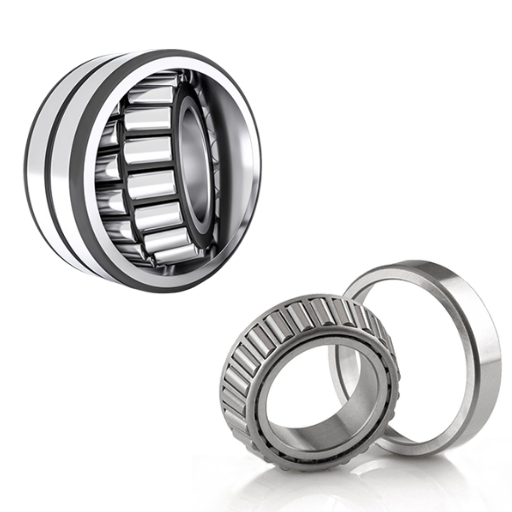
Tapered roller bearings are used when both radial and axial loads are present, such as in automotive wheel hubs and gearboxes. The cone-shaped design of these bearings provides precise alignment under heavy loads with high load-carrying capacity.
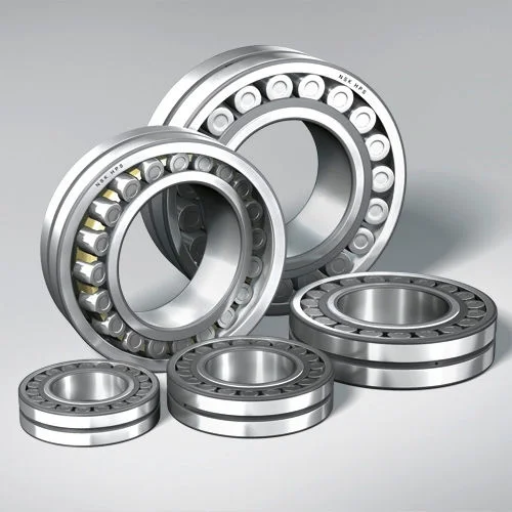
They are ideal for such applications as industrial machinery or equipment that have shaft deflections or misaligned mounting positions because spherical roller bearings primarily accommodate misalignment and predominantly tolerate heavy radial loads with some axial load capability.
The main distinction is concerning load handling and the capability of managing misalignment. Tapered roller bearings are more useful in high precision, high load applications with aligned settings, while spherical roller bearings serve better in general applications with high radial loads, and misalignment.
Comparing Tapered and Spherical Roller Bearings
Load Capacity and Performance
Tapered roller bearings are capable of axial and radial load handling simultaneously. Their conical shape facilitates better combined load bearing with improved stiffness which is important for precision applications like gearboxes and hubs of automobiles. For instance, tapered roller bearings can support several hundred kilonewtons of dynamic load approval depending on the design which is very important for critical operations.
Spherical roller bearings are used to bear heavy radial and moderate axial loads of a misaligned shaft. These self-aligning spherical roller bearings are used in mining, construction, and paper milling. Their load ratings are over a thousand kilonewtons for large designs which is necessitated by harsh conditions where shaft deflection, housing misalignment, and off-axis placement frequently occur.
Misalignment and Durability
An astonishing highlight of spherical roller bearings is the ability to compensate for up to a few degrees of shaft misalignment. This makes them popular in uses where the machinery is subject to deformation or installation inaccuracies. On the other hand, while tapered roller bearings are not self-aligning, proper alignment during installation supports greater efficiency and longer life under optimized conditions.
Speed and Temperature
In comparison, tapered roller bearings operate best under high speed due to the retention of rotational equilibrium and minimization of frictional heat. These bearings are more common in applications needing constant speed and precise load control. Moderate speeds suit spherical roller bearings, as they operate better where significant loads are present instead of high rotational speeds. In addition to this, specially designed spherical roller bearings can also perform effectively at extreme temperatures geared with enhanced lubrication technology and advanced materials.
Applications Summary
This decision between tapered and spherical roller bearings is guided mostly by the requirements of the specific application. Tapered roller bearings are best for situations involving extreme loads and speed, provided the alignment conditions are strictly controlled. Spherical roller bearings dominate in the other regions of performance, that is, in heavy-duty industrial applications where there is a greater prevalence of shaft misalignment and erratic operational conditions.
Pros and Cons of Tapered Roller Bearings
Pros:
- High Load Capacity: Tapered roller bearings can radial and vertical thrust loads simultaneously which makes them suitable for applications with mixed load configurations.
- Precision and Stability: These bearings exhibit outstanding stiffness and rotational precision which ensures great consistency in performance on high-speed and precision machine tools and automotive components.
- Durability: The strong operational and radial clamping forces make it possible for tapered roller bearings to operate under severe harsh conditions such as high levels of vibration and extreme mechanical stress.
- Customizable Designs: The wide range of sizes, angles, and configurations permits manufacturing tapered roller bearings to particular requests.
- Superior Alignment Support: The tapered shape assists with friction and heat reduction needed for rotational motion while preserving proper alignment as tapered roller bearings disperse thrust loads simultaneously.
Cons:
- Higher Cost: Other bearing types, are generally cheaper than tapered roller bearings which incur greater expenses due to intricate designs and manufacturing processes.
- Greater Sensitivity to Misalignment: While suitable for alignment-centric endeavors, improper alignment during installation may lead to uneven load application, resulting in disproportionate wear and tear over time.
- Maintenance Requirements: Regulated upkeep becomes necessary if lubrication is not done routinely during precise assembly as these bearings operate under optimal conditions which increases the demand for maintenance over time.
- Limited Axial Load Capacity in Single Direction: A single tapered roller bearing supports unidirectional axial forces, bearing pairs may be required for bi-directional axial loads.
Tapered roller bearings are some of the first choices for industries such as automotive, mining, and wind energy, proving their worth in high-load, high-speed industries. Knowing where these bearings excel and fail helps users adopt them efficiently for different purposes.
How Do Tapered Bearings Handle Different Loads?

Tapered roller bearings are made to bear both radial and axial loads simultaneously. Their taper shape aids the roller surface efficiency and durability under different conditions of load of the bearing. They withstand almost all engineering applications that have combined loads and offer great strength and dependability. Furthermore, the adjustable tapered roller bearings also enable tuning of preloads, making proper balance possible for many taper roller bearing uses.
Radial and Axial Loads in Tapered Bearings
Unlike other bearings, tapered roller bearings are meant to work with axial and radial loads at the same time. The angle of tapered rollers permits them to manage these forces effectively by relieving stress along the bearing axis. These bearings are used widely in automotive wheel hubs, industrial machinery, and gearboxes, so the engineers who designed them wanted to offer smooth service in balancing high stress.
Bearings with taper angles of greater than 25° contribute more optimally for heavy axial load support as compared to moderate ones. Load-bearing capacity also increases with steeper angles. Thus, bearings with 15° angles would be suited for moderate axial loads. Radial loads also have a robust bearing support design, routinely sustaining radial loads that range in the tens to hundreds of kilonewtons; these bearings are useful in extreme operating circumstances involving dynamic shafts or heavy wheels.
Increased internal stiffness leads to improved deflection control for axial and radial load applications. Adding preload enhancement accomplishes the aforementioned alongside achieving better internal clearance, and reducing deflection with lower heavy load conditions. Maintaining precise alignment while extending lifespan. Furthermore, modern materials such as advanced steel alloys, comprehensive lubricants, and aging tapered roller bearings add value by providing improved energy efficiency and exceptional durability, thus making the bearings more responsive to the increasing demands of industrial operations.
The Role of Thrust in Bearing Selection
Thrust impacts which bearing to select for particular applications since it directly affects how much axial load the bearing can support. Through the ranges of axial and radial forces, bearings encounter, the right thrust capacity must be understood to provide optimal performance and reliability. For example, tapered roller bearings are best suited for applications where both radial and axial loads are high, such as in the automotive and heavy machinery industries.
While choosing a bearing, the axial load criteria must also be checked. A spherical roller thrust bearing carries an example, where it can support heavy machinery axial loads above 200 kN for low-friction and operational efficiency. Other considerations include shaft misalignment, lubrication, operating speeds, and a host of others. Thanks to advancements in bearing design done by many manufacturers, some hybrid ceramic bearings are designed to endure massive loads and actively rotate above 10,000 RPM, smashing previous limitations on load capacity.
Employing modern materials and design improvements alongside proper thrust understanding allows increased system durability and performance across various fields. This translates to extended uptime in demanding environments.
Load-Carrying Capacity of a Tapered Roller Bearing
Not only do tapered roller bearings carry radial loads, but they also support axial loads. Because of this versatility, they are useful in many aspects of industry. Their load-carrying capacity is influenced by the contact angle, roller size, and overall bearing material quality. Generally, tapered roller bearings are configured to take greater axial loads in applications with predominately axial forces. This load-bearing capability stems from the large contact area between the rollers and raceways.
Take the single-row tapered roller bearing, for example; it can support radial and axial loads simultaneously. Further, the double row or paired configurations are optimized for high-load environments. The ability to withstand severe operating conditions is further improved with new material technologies, like high-carbon chromium steel or ceramic coatings.
Industry sources claim that certain high-end tapered roller bearings can support static radial loads from thousands to millions of Newtons, depending on the bearing size and application. Such bearings also reach operational speeds which are maintained with considerable load stresses, and they do so with precision and minimal noise. Reliability and longevity, especially in the demanding fields of automotive, aerospace, and heavy machinery, require careful consideration of lubrication, alignment, and preload to optimize these factors.
What Are the Key Bearing Components in Tapered Roller Bearings?

Tapered roller bearings have four main parts:
- Inner Ring (Cone): This is the part that is attached to the shaft. It holds the support of the rollers which rotate freely underneath the load applied.
- Outer Ring (Cup): This part encircles the bearing assembly and fits in the housing to ensure correct positioning.
- Tapered Rollers: These are the rolling elements that absorb the load while rotating with minimal friction. because of their shape, the bearings are capable of accommodating radial and axial loads.
- Cage (Separator): It secures the rollers, so they do not move; this guarantees the desired spaces between them during operation.
Each part of the structure is efficient on its own but will work optimally when combined with other parts as a system.
Understanding the Inner and Outer Ring
The guiding and carrying loads in tapered roller bearings are done by the inner and outer rings. The inner ring, or the cone, interfaces with the rolling parts- the elements- and allows them to move in a straight line relative to the bearing’s axis. The outer part, also known as the cup, surrounds the inner components and transfers external loads uniformly to avoid excessive stress.
Both the inner and outer parts are designed to be made out of steel of considerable strength to ward off excessive wear and tear, and deformation to ensure best performance. Their rigorous processes to increase wear resistance include using sophisticated construction techniques that guarantee frictionless contact during spinning. Surpassing minuscule gap standards is vital for speedy and tough conditions like those faced in vehicle wheel hubs and industrial tools.
Improvement of the surface of the rings is known to reduce friction significantly to more than a fifth of the entire friction, showing data from research, thus smoothing operation and extending the lifetime of the bearings. Furthermore, modern designs offer these rings specialized coatings or treatments such as black oxide or titanium finishes that increase corrosion resistance and lessen the effect of temperature shifts while in operation. These changes accentuate the need for taper roller bearings to undergo constant redesigning in order to fulfill their intended uses in hostile environments.
The Function of Raceways in Bearings
Bearings raceways are vital to the proper functioning of all bearings since they affect the load-bearing capability and frictional performance of the bearing. The raceways are positioned as surfaces on which the rolling elements, such as balls or rollers, rotate. Therefore, the raceways are mechanically worked to accuracy and they are polished to ensure that the motion is smooth, and the energy used is not wasted.
When it comes to bearing a load, modern raceway designs have undergone even greater changes. For instance, the optimization of raceways to accept axial and radial loads has reached a new level. Improved raceway geometry can increase the load-carrying capacity of a bearing by up to 15% in comparison with classical designs. Furthermore, new technologies have led to the increased use of materials such as high carbon chromium steel and ceramic coatings for raceways which improves the static and dynamic durability and resistance to erosion from repeated high-stress cycles singularly exponentially.
The surface treatment, as well as the lubrication methods employed, are significant in mitigating fatigue failure of raceway bearings. Studies show that using fine-polished raceways with low-friction lubricants can reduce operational friction by 10-15%, which increases efficiency and prolongs the bearing assembly’s life. Such improvements are essential in aerospace, automotive, and heavy industry applications where dependable performance in extreme conditions is needed.
Importance of Roller Rows and Spindle Bearings
Roller rows and spindle bearings are critical parts that affect the accuracy and effectiveness of rotating equipment. The placement and condition of roller rows affect the load-bearing and rotational balance of the system, ensuring that everything runs smoothly during high-speed and high-load operations. For example, cylindrical roller bearings are more efficient for industrial applications because of their improved roller geometry, which greatly reduces edge stress and increases radial load capacity.
In contrast, spindle bearings are designed to have high stiffness and precision because of the needs of aerospace, manufacturing, and robotics. Parts like spindle bearings are usually made with ceramic or hybrid materials today because they are more resistant to thermal and wear stress. Data indicates that using ceramic balls instead of steel in a bearing leads to a 40% reduction in heat generation, therefore increasing operational life and reducing maintenance needs. In addition, primary spindle bearing lubrication systems are highly advanced and help to maintain low friction, resulting in constant performance regardless of the harsh conditions.
With well-designed roller rows and high-performance spindle bearings merged optimally, the integrated results are superior operational reliability, improved energy efficiency, and an increased service life and modern mechanical systems jealously needed. This highlights the urgent need for better engineering and industrial machinery, their prime purpose being to advance facilities bare for striking leaps in technology.
Reference Sources
-
The Dynamics of Tapered-Roller Bearings–A Bottom-up Validation Study:
- Explores the dynamic behavior of tapered roller bearings, including torque and temperature rise.
- Provides insights into selecting bearings based on their dynamic performance under various conditions.
- Methodology involves analytical modeling and validation of bearing dynamics.
-
Investigation of Drag and Churning Losses on Tapered Roller Bearings:
- Examines the influence of oil quantity on friction torque in tapered roller bearings.
- Highlights the importance of lubrication and load conditions in choosing the right bearing.
- Methodology includes experimental studies and numerical simulations to analyze frictional losses.
-
- Focuses on optimizing the design of tapered roller bearings to maximize fatigue life.
- Discusses the role of dimensional tolerances and material properties in bearing selection.
- Methodology involves the use of evolutionary algorithms to achieve robust design optimization.
- If you are looking for more information about Taper Roller Bearings – Amigo go here right away
Frequently Asked Questions (FAQs)
Q: What are tapered roller bearings and how do they differ from other types of roller bearings?
A: Tapered roller bearings are a type of roller bearing that can handle both axial and radial loads. Unlike angular contact ball bearings, the rollers are tapered, which allows them to effectively manage a combination of forces. This design is beneficial for applications requiring meticulous control over bearing movements and loads.
Q: What are the key considerations when choosing the right bearing for an application?
A: Key considerations include the load capacity of the bearing, the bearing axis alignment, the type of loads the bearing will support, the environmental conditions, and the speed of bearing movements. It’s also important to consider the internal design, such as the number of rollers and the taper of the rollers.
Q: How can I determine the appropriate bearing series for my needs?
A: To determine the appropriate bearing series, you should assess your application’s load requirements, space constraints, and the type of movement involved. Consulting with a bearing manufacturing company can provide you with options like single-row bearings or spherical bearings based on your specific needs.
Q: What advantages do tapered roller bearings offer compared to simpler bearing types?
A: Tapered roller bearings offer advantages such as higher load capacity, the ability to handle combined loads, and enhanced efficiency in managing bearing movements and loads. This makes them suitable for applications like wheel bearings and turntable bearings where precision and reliability are critical.
Q: What is the significance of the bearing bore in tapered roller bearings?
A: The bearing bore is significant because it determines how the bearing will fit onto the shaft. Proper fitting is crucial to ensure optimal performance and longevity of the bearing. The bore must match the axis of the bearing for seamless integration into the machinery.
Q: How does the internal design of tapered roller bearings affect their performance?
A: The internal design, including the taper of the rollers and the number of rollers, directly impacts the bearing’s load capacity and efficiency. A well-designed internal structure allows for better distribution of forces and enhances the overall performance of the bearing.
Q: What role does precision play in bearing manufacturing?
A: Precision in bearing manufacturing is essential to ensure that bearings offer reliable performance and longevity. High precision allows for meticulous control over bearing movements, reducing wear and increasing the efficiency of the machinery in which they are used.
Q: Why are tapered rollers positioned in a specific way within the bearing?
A: Tapered rollers are positioned in a specific way to manage the distribution of axial and radial loads effectively. This positioning ensures that the forces applied are evenly distributed along the axis of the bearing, preventing premature wear and failure.