


Without a doubt, roller bearings are some of the most important elements in the majority of machines and industries today. Choosing the proper type of roller bearings is critical as it affects the performance, productivity, and lifetime of the application. Roller bearings possess several alternatives, but firms may find it simple to identify the most appropriate ones. This also applies to spherical and cylindrical roller bearings with particular construction features. Both types of these roller bearings are widely used. If you are a mechanic or even an engineering specialist, knowing the various designs of these will assist you a great deal in making the right choices. This guide seeks to provide a thorough comparison of spherical and cylindrical roller bearings based on their structure, operation, and use. After reading this guide, you know which type of spherical or cylindrical roller bearings to go for depending on your needs.
What are the basic characteristics of spherical and cylindrical roller bearings?
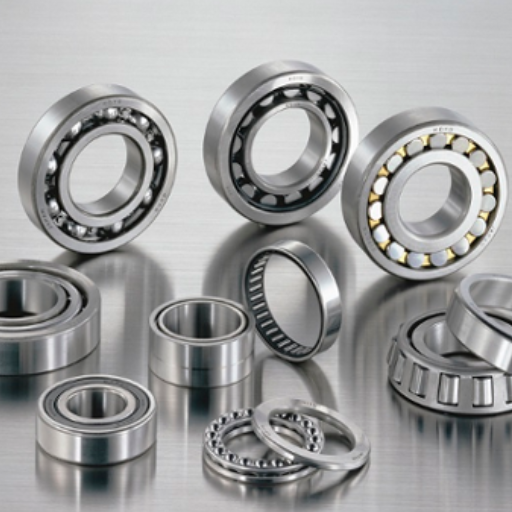
Both spherical and cylindrical roller bearings have distinctive functions and features which are as follows:
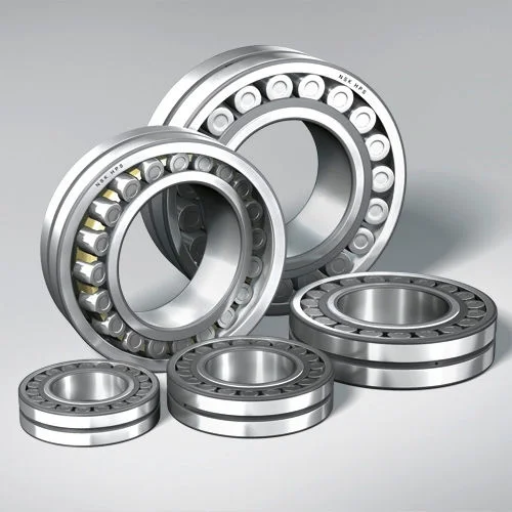
- Spherical Roller Bearings: These bearings can reliably accommodate axial and radial loads simultaneously. They are well suited for operations with moderate amounts of misalignment and heavy-duty performance, mostly found in construction and mining. They can adapt to mounting errors or shaft deflections while withstanding misalignments.
- Cylindrical Roller Bearings: These bearings are designed to handle high radial loads in high-speed applications. Rollers placed parallel to the axis of the bearing improve radial geometric accuracy, making the performance under precision and rigidity requirements superb.
Each of these types are extensively employed in different industries; however, the choice between the two depends on the specific operational alignment requirements as well as load and motion control criteria.
How do spherical roller bearings differ from cylindrical roller bearings in design?
The wedge axial load spherical self-alignment roller bearings can accommodate the misalignment and axial loads. The difference between the spherical roller bearings and cylindrical roller bearings primarily is that spherical roller bearings have an inner ring that comprises of two raceways while an outer ring has a spherical raceway. The self-alignment property makes the spherical roller constant speed bearings ideal for applications with deflection and misalignment in the shaft. Such applications include heavy machinery as well as vibrating.
The rollers in the cylindrical roller bearings are cylindrical and operated along the raceways in a straight line. These bearings perform excellently when there are high radial loads and high speeds of rotation. However, there is no provision for significant axial load and misalignment compensation. Recent data shows that spherical roller bearings can accommodate angular misalignment of 1-2.5 degrees depending on the design. This is not the case with cylindrical rollers as they have little to zero angular adjustment capability.
Besides that, spherical roller bearings usually have two rows of rollers which give them a greater load-carrying capacity than cylindrical roller bearings of the same size. This makes them more suitable for heavily loaded machinery and harsh operating conditions, for example, in mining, construction, and marine environments. This illustrates the importance of having the proper type of bearings in industrial applications to maintain reliability and efficiency.
What are the key components of both bearing types?
Integrated taper and cylindrical roller bearings include parts that enable them to perform optimally in their intended industrial applications. These parts include:
- Inner and Outer Rings (Races):
Inner and outer rings aid in ensuring proper seating and movement of the rollers. The outer ring is placed within the housing while the inner ring is tightly fitted in the bore of the shaft. Tapered roller bearings are capable of handling both axial and radial loads due to their conical raceways. On the other hand, cylindrical roller bearings can only support radial loads due to their raceways.
- Rollers:
Load transmitting parts that occupy the space in between the races are called the rollers. For tapered roller bearings, combined loads could be effectively distributed through the use of conically shaped rollers. Only radial forces are sustained by cylindrical rollers in cylindrical roller bearings; thus, it offers a higher load capacity. Irrespective of the bearing type, roller geometry has to be precise and consistent to achieve smooth operation and reduced friction.
- Cage:
Rollers are guided to be properly spaced apart by the cage so that they do not contact one another. This helps reduce friction and heat generation. Depending on the type of bearing and the operational conditions, cages can be made of steel, brass, or polymer. For tapered roller bearings, stronger cages are used to accommodate greater loads and misalignment due to increased demands on the bearing.
- Seals and Shields:
Dust and moisture is held out of internal components with seals and shields, which are vital in the construction and mining industries. These components also make sure lubricants are retained in place, therefore internal components are not damaged while working in lubrication neglectful places.
- Lubrication Channels:
Ancient lubricators do not make life easy in modern society, which is technologically advanced. Relief grooves or channels are now almost ubiquitous in modern bearings as they aid effortless delivery of lubricators resulting in reduced depreciation of service life.
- Load-Bearing Capacity and Performance Data:
Cylindrical roller bearings outdo most bearings because of the high radial forces in fast-rotating shafts encountered in electric motors and gearboxes. On the other side of the capabilities fence, tapered roller bearings do an admirable job in automotive applications such as wheel hubs, enduring a good deal of axial loads.
Every engineer has to balance between a couple of factors such as load demand, working conditions, and many others to devise an appropriate bearing fit for their need. Gears serve as an example of a component where the blend of all these features seamlessly converges.
How do spherical rollers compare to cylindrical rollers?
The key distinction of spherical roller bearings as opposed to cylindrical ones is their capacity to accommodate angular misalignment. Spherical rollers comprise two rows of rollers whose outer ring contains a common spherical raceway. This enables the rollers to take both radial and axial loads under extremely difficult operating conditions. Thus, these bearings are best suited for applications such as mining equipment, paper mill machinery, and heavy industrial equipment where shaft deflection or misalignment is prevalent.
Cylindrical roller bearings, in contrast, are better suited for higher speeds and have increased radial load capacity, often found in electric motors and gearboxes with precise alignment. Their singular line of contact with the raceways and lower friction than spherical rollers increase the efficiency of aligned systems while reducing energy costs and friction.
In terms of comparing loads, spherical roller bearings tend to have an edge in combined loads and irregular operating conditions. They have exceptional shock and vibration resistance, for example, vibration that occurs with material handling equipment. Cylindrical roller bearings outperform all others in environments with high speed and minimal axial load.
Choosing between the two options relies heavily on the alignment expectations, operational speed, the application’s load requirements, and the environment. Although spherical roller bearings are easier to adapt with, requiring more alignment sensitivity, cylindrical rollers are more efficient and dependable in controlled environments.
How do load capacities differ between spherical and cylindrical roller bearings?
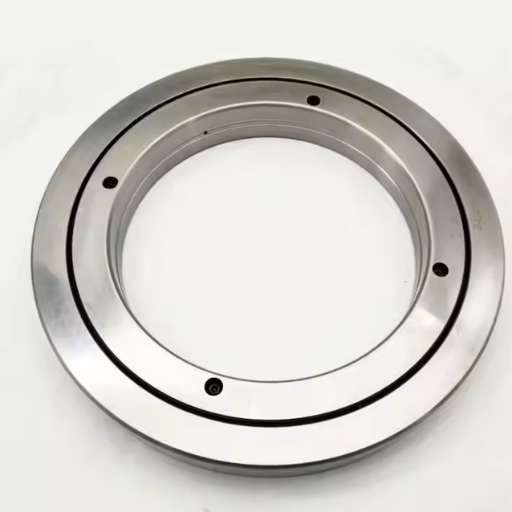
The design of spherical roller bearings allows them to have higher radial and axial load capacity compared to cylindrical roller bearings. Spherical geometry enables these bearings to evenly distribute loads across the bearing. In contrast, cylindrical roller bearings have a better performance in applications where high radial load is required but little axial load is acceptable. Their linear contact design restricts them from handling as much axial load as the spherical design. Thus, the selection between the two depends on the bearing application’s load requirements.
Which bearing type handles heavy radial loads better?
As far as radial loads are concerned, cylindrical roller bearings can handle larger radial loads than any other type of bearing because of their linear contact geometry. They have relative radial contact with the roller elements which helps in distributing load greater than other types. A good example would be the electric motors, gearboxes, and heavy-duty conveyor systems which make use of cylindrical roller bearings and are considered industrial machinery.
Research suggests that the radial load capacity of cylindrical roller bearings ranges between 10,000 N and 1,000,000 N, based on the bearing’s design and size. They are very useful in high-speed and high-load environments because of the radial load placed on them. However, if the application compromises with significant axial loads a spherical roller bearing could be more useful as they have a favorable blend of radial and axial load. Having analyzed all the requirements, conditions on site, and, specific machinery to consider, choosing the type of bearing is the last step.
How do these bearings perform under axial load conditions?
The design of cylindrical roller bearings focuses on managing radial loads, as they are most efficient with radial load. When it comes to significant axial loads, they become less effective. In some configurations, these bearings can take small amounts of axial force, but they perform poorly as the axial load increases. This is because the rollers are not axial stability mechanisms. They lack tapered rollers or spherical rollers, making them less capable of combined load handling. Some studies and engineering data claim that certain modified cylindrical roller bearings, such as those with flanges or guide rings, can take limited axial loads. But these cases are highly application-specific. Those bearing types may be better for heavy machinery because they reliably handle the central control of the axial forces.
What are the combined load capabilities of each bearing type?
The capability of a bearing to sustain combined loads (a mixture of radial and axial forces) differs greatly with the type and design of the bearing. Following are the major combined load capabilities of common bearing types:
1. Ball Bearings
Ball bearings have the widest application and their main purpose is to handle radial and axial loads of moderate size. Their axial load bearing capacity is less than what is available in bearings specially made for these conditions. For example, angular contact ball bearings give better support to some pumps or gearboxes wherein the contact angle offers better sustenance for the axial load due to its design than the radial load, hence having higher partial combined load capabilities.
2. Cylindrical Roller Bearings
Cylindrical roller bearings are mainly made to support radial loads of great magnitude. These are also from the category with the lowest capability of axial loads unless some features such as flanges or guide rings are added to the design. Certain advanced cylindrical roller bearings, like those used in extremely high-speed rotating parts, exhibit some resistance to the petty axial loads and still remain excellent for the radial loads.
3. Tapered Roller Bearings
Their geometry gives tapered roller bearings a unique capability of managing high combined loads. In these bearings, the rolling elements are angled allowing radial and axial forces to be balanced. For demanding applications like turbines and heavy-duty machinery, tapered roller bearings commonly deliver dependable performance under dynamically combined load conditions.
4. Spherical Roller Bearings
Spherical roller bearings are extremely adaptable, able to bear a great deal of radial loads and moderate to high axial loads. They work best on misaligned shafts or in situations with high-impact shock loads like mining. Their efficiency as a heavy industrial bearing makes them a prominent choice in simultaneously handling both types of load.
5. Thrust Bearings
Thrust bearings, which include thrust ball bearings and thrust roller bearings, are primarily designed as thrust or radial bearings, but some designs allow for minor radial forces. Examples of thrust-bearing applications are in rotary tables or used vertically on shafts. Other bearing types have relatively broader uses as thrust bearings have limited capabilities with custom-designed thrust bearings only serving certain applications.
Due to engineering advancements, the overall load performance of different bearing types has been improved to some extent by contact geometry, new materials, as well as surface treatments. Selecting the correct bearing type for combined loads entails evaluating the operational parameters such as environment, speed, and load distribution.
What are the alignment capabilities of spherical vs cylindrical roller bearings?
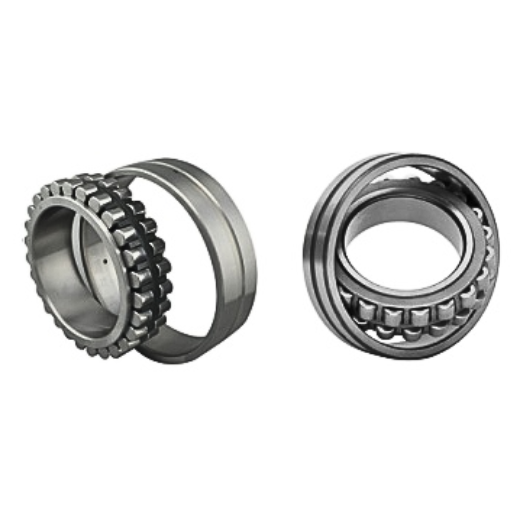
Spherical roller bearings are ideal for supporting structures and mechanisms because of their self-aligning ability to compensate for deflection due to deformation of the support structure or errors during assembly. This feature issue become common alignment problems in many applications. In contrast, cylindrical roller bearings have no such capability, which makes them better suited for applications with no variation in alignment.
Why are spherical roller bearings considered self-aligning?
They have self-aligning capabilities because of the outer ring with a common spherical raceway which allows appropriated axial thrust caused by angular misalignment between the shaft and housing. This geometry allows low-stress conditions around the bearings housing. Unlike other types of bearings, spherical roller bearings can adjust to deflection incurred misalignment due to deformation of shaft, housing change shape, or installation errors.
Self-aligning features of the bearings are quite beneficial in the case of heavy industry work. They, for example, are often found in the working parts of conveyors, in mining machinery, and in wind turbine generators, where some degree of shaft misalignment is almost always present. Tests suggest standard spherical roller bearings retain performance with up to ±1.5° misalignment, and some high-performance designs have even greater flexibility.
Also, the strong axial and radial load capacity provides these bearings with exceptional durability in harsh operating conditions. Modern spherical roller bearings are often constructed with sophisticated materials and lubricants which offer lower friction and longer service lifespan even when facing tough operating conditions. Such attributes make these bearings suitable for industries that need performance enhancement while dealing with alignment issues.
How does misalignment affect cylindrical roller bearings?
For cylindrical roller bearings, misalignment can pose a serious threat to functionality and may even shorten operational life. These bearings are made to withstand high radial loads. Unlike cylindrical bearings, however, these bearings are less tolerant of angular misalignment. A typical feature of misalignment leads to uneven distribution of loads placed onto the rolling elements. This leads to increased bearing straining as well as accelerated wearing on bearings, surface degradation otherwise known as spalling or flaking is encountered.
Research indicates that small disruptions such as 0.03-degree misalignments can lead to an increase in frictional heat within the bearing. This can lead to machinery failure and unanticipated downtime. For instance, businesses that deploy cylindrical roller bearings in high-speed or heavy-load applications tend to experience significant bearing fatigue if alignment issues are neglected.
Regular maintenance and proper alignment techniques reduce the issues relating to misalignment. Strategies such as precise installation, implementation of alignment instruments, and advanced techniques like vibration analysis help address misalignment issues. These practices ensure that the cylindrical roller bearings operate efficiently in sensitive tasks.
When would you choose self-aligning features over rigid designs?
In scenarios where operational or assembly irregularities may occur, self-aligning features should always be preferred over rigid designs. Self-aligning self-bearing features are beneficial for applications that encounter shaft deflection, mounting inaccuracies, or housing distortion. A case in point is the mining and paper industry where the machinery is subjected to large and uneven loads, as well as a plethora of operational conditions. The ability of self-aligning bearings to compensate for angular misalignment greatly reduces the stress placed on components and subsequently enhances equipment lifespan.
As research shows, self-aligning bearings with an angular misalignment capability of about 3° are more flexible than rigid designs which are stuck tolerating less than 1°; hence, these rigid structures can be more prone to equipment failure. In addition to this, self-aligning bearings contribute to diminished maintenance expenditures and reduced downtimes as well. In one particular example revolving around the rolling mill operations, self-aligning bearings were able to reduce maintenance time by 20%, as frequent alignment adjustments associated with traditional bearings were no longer necessary.
In environments dynamic in nature with abruptly changing high loads, structures with self-aligning features are significantly more advantageous because of their relentless performance. The preferred choice for difficult and varying conditions is the flexibility to balance out operational imbalances with no compromise to efficiency.
In which applications are spherical roller bearings preferred over cylindrical roller bearings?
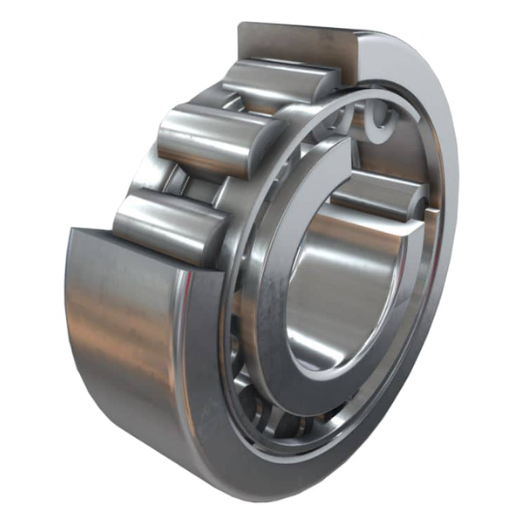
Use of spherical roller bearings is best where there is a possibility of misalignment or deflection of the shaft. This includes industries like mining and construction or the paper industry, which adds rough operating circumstances along with heavy loads. They are good to use also in heavy machinery like conveyors, crushers, and gearboxes because of their dependable self-alignment in varying conditions.
What industries typically use spherical roller bearings?
Spherical roller bearings have become a staple in almost every industry due to their unparalleled durability combined with durability to radial and axial loads. They are a critical component in the mining industry for machineries like crushers, vibratory screens, and conveyors because they endure extreme loads as well as harsh conditions. In the construction industry, spherical roller bearings are incorporated into heavy-duty equipment such as excavators and cranes to maintain performance during intense pressure and off-axis loading.
Spherical roller bearings are also extensively used in the pulp and paper industry, especially in paper machines because they need to support high speeds and heavy loads, guaranteeing smooth operation over time. They are also used in the power generation industry, including wind turbines to help cope with variable loads and misaligned load shifts caused by the rotation of rotors. Additionally, static roller bearings are mostly used for heavy-duty manufacturing like steel mills where these bearings are subjected to extreme temperatures and contaminants within rolling mills. These industries depend on the performance of spherical roller bearings to provide stability and sustained demanding conditions.
When are double-row cylindrical roller bearings the better choice?
Double-row cylindrical roller bearings outperform others in cases that require high radial load bearing capacity, lower friction, and precise axial control of position within the bearing. Their specific design that combines two rows of cylindrical rollers enhances the distribution of load and stability while improving performance under heavy radial loads which supports their use in electric motors, gearboxes, machine tools, and paper making machines. In addition, these bearings are well adapted for use in very high speeds owing to reduced friction and effective heat dissipation.
Another notable advantage is accommodating axial displacement in one or both directions which is helpful for applications that involve thermal expansion or movement due to shifting loads. For instance, double-row cylindrical roller bearings are used in high-speed turbines and compressors where they provide accurate control and low wear over time. Research indicates these bearings operate under radial loads 25% higher than bearings of similar construction with standard features while exhibiting exemplary structural strength. Such features place these bearings as favorable in many industries requiring high precision and reliability under extreme operational loads.
How do operating conditions determine the type of roller bearings needed?
The bearings’ operating conditions are important for identifying the appropriate type of roller bearing for each application. Working conditions like load type, speed, temperature, and the environment must all be taken into consideration. For example, applications with high radial loads often need cylindrical roller bearings because of their load-distributing ability. Situations with a combination of radial and axial loads are better served with tapered roller bearings since they efficiently manage both forces because of their angle.
The temperature of the bearing environment is equally important. Bearings subjected to high temperatures require special materials as well as oils. These mates must withstand thermal expansion and hold their shape. For example, bearings coated with ceramics can outperform most items in extreme heat.
The speed of applications also affects bearing selection. Operations carried out at high speeds require better controlled and lower friction bearings, such as angular contact ball bearings, which can facilitate rapid action without excessive wear, in low thrust operations designed for rotational stability.
Recent studies highlight that the operational environment has a major influence on the longevity of a bearing. For instance, bearings that come into contact with contaminants such as dust, moisture, or corrosive chemicals require sealing or shielding mechanisms to prevent debris ingress, thus prolonging the operational lifespan. Full and partial shields as well as total seals increase the service life of these bearings. Protective mechanisms need to be designed bearing the specific operating environment in mind. This functionality ensures an optimal balance of service life, performance, and longevity for the selected roller bearing.
How do speed capabilities compare between these bearing types?
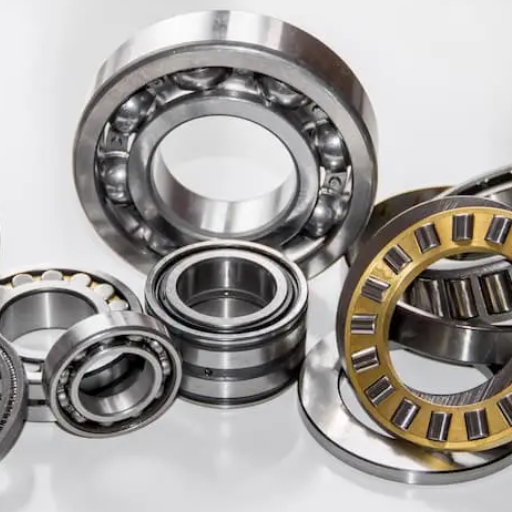
Due to the spherical roller bearings’ specialization in dealing with load and alignment issues, they are limited to moderate-speed operations. In contrast, double-row cylindrical roller bearings are capable of operating at much higher speeds because of the design’s low internal drag and its orientation towards rapid rotation. The decision of which of these to use is predicated on whether the application prioritizes high-speed operation or the ability to withstand extreme loads and misalignment.
Why do cylindrical roller bearings excel in high-speed applications?
Due to reduced friction and innovative design aspects, such as the ones decreasing the generation of heat during operation, cylindrical roller bearings are best suited for high-speed applications. The rolling elements placed in the bearings assist in load distribution and also minimize the contact area of the components so that energy loss can be minimized and motion can be improved. Advanced material technologies like high-grade steels and ceramic coatings also help improve performance by increasing durability and reducing wear even at high speed.
Moreover, optimized designs of the cage, like those made of light polyamide and brasse, improve lubricant flow and overheating risk, which is vitally important at high speeds. Research has shown that cylindrical roller bearings with specially designed cages achieved more than 20,000 RPM in some industrial applications. With proper lubrication and maintenance, these bearings provide improved reliability and reduced operational downtime, making them ideal for high-speed machinery in the aerospace, automotive and manufacturing sectors.
What limits the speed rating of spherical roller bearings?
Factors that restrict the speed rating of spherical roller bearings include the generation of excessive heat as a consequence of friction. One area of friction’s impact is its rolling over the elements and cage at high speeds. This has the potential to significantly increase temperatures.
If the heat generated during these processes is not removed, inflammation and/or damage to the various parts of elements within the bearing could set in. Friction reduction, through the correct management, with proper oiling can be addressed for better performance and limited resistance. High-speed oils will solve this for you.
The materials used in the spherical roller bearings, as well as their design also influence the speed possibilities. Bearings composed of upper-grade materials and with hybrid ceramic parts have the potential to sustain increased rotational speeds because of their reduced thermal expansion coupled with low wean increase. The speed rating also depends on the cage design; cages made from steel or cast brass which are auto lath machined are more appropriate for higher speeds than stamped steel cages.
Another aspect to consider is the load-bearing capacity of the bearing. Spherical roller bearings, as a rule, have the capability of supporting heavy radial and axial loads. This may make them more susceptible to slower speed ratings compared to high-speed optimized bearings like angular contact ball bearings. Environmental factors also contribute to this bearing’s contamination, misalignment issues and decreased, operational suitability. Proper alignment while clean operating conditions and choosing an optimized bearing improves performance. For instance, modern engineered spherical roller bearings can reach speeds of about 3,000 – 4,000 RPM with the right technology and application.
How does bearing design affect maximum operational speeds?
The design of a bearing is crucial when determining its maximum operational speed. Material choices, internal geometry, lubrication system, and overall machining accuracy all affect the bearing’s capabilities at high speeds. The hot and cold temperatures of high-speed bearings create deformation; however, ceramic materials have lower density and thermal conductivity which lessens heat and reduces deformation. This is why hybrid bearings which combine steel rings and ceramic rolling elements have more success at high speeds.
Better machining processes increase bearing performance by lowering surface roughness, tolerance levels, and friction which makes everything work better. Friction with internal lubrication is known to make a bearing work smoother and with less opposing pressure. Grease with specific grams per cubic centimeter viscosity and oil-air lubrication keeps thermal conditions at needed levels around the bearing making everything work seamlessly. Sufficient axial and radial load contact also helps achieve ultra-high speeds without overheating. Those kinds of lubricating systems operate at lower than required temperatures with rotating machines.
Today, high-speed bearings have become standard in turbines and electric motors with rotational speeds of over 10,000 RPM. Sleek materials with precise designs enable aerospace bearings to perform at even higher ranges. With breakthroughs in material science and lubricants, there are new benchmarks established for high-speed machinery.
How do costs compare when choosing between spherical and cylindrical roller bearings?
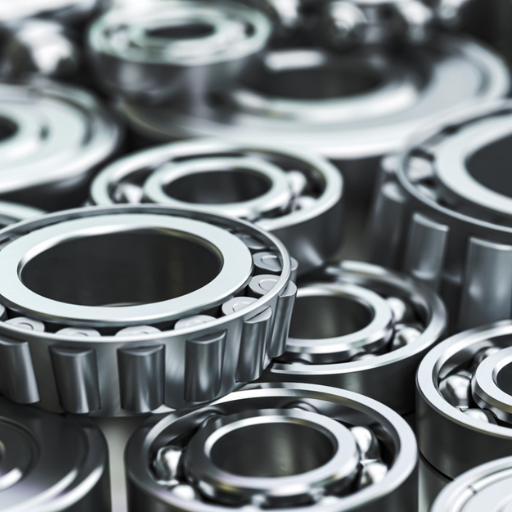
Cylindrical roller bearings bear a lower price than spherical roller bearings because of their simplistic design and easier manufacturing process. However, ownership cost depends on the application specifics, maintenance demands, and the expected life of the bearing. Although spherical roller bearings are more expensive, they are useful in high-load and misalignment applications, thus increasing durability and decreasing downtime and maintenance costs over time.
Which bearing type offers better value for specific applications?
Cost-saving opportunities depending on which bearing type to choose depend on the application requirements on each specific case. For applications with low to moderately increasing loads and not paying much attention to the alignment, ball bearings usually provide great value. Their use is spread widely in the automotive, home appliances, and electric motors industries because of their price and reasonable performance.
In combination with their ability to withstand simultaneous impacts of great radial and axial loads, spherical roller bearings are also suitable for the most difficult operating conditions, harsh environments, and heavy-duty applications often found in mining, construction, and marine industries. Recent data shows that their robust construction allows them to outperform ball bearings by up to 50% in life expectancy when subjected to these challenging environments, reducing replacement and maintenance costs over time.
Moreover, spherical roller bearings are preferred in applications with frequent vibration or shock loading because their design minimizes the chance of premature failure. In this case, the initial investment may be greater but, in the long run, savings are typically substantial due to lower operational delays because of breakdowns, especially in industrial environments. In the end, the right bearing type is a matter of striking the balance on which factors are more important, upfront spending or technical requirements relating to performance and lifetime.
Are there significant manufacturing cost differences between the types?
Yes, manufacturing costs also differ greatly from one type of bearing to another because of the materials used, their complexity in design, and how the bearing is made. For example, ball bearings have a simpler design and therefore use less material than roller bearings. Due to the more sophisticated design and specialized materials needed, tapered roller bearings and spherical roller bearings are usually more costly than other types.
Performance-based applications that incorporate advanced materials like ceramics or hybrid designs that fuse ceramic and steel components are also much more costly to manufacture. To illustrate, manufacturing ceramic bearings can be multiple times more expensive than steel bearings because of the manufacturing difficulties associated with ceramic parts and the precision required for assembly.
In addition, the automation of manufacturing processes about standard bearings streamlines cost; however, specialized bearings or those produced in low volumes tend to increase in cost. The difference in cost for bearings with high-performance requirements and complex tolerances, like those used in aerospace or medical equipment, can be extreme. Everything from the materials used, the size of the bearings, the tolerances, and the scale of production amplifies the differences in costs for manufacturing different types of bearings.
How does bearing replacement frequency affect the total cost of ownership?
The frequency of bearing replacements impacts the total cost of ownership (TCO) of machinery and equipment in the business. Tightening the replacement frequency can add excessive costs not just in terms of replacement bearings but also due to downtime, labor, and lost production. One study indicates unplanned equipment downtime due to failing bearings constitutes about 70 percent of the maintenance costs in an industrial environment.
Modern techniques and materials, such as ceramic or hybrid bearings, allow for an increased lifespan for these components, ultimately lowering replacement frequency. An example is with specific high-performance applications; a ceramic bearing could outperform a steel bearing up to five times leading to cost-effective savings long term.
With the implementation of condition monitoring systems, predictive maintenance technologies can also mitigate potential failures before they happen. With proactive replacements performed in time, costly operational halts can be avoided. Managing bearings proactively allows companies to lower their total maintenance costs by 25 percent.
Choosing high-quality materials for bearings, implementing effective lubrication methods, and utilizing condition monitoring systems can help businesses achieve a reduction in replacement frequency. Overall, these methods would reduce the TCO, which improves profit margins and operational productivity.
Reference Sources
-
- Explores the performance of cylindrical roller bearings in offshore wind turbines and compares it with spherical roller bearings under variable load conditions.
- Highlights differences in load distribution and collision forces between the two bearing types.
- Methodology includes numerical simulations and experimental validation under varying operational conditions.
-
Rolling Bearing Diagnosis Based on CNN-LSTM and Various Condition Dataset:
- Focuses on fault diagnosis in rolling bearings, including spherical roller bearings, under different operating conditions.
- Compares the behavior of spherical and cylindrical roller bearings with artificial defects.
- Methodology involves deep learning models (CNN-LSTM) and analysis of acceleration waveforms to detect and classify defects.
-
Recent Advancements in Fault Diagnosis of Spherical Roller Bearing: A Short Review:
- Reviews advancements in fault diagnosis for spherical roller bearings and includes comparisons with cylindrical roller bearings.
- Highlights differences in fault characteristics and diagnostic challenges between the two types.
- Methodology involves a survey of existing research and experimental setups using both spherical and cylindrical roller bearings.
- View Cylindrical Roller Bearings in China – Amigo details to get into the details
Frequently Asked Questions (FAQs)
Q: What is the main difference between spherical and cylindrical roller bearings?
A: The primary difference between spherical and cylindrical roller bearings lies in their design and application. Spherical roller bearings are self-aligning and can accommodate misalignment between the shaft and housing, while cylindrical roller bearings have a higher load capacity and are not self-aligning.
Q: How do ball bearings differ from roller bearings?
A: Ball bearings use spherical balls to maintain the separation between the bearing races, providing low friction and supporting radial and axial loads. Roller bearings, on the other hand, use cylindrical elements and are designed to support heavy radial loads and limited axial loads.
Q: What types of ball bearings are commonly used?
A: Common types of ball bearings include deep groove ball bearings, self-aligning ball bearings, and radial ball bearings. Each type is designed for specific applications and load conditions.
Q: Why are cylindrical roller bearings often used in industrial applications?
A: Cylindrical roller bearings are often used in industrial applications due to their high load capacity and ability to accommodate heavy radial loads. They are also available in full complement designs for even greater load capacity.
Q: What is the difference between roller bearings and cylindrical roller bearings?
A: Roller bearings encompass a broader category that includes cylindrical roller bearings, which specifically use cylindrical rollers. Cylindrical roller bearings are designed to handle high radial loads and offer a larger contact area with the bearing rings.
Q: Can you explain the stress on the bearing in relation to spherical and cylindrical designs?
A: Spherical roller bearings can accommodate misalignment and uneven stress distribution, making them suitable for applications with shaft deflection. Cylindrical roller bearings focus stress along the contact surfaces, ideal for applications with consistent, heavy radial loads.
Q: How does the angle to the bearing axis affect roller and ball bearings?
A: The angle to the bearing axis can influence the load distribution in bearings. Ball bearings can handle axial loads better due to their spherical shape, while cylindrical roller bearings, with no angle to the axis, excel in handling radial loads.
Q: What are the advantages of using a self-aligning ball bearing?
A: Self-aligning ball bearings are advantageous because they can tolerate misalignment between the shaft and housing, reducing stress on the bearing and improving performance in applications where alignment is difficult to maintain.
Q: What is the significance of ‘row’ in row cylindrical roller bearings?
A: The term ‘row’ in row cylindrical roller bearings refers to the number of rows of rollers within the bearing. Single row designs offer simplicity and cost-effectiveness, while double or multiple row designs provide higher load capacities and rigidity.
Q: Why might one choose a tapered roller bearing over a cylindrical roller bearing?
A: Tapered roller bearings are chosen over cylindrical roller bearings when both radial and axial loads need to be supported simultaneously. Their tapered design allows them to handle combined loads more effectively than cylindrical designs.