


Cylindrical roller bearing is one of the most pivotal parts of many machines and are well known for their capability to manage hefty radial loads and achieve high rotational speeds with great efficiency. Whether you are an engineer trying to achieve the best results from a machine or an interested learner trying to widen your skill set, grasping these high-performance rollers is important. In this guide, we cover important facts about cylindrical roller bearings from their specific features design and dependability to their widespread uses in sectors like construction, automotive, and power generation. Keep reading to find out what makes the cylindrical roller bearings the preferred answer for demanding industrial requirements and how they assist in improving accuracy and reliability in contemporary engineering and industrial applications.
What is a cylindrical roller bearing and how does it work?
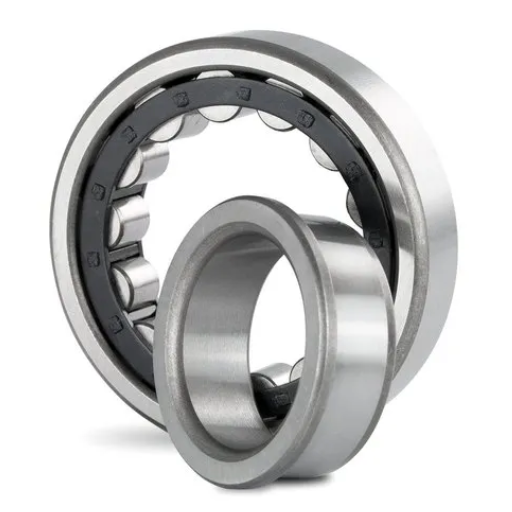
Cylindrical roller bearings are a subset of rolling-element bearings that restrain high radial loads with low friction. They have a set of cylindrical rollers located between an inner ring and outer ring, which aids in load carrying and movement. Rollers are positioned parallel to the axis of the bearing which optimizes radial force (with small axial force) performance. These bearings are most often used in highly precise and efficient applications such as machinery, vehicle gearboxes, and industrial machinery. Their simple design provides good operational reliability coupled with ease of maintenance.
Basic structure of cylindrical roller bearing components
Cylindrical roller bearings are made of numerous parts that ensure performance and a long lifespan. In this component,s we have:
- Inner Ring: The inner ring houses the inner raceway where rollers travel. It is made out of hardened steel which provides wear and tear resistance. The inner ring is also precision machined to reduce friction during operation.
- Outer Ring: The outer ring acts as one of the frame boundaries. It also provides support to the bearing assembly. Just like the inner ring, the outer ring is made out of high-strength material to endure intense stress and extreme operating conditions.
- Rollers: Cylindrical rollers are the most prominent alphabetic character of this bearing type. They are placed between inner and outer raceways, and are shaped rotably to decrease rotation’s impediment while orderly radial loads. It is a very crucial property because its length-to-diameter ratio guarantees a great extent of lifting capacity.
- Cage: The cage, which is mostly made of steel, brass or polymer, grabs hold of the rollers and spaces them out evenly which ensures no jerky motion at rapid rotation.
- Lubrication System: Effective lubrication ensures minimal friction and wearing out such that movement becomes easier. To make the bearings function better, they should be operating under extreme conditions.
How cylindrical rollers differ from ball bearing designs
Both cylindrical roller bearings and ball bearings serve as important parts within machines, yet they differ drastically in design, performance, and application. The rolling elements in cylindrical roller bearings are carved out into the form of cylinders and provide a larger area of contact to the raceway. With a greater surface area of contact, there is a greater radial load capacity. Their ability to endure heavy loads and high stiffness makes them ideal for gearboxes, as well as other industrial machinery.
In contrast, spherical rolling elements are used in ball bearings. The point contact between the balls and the raceways allows for lower friction and smoother rotation at high speeds. As such, ball bearings are useful in applications that require precise movement, but do not demand high radial load, such as in electric motors or precision devices, like instruments.
One of their most important differences is tolerance to misalignment. While ball bearings can take in light misalignment due to having a looser geometry with point contact, they are less forgiving because of the line contact in cylinder roller bearings. On the other hand, when Integrated to other specific structures, like double-row or multi-row configurations, cylindrical roller bearings greatly increase axial load handling.
As per revisions received from the engineering department, cylindrical roller bearings can support radial loads 30–50% greater than ball bearings of similar dimensions, based on the configuration. Moreover, their operational life may be increased with appropriate lubrication and alignment changes. On the other hand, ball bearings usually obtain greater efficiency at speeds above 10,000 RPM, which renders them suitable for many applications that require high speeds.
Grasping these differences makes it possible to choose characteristic bearing systems to fit industrial or mechanical uses that require particular engagement to optimize performance, longevity, and overall efficiency.
The mechanical principles behind cylindrical roller bearings
Cylindrical roller bearings follow the principle of line contact, which makes it possible to handle heavy radial loads and operate at high speeds. Unlike ball bearings which operate on point contact, the line contact of cylindrical rollers guarantees an even distribution of load across the bearing surface, hence reducing the stress, increasing component life, and improving reliability. This type of bearing comprises an inner ring, an outer ring, and several cylindrical rollers with a precisely set geometry to minimize friction and energy loss.
The performance capabilities of cylindrical roller bearings have always been evolving with time due to new innovations in design and materials. The introduction of new high-strength steel and ceramic materials is an excellent example, as they have further increased load capacity and service life in more demanding environments. Precision research demonstrates that high-precision cylindrical roller bearings can perform rotational speeds greater than 3 million dN (speed multiplied by the diameter of the bearing) while remaining operationally stable. Furthermore, the optimized designs of the cages promote better lubrication flow, less wear, and reduced noise levels which are crucial for several industries including wind energy, automotive, and industrial machinery.
Cylindrical roller bearings, in essence, are one of the most significant parts of any mechanical system because they seamlessly integrate rugged load-bearing capabilities with modern technological advances.
What are the different types of cylindrical roller bearings available?
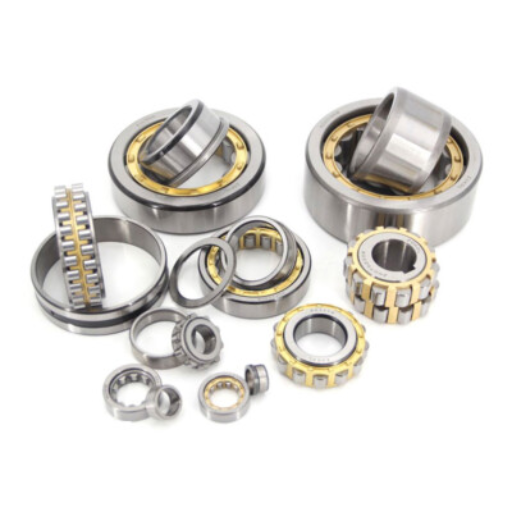
Different types of cylindrical roller bearings are tailored to suit specific application and load requirements. The main types include:
Single-row cylindrical roller bearings: These are the most widely used and apply to radial load operations. They allow for some degree of axial displacement which is important for thermal expansion.
Double-row cylindrical roller bearings: These bearings have higher radial load capacity and thus are used in more rigorous applications that require additional durability and stiffness.
Multi-row cylindrical roller bearings: These are popular in heavy machinery as they can support very high radial loads.
Full-complement cylindrical roller bearings: These are designed with the maximum number of rollers possible. They are best used at low speeds with heavy loads because of their slow speed capabilities.
Sealed cylindrical roller bearings: Lubrication loss is often a problem and these types retain lubrication. They are sealed against contamination and thus have a longer life while requiring less maintenance.
Every different type serves a unique purpose and is selected based on the requirements of the machine or application.
Single-row cylindrical roller bearings and their applications
Single-row cylindrical roller bearings are useful in applications that necessitate high radial load-bearing capacity and low friction. They can be found in electric motors, gear reducers, pumps, and compressors. Their design enables accurate rotation and high-speed performance which makes them usable in manufacturing, transportation, and energy industries. They are especially good at withstanding heavy radial loads while maintaining reliability in tough conditions.
Double-row cylindrical roller bearings and load capacity benefits
Double-row cylindrical roller bearings are capable of accomplishing heightened load-carrying capacities for more complicated structures. These bearings are made with two rows of rollers; hence increasing their radial load-bearing capacity and stability at overload conditions. Their configuration reduces the load on a single roller by spreading the forces acting on the roller more evenly and as a result wear.
In demanding situations like those seen in mining, wind turbines, or industrial machines, double-row cylindrical roller bearings perform exceptionally well. For example, research indicates that these bearings can sustain radial loads 1.5 times greater than their single-row counterparts, depending on application and lubrication conditions. Further, newer materials, including high-performance steel with refined roller geometry, enable these bearings to endure extreme temperatures and harsh conditions, boosting their efficiency and durability.
Double-row cylindrical roller bearings are an essential part of machinery in areas where reliability and maximum efficiency are crucial, due to their unrivaled durability, efficiency, and load capacity. Other innovations include precision engineering methods, which enhance their operational accuracy and lengthen maintenance intervals.
What are the load capacity characteristics of cylindrical roller bearings?
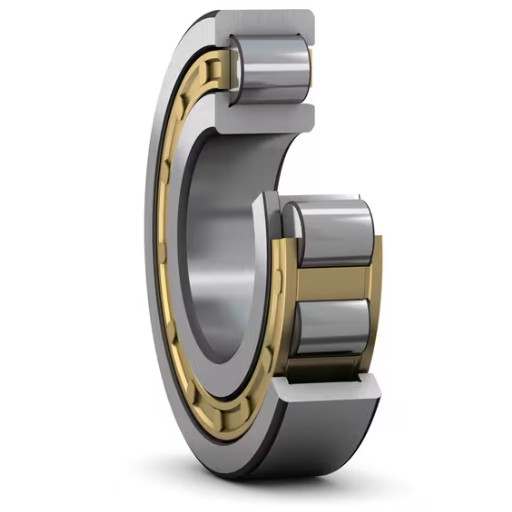
Cylindrical roller bearings boast an impressive load capacity making them ideal for the support of heavy radial loads. Their design facilitates effective eloadspartition across the rolling elements, enhancing performance under extreme conditions. Further, they provide low friction which helps minimize energy waste while maintaining proper operation. These bearings excel in high-speed applications with high radial loads present.
How cylindrical roller bearings handle high radial loads
Cylindrical roller bearings are designed to cope with heavy radial loads as a result of the cylindrical shape of the rolling elements which allow for an even distribution of the load as well as efficiently reducing points of stress. These bearings are made from accurately designed raceways that provide an increased contact area between the rollers and the inner and outer rings. The guarantee the sustainment of higher radial forces without deformation or excessive wear.
Bearing industries from across the world claim that bush roller bearings can have radial load capacity from a few hundred kilograms to several tons. This capacity depends on the size and materials used in the bush roller bearing. Advanced designs now utilize higher-grade steels and employ heat treatment processes which enhances their resistance to wear and fatigue caused by continuous operation. Further to this, lubrication greatly impacts the performance of roller bearings by reducing friction and heat and thus, enhancing the life of the bush roller bearing even in harsh high-speed or high-load environments.
Double-row or multi-row cylindrical bush roller bearings are some of the advancing innovations that have greatly improved the overload capabilities of cylindrical bush roller bearings. Such configurations have a greater contact area which enhances the stability of the bearing making it preferable for use in heavy machines, wind turbines, industrial lifts and other machinery that experience consistent high radial loads.
Understanding axial load limitations in cylindrical roller designs
Cylindrical roller bearings are designed to primarily support radial loads, but the bearing’s design prevents it from supporting any significant axial loads. The lack of angled contact surfaces, which are usually used for controlling axial forces, is the reason why this type of bearing has a reduced ability to handle thrust loads. Concerning angular contact or tapered roller bearings, cylindrical roller designs have significantly lower axial load-bearing capabilities.
As with most bearing types, the maximum axial loads are often defined and marked or permissibly set as a portion of radial load capacity. For example, a common guideline would state that the axial load for these bearings should not exceed 0.1 to 0.2 times the radial load rating, depending on the bearing’s configuration and the operating conditions. These bearings are mostly manufactured these days based on application requirements. Exceeding the aforementioned limits will cause uneven loading, frictional heat, and wear.
Hybrid designs or modifications that allow for some light axial load support in certain applications have recently been developed. This also includes some flange modifications to cylindrical roller bearings which improve their ability to accept axial loads, albeit modestly. Even so, where substantial axial load support is needed, combinations with other bearing types such as thrust ball or angular contact ball bearings are typically used. The right choice and use of cylindrical roller bearings minimize the performance and reliability risks relating to the axial load envelope and ensures dependable life cycle value in the context of bearing selection.
Radial rigidity advantages of cylindrical roller bearings
Cylindrical roller bearings are well-known for their radial rigidity, which permits use in applications requiring high accuracy. This rigidity is because of the internal configuration which allows load to be evenly distributed to many rolling elements. To illustrate, in machine tools and other precision machinery, the deflection of cylindrical roller bearings with radial loads performs much better than most parts – guaranteeing accuracy and operational stability.
The most recent innovations in bearing technology have significantly improved their rigidity performance. Modern cylindrical roller bearings are fabricated from high-strength advanced steel alloy which improves the vibration tolerance and load-bearing capacity of the bearing. It has been tested that cylindrical roller bearings used for high-speed applications continuously outperform older bearing designs by up to 20% in regards to radial displacement of the bearing.
Furthermore, cylindrical roller bearings also excel in resisting elastic deformation under radial stress, which is important for printing machines, gearboxes, and railway vehicles. The durability combined with outstanding wear and reduced operational degradation experienced under difficult circumstances is unparalleled in engineering. It is now possible to provide these benefits utilizing the latest innovations in cylindrical roller bearings radial rigidity needs to be prioritized.
When should you use cylindrical roller bearings in machinery?
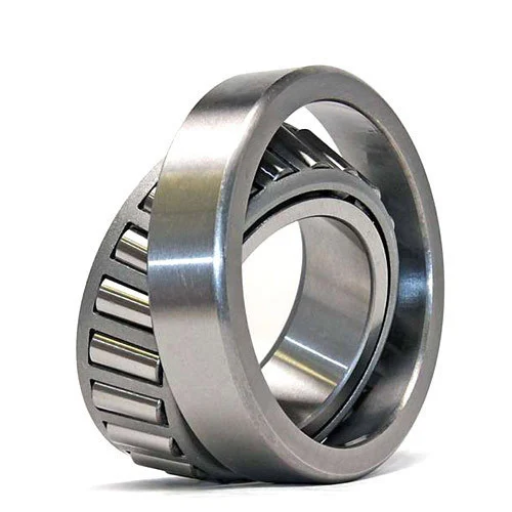
Cylindrical roller bearings are best suited for use in machines that require the supporting of high radial loads while simultaneously achieving smooth and efficient operation. They are best used in applications where speed and endurance are critical such as in electric and industrial gearboxes, electric motors, and automotive transmissions. They excel under heavy, enduring loads and perform best in environments with a requirement for radial rigidity, though not for situations with high axial load support capabilities. Their application should be considered based on the direction of load and operational demands.
Ideal applications for cylindrical roller-bearing units
Due to their outstanding radial load capacity along with several other benefits, roller bearing units are widely used in many sectors. They find applications in automotive, aerospace, heavy machinery, and power generation industries. In the automotive industry, roller bearings are used in the transmission assembly and wheel hub as they enable smooth operation even under substantial radial forces. They also provide heavy machinery such as cranes and conveyor systems with the ability to endure large radial loads while reducing wear over time.
Industry experts say that cylindrical roller bearings are exceptionally effective in high-speed operations because of their minimal contribution to friction and heating. For instance, the electric industrial motors incorporating these bearings can promptly reach 15,000 RPM and still retain accuracy and stability in function. Moreover, these bearing units assist wind turbines because they need to support rotor shafts which experience radial forces due to high winds for prolonged periods.
Finally, railway is another distinctive use case. The sophisticated structure of cylindrical roller bearings enables them to cope with the repetitive train wheelset’s stresses and vibrations, which enhances safety and durability in rail travel. These units are still widely used in industries that need high performance and reliability because of the functionality and flexibility they offer.
Industries where cylindrical roller bearings are commonly used
Cylindrical roller bearings are critical across an array of industries due to their capability of dealing with a high radial load withstanding harsh operating conditions. Listed below are some of the primary industries where these bearings are used as well as descriptions that capture their role and significance:
Automotive Industry
The automotive industry is one of the largest axial roller-bearing users and buyers. These bearings are applied within the gearboxes, engines, and transmission assemblies because of their remarkable ability to withstand fast rotational velocities and substantial loads. As projected, the automotive bearings market will be more than USD 50 billion by 2030. The market is expected to further grow due to the electric and hybrid vehicle industry’s growth and investment in cylindrical roller bearings.
Manufacturing and Machinery
Cylindrical roller bearings are critical components of Heavy machinery and are used in general manufacturing like presses, conveyors, and industrial gearboxes. Increased sales of these bearings directly translates to the growth of productivity and Minimization of friction and heat at elevated loads. Businesses and manufacturers in the Asia Pacific region further support the demand because of the robust growth in other country’s manufacturing industries.
Wind Energy
To achieve the performance and dependability of turbines, the wind energy sector requires the use of precision-engineered parts. Main shafts and gearboxes of wind turbines use cylindrical roller bearings which sustain the thrust and radial winds. These bearings are subjected to substantial wind load forces both in the axial and radial directions. The sharp increase in demand for energy supplied by the world’s trusted wind power sources, estimated to reach 1,800 GW by the early 2030s, is expected to create new opportunities in this sector.
Railway Industry
Ensuring the safety and efficiency of rail transport relies heavily on the life and durability of its components, among them cylindrical roller bearings. These parts are operated in the axles, the traction motors, and gearboxes and must withstand extreme vibrations and heavy loads for long durations. The modern high-speed railway systems adaptation tends to be intensified with the global investment growth in the industry.
Steel and Mining
The rough environment which is usually characterized by the presence of heavy loads and high temperatures, as well as abrasive surroundings, steel and Mining Industries stay busy. The extreme environment associated with resource extraction and production makes the demand for cylindrical roller bearings in rolling mills, crushers, and conveyor systems rise.
Aerospace
The use of cylindrical roller bearings is found in the aerospace industry in critical components, such as jet engines and auxiliary power units, where performance and dependability are paramount. These bearings also aid in sustaining the ever-increasing demand of global aviation markets by withstanding high operational temperatures and extreme stress during aviation operations.
Power Generation
Power plants using both gas and steam turbines depend on the efficiency of cylindrical roller bearings while operating under heavy loads. There is still a constant unfulfilled demand in the power generation industry, especially with the growing need for constructing renewable energy sources, which calls for more advanced bearing technologies.
Cylindrical roller bearings provide a remarkable load-carrying capacity and dependable service, making them an essential part of several industries, including power generation, renewables and aviation, making them an industrial marvel for engineering innovation.
How do cylindrical roller-bearing cages and rings function?

The cages and rings of cylindrical roller bearings have individual yet cooperative duties to maximize functionality. They serve the purpose of creating inner and outer raceways which guide and support the low-bearing rollers. The cage maintains proper spacing among the rollers to reduce friction as well as contact. The design assures smooth and stable rotation and high durability under demanding loads.
The role of the cage in cylindrical roller bearing performance
This component a critical position since it directly serves the efficiency, reliability, and operational life of the bearing itself. The cage spacing effect minimizes friction as well as roller contact which helps lessen heat generation and shedding. A precise alignment provides uniform force distribution over the rollers and increases the load-carrying capacity.
There is a lot of value to achieving these objectives, like increased wear and fatigue resistance over time, as well as greatly improved versatility when it comes to numerous conditions such as being subjected to extreme temperatures. For instance, some polymers have been shown to have low mass and low friction which greatly increases the value of high-speed applications. Thorough 3D modeling and precision machining also decrease the risk of wear, iand njury and increase the good flow of lubrication, which greatly increases a long time of use.
The latest designs of cylindrical roller bearing cages used in the automotive, aerospace, and heavy machinery industries have been shown to increase the operational life of the bearing system by as much as 20% over older designs, which underscores their usefulness in high-stress application environments. These improvements underscore the importance of the cage about the performance and durability of cylindrical roller bearings in operating conditions of modern applications.
Inner and outer ring designs and their significance
The smooth functioning, load sharing, and accuracy of the operation within the inner and outer rings of cylindrical roller bearings is especially critical in high-performance applications. These rings must bear heavy radial loads and protect the structure during different working conditions. The recent breakthroughs in the field of materials science enabled the production of rings from high steel alloys as they are much more durable, wear-resistant, and less prone to deformation when stressed compared to conventional materials.
As an example, certain inner and outer ring designs can reduce rolling friction by as much as 15%, which is beneficial for energy consumption in devices. Furthermore, some surface treatments like nitriding and tempered martensitic surfaces have been incorporated to increase fatigue strength and considerably reduce bearing failure in industrial machinery and automobiles. The accuracy of the rings is critical to achieving minimum vibration and noise emissions which is vital for many sectors like aerospace and energy.
Additionally, segmented designs for the outer rings have been adopted within particular use cases to allow them to thermally expand and contract while still maintaining functionality. These changes portray the need for more dependable, productive, and flexible bearings across numerous important sectors. If focus is directed toward the appropriate design and care of the inner and outer rings, manufacturers are able to improve the working capabilities and durability of their machinery greatly.
How bearing rings affect installation and operation
The features and attributes of bearing rings directly impact the effectiveness and ease involved in the installation, as well as the subsequent operation of advancement in the machine. At the time of fitting the bearing, the circularity of the inner and outer rings gives proper rotation to alignment which is critical to the wear and life cycle of the machinery. A properly designed bearing ring increases the alignment; therefore, it improves functions such as reducing early failures, minimizing vibration, and inefficient working.
The cutting-edge developments in engineering over the years have introduced the use of new materials and manufacturing developments that have greatly enhanced the performance of bearing rings. For example, the use of through-hardened steels or case-hardened steels improves fatigue resistance and enhances load distribution. Optimized steel grades on bearings are said to increase the service life by 50% demonstrated even under the harshest conditions. Furthermore, the application of black oxide and other anti-corrosive coatings to bearings allow for greater durability and safeguard the bearings from environmental elements such as water and dirt.
Another aspect greatly impacted by the workmanship of the bearing rings as well as the design is gear lubrication. The geometric and surface quality of the ring has to guarantee the flowing qualities of the lubricant. The application of advanced lubrication techniques is estimated to reduce the energy usage of rotating machinery by 10 to 15 percent which results in a positive financial impact as well as a smaller carbon footprint.
ISO and ABMA also define specific limits on the tolerances for bearing rings to ensure that they fit and can be used in multiple systems. The fulfillment of such requirements in the mounting guarantees a defined behavior, allows the building of synergy and increases the operation uptime which, in turn, shows how bearing rings are critical to reliable and efficient performance of machinery.
What are common cylindrical roller-bearing failure modes?

Cylindrical roller bearings can fail due to several common modes:
- Surface Fatigue – Repeated axial loads on the bearing surfaces can create cracks and/or flaking, also known as “spalling.”
- Improper Lubrication – Insufficient lubricant of the right type is not applied, leading to excessive wear and friction.
- Contamination – Foreign matter such as dirt and other particles can enter the bearing and damage the rollers as well as the raceways.
- Overloading – Operating beyond the allowable load can cause deformation or lead to abnormal breakdowns before the expected lifespan.
- Misalignment – Installation or operational alignment errors lead to non-uniform stress distribution and uneven wear.
Taking the right steps in maintenance, proper alignment and lubrication can greatly reduce the wear and tear on cylindrical roller bearings.
Recognizing signs of bearing failure in cylindrical roller designs
Detecting the initial stages of failure in cylindrical roller bearings is key to preventing costly equipment downtime and damage. Unusual noise, excessive vibration, and high operating temperatures are some of the most common indicators of bearing failure. For example, high-frequency noise or vibration can indicate surface damage such as spalling or pitting on the raceway or rollers.
Bearings that show discoloration or scoring on the components have also raised concerns because that may indicate lack of proper lubrication or thermal overload. As studies show, almost 50% of bearing failures are attributed to inadequate lubrication, thus routine lubrication intervals should be implemented. Moreover, increased axial or radial movement within the bearing may suggest wear and misalignment that exert uneven stress on the internal parts.
Consideration of operating temperature is just as important. A sustained increase in operational temperature could suggest frictional issues, contamination, or other problems. Infrared thermography and vibration analysis tools provide real-time monitoring of these concerns through the assessment of the bearing’s condition. Proactively managing these issues could greatly enhance equipment reliability and operational efficiency in industries.
Maintenance practices to prevent cylindrical roller bearing issues
The right maintenance practices must be taken for cylindrical roller bearings to ensure reliability and long life. One of the critical maintenance practices is lubrication. Studies show that over 40% of bearing failures are linked to poor lubrication practices, either inadequate or improper. Lubrication must be provided as per the recommended schedule at intervals depending upon the speed, operating temperature, and workload for the roller bearings. For instance, in high-temperature working conditions, synthetic oils or greases are preferred because they don’t break down or oxidize as quickly as standard oils.
Cleanliness is another very important aspect of bearing maintenance. Spraying oil to keep the bearing surfaces clean is futile if dust, dirt, and moisture are not kept under control. To counter this, bearings must be stored in a dry place and during the installation process, surrounding debris must be controlled. Moreover, the use of sealed and shielded bearing units helps combat the issue of contaminants.
Equally important is the precise installation and alignment of the components. Any type of misalignment may result in an unequal load distribution, increasing the stress and wear on the bearing. Achieving the required precision is easy with tools such as laser alignment systems. Furthermore, ensuring the load on the bearing is monitored and kept within design limits prevents any undue bearing.
Condition monitoring serves as a regular measure that can be described as supportive. Vibration and ultrasonic detectors can pinpoint potential problems of wear, alignment, or lack of lubrication. With prior research integrating predictive maintenance technologies showed unplanned downtime reduction values of 45%.
Appropriate procedures for handling are equally important as they minimize the risk of damage during transport and installation. The bearing is kept in the proper condition by using the correct tools such as bearing pullers and presses along with following correct procedures from the manufacturer.
Fulfilling all these detailed maintenance practices allows industries to mitigate failures on cylindrical roller bearings, leading to an improved operational dependability and reduced costs.
Reference Sources
-
Defect Diagnosis of Gear-Shaft Bearing System Based on the OWF-TSCNN:
- Focuses on diagnosing defects in cylindrical roller bearings, particularly cracks in the outer raceway and rollers.
- Utilizes wavelet time-frequency maps and FFT spectrum analysis for defect detection.
- Methodology includes experimental testing and computational analysis to identify and classify bearing defects.
-
Intensity Analysis of Pretightening Bolt of Turntable Bearing:
- Analyzes the geometric and mechanical characteristics of turntable bearings, which include cylindrical roller and thrust needle rollers.
- Explores the impact of pretightening bolts on the performance and stability of the bearing system.
- Methodology involves finite element analysis and experimental validation of bearing behavior under load.
-
Nonlinear Dynamic Analysis of Cylindrical Roller Bearing with Flexible Rings:
- Investigates the nonlinear dynamic behavior of cylindrical roller bearings with flexible rings.
- Highlights the importance of considering nonlinearities in rotor-bearing systems for accurate performance predictions.
- Methodology includes numerical simulations and dynamic modeling of rolling bearings under transient conditions.
- If you are looking for more information about Cylindrical Roller Bearings – Amigo go here right away
Frequently Asked Questions (FAQs)
Q: What are cylindrical roller bearings?
A: Cylindrical roller bearings are a type of bearing designed to handle greater radial load-carrying capacity and provide high radial rigidity. They consist of cylindrical rollers that are in linear contact with the inner or outer ring, making them suitable for heavy radial loads.
Q: How do cylindrical roller bearings differ from spherical roller bearings?
A: While both are types of roller bearings, cylindrical roller bearings have rollers that are cylindrical in shape, offering high radial load-carrying capacity and rigidity. Spherical roller bearings, on the other hand, can support both radial and axial loads due to their spherical design, which allows for misalignment.
Q: What are the main applications for cylindrical roller bearings?
A: Cylindrical roller bearings are used in applications requiring high radial load-carrying capacity, such as in gearboxes, electric motors, and machine tool spindles. They are also used as locating bearings and in applications where high radial rigidity and are used primarily to support axial loads in one direction.
Q: What are full complement cylindrical roller bearings?
A: Full complement cylindrical roller bearings are a type of cylindrical roller bearing that does not use a cage. This design allows for more rollers to be used, increasing the bearing’s radial load capacity. They are ideal for applications with heavy loads at low speeds.
Q: Can cylindrical roller bearings support axial loads?
A: While cylindrical roller bearings are primarily designed for radial loads, certain configurations, such as double-row bearings, can support limited axial loads in one direction. However, thrust bearings are better suited for applications with significant axial load requirements.
Q: What is the difference between single-row and double-row cylindrical roller bearings?
A: Single-row cylindrical roller bearings consist of one row of rollers, ideal for applications with moderate radial loads. Double-row cylindrical roller bearings have two rows of rollers, providing higher radial load-carrying capacity and are used in applications where greater stability is needed.
Q: Why are cylindrical roller bearings used as free-end bearings?
A: Cylindrical roller bearings are used as free-end bearings because they allow axial displacement between the inner and outer rings. This feature accommodates thermal expansion and contraction of the shaft, preventing excessive stress on the bearing assembly.
Q: What are locating bearings and how do cylindrical roller bearings fit this role?
A: Locating bearings are used to position the shaft axially and radially. Cylindrical roller bearings, especially those with a high radial load-carrying capacity, can serve as locating bearings by ensuring the shaft remains precisely aligned within the housing.
Q: What is the significance of radial rigidity in cylindrical roller bearings?
A: Radial rigidity refers to the ability of a bearing to resist deformation under radial loads. Cylindrical roller bearings have high radial rigidity, making them suitable for applications requiring precise shaft positioning and minimal deflection, such as in machine tools and precision machinery.