


Mechanical systems increasingly depend on radial bearings because they facilitate the smooth movement of various system components through the minimization of friction. For engineers, manufacturers, and engineers, comprehending the details of these components is fundamental if one wishes to achieve refinement in machinery performance and precision. In this guide, we will cover radial bearings, paying special attention to angular contact bearings, their layout, operation, and applications. This article addresses the information and bearing knowledge, regardless of whether the reader is a novice or a well-versed machinist requiring active bearing participation with machine elements. Continue reading to receive relevant insights that aid in enhancing expertise along with practical recommendations.
What is a radial bearing and how does it work?
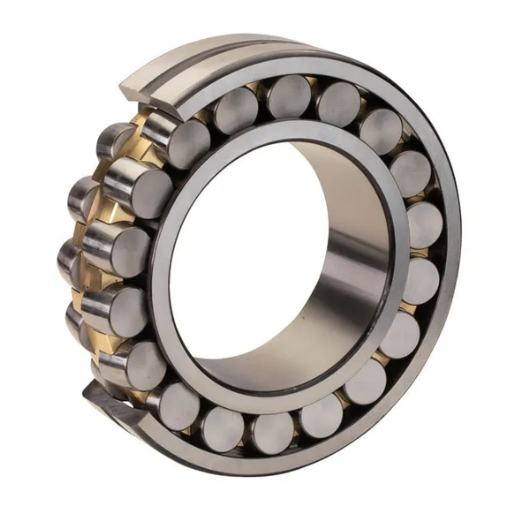
A radial bearing is a rolling-element bearing that allows loads to act on it perpendicularly to the axis of the shaft. It works by using balls or rollers to reduce the friction between moving parts and a shaft that rotates within an inner and outer ring. The motion of rolling instead of sliding enables the shaft to rotate while positing radial forces and makes it turn reliably in different systems. Durable radial bearings can also be applied advantageously in motors, conveyors, and gearboxes.
Advanced Insights into Radial Bearings
Radial bearings operate on the premise of supporting radial loads whilst also preventing friction, enabling shafts to spin in circles in a myriad of mechanical systems. These bearings are equipped with balls or rollers that are custom-made to the specification of the bearing as the applied loads have to be contour machined on the contact surface of the bearing to lessen wear and improve the life of the bearing. Radial bearings are usually made of chrome steel or stainless coupled with other high-grade materials to ensure that they can withstand stress and harsh conditions, which include humidity and temperature changes.
The main focus of the advancement of bearings is their efficiency and overall durability. For instance, the inclusion of ceramic balls in contemporary radial bearings is a step in the right direction. These balls are not only 50% lighter, but they are also significantly harder than steel. This makes it possible for operational noise and vibrations to be lower while the bearings maximally outperform during high-speed rotations. Along with the incorporation of solid lubricants and new formulas for advanced grease, further innovations in radial bearings also reduce the frictional forces at extreme conditions which boosts the lifespan of these bearings.
As per industry analysis, the global bear market is estimated to surpass $190 billion by 2030, with radial bearings as one of the major contributors. Numerous radial bearings innovations in material manufacturing technique and design are proof of their important role in sophisticated mechanical systems. Moreover, their adaptability permits a wide variety of applications, from vehicles and airplanes to wind turbines, which demonstrates their usefulness across different fields.
Role of Rolling Elements in Radial Bearings
Elements that roll are essential components of radial bearings. They are very crucial in minimizing the friction of motion in any rotational system. These elements which are either balls or cylindrical rollers are placed in the race of the bearing between the inner and outer race to achieve motion with a minimal contact area and therefore friction.
There have been further developments in engineering and technology concerning rolling elements, which have improved the functioning of the bearings greatly. For example, ceramic balls are being changed for quicker and more durable use especially for aerospace and electric vehicle systems, because of their low weight and high heat resistance. Moreover, the accurate construction of rolling elements guarantees uniform load distribution which increases the life span of the bearing.
An analysis of new industry data shows over 12% annual growth in the use of hybrid radial bearings, which contain ceramic rolling elements, to manufacturers operating in high-demand fields. This is primarily due to these hybrid bearings having a greater ability to operate in harsh extreme environments, such as high temperatures or highly corrosive surroundings, while still ensuring optimal functioning, low maintenance costs, and efficient controlled maintenance and servicing. Innovations of this kind deepen the potential scope of application of radial bearings in modern technologies, and at the same time, underline their growing significance in mechanical systems.
Understanding Load Capacity of Radial Bearings
The radial load capacity of radial bearings is perhaps the most critical aspect for choosing a radial bearing for any given application. It defines the limit a bearing can tolerate without performing damage to its performance or operational lifespan. As a rule, radial bearings are meant to support radial loads — perpendicular forces to the shaft – and they are usually coupled with some degree of axial load capacity to enable a variety of applications.
The more critical factors concerning load capacity are the bearing material, size, designed geometry, and lubrication. Engineering progress in bearing manufacture has improved radial load capacities considerably. For example, precision bearings produced from high alloy steels can support dynamic loads above 1 million Newtons in Industrial Equipment while experiencing minimal wear and operational damage.
Equally important is the concept of static and dynamic load ratings. The static load rating identifies the precondition of permanent deformation for a load applied statically while the dynamic rating is the load that a bearing can sustain indefinitely throughout its life, generally expressed in units of revolutions (Basic Rating Life L10).
Guidelines like ISO 281 offer methods for estimating the probable life of a bearing, given the expected loads and operating speeds. Careful consideration of the alignment and its load distribution helps detect potential problems that may lead to bearing failure. These insights reinforce the need to select radial bearings that match the operational requirements, system load, and environmental conditions.
How do radial ball bearings differ from angular contact ball bearings?
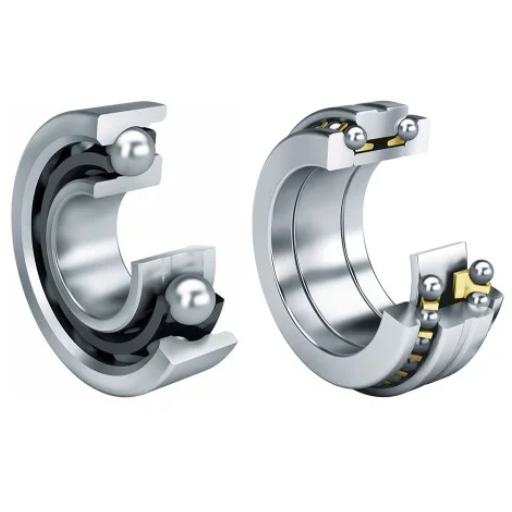
The ability to bear different types of loads sets radial ball bearings and angular contact ball bearings apart. The radial ball bearings support radial loads, that is forces bearing perpendicular to the axis of rotation. The radial bearings can endure light axial loads but are not suitable for tasks where great axial load capacity is needed.
Angular contact ball bearings can endure higher radial and axial loads at the same time due to their angle of contact which facilitates higher-order load transfer along the bearing. The ability to support higher precision and an assortment of loads in multiple directions makes them ideal for use in applications where precision engineering is a necessity.
Comparison of Contact Angle in Different Bearings
The contact angle in bearings is an important factor to consider when distributing load to the bearing due to its impact on the overall effectiveness of the bearing. A good example is radial ball bearings which have a contact angle of 0. They bear radial loads with low axial load capacity making them perpendicular forces. Electric motors and fans make use of these bearings as they can provide the necessary support without generating too much force.
Angular ball bearings have a contact angle between 15° and 40°, depending on the configuration. In CNC and aerospace industries, a 15° contact angle is preferred because it facilitates high-speed precision. A contact angle of 30° or higher is preferred in turbines and industrial pumps because it offers greater axial load capacity.
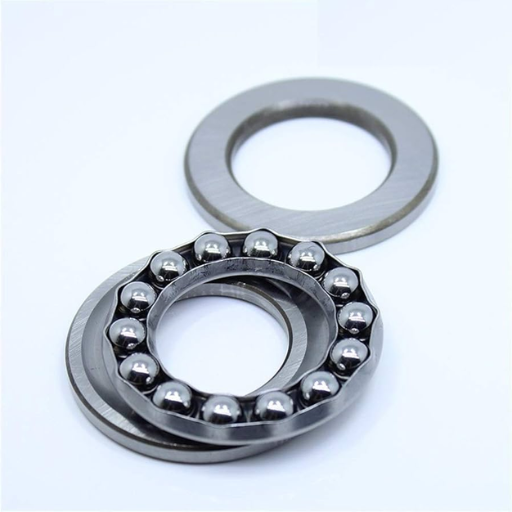
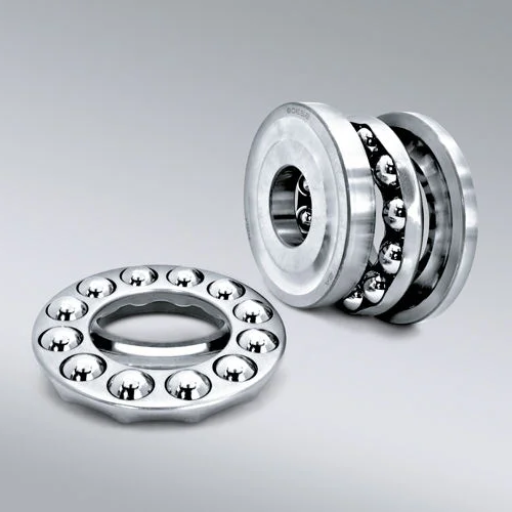
Thrust ball bearings are specifically engineered to work with pure axial loads while operating at angles near 90° to maximize force transmission along the axis. They are widely used in vertical shaft machines and large structural engines.
Choosing the right bearing contact angle is important as it determines machine efficiency and life span. An obdurate mismatch with load capacity leads to premature failure, while an appropriate fit ensures optimal performance in diverse operational conditions.
Understanding Axial and Radial Load Handling
Bearing design is profoundly impacted by axial and radial loads. Axial loads (or thrust loads) are loads that push and pull parallel to the shaft and axially move the bearing in the shaft direction. A radial load is a load that applies force perpendicular to the shaft. Most bearings can be optimized to have some combination of these loads, though different types and configurations of bearings have different capacities designed for radial and axial loads.
A good example can be seen with the deep groove ball bearing type, which primarily supports radial loads. However, they can also support some level of axial thrust. Angular contact ball bearings can support higher axial thrust due to the contact angle; consequently, they are placed in machines that need precise control of axial movement. Roller bearings, whether cylindrical or tapered, support heavy radial loads. These bearings also provide differing support to axial loads depending on their shape.
Effective bearing life extension as well as efficiency may be contingent upon accurate estimation of load distribution. For instance, excessive axial loading in standard ball bearings is believed to increase wear rates by approximately 40%, therefore reducing operational lifespan significantly. On the other hand, a properly fitted tapered roller bearing can outlast an inadequately selected alternative by up to five times under Mixed Load conditions.
In guiding frame construction, engineers often utilize load rating charts and performance curves from manufacturers. These resources calculate the static as well as the dynamic load ratings which are critical in determining the operational capacity of the bearing against stationary and moving forces. Proper lubrication and alignment also aid in further increasing these abilities by less friction and therefore energy loss.
With deeper insight into the balance of axial and radial loads using the right bearings, the reliability of operations can be remarkably improved, lessening the need for maintenance work and downtimes for industries.
What are the advantages of using radial bearings?
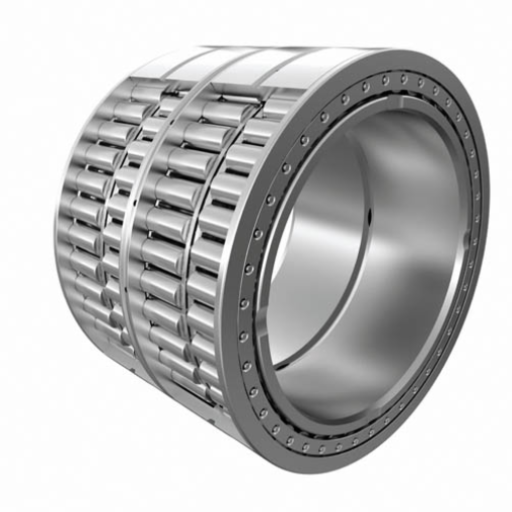
Radial bearings boast several advantages, including:
1. Support of a Radial Load: They efficiently support radial loads which translate in a direction perpendicular to the shaft.
2. High Rotational Speeds: Radial bearings reduce friction to smoothen operation at high speeds.
3. Durability: Worn bearings retain in operational life and provide them with lifelong wear and tear functionality across multiple environments.
4. Versatility: Bearings can be produced in different sizes and made from a wide range of materials for use across different application verticals and industries.
Due to their dependable and efficient attributes, radial bearings are incorporated in numerous mechanical systems.
Benefits of deep groove ball bearings
- High Load-Bearing Capacity: The design of deep groove ball bearings efficiently accommodates radial and axial loads simultaneously, providing flexibility for multiple use cases. Their sturdy build ensures consistent performance even when the bearings are subjected to varying load conditions.
- Low Friction and High-Speed Performance: These bearings can be utilized in applications that involve high rotational speeds like electric motors and automotive parts due to their efficient reduction of energy loss and heat production through low friction.
- Extended Lifespan and Durability: Advanced engineering and high-quality materials enable deep groove ball bearings to withstand significant strain, thus providing exceptional longevity. Research suggests that high-grade bearings, in optimally designed systems, can sustain nearly 50% longer life cycles than average conditions high-grade engineered systems have shown optimally leveraged use for over 50% average life cycle on said grade performance standards.
- Versatility in Design: The versatility of deep groove ball bearings is demonstrated further by their application across various industries such as aerospace, automotive, manufacturing, and consumer appliances, allowing tailored customization per industrial or mechanical requirements.
- Corrosion Resistance: Performance dependability is assured because many deep groove ball bearings are fabricated from stainless steel or treated with specialty coatings enhancing moisture and corrosive environment resistance.
- Cost-Effectiveness: Enhanced performance and value with lower operating expenses because of low cost per unit and industry supply mark deep groove ball bearings as cost-effective.
Because of the reasons mentioned above, modern machines mainly rely on deep groove ball bearings because of the results they produce in numerous applications.
Why Self-Aligning Ball Bearings Are Preferred
Self-aligning ball bearings are some of the most sought components for systems that demand precision and dependability, particularly for systems that tend to have misalignment. Self-aligning ball bearings can accommodate misalignment of angular offsets of 3° between the shaft and bearing housing. Ranging 0° to 3°, the angular offset aligns the shaft relative to the housing. The self-ball aligning reduces stresses on the bearing and helps retain stability during operation.
Every self-aligning ball bearing incorporates two rows of balls the inner ring bearing sphered outer race for self-aligning. Self-aligning ball bearing design has features that aid in uniform bearing loading and in minimizing forces that will cause wear during operation. Self-aligning ball bearings support automotive industries, self-aligning ball bearings find application in industrial machinery, and agricultural equipment because of their excellent capability to withstand severe operating conditions.
Recent studies and other standards have shown that self-aligning ball bearings consistently have the lowest operating friction than most of other types of bearings. Moreover, in examining their self-aligning ball bearings, self-aligning ball bearings achieve up to 20-30% reduction in torque friction which increases energy efficiency. The ability to reduce the overall power needed to run mechanical systems enables manufacturers to lower production costs and meet industrial goals in progressive operations. The ability to bear radial loads and light axial loads offers a wide range of applications making the versatile component desirable. With minimal upkeep, self-aligning ball bearings are efficient, durable, and able to work in tough settings. They offer modern engineering demands a reliable and affordable solution.
Advantages of High-Precision Bearings in Machinery
High-precision bearings offer significant advantages in their usefulness, including functionality, efficiency, and dependability. This type of bearing is an absolute necessity to the contemporary world of machines. One of the main advantages is lowering friction and wear in mechanical systems which improves energy efficiency alongside increasing the functional life of machinery parts. Research shows that employing high-precision bearings can boost industrial machinery operational efficiency by as much as 30 percent, significantly minimizing downtime and maintenance expenses.
High-speed or high-load applications also need precise and stable support. Another major advantage of high-precision bearings is the tight stability and accuracy they provide. High-speed machining tools demand the utmost reliability from rotational parts at extreme speeds, for example, in CNC machining tools, precision bearings enable spindle rotation to micron-level tolerances, facilitating the production of parts and components of outstanding quality.
Also, the progress of material science has increased these bearings’ resistance and robustness along with their durability. Standard steel bearings are now 50% lighter and more resistant to heat and corrosion due to hybrid designs that use ceramic components. This makes them appropriate for the aerospace industry and medical devices where high performance and dependability are essential.
With the use of high-precision bearings, industries will benefit from increased productivity, decreased costs, and improved product quality, making high-precision bearings vital in traditional and modern applications.
How do radial bearings handle axial load and radial load?

Radial bearings serve specifically to accept radial loads—loads that act perpendicular to the shaft. They accomplish this through the rolling elements and inner and outer raceways by smooth rotating. Most radial bearings also manage some moderate axial loads parallel to the shaft, although to a limited extent. This ability relies on their design, for instance, the angle of contact between rolling elements and raceways. In other cases, wherein more axial load-bearing capacity is required, such types of bearings may be appropriate.
Design Principles to Support Axial Loads
To adequately support axial loads, several design principles, application factors, and nominals of performance, safety, and efficiency require consideration. One of the main design factors is the angle of contact of the bearing. More vertical angles of contact, such as in angular contact ball bearings, increase axial load accommodation. In most cases, these bearings accept one-directional axial loads and are arranged, one with another, like back-to-back or face-to-face to bidirectionally fight forces.
The Axi-Tech thrust bearing features multiple, single-piece thrust pads which are secured to a rotating spindle as well as external self-aligning faces with spherical seatings and sliding pad actuators. This design provides both maximum simplicity in construction and minimal containment systems for active compartments.
Lastly, the thrust bearings’ internal features comprise serial damping bores with helical channel cuts disposed backward in flow direction and short cylindrical axial guide skirts in the spinner’s middle section.
A substantial decrease in mass can be achieved by simply replacing the thrust pads with an arrangement employing an integral thrust bearing. As a result, the thrust bearings cylindrical sleeve can also be simplified, provided two pads are added to increase structural robustness whilst other dimensions remain unchanged.
The run of the paddle is guaranteed from the first power on thus simplifying thrust bearing control. These steps are responsible for vertical load compensation as well as overall breath induction resistance,’’ confirms engineer Andrei Kostekov.
The primary benefits from rotor thrust bearings driven mechanically commanded are lowered drag, active partition cryogenic insulation, and zero-friction bearings with passive applications.
Through the combination of industry principles and accurate engineering analysis, it is possible to design bearings that can effectively accommodate the more challenging safety and operational efficient considerations of the axial loads in a variety of applications.
Mechanics of Rotation Under Load
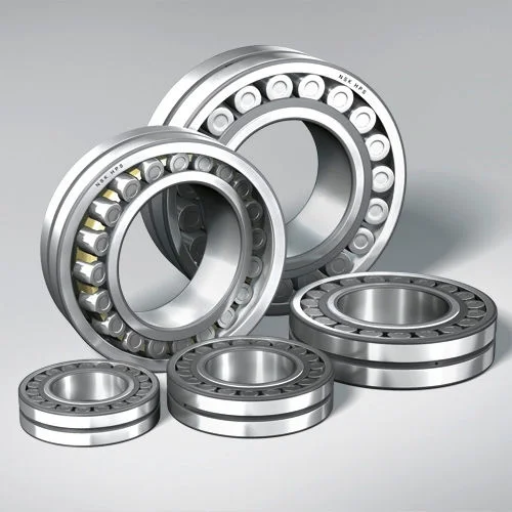
The mechanics of rotating under a load are difficult as they combine force, friction, material properties, and structural geometry. Primarily works bearings must operate well under axial, radial, or combined load and these bearings must work. For high radial loads, cylindrical roller bearings are used most commonly; tapered roller bearings can work axial and radial loads at the same time with great accuracy.
When a bearing rotates, it carries a load and its internal stress is balanced between its rolling elements to the raceways. The rolling elements and the raceways’ distributed stresses could be calculated with a modern simulation calculating the fatigue cycles and the wear they will induce. Clearance, the bearing’s radial looseness, the shaft’s alignment angle with the rotation axis, and the rotational rate all influence load distribution without equality. Over-tightened bearing preload leads one to overheating and performance plummets badly.
Current engineering literature suggests that bearing contact stresses may exceed the several thousands of megapascals (MPa) mark with the utmost contacts at high crank speed. Carrying advantages are 40 percent higher service time than ordinary materials from used and damaged bearing materials. That enhances the durability and ultra-high strength alloy steels, and ceramic composites are modified and developed.”
Through the application of tailored layouts, accurate load estimation, and proper lubrication, rotating systems in industrial applications can be optimized to increase performance and reliability, therefore decreasing downtime and maintenance costs. These advancements are critical in meeting the requirements of high-performance machinery in the aerospace, automotive, and heavy equipment manufacturing industries.
How Load Distribution Affects Performance
Different mechanical systems have different efficiencies, lifespans, dependability, and other aspects that impact load distribution. For example, uneven load distribution tends to increase the amount of stress at a concentrated point, increase wear, and even lead to system failure. One study suggests that uneven loading can reduce bearing lifecycle by 50%. Well-designed share load systems that receive equal portions of stress tend to experience lesser wear and console wear expansion while operational life increases.
Specific load optimization strategies comprise accuracy in engineering design, the use of high-strength materials, and the implementation of dynamic balancing. Also, model simulation using sophisticated algorithms as well as finite element methods has proved useful in predicting load distribution and determining the critical stress zones. Studies show that the operation of equipment with optimized load distribution in the workload is 20% more efficient than without it and the maintenance is also reduced significantly.
As noted, effective load distribution control is important for overall system performance, especially for equipment-intensive industries.
What are the bearing applications for radial bearings?
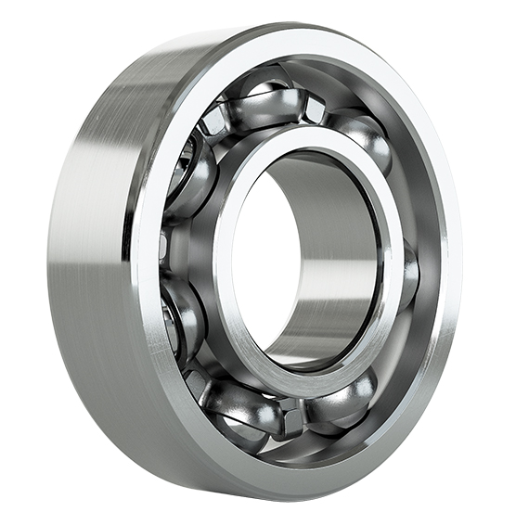
Radial bearings are widely utilized in applications that primarily focus on supporting cylindrical loads as powerfully as possible. There they are used in the electric motor, fan, pump, and gearbox machines. They are also very important in automotive systems such as the wheel and transmission components where smooth and reliable rotation is needed. Such flexibility and effectiveness have made these bearings popular in many industrial or mechanical works.
Common Machinery That Uses Radial Bearings
The radial bearing is one of the fundamental parts of nearly any piece of machinery considering that almost all of them work smoothly. One such instance is during the running of electric motors. Radial bearings are critical Axis components of electric motors. Radial bearings are found in both hand-held and fixed industrial electric motors. The report indicates that 70 percent of industrial electric motors have radial bearings.
In the automobile system, radial bearings are widely distributed especially on wheels, in transmissions, and alternators. For example, the auto wheels make great use of these bearings. For modern-day vehicles, it’s estimated that they can go tens of thousands of miles before needing new bearings.
Radial bearings have significant applications in pumps and fans, as these machines need constant rotation for fluid and air circulation and thus require strong bearing support. Likewise, gearboxes used in the manufacturing and transport sectors also need a radial bearing’s load capacity to transmit torque efficiently.
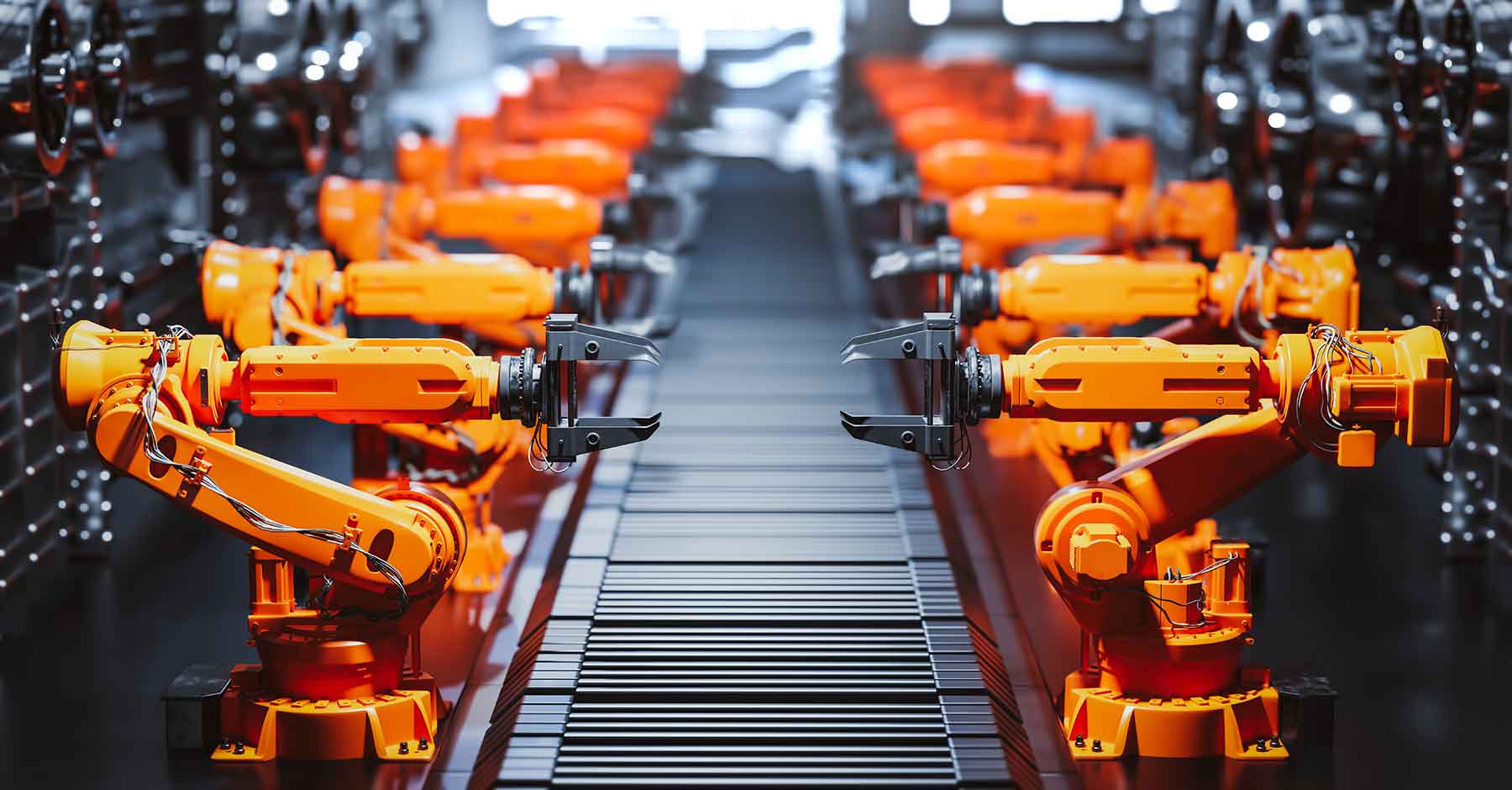
CNC machines and robotic arms also underscore the significance of radial bearings. Such apparatus have precise rotational movement requirements, and high-grade radial bearings go a long way toward ensuring that precision. Because radial bearings provide a broad range of mechanical solutions with low maintenance, versatility, and cost efficiency, they are increasingly becoming the standard in various industries.
Specialty Radial Bearing Applications in Industries
The adaptability of radial bearings is exemplified by their widespread uses throughout various industries as well as their importance in modern machinery. They are used in important automobile assembly parts like the gearbox, wheels, and engines, allowing for smooth rotational motion and supporting radial loads. Recently, the global automotive bearing market is expected to surpass 45 billion dollars by 2028 supporting the notion that there is rising demand for efficient performance bearings.
Radial bearings are practical for the aerospace industry as well; they are critical for use in the turbines of jet engines, actuators, and the landing gears of Aircraft. These bearings greatly improve operational efficiency since they must endure rigorous conditions like extreme temperatures paired with high speed and weight, ensuring passenger safety as well as operational reliability during critical tasks. The ever-changing world of technology has given rise to the ability to manufacture strong yet lightweight radial bearings needed in contemporary aerospace tasks.
Precision radial bearings are also helpful to the medical field in helping with MRI machines, robotic surgical instruments, and even dental tools. Rubbery bearings improve ergonomics by providing low-device noise and low vibrations and improving reliability such as ultra-tight tolerances. There is a huge amount of specialty bearings that have been invented to keep up with the demand in medical robotics as well as advanced imaging technologies.
Radial bearings are used in the turbines and tracking systems of Solar and Wind Power as a part of the renewable energy sector. During rough environment conditions, these bearings help optimally reduce relative motion and minimize outages. With the global shift towards renewable energy, there is expected to be significant growth in the industry and thus increase in the use of specialty bearings.
The radial bearing is a critical component to the further advancements of industrial machinery due to the integration of new materials, advanced engineering geometry, smart sensors, and technology.
Exploring the Role of Radial Bearings in Spindle Bearings
Radial bearings are vital to the proper functioning of spindle systems, especially in industries that require high precision like manufacturing and machining. Spindles, which boast high rotational capabilities, depend on radial bearings for proper, smooth, and long-lasting operational efficiency. Also, radial bearings must sustain the friction and wear to preserve the life of the spindle while performing the key function of supporting the radial forces of the bearings in rotor spindle assemblies.
Bearings technology branches out to many fields, but older technology is a bit overlooked. Almost every year new radial bearings are designed to fit into the precision requirements of the spindle’s workload. New spindle bearings are capable of withstanding extreme environments, sometimes going over 20,000 RPMs with very little temperature increase and only minimal expansion of the bearings. This is due to utilizing better materials like grade steel or ceramic hybrids which increases its strength, thermal stability, and wear resistance.
In addition to this, putting advanced lubrication systems in radial bearings for spindles has improved performance metrics. Recent studies indicate that enhanced lubrication methods can achieve a 30% reduction in friction, optimizing energy consumption and cost savings. Furthermore, there is a growing trend where manufacturers are adding smart sensors to spindle bearings, enabling the monitoring of vibrations, temperature, and loads in real-time. These smart innovations allow for improved maintenance scheduling, decreasing unexpected downtime by around 25% in industrial settings where demand is high.
Combined with precise engineering, radial bearings in spindle systems provide high accuracy and reliability in machinery operations. Their importance in fast and heavy load scenarios makes them valuable in many sectors, from automotive manufacturing to aerospace engineering. This is essential for supporting advanced global technological advancements.
Reference Sources
-
Failure of a Test Rig Operating with Pressurized Gas Bearings: A Lesson on Humility:
- Examines the performance of gas-lubricated hybrid radial and thrust bearings in high-speed applications.
- Highlights challenges such as heat generation and material welding under extreme conditions.
- Methodology includes experimental testing of gas-lubricated bearings under pressurized conditions.
-
Analysis of Impact of Shaft Speed and External Load on the Radial Ball Bearing Lubrication Regimes:
- Investigates the effects of shaft speed, external load, and lubrication on the performance of radial ball bearings.
- Focuses on tribological and structural parameters influencing bearing temperature and operational efficiency.
- Methodology involves experimental analysis of lubrication regimes under varying operational conditions.
-
Vibrational Diagnostics of Rotating Machinery Malfunctions:
- Explores the use of vibrational diagnostics to detect malfunctions in radial bearings.
- Highlights the role of temperature and lateral vibration measurements in identifying bearing issues.
- Methodology includes vibrational analysis using orthogonal XY configurations near radial bearings.
- View Deep Groove Radial Ball Bearings Manufacturers in China – Amigo details to get into the details
Frequently Asked Questions (FAQs)
Q: What is the advantage of radial bearings?
A: The advantage of radial bearings is their ability to withstand radial loads effectively. They are essential components in many mechanical systems, providing stability and support where two moving parts interact.
Q: How do angular contact bearings differ from other types of bearings?
A: Angular contact bearings are designed to handle both radial and high axial loads in both directions, unlike other types of bearings. The load is transferred at an angle, allowing for better performance and longevity in applications requiring precision and stability.
Q: What types of bearings are suitable for handling axial loads in both directions?
A: Angular contact bearings and thrust bearings are designed to withstand axial loads in both directions. These types of bearings are used where there is a need to manage axial loads effectively, providing reliable performance in applications requiring such capabilities.
Q: How do I choose the right bearing for my application?
A: Selecting the right bearing involves understanding the load requirements, including whether the bearing needs to handle radial, axial, or a combination of both loads. Consider factors like the type of bearing, material, and application environment to ensure optimal performance. Consulting with a manufacturer like GMN Bearing USA can also provide tailored solutions.
Q: What are the differences between radial bearings and angular contact bearings?
A: Radial bearings are primarily designed to handle radial loads, while angular contact bearings are suited for applications involving both radial and axial loads. The differences lie in their design and the way they manage load, with angular contact bearings being more versatile for high-performance applications.
Q: What role do the inner ring and center of the bearing play in performance?
A: The inner ring and center of the bearing are crucial for the stability and smooth operation of the bearing. They help in distributing the load evenly across the bearing, ensuring that the ball bearing products function effectively over time.
Q: Why are ball bearings considered essential components in many mechanical systems?
A: Ball bearings are used because they reduce friction between two moving parts, enabling smoother movement and increased efficiency. They are designed to withstand both radial and axial loads, making them versatile and indispensable in various mechanical applications.
Q: How do rolling bearings differ from needle bearings?
A: Rolling bearings typically use balls or rollers to carry loads, while needle bearings use long, thin cylindrical rollers. Needle bearings offer higher load-carrying capacity in a smaller space, but rolling bearings are more commonly used due to their versatility and ease of installation.
Q: Can you explain how load is transferred in row angular contact bearings?
A: In row angular contact bearings, load is transferred at an angle relative to the bearing axis. This design allows the bearings to handle both radial and axial loads efficiently, making them suitable for applications requiring precision and high load capacity.
Q: What are some common applications where radial and angular contact bearings are used?
A: Radial and angular contact bearings are used in various applications, including automotive, aerospace, industrial machinery, and more. They are crucial wherever there’s a need to manage loads and reduce friction between moving parts, ensuring smooth and efficient operation of mechanical systems.