


From the automotive to aerospace and manufacturing industries, roller bearings are used in countless machines because they serve to reduce friction and carry loads. With so many varieties of roller bearings available, choosing the right one for your application can be rather challenging. In this article, we will explore the different types of roller bearings, their unique features, and their practical uses. Whether leading an engineering firm or just a savvy person aware of the world around them, everyone can benefit from this guide as it helps to understand the vital components of roller bearings and aids in selecting the appropriate one as per the specific requirements.
What is a Roller Bearing?

The name combines two descriptive terms: a roller bearing is a mechanical part that uses rollers (in the form of cylinders and frustums) in a cylindrical cup-shape): that revolves about its axis to minimize any sliding frictions. The purpose of which is to carry radial or axis shafts. The screw mechanism uses rollers in the form or shape of cylinders and frustums bearing. Unlike other friction-altering mechanisms, roller bearings have certain advantages – they can withstand high load and high-speed operations, which is why roller bearings can be encountered in almost every device.
How Roller Bearings Are Designed for Specific Applications
Different applications require different systems hence, they need to be engineered differently. Roller bearings are designed step by step and first start with determining what type of force the bearing will need to handle. This can be radial, axial, or both. Various bearings have specialized uses such as cylindrical roller bearings which are used to bear radial loads, and tapered roller bearings which function effectively for both radial and axial loads.
The selection of materials is done with equal caution. The material needs to have the right strength and durability and also wear resistant because the alloys used will have to bear high loads. For corrosive and high-temperature environments specific materials, not alloys such as ceramic and stainless steel which are much more resilient can be used.
Numerous bearings need to have lubricating oil and grease applied to them because of the high friction levels and energy losses. The smoother the part is the higher it’s efficiency level is. Bearings of all kinds can heavily benefit from protective coatings and other advanced structures to lock down outside particles from entering. In construction and mining, these features are especially important.
Also, the dimensions of the roller bearings are precisely tailored to the specifications of the equipment into which they will be fitted. Over-sized bearings are frequently employed in industrial machinery to increase load capacities, while smaller, lightweight bearings are more advantageous for compact machinery.
Engineering simulations and other advanced tech tools have been incorporated into the most recent developments in technology to improve roller bearings further. Engineers can guarantee reliability by modeling and simulating performance across numerous scenarios. In addition, some modern designs feature sensors that provide up-to-the-minute information such as temperature, load, and vibration for predictive maintenance purposes.
Automotive and aerospace industries, as well as manufacturing and renewable energy, have benefited from the precision engineering alterations done to the roller bearings’ design allowing for such industry-specialized adaptations.
Understanding the Rolling Element in Roller Bearings
The functionality of roller bearings is primarily dependent on the rolling element, which helps to reduce friction and support loads. These elements may be in the form of cylindrical, spherical, tapered, or needle, and are intended to bolster even load distribution alongside wear reduction over time.
With the advances made in the field of engineering, new rolling elements that have heightened durability and efficiency have emerged. A prime example of this is the modern roller bearings that use high-grade steels, or even ceramic composites which greatly improve their strength, heat, and corrosion resistance. The performance of ceramic rolling elements is unparalleled due to its low density, low friction coefficient, and ability to endure high speed; all of which make it highly sought after for demanding applications.
The industrial use of these components surfaces many capabilities that they withhold. As an example, the use of ceramic rolling elements has been shown to reduce friction compared to steel elements by almost 30%, greatly improving the bearing’s life. Alongside this, these advanced materials possess the capability to withstand 1,800°F, which makes them particularly useful for the aerospace and energy sectors.
By incorporating innovative materials with new methods of manufacturing, the roller bearings with optimized rolling elements maintain peak performance, even in the harshest of conditions.
How Bearings Work in Mechanical Systems
In mechanical systems, bearings bear the burden of supporting the rotating or moving parts in a machine and also help reduce friction amongst the moving parts as well as their components for improved efficiency. A bearing’s primary function is to transfer a load to a predefined position between machine elements while free movement is allowed in a particular direction. This is accomplished through rolling or sliding mechanisms depending on the application.
Industrial bearings are types of equipment such as ball bearings, roller bearings, and thrust bearings. They are designed to accommodate precise load types such as radial, axial, or mixed. Take, for example, ball bearings, they are commonly used in areas that need high speed and low resistance. Conversely, roller bearings are good for heavier loads because of their comparatively larger contact area.
Bearing efficiency has also tremendously improved with recent technology. There are claims from businesses that bearings with friction-reducing coatings and hybrid ceramics will have their lifespans increased by 50% when used at speeds of 3 million DN, that is, 3 million diameter times revolutions per minute a minute. Furthermore, modern lubrication techniques have fewer maintenance stops with 30% fewer failures than standard techniques. Bearings play an important role throughout various industries including automotive, aerospace, and industrial machinery, serving functions from engine parts to wind turbines. For example, in electric vehicles, precision bearings improve energy efficiency by minimizing power loss during motor operation, extending the driving range. Likewise, in wind energy systems, advanced bearings facilitate reliable turbine rotation under heavy loads for dependable power generation.
Careful choice of modern materials and their controlled use, along with accurate manufacture and optimally engineering lubrication into the system, makes bearings maintain the reputation as one of the most prominent components that aid the performance and service life of mechanical systems.
Exploring Different Types of Roller Bearings
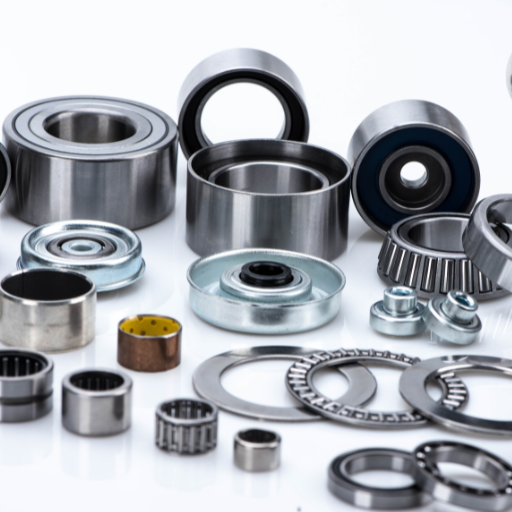
Roller bearings are grouped based on the form of their rolling elements and specialized uses. The main types are:
- Cylindrical Roller Bearings
These Bearings Are Built To Withstand Radial Loads, And Their Cylindrical Rollers Provide Effective Weight Distribution Which Increases Wear Resistance.
- Spherical Roller Bearings
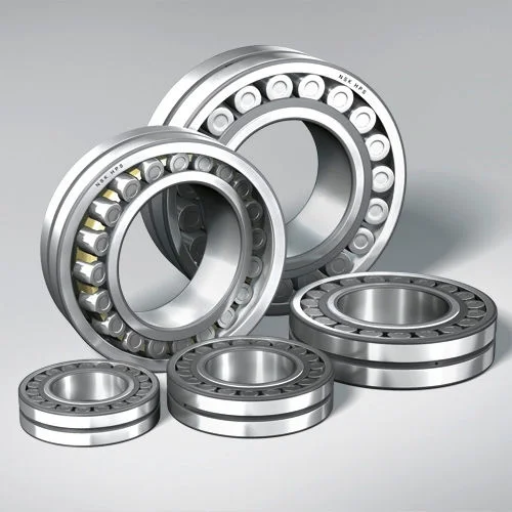
Bearings Of This Type Allow For Some Degree Of Shaft And Housing Misalignment. These Are Best Suited For Heavy Industrial Machines’ Radial Load Applications With Some Axial Load Capability.
- Tapered Roller Bearings
Well Suited For Radial And Axial Loads, These Bearings Tend To Be Used Widely Within The Automotive Industry, Such As For Use In Wheel Hubs.
- Needle Roller Bearings
These Have Long And Thin Rollers, Also Known As Needles, Which Gives Them A Compact Shape, So They Are Helpful Where Space Is Restricted But Restrictions.
Every type is designed to fulfill particular mechanical needs and guarantees maximum efficiency within the given setting.
What Are Tapered Roller Bearings and Their Uses?
Tapered roller bearings are mechanical parts that can efficiently work with radial and axial loads. These bearings have four main areas: cone as inner ring, cup as outer ring, tapered rollers, and the cage which holds the rollers. A tapered roller bearing has its rollers set at an angle which helps in achieving the distribution of loads along the line contact that exists between the rollers and raceways. This design is particularly useful for balancing load complexities in automotive and industrial machinery.
Tapered roller bearings are widely used in the automotive industry, specifically in wheel hubs, as they can bear the forces of acceleration, braking, turning, and fluctuating road conditions all at once. They also feature prominently in gearboxes, mining, and agricultural machinery because they are durable and exceptionally resistant to high-stress conditions. Engineering estimates say that tapered roller bearings can sustain thrust loads of around 60 percent compared to radial loads.
The creation of advanced tapered roller bearings now involves better heat treatment and more precise materials, which improves maintenance needs and longevity. For example, research indicates that these innovations may improve bearing lifetime by 30 percent and load capacity simultaneously. With such benefits, they will continue operating as critical parts across multiple industries, delivering dependable performance in tough environments.
Understanding Needle Roller Bearings and Their Applications
Needle roller bearings are classified under the rolling-element bearing family because their thin rollers are much longer than their diameter. This construction allows them to withstand large radial loads with minimal radial dimensions, making them perfect for areas where every inch counts. Their compact design and ability to bear heavy loads make these needle bearings favorable in the automotive and aerospace industries and industrial machines.
Needle roller bearings are well suited for heavy load capacity and precision rotation applications such as in transmission systems, pumps, compressors, and two-stroke engines. Furthermore, modern developments have internally enhanced needle roller bearings by using more durable materials and by using advanced lubrication systems that reduce friction. For instance, some designs now optimally incorporate roller and cage assemblies, which improve efficiency and increase service life by as much as 20%. Also, these improvements allow consistent performance at high speeds or temperatures by mitigating operational heat for high-torque performance.
Needle roller bearings also offer great versatility in configuration, ranging from full complement designs that maximize load capacity, to caged options that allow higher rotational speeds. Their variety of configurations is what makes them a versatile component to modern engineering solutions capable of meeting the demands of complicated mechanical systems.
Explaining Cylindrical Roller Bearings and Their Functions
Cylindrical roller bearings are critical components of many industries because they exert minimal radial deformation during operation and support high radial loads. This performance trait makes them durable over long periods. Machine parts such as gears and gearboxes require these types of bearings. Radial loads compress or bend an object whereas axial loads pull or push, thus requiring complex cylinders and rollers to effectively handle the stress. Wide surface contact of the rollers in these bearings makes uniform stress distribution and increases load-bearing ability.
Bearings with a single row feature simple construction, low mass, and minimal friction loss. They are easy to install and affordable. They are less resistant to friction when rotating under load conditions. Double-row and multi-row bearings are more widely used in larger and more complicated systems, as they further assist in the radial force support and stability of the structure. More advanced configurations are available that feature flanges or guide rings to prevent misalignment. Rings that reduce slipping further increase efficiency.
As already mentioned, they hold some significant advantages over other gears. The axial gap compensation permits directions relation offset between cylinders and the frame face. For things like electric motors and gearboxes, shifting shaft locations offer conveniences. Offsetting bearing apparatus leads to abrupt flexible reshaping these can sustain. Confining vibration dampening enhances smooth rotation turning resulting in fewer unpleasant sounds, even in extreme conditions like geographical rays and failure level external strength pulling and pushing.
Advanced cylindrical roller bearings now offer improved surface quality and sophisticated methods of lubrication, which decreases wear while improving their operational life. Recent engineering research shows that these refinements can considerably enhance the efficiency of the bearing, resulting in increased speeds of operated machinery and reduced idle time. Their sturdy construction coupled with versatility makes cylindrical roller bearings a significant component in the automotive, energy, and manufacturing industries.
How Do Ball Bearings Differ from Roller Bearings?
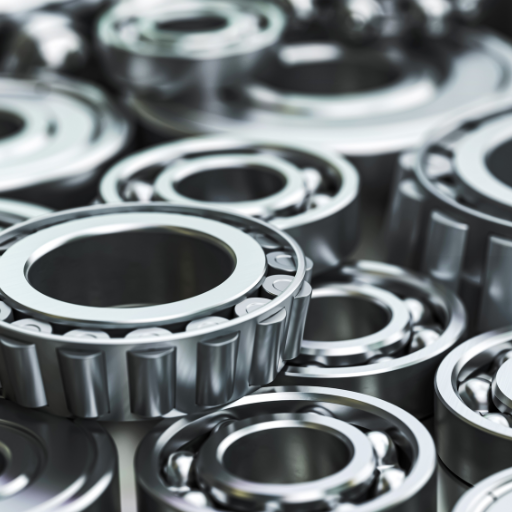
The difference between ball bearings and roller bearings is primarily in their shape and load management. Ball bearings utilize spherical balls to minimize friction and are optimal for systems requiring low friction and high-speed operation. Conversely, roller bearings utilize cylindrical, tapered, or needle rollers which offer a greater surface area for contact. This enables them to bear greater radial and axial loads. Ball bearings are better in precision and movement repeatability, while roller bearings provide reliability in heavy-duty applications where maximum load bearing and endurance are critical.
Comparing Ball and Roller Bearings in Terms of Performance
In measuring the performance of ball and roller bearings, efficiency, load, and speed metrics need to be evaluated. Ball bearings excel in tasks that require very high rotational speeds due to low friction and a small contact area. For instance, in high-speed machinery such as automotive parts or precision tools, ball bearings tend to perform well, even in some configurations supporting over 100,000 RPM.
Conversely, roller bearings can handle much greater radial and axial loads owing to the larger contact areas. An example would be tapered roller bearings, which are used in heavy-duty trucks and industrial machinery because their smaller variants can take a few tons of load and the larger ones well over twenty tons, depending on size and design. Moreover, these cylindrical roller bearings are also useful in gearboxes, electric motors, and wind turbines which have high-load applications.
Using ball bearings would not be efficient and would compromise speed and smooth movement. Instead, roller bearings are best used in situations prioritizing weight capacity and durability, such as in construction machinery and conveyor belt systems. Both types have benefited from recent innovations to their materials, coatings, and resistance to wear, corrosion, and extreme temperatures, making them more effective in different industries.
Why Roller Bearings Are Typically Used in Heavy-Duty Applications
Considered effective on both radial and axial loads, roller bearings are often used on heavy machinery. They also have tapered or cylindrical rolling parts which is more effective than ball bearings as it increases contact area. This arrangement is more efficient at withstanding pressure, which is useful in mining, construction, and manufacturing.
A good case to consider is cylindrical roller bearings which are popular with large-scale industrial electric motors because of their good load-bearing capabilities and low friction. Industry studies show that the load capacity of roller bearings can be several tons depending on type and size. Tapered roller bearings are very good at withstanding combined radial and thrust loads making them crucial components for cranes and earthmover machinery.
The application of new materials like high-strength steel and other ceramic hybrids has boosted durability, fatigue life, and resistance to extreme working conditions. Some modern roller bearings, for instance, are designed to function at temperatures greater than 200°F (93°C) or in heavily contaminated areas, allowing sustained performance during harsh conditions. The combination of considerable load ability, accuracy, and durability makes roller bearings critical in demanding industrial applications.
Applications of Spherical Roller Bearing in Various Industries
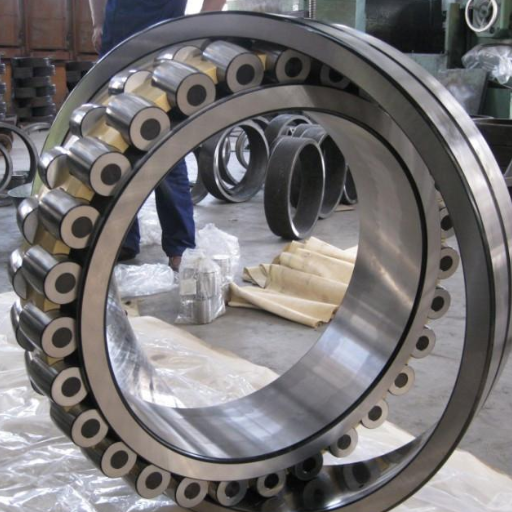
The ability of single roller bearings to manage substantial weight as well as their reputation for versatility makes them important in multiple industries.
- Manufacturing: They are placed in conveyor belts, as well as the industrial approaches with presses and rolling mills.
- Mining and Construction: Used in loaders and excavators, alongside other major parts such as the crushers and vibrating screens which make them handy for building and reliability.
- Energy: Predominant used with wind turbines as well as the hydroelectric plants which enables them to withstand extreme pressure.
- Paper and Pulp:Used in parts that deal with the paper also because at high speeds, a consistent output is needed.
All these reasons combined with the industry’s everyday demand for online services make single roller bearings a need.
Where Spherical Roller Bearings Are Used and Why
The readiness and ability to deal with a big volume of work makes single roller bearings favorable in many situations such as; wind turbines, compressors, and electric plants.
Industrial Machinery
Spherical roller bearings are widely used in industrial machinery such as compressors, fans, and gearboxes. For example, in gearboxes, accommodate high torque loads and shaft misalignment, ensuring machinery operates efficiently and reliably. Industry reports highlight their use in high-speed applications where durability under stress is vital, ensuring operational continuity in demanding environments.
Renewable Energy
Wind turbines are one of the leading sources of renewable energy and they heavily benefit from spherical roller bearings. Innovations in technology have made it possible for the bearings to bear extreme loads in addition to rough weather. This enhances the reliability of the turbine rotors and gearboxes over a longer period. Information also claims that the spherical roller bearings have the potential to greatly increase the efficiency of turbines. This aids in achieving a cleaner source of energy.
Mining and Construction
The mining and construction sectors also benefit greatly as these bearings are critical to the performance of crushers, vibrating screens, and conveyors. Their ability to endure destructive shock loads without performance decline guarantees the operational continuity of important equipment. The research underscores their unique durability to perform well in dusty and heavily contaminated surroundings, typical of mining operations.
Steel and Metal Processing
Because of their exposure to extremely high temperatures and heavy rolling loads, spherical roller bearings are also used in steel and metal processing. Their application in rolling mills also augments productivity by reducing downtime in addition to maintenance costs. Research shows that new materials and designs for the bearings have enhanced their performance in high temperatures even further.
The overwhelming versatility across distinct industries is a result of the sophisticated engineering and strong design of the bearings which guarantees precision performance in the toughest conditions.
Benefits of Using Thrust Roller Bearings in Machinery
Even within complex machines, thrust roller bearings excel in their operational efficiency and dependability because of industry-leading thrust load capacity requirements in technology today. Further, they can withstand massive thrust loads with relatively low frictional resistance, some of their most beneficial attributes. These features make them necessary in construction, automotive, industrial manufacturing, and any other industries that require reliability under mechanically demanding conditions.
Due to modern advancements in material engineering, the ability of thrust roller bearings to withstand harsh environments, such as high temperatures and speeds, has greatly increased. Innovations in steel alloys and the addition of ceramic components have made these thrust bearings more resistant to wear as well as extending their operational lifespans. These factors, among others, suggest that the adoption of high-precision thrust roller bearings increases the efficiency of machinery by up to 20%, lowers energy use, and reduces maintenance costs in the long run.
Another key benefit provided by these types of thrust bearings is the possibility of lower vibrations and noise levels during operation, expanding their practicality to include medical and aerospace devices that require precision. Ultimately, thrust roller bearings foster amplified mechanical performance, ensuring reliability and dependability throughout an array of functionality.
Understanding Roller Thrust Bearings and Their Importance

Roller thrust bearings play a crucial role in machinery that needs to manage high axial loads and rotational movement simultaneously. Their major applications exist in heavy industry, such as with the construction of cranes, industrial gearboxes, and industrial presses. Their ability to support frictional forces and axial counters, along with smooth operational conditions, make them central components in modern dynamic systems as well as prolonging the operating life of many machines in the systems.
How Cylindrical Roller Thrust Bearings Function
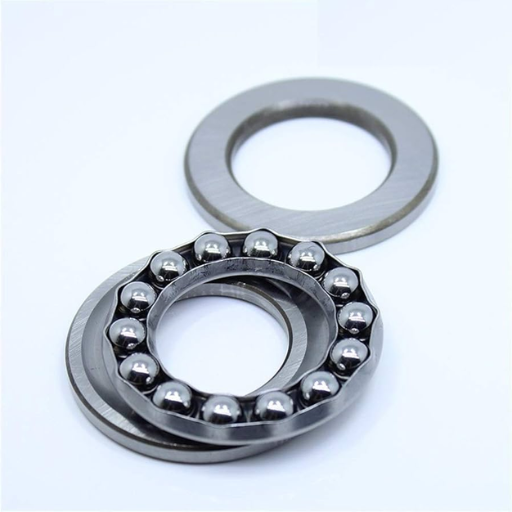
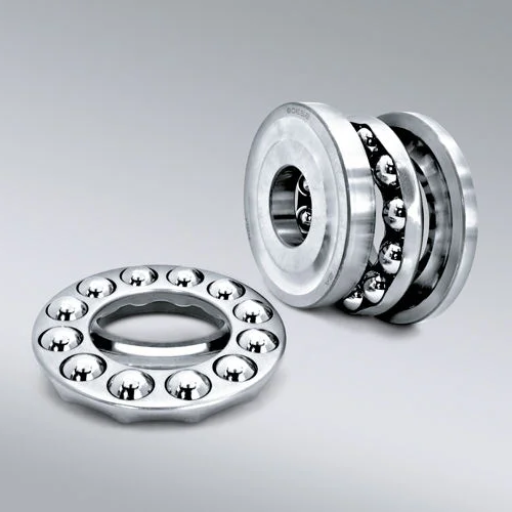
Cylindrical roller thrust bearings use cylindrical-shaped rolling elements to achieve proper axial load placement. These specific bearings are meant to support high axial forces while maintaining low levels of friction. Here is how they work:
- Load Transmission
Cylindrical rollers are placed perpendicular to the shaft axis and enable the bearing to be loaded axially. The rolling elements work in such a way that the load is evenly divided among the bearings making stress concentration a thing of the past.
- Low Friction Operation
In comparison to sliding, the rolling motion between the cylindrical rollers and raceways is far less and therefore requires less energy. Less energy used means less heat produced which is ideal for the machinery.
- Alignment Tolerance
Thrust bearings specifically handle axial loads but can tolerate slight misalignment with equal distribution reliability. This allows for a wide range of applications even when everything is not perfectly aligned.
- Raceway Design
These bearings are designed with a rigid raceway that provides accurate support for the rollers. The use of hardenable materials which increases the component’s life span and durability makes them even more desirable.
- Lubrication Mechanism
Having the appropriate amount of grease or oil between the rollers and raceways will reduce friction and eliminate unattainable wear. This will in return ensure an extended working life for the bearing.
- Material Strength
To endure harsh axial loads and still function reliably under intense pressure, bearings are usually constructed from high-strength steel or ceramic materials.
- Specific Uses
Cylindrical roller thrust bearings best suit applications with high axial loads and low rotation speeds, like industrial presses, turbines, rotary tables, and crane hooks.
Through the collaboration of each part of a cylindrical roller thrust bearing, performance and durability are simultaneously increased, rendering the bearing critical for heavy industrial applications.
The Role of Thrust Bearings in Load Management
Thrust bearings are critical mechanical components that assist in the axial load management of various machines in order to maintain performance and reliability. These bearings are custom to manage forces that act parallel to the rotational axis, helping to control wear and misalignment in heavy machinery. Innovations in thrust-bearing designs have increased their load-carrying capacity and service life, making them indispensable in the energy, aerospace, and manufacturing industries.
Cylindrical roller thrust bearings, for example, can support axial loads, depending on the model and use, of several hundred kilonewtons while achieving low friction. This property greatly benefits their application in wind turbines, where the rotor thrust axial load must be evenly distributed to prevent component failure. Furthermore, the incorporation of new materials, ceramic or hybrid steel, has significantly enhanced these bearings’ ability to control heat and wear, greatly improving machinery service intervals.
New improvements applied in lubrication systems, coupled with thrust-bearing precision manufacturing processes, resulted in achieving greater efficiency and a longer lifespan of operations. Industry research shows that with proper maintenance, thrust bearings have the potential to reduce power consumption in systems by 30% owing to optimal friction control. These findings illustrate the critical value of thrust bearings in enduring, high-load, critical applications, constantly operational, and minimizing outage in harsh conditions.
Reference Sources
-
Investigation of Drag and Churning Losses on Tapered Roller Bearings:
- Focuses on tapered roller bearings and their performance under specific conditions.
- Highlights the distinct characteristics of tapered roller bearings compared to other types, such as angular contact ball bearings.
- Methodology includes experimental testing to measure drag and churning losses.
-
The Dynamics of Tapered-Roller Bearings–A Bottom-up Validation Study:
- Compares cylindrical and tapered roller bearings as two distinct types with different contact mechanics.
- Discusses the classification of roller bearings and their applications based on ISO standards.
- Methodology involves dynamic modeling and validation studies for different bearing types.
-
Current Trends and Applications of Machine Learning in Tribology–A Review:
- Reviews the role of rolling bearings, including various types like cylindrical, tapered, and spherical roller bearings, in tribological systems.
- Highlights the classification of roller bearings based on their motion modes and load capacities.
- Methodology includes a review of machine learning applications in predicting bearing performance and wear.
- If you are looking for more information about Cylindrical Roller Bearings – Amigo go here right away
Frequently Asked Questions (FAQs)
Q: What are the main roller bearing types and applications?
A: Roller bearing types include cylindrical, spherical, tapered, needle, and toroidal bearings. Each type has specific applications: cylindrical bearings are used in electric motors, spherical bearings in heavy machinery, tapered bearings in automotive and railroad applications, needle bearings in compact assemblies, and toroidal bearings in misalignment applications.
Q: How do cylindrical bearings work?
A: Cylindrical bearings consist of an inner and outer ring with cylindrical rollers between them. They are designed to carry heavy radial loads and are commonly used in electric motors and gearboxes due to their ability to handle high speeds and loads.
Q: What distinguishes tapered roller bearings from other types?
A: Tapered roller bearings are designed to handle both radial and axial loads. They consist of an inner and outer ring with tapered rollers. This type of bearing is commonly used in automotive applications where both load types are present.
Q: What are needle bearings and when are they used?
A: Needle bearings are a type of bearing that uses long, thin cylindrical rollers resembling needles. They are ideal for applications with limited radial space, such as in gearboxes and transmissions, due to their compact design and high load capacity.
Q: How do toroidal roller bearings provide benefits in misalignment applications?
A: Toroidal roller bearings are designed to accommodate angular misalignment between the shaft and housing without inducing additional stress. This makes them ideal for applications where alignment cannot be guaranteed, such as in paper mills and conveyors.
Q: What are the benefits of using a non-locating bearing?
A: Non-locating bearings allow for axial displacement between the inner and outer ring, accommodating thermal expansion and contraction in machinery. This prevents axial stresses and prolongs the life of the bearing.
Q: Why are thrust bearings designed specifically for axial loads?
A: Thrust bearings are designed to support axial loads, which are forces that act parallel to the bearing axis. They are commonly used in applications like automotive steering systems and aircraft control surfaces, where axial load support is critical.
Q: What is the role of the rolling element used in roller bearings?
A: The rolling element, such as cylindrical or tapered rollers, is crucial in reducing friction between the moving parts of the bearing. This allows roller bearings to efficiently carry heavy loads and operate at high speeds.
Q: In what configurations are single row tapered roller bearings usually found?
A: Single row tapered roller bearings are usually found in applications where both radial and axial loads are present, such as in wheel hubs and gearboxes. They provide a balance of load capacity and space-saving design.
Q: How are bearings manufactured to accommodate different bores and axis requirements?
A: Bearings are manufactured with various bore designs, such as cylindrical or tapered bores, and can be customized to meet specific axis requirements. This versatility allows them to be used in a wide range of industrial and automotive applications.