


Roller needle bearings may not be given much thought, but they perform a very necessary function in a great number of mechanical systems. Roller bearings, best known for their compact proportions and their capability of handling heavy loads, are critical in ensuring that machines are operated and maintained in their best working condition. Whether you are a technician, an engineer, or simply interested in the workings of mechanical systems, basic knowledge of roller needle bearings can help you understand their importance. Follow us as we explain to you the most important principles, design features, and design applications of roller needle bearings so that you will be able to understand their importance and determine how to make the right selection suited for your needs. Now, we will together explore the reasons why these small engineering parts are essential not just in modern engineering, but in any engineering field.
What is a Needle Roller Bearing?
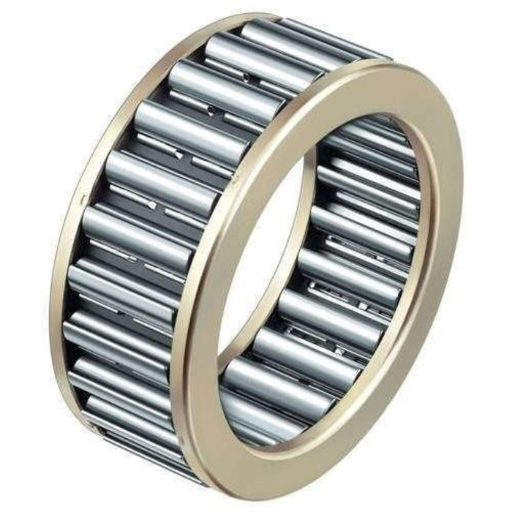
This needle-shaped bearing is a specific kind of rolling-element bearing that employs long, narrow, needle-like cylindrical rollers capable of reducing friction while supporting radial loads. As a result, they are capable of enduring considerable amounts of load while maintaining a low profile. This is perfect in cases where space is at a premium. Because of the small components, precise load application and seamless functionality in advanced machinery systems are achievable. Lightweight vehicles, industrial tools, and aerospace technology contain these components.
Key Features and Advantages of Needle Roller Bearings
Needle roller bearings benefit from high load-carrying capacity while having a compact and lightweight structure. They are usually provided with needle rollers which have a length-to-diameter ratio of at least 4:1, to help them in force distribution through an area as much as possible. Their graceful performance in confined space operations is one of the remarkable features, along with great precision and durability, which make them most advantageous in an extensive number of applications.
Modern designs utilize new materials such as steel with optimized corrosion protective properties, as well as advanced shapes of the rollers, which improve the strength and durability and extend the service life even under harsh conditions. Their low sectional height enables a reduction in the dimensions of the machines and their energy needs during operation. For example, needle roller thrust bearings are capable of supporting very high axial loads while having a very shallow profile, which makes them suitable for compact mechanisms, for example, in transmission and gearboxes.
These days, better technological advancements are focused on lubrication needs which result in burns getting reduced and service life enhanced. A more recent change in the sector is the introduction of polymer cages for better weight and temperature resistance, enhanced dampening of vibrations, and superior resistance to elevated temperatures. After considering all these, it is safe to claim that needle roller bearings are critical parts in high-precision machinery like automotive, industrial automation, and aerospace engineering.
Key Components: Needle Rollers, Outer Ring, and Inner Ring
Needle Rollers
Because of their high length-to-diameter ratio, needle rollers are cylindrical elements that can support heavy radial loads while minimizing friction. Modern needle rollers are often precision machined from more advanced materials like chrome steel to improve their tensile strength. Their geometrically precise construction guarantees that an accurate equilibrium of load is achieved and aids in the efficiency of the entire bearing system. To offer application-specific suitability, needle rollers are manufactured with varying lengths and diameters as well as increasing adaptability across different machines.
Outer Ring
The outer ring acts as the fixed or revolving face which the needle rollers work against. As harsh and permanent deformation needs to be avoided, it is prepared to give an enduring and smooth surface for the rollers’ track which is also made from hardened steel. Sometimes outer rings are coated with modern treatments like black oxide to prevent rusting and other damage over time. The outer ring directly influences the quality and accuracy of the bearing providing performance under high rotational speeds or extremely hot and cold temperatures and the inner workings of the bearing do the opposite.
Inner Ring
The inner ring is the mounting shaft interface and provides an additional mounting surface for the movement of the needle rollers. It helps keep the bearing aligned and functioning as intended in dynamic load situations. It is equipped to handle modern requirements because these inner rings undergo harsh machining and finishing processes which afford them wear resistance and the ability to withstand high-speed applications. Some designs use lubrication grooves placed strategically to enhance grease retention and self-sustainment for maintenance.
With these configured components, needle roller bearings have proven high-performance reliability and adaptability which has made them critical in harsh environments like those found in turbine engines, conveyor systems, and precision robotics.
How These Bearings Reduce Friction
Friction is reduced in needle roller bearings due to the minimum contact area between the rolling elements and the bearing surfaces. Compared to conventional bearings that use larger balls or rollers, needle rollers improve operational smoothness and have less resistance because the load is distributed across several thin cylindrical rollers. Moreover, the heat dissipation and wear over time is improved because the machining of the rollers is done with high precision, making the distribution of load more uniform.
Within bearings, friction is further reduced with the use of advanced lubrication systems. Many designs also incorporate lubrication grooves or oil holes which enhance grease retention and lubrication throughout operation. For example, research indicates that with proper lubrication, needle roller bearings have a 30% reduction in frictional losses compared to unlubricated ones. The lesser maintenance is a result of this efficient system alongside the lesser bearing repair or replacement needs due to increased bearing durability.
Another advantage of using low-friction materials in needle roller bearings is equally significant. Bearings today are more effective due to the usage of modern materials, like composite polymers and chromium steel, which have high resistance to wear alongside low friction coefficients. These materials maintain optimal performance even when subjected to varying temperatures or pressures, providing added reliability.
By integrating new product designs, accurate machining methods, and optimized lubrication strategies, needle roller bearings achieve minimal energy losses. This permits high performance and efficiency in mechanical systems.
Different Types of Needle Roller Bearings
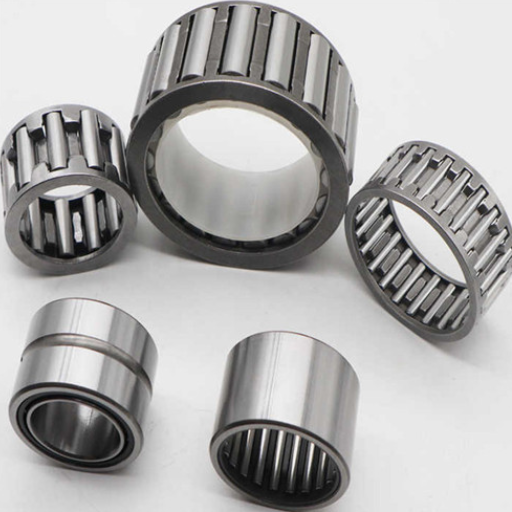
- Drawn Cup Needle Roller Bearings
The drawn cup needle roller bearings are featherlight with a deep outer cup. The specific structure of the outer cup makes them ideal for low to medium-force conditions.
- Solid Needle Roller Bearings
These bearings with a machine-made outer ring have greater strength and rigidity making them appropriate for use in harsher applications.
- Thrust Needle Roller Bearings
These bearings are set up to handle axial force making them ideal where space is tight, and axial force needs to be managed effectively.
- Cage and Needle Roller Assemblies
These consist only of a cage and needle rollers. Such configuration gives them unlimited use in engineering designs where the shaft or housing is the raceway.
- Needle Roller and Cage Assemblies
Assemblies High-speed and high-load applications are made simpler with these pre-assembled units because they are simple to install.
As you can see, they all work under different loads, space, and operational constraints in different settings.
Exploring the Different Bearing Types
Ball Bearings
One of the simplest forms of bearings are ball bearings. They are used to minimize the friction on rotating parts while also supporting radial and axial loads simultaneously. The use of balls as rolling components ensures that contact with the surface is minimum. Electric motors, skateboards, and parts of automobiles are examples of applications that need high speeds and low friction, which are made easier with the use of ball bearings. As balanced and dependable components, as a large portion of the nearing market is supported by industrial data, ball bearings are undeniably important.
Roller Bearings
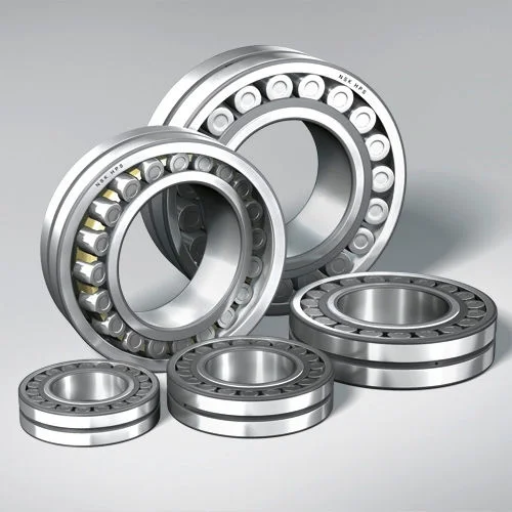
Due to their ability to bear greater loads than ball bearings, roller bearings make use of cylindrical, spherical and tapered rolling elements to widen the load-distributing surface. They are mainly used in the construction, mining and heavy machinery industry. Roller bearings differ from other bearings due to their ability to withstand harsh conditions, making them the go-to choice for demanding applications. Spherical roller bearings can tolerate some misalignment while tapered roller bearings are best at supporting combined radial and thrust loads.
Needle Roller Bearings
Needle roller bearings are a type of roller bearing using thin, long, cylindrical rollers. These needle roller bearings are used in industries where available space is limited because they are lower in height than other types of roller bearings. They are popular in automotive systems such as transmissions, gearboxes, and hydraulic pumps. The bearings are also more space-efficient in terms of load capacity and size than more traditional bearing types. The shift toward more narrow and space-efficient designs makes these bearings much more sought after.
Thrust Bearings
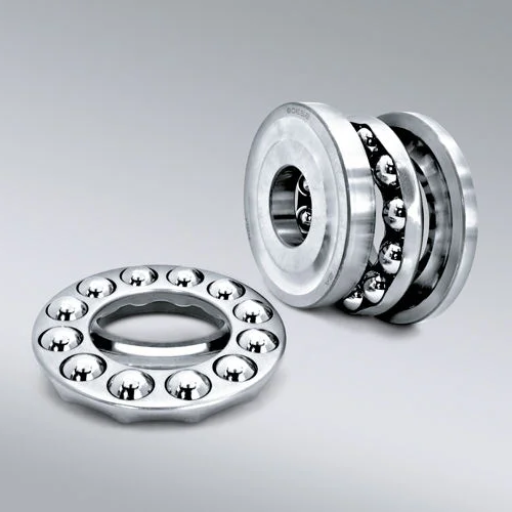
Thrust bearings are designed to take care of axial loads, supporting components that are subjected to thrust along the axis of rotation. Thrust bearings can be made with different rolling elements, the most common: being balls, cylindrical rollers, and tapered rollers, each serving different load capacity and speed requirements. Ball thrust bearings, for instance, usually have lighter loads and are found in everyday machines like washing machines while cylindrical or tapered thrust bearings are found in cranes and turbines.
Application Insights
North American railroads refined proprietary designs for roller-bearing-wheel sets several decades ago and have progressively improved them for the past twenty years. Modern engineering requirements are met through the optimization of each bearing type. Durability, weight, and corrosion resistance are further improved with the use of advanced materials like ceramic and hybrid. Further, bearing life and efficiency across industries has improved tremendously because of advancements in lubrication technologies. Reliability and overall performance is enhanced in engineering designs through the correct selection of bearing type considering load capacity, dimensional limitations, and environmental conditions.
What are Drawn Cup Needle Roller Bearings?
Drawn cup needle roller bearings are a specific type of rolling-element bearing comprising thin, stretched outer cup shells that contain a set of needle rollers. These bearings are optimized for a high load-to-weight ratio, making them ideal for space-critical applications. As such, they provide compact and lightweight solutions without toggling on performance.
The outer shell of the drawn cup needle roller bearing is engineered to perfection to withstand radial and limited axial thrust loads due to thrust washers. The needle rollers are shaped like slender needles which are arranged parallel to National Standards to ensure maximum load concentration. This configuration greatly reduces friction while enabling high-speed operations.
Based on their intended purpose, there are two major classifications of drawn cup needle roller bearings—caged and full complement. Caged variations feature a retainer that positions the rollers to a nominal spacing to enhance speed and reduce friction. This makes them ideal for high rotational speed applications. Full complement variations forgo the cage to maximize the number of rollers and therefore, increase load capacity. However, these are unsuitable for low-torque and high-speed use.
The latest reports show that drawn cup needle roller bearings cater to the needs of automotive transmission systems as well as power tools and industrial machinery. Their ability to withstand substantial radial loads makes them reliable and versatile, while their narrow cross-section allows for these bearings to fit into compact spaces. Generally, the bearings can operate in dire environments at temperatures spanning -22°F to 250°F (-30°C to 120°C). They are also offered in open or sealed variants, which can be selected based on the lubrication and contamination needs of the system.
In general, modern engineering relies on drawn cup needle roller bearings due to their exceptional load-straining capabilities, small space requirements, and long-lasting durability, which enable precise optimization of sophisticated high-performance apparatuses.
Understanding Thrust Needle Roller Bearings
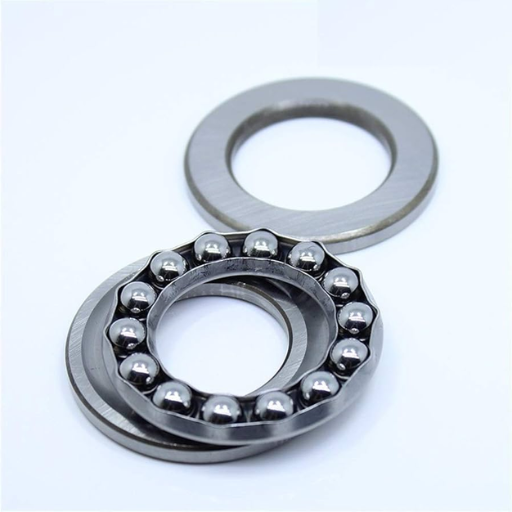
Thrust needle roller bearings are a type of bearing that is designed to endure and sustain an axial load while providing exceptional operating efficiency during movement. Each unit is comprised of a thrust washer and a precisely constructed needle roller and cage assembly that ensures stability against deformation. These bearings tend to thrive in demanding conditions where axial space is limited but dependable support in all load directions is essential.
Thrust needle roller bearings are constructed from various materials, ranging from high-strength steel to custom alloys, providing the bearings with the necessary strength and resistance to wear. Depending on the particular application, these bearings can support a precision-maintained axial response load in the order of a few thousand pounds. For example, support bearings in heavy machinery may require higher capacity bearings which enable supersonic operational requirements.
Thrust needle roller bearings also have single and double-direction designs which increase their application in different mechanical assemblies. In addition, new advancements in lubrication and the use of heat-treated materials have furthered their operational lifespan which in turn lowers the maintenance intervals and cost for industrial systems.
Due to the ability to repeatedly sustain framed axial loadings with low friction, these compact and light thrust bearings are often integrated into automotive transmissions, gearboxes, thrust reversers, and other aerospace components. They are an essential part of modern engineering due to their high performance and compact size.
Characteristics of Needle Roller Bearings
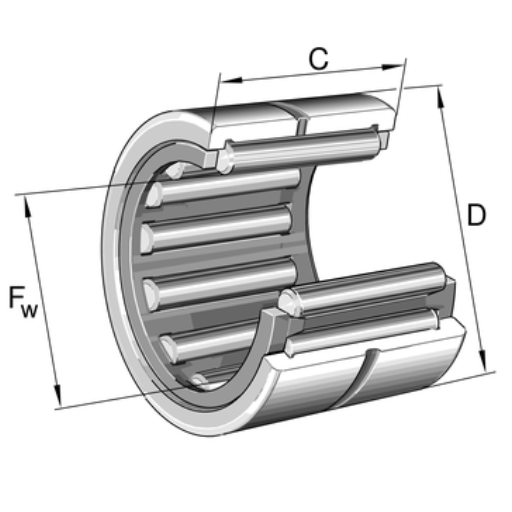
Needle roller bearings possess a high load carrying capacity relative to their size. They have needle shaped cylindrical rollers that rotate with the needles and aid in lowering friction while also assisting in efficient load distribution. This makes the bearings light-weight which makes them suitable for constrained spaces. Moreover, the design permits a variety of operational functions including fast rotational speeds under heavy loads. Also, the bearings maintain their functional reliability regardless of the working conditions whether it is oscillating or rotating.
Unique Features and Bearing Design
- Needle Roller Bearings Design
Needle roller bearings are designed to achieve high load-carrying capacity in a compact space. The case width as well as the outside radius of the bearings is narrowly profiled to enhance compactness.
- High Load-Carrying Capacity
The needle shaped rollers maintain maximum contact with the raceways which optimally distributes the load. As a result, both radial and axial loads are supported without any problem.
- Lightweight Construction
Needle roller bearings are lightweight which reduces the overall weight of the machinery despite the heavy loads that need to be supported.
- Capability for High-Speed Performance
The needle roller bearings can be used in high-performance areas as the shape of the needles permits smooth operations at high speeds.
- Durability in Diverse Conditions
Under oscillating or rotating actions, needle roller bearings are crafted to function dependably and perform a reliable oscillating motion. They are very resistant to abrasion and can operate under strong sustained and intermittent loads.
- Low Friction Levels
Low energy loss friction is achieved by power saving through the use of a specific powered unique roller design and will ultimately lead to energy savings.
- Material Versatility
These bearings are manufactured using high-grade steel and various strong manganeses which gives them improved damage resistance, perishability, durability, and extended life spans.
- Wide Range of Applications
Due to their effectiveness in restricted spaces, needle roller bearings find use in automotive, construction, aerospace, and other industries with flexible industrial engineering approaches.
It is reported that properly maintained, needle roller bearings can survive operational hours for thousands of hours with the right lubrication. They are an essential component in modern engineering solutions due to their adaptability and unparalleled performance throughout diverse applications.
Advantages of a Compact Design
The design of compact bearings includes vital advantages that are especially helpful in the contemporary engineering context.
1. Efficient Space Use
Because of their design, compact bearings are relatively smaller in size and so they find application in places with space limitations. Areas like automotive gearboxes or robotics which entail heavy spatial constraints make use of these compact bearings.
2. Reduction of Weight
In addition to being small in size, compact bearings have a lightweight structure. As a consequence, they can be used in drones, parts of aerospace, and other machines with moving components where weight reduction is important.
3. Better Performance with Additive Assembly
Their performance is largely retained when the compact bearings are placed in tight or complicated assemblies which are challenging to work with. Also, the design activities of compact bearings perform the load operations smoothly.
4. Reduction of Energy Consumption
Compact bearings are specifically helpful in reducing energy consumption with optimized friction reduction. For instance, in motors and electric pumps, can cause enormous savings through energy-efficient designs.
5. Increased Economic Value
Smaller bearings have an economic edge due to the low construction material needed. Along with reduced maintenance and increased durability during use, these bearings are now able to provide great financial advantages throughout their lifecycle.
6. Versatility in Use
Compact bearings serve a wide range of industries including automobile manufacturing, industrial machinery, and even medical devices. Their sharp edge in radial and axial loading handling – both simultaneously as in dual-action – along with their compact size, offer an engineering solution to a wide variety of problems.
Due to the additional benefits provided by these compact bearing designs, their selection has become very popular in numerous high-demand, multi-functional fields. This is especially true in those designed to work simultaneously in various environments to achieve greater efficiency and improved functionality.”
Using High-Quality Steel for Durability
The durability and reliability of compact bearing designs depend heavily on high-quality steel. Its exceptional hardness, wear resistance, and fatigue strength make high-carbon chromium steel and other advanced steel alloys popular. A good example is 100Cr6. This steel is well known for its usefulness in bearing production since it performs exceptionally well with high loads over prolonged periods.
Data shows that bearings made from premium-grade steel can last up to 40-60% longer than those made from standard materials. This increased lifespan means a reduced frequency of replacements and maintenance, lowering operational costs. Additionally, the materials undergo heat treatment and surface hardening to improve resistance to extreme temperatures, corrosive elements, and external pressure, thus making them suitable for heavy-duty applications in the aerospace, automotive, and heavy machinery industries.
Manufacturers lower operational costs by using premium-grade steel not only because it reduces maintenance costs, but also improves performance for long-term use, shifting the focus of engineering towards endurance and reliability.
Choosing the Right Needle Bearing for Your Needs
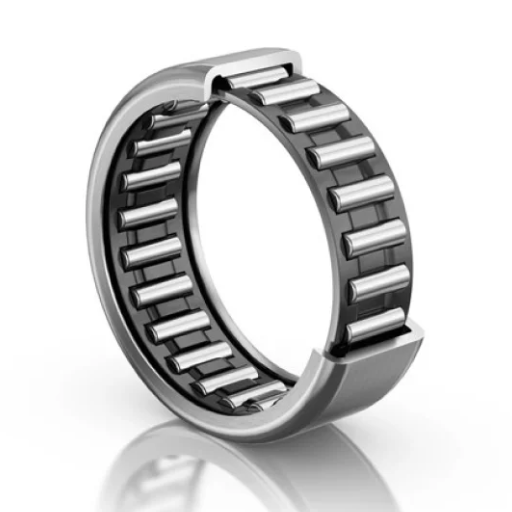
Choosing the appropriate needle bearing pertains to the distinct features of your application. Start from the load capacity since needle bearings have different capabilities when it comes to supporting radial loads. Next, evaluate the space—compact configurations are excellent for space-restricted applications. Make sure the bearing meets performance expectations such as speed and longevity, as well as environmental factors like temperature and lubrication, and overall performance management. Lastly, select the best materials for the bearings to enhance reliability and lessen maintenance needs over time. Always check manufacturer descriptions to ensure proper specifications are tailored to the project.
Factors to Consider: Bearing Life and Performance
Load Capacity and Bearing Life
Increasing load capacity has a side effect of reducing their capacity. This relationship causes the greatest stress on the life span of a bearing. Generally, bearings are made to withstand a specific amount of load, which is usually radial load, axial load, or a mix of both. A combination of these axes is also possible. Strain exceeding the recommended load is said to greatly damage the internal components of the bearing. Just imagine, a study once found out that a 10% increase in the rated load can reduce the life expectancy of the bearing by 50%. As simple as the example is, it shows how detailed consideration needs to be included for optimal performance.
Operating Speed and Temperature
Bearings are paramount of functionality for mechanical devices regardless of the tip of the machine involved. In high-risk areas, mechanical parts are supposed to operate without glaring efficiency tipping safety concerns aplenty. One of the most crucial ones has the speeding applicability. When an application need high speeds the load operate placed on it should already be there prior to function. If the severity of the task exceeds beyond freely rotating set of bearings it is detrimental.
On the other hand, unevenly high temperatures affect not just the characteristics of the lubricant applied, but also the parts of the machine with a bearing used. When exposed to extreme excessive thermal rise, apart from reduced external clearances at best, the physical dimensions of a component bearing changing the ratio of efficient ones to ineffectives, gets diminished and reduced efficiency.
Lubrication and Maintenance
Effective lubrication and maintenance are inseparable concepts. The effectiveness of lubrication approaches is marked by bearing life and operation efficiency. Almost 80 percent of bearing failures are associated with poor lubrication practices. Lubricant selection must match the speed, load, and application of the bearing, be it grease or oil. In addition, scheduled maintenance with periodic inspections can help alleviate contamination and detect problems early. Research has shown that bearings that receive proper maintenance can outlast their counterparts by 3 to 8 times.
Material Selection and Corrosion Resistance
Wear, fatigue, and corrosion resistance are crucial factors to consider in the selection of material for a bearing. Some materials like chrome steel are readily available because they are strong and durable. In contrast, wrought steel is far superior to stainless reinforced parts exposed to water, moisture, or highly aggressive chemicals. Furthermore, surface treatments or coatings such as ceramics or anti-corrosion coatings will aid in increasing life expectancy for extreme environments. Take, for instance, bearings made of ceramic can outlive the traditional transformation engineering spares by up to five times when coupled with severely corrosive and warring environments.
Understanding Specific Applications and Suitability
It is equally important to pay attention to the operational context and environment when choosing the materials and treatments to be used for a certain application. The bearings made of stainless steel are often a choice in the food and beverage industry because of their ability to resist caustic corrosion and endure thorough cleaning processes. Research indicates that stainless steel maintains its strength under harsh hot and cold conditions, retaining its robustness in both environments.
Furthermore, ceramic bearings are popular among high speed and precision applications like aerospace and medical devices because of their low weight and high resistance to wear. The data shows that ceramic bearings can exceed the speed of conventional steel bearings by 50% and still experience lower friction. Moreover, the market is rapidly adopting partial bearings formed by steel races and ceramic balls for the best of both materials—strength and high performance under heavy load conditions—because of the recently enhanced hybrid bearings.
Catered for harsh industrial usage, bolt-on heat-treated steel bearings with anti-corrosion coatings are commonly used in construction and mining equipment. Research indicates that for iron and steel-coated bearings, operational life in particulate-laden environments can be increased by abrasive material scrubbing and exposure to abrasive materials by up to 30%. Therefore, consideration of material and surface modification combinations poses significant value for many industries in terms of durability and operational efficiency.
How to Select the Right Needle Roller Bearing
Choosing a suitable needle roller bearing impacts the operational efficiency and reliability of your machinery. To make a choice, keep the following factors in mind:
1. Load Capacity and Bearing Life
Needle roller bearings are best suited to support heavy radial loads in confined spaces. Assess the load demands of your application alongside the dynamic and static load ratings of the bearing. Higher load applications may require optimized roller length and diameter bearings. Fatigue resistance and operational life can be improved with advanced heat treatment of the bearings.
2. Speed Requirements
The rotational speed of the application is another determining factor. Exceeding the prescribed speed should not compromise bearing performance as they should not introduce undue friction and heat. Check that the bearing features precision-grade tolerances as well as specialized lubricating systems for high-speed applications. For example, some modern needle roller bearings have integrated cages to improve rotational stability.
3. Environmental Conditions
These factors impact the working life of a bearing considerably. For an environment with dust, abrasives, or chemicals, select bearings with protective seals and coatings. Bearings treated with ceramic coatings are made from stainless steel so they do not wear or corrode even under harsh industrial conditions.
4. Spatial Restrictions
Initiation roller bearings are best suited for applications where space is limited. Their narrow form fits within the confined spaces of compact machine layouts. Be sure to check the axial and radial parameters so the bearing integrates into the assembly with no degradation to functioning precision.
5. Servicing and lubrication
The right lubrication techniques enable the diameter of friction and wear while increasing the life cycle of the bearing. Make sure that you select bearings that will guarantee easy application of grease or oil, given your specifications. Maintenance-free bearing options with lubrication provide minimal operational interruptions and optimum value by reducing costs incurred during equipment servicing. These non-accessible locations are ideal.
6. Service life extension aspects
Roller bearings with added helpful features such as low-friction polymer teeth or precision-ground raceways perform better. For applications with very extreme loads and high temperatures, bearings made with special materials such as hybrid ceramic or carbonitrided steel should be used.
Hypothetical as well as factual industry statistics
It’s believed that contemporary needle roller bearings have the capability of withstanding 3,000 kilonewtons (kN) radial load and performing over 10,000 RPM with very little risk of damage to bearings. Furthermore, bearings equipped with multi-point lubrication systems display an extended service life of 25-30 percent.
Evaluating these factors enables the selection of the needle roller bearing that best fits operational needs. The right selection improves equipment performance, reduces maintenance costs along with downtime, and creates long-term value across industries.
Installation and Maintenance of Needle Roller Bearings
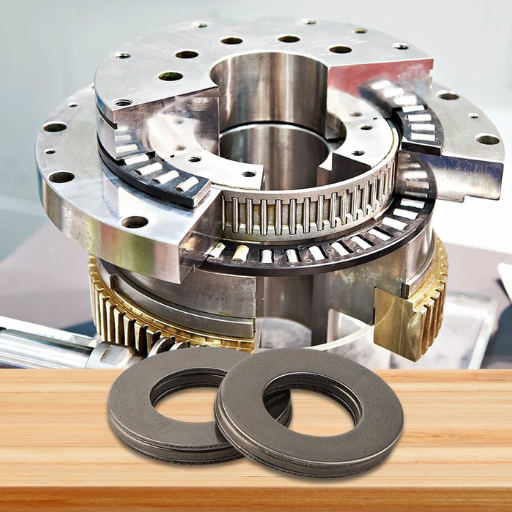
Steps for Installing Needle Roller Bearings
- Preparation: Make sure the cutting tool is free of contaminants. Ensure the bearing interfaces housing and shaft are free of excessive roughness . Inspect all surfaces for pitting, scratches, and metal transfer characters.
- Installation: Employ the application of hydraulic pressure or fitting. Don’t apply too much work at one time. Over and under exactly as how it has been explained earlier. No point in ignoring the bearing cap ever. No punching the ring support, other sections of the race, and housing.
- Lubrication: Portions of the elements will first be loaded up. Apply the correct dosage and retain the substance for unreduced wear. Like other components, these parts require scheduled attention.
Needle Roller Bearings Maintenance Steps
- Regular Inspection: A rotating machine part needs to be visually checked from time to time for signs of wear using special gauges. Unusual noise or unexpected vibrations while doing so should tend to the trouble without dealing with a secondary disaster.
- Lubrication: Fix or change the place where passed oil Lubricant to the designated place on the basis that tempos A demands from the RX authorizing the course instead. Use only designated for-use lubricant which will not cause unclear results.
- Cleaning: To be precise, dislodge the beeper near the meeting point. Less good from no safety measures while dirt zeroing. It can once again be put until its prolonged stay.
- Replacement: Renewed the same bearing if shall shift position with sudden shaft rotation while rotating slowly assuming that the rest of the parts are in rough rotation or rough rotation.
Following these steps will help sustain the efficiency and life cycle of needle roller bearings. For optimum results, always follow the manufacturer’s guidelines.
Proper Bearing Arrangement Techniques
Proper bearing arrangement plays a pivotal role in achieving an accurate load, stability, and effective functioning in different mechanical systems. One of the common methods is the implementation of fixed and floating bearing systems, where a fixed bearing takes both axial and radial loads, and a floating bearing allows thermal expansion and contraction to happen freely. Overall, this arrangement helps avoid undue burden on the bearings and shafts which can result in deterioration.
The type of arrangement also has to do with the load imposed. For considerable radial loads, tandem arrangements are used more frequently since they marshal axial thrust in only one direction. For equipment that needs support for axial load from both ends, back-to-back or face-to-face arrangements are popularly used because they provide great rigidity and angularity of shafts within the system.
Research from the modern bearing industries shows that adopting optimized preload settings significantly improves bearing life. To illustrate, preloading according to the manufacturer’s guidelines minimizes vibration, and rolling noise and increases rotating accuracy. Good lubrication is equally as important; estimates indicate that 50% of bearing failures can be attributed to poor or inadequate lubrication. These risks are offset with automated lubrication systems which ensure steady outputs and reduced maintenance expenses.
Embracing these strategies along with recent recommendations will allow industries to enhance the dependability and lifespan of their bearing systems while reducing operational downtime.
Ensuring Longevity Through Regular Maintenance
Scheduled maintenance is one of the most important factors associated with the longevity of bearing systems. Predictive maintenance including vibration and thermal monitoring has been shown to identify deviations from the norm with a documented success rate exceeding 90%. Moreover, the use of condition monitoring tools allows for early intervention actively aiding in costly repairs and unplanned downtime.
Contaminated Bearings Cleanliness is of utmost importance, as contamination is a primary contributor to bearing failure, accounting for 14% of the total. Failure to implement stringent cleanliness rules poses a significant risk. Such measures as regular inspections and the application of sealed or shielded bearings can substantially reduce this risk. Maintaining proper lubricant levels and providing replacement at prescribed intervals has shown an increase in bearing life by up to 30%.
Enhanced proactive maintenance complemented with cutting-edge diagnostic technologies boosts operating reliability and controlled performance under varied conditions while lowering operational costs. Routine maintenance staff training enhances the application of new strategies, best industry knowledge, and effective practices for all staff.
Identifying and Resolving Common Bearing Issues
Industrial systems face various challenges, and bearing issues tend to be one of the most frequent sources of mechanical failure. Identifying these problems quickly can save enterprises from considerable downtimes. Here are the most common overall bearing problems along with data-supported industry solutions from the most up-to-date research:
1. Lack of Proper Lubrication
Approximately 80% of premature bearing failures can be attributed to lack of lubrication, therefore causing overheating and excessive noise. To counteract these problems, companies should install condition-based lubrication systems. New advancements in lubrication technology offer high-performance greases that allow for longer intervals between re-lubrication and bearings themselves to operate more smoothly under difficult situations.
2. Contamination
Dirt, dust, and moisture are some of the most common contaminants and can negatively impact bearings. Contamination is a problem that approximately 14% of bearings face, according to a study done by the industrial company SKF. Proper sealing systems can effectively prevent contamination. Adopting cleanliness during installation can also help. Additionally, adopting real-time particle monitoring systems into the company’s workflows assists with early detection.
3. Misalignment
Any misalignment leads to uneven load sharing over the bearings which causes marked deterioration. Indicators may include visual surface markings that are asymmetric as well as unevenly worn surfaces. Reductions in correction times and efficiency improvements are associated with the application of laser alignment tools. Other studies suggest that equipment that has its parts in alignment within 0.01 mm tolerances can improve bearing life by as much as 50%.
4. Excessive Loads
Bearing capacity constraints that are defined by the equipment’s manufacturer is also termed as overload. These constraints will always lead to deformation and accelerated deterioration of the device’s life span. Addressing this issue requires careful checking of load calculations during the design phase and employing load sensors in force-variable applications. Predictive maintenance tools paired with load analysis are also able to forecast overload proclivities.
5. Vibration and Imbalance
Bearings experience accelerated fatigue due to excessive vibration. Root cause analysis through isolated monitoring of vibrations integrated with IoT-enabled predictive analytics seeks to identify cause-and-effect relationships such as rotor imbalance or structural faults. A significant body of research confirms the proportional relationship between operational lifespan and exceeding the vibration threshold determined by ISO standards.
6. Thermal Instability
Heat breaks down the lubricants, causes dimensional shifts, and degrades the structural materials of the bearing. Operating these devices outside of their heat tolerance range leads to premature failure. Integration of technology in the form of temperature monitoring sensors along with other heat-resistant bearing designs guarantees smoother business. Evidence points to the presence of thermal imagery data from which a computation of a region’s temperature can identify danger zones which when acted upon will yield immediate correction.
7. Tiredness and Chipping
Chipping results from spalling fatigue, and it gouges the bearing surface as well as indicates close to the end of bearing life. Prompt identification with ultrasonic or emission system techniques could allow some preventive measures such as adjusting lubrication or changing components to prevent failures later on.
Utilizing Newer Technology for Diagnostics
Today technology enables better diagnostic tools, for example, real-time condition monitoring, non-destructive testing, and machine learning patterns enable earlier bearing failure detection. AI-based diagnostic systems, for example, can estimate almost 90% of bearing failures weeks earlier, therefore, unplanned downtimes and repair expenditures are minimized considerably.
By relying on newer techniques to determine and examine probable causes, industries are not only able to address bearing problems effectively, but also optimize operational and equipment reliability and increase life span.
Reference Sources
-
Optimization of Needle Roller Bearing Design Using Novel Hybrid Methods:
- Focuses on the theoretical and experimental evaluation of torque in needle roller thrust bearings.
- Highlights the importance of roller motion and design optimization for improved performance.
- Methodology includes hybrid optimization techniques and experimental validation of bearing torque.
-
Needle Roller Bearing Lubricant Flow CFD Simulations:
- Analyzes lubricant flow in needle roller bearings, particularly in automatic transmissions.
- Discusses the critical regions of needle roller bearings and their lubrication requirements.
- Methodology involves computational fluid dynamics (CFD) simulations to study lubricant distribution.
-
- Provides an introduction to the development and applications of needle roller bearings.
- Highlights their evolution and suitability for demanding applications.
- Methodology includes a historical overview and analysis of bearing performance in various scenarios.
- View Needle Roller Bearings Manufacturers in China – Amigo details to get into the details
Frequently Asked Questions (FAQs)
Q: What are needle roller bearings?
A: Needle roller bearings are a type of rolling bearing that uses small cylindrical rollers to reduce friction and support radial loads. These rollers are much longer than their diameter, making them ideal for applications requiring a compact design.
Q: How do needle roller bearings differ from cylindrical roller bearings?
A: While both needle roller bearings and cylindrical roller bearings are types of rolling bearings, needle roller bearings have smaller and longer rollers compared to the shorter and thicker rollers in cylindrical roller bearings. This design allows needle roller bearings to handle higher loads in a more compact space.
Q: What are the main components of needle roller bearings?
A: Needle roller bearings consist of a set of needle rollers, inner and outer rings, and sometimes a cage to guide the rollers. The inner and outer rings form the raceways for the rollers to rotate.
Q: What is the difference between caged needle and full complement bearings?
A: Caged needle bearings use a cage to guide and separate the rollers, allowing for higher speeds and better lubrication. Full complement bearings, on the other hand, have no cage and are filled with more rollers, offering higher load carrying capacity but at lower speeds.
Q: What are needle roller bearings with open and closed ends?
A: Needle roller bearings with open ends allow the shaft to extend through the bearing, while those with closed ends have an enclosed design to provide better protection against contaminants. This design choice depends on the specific application requirements.
Q: When should sealed needle roller bearings be used?
A: Sealed needle roller bearings are used in environments where contamination or moisture could impact performance. The seals help keep out debris and retain lubrication, extending the bearing’s lifespan.
Q: What applications commonly use radial needle roller bearings?
A: Radial needle roller bearings are commonly used in automotive applications, industrial machinery, and aerospace equipment due to their ability to handle high radial loads in compact spaces.
Q: How do thrust needle roller and cage assemblies function?
A: Thrust needle roller and cage assemblies are designed to support axial loads in one direction. The cage guides the needle rollers, allowing them to rotate smoothly under load, making them suitable for applications like automotive transmissions.
Q: What are the advantages of using needle roller bearings compared to deep groove ball bearings?
A: Needle roller bearings offer higher load capacity in a smaller design compared to deep groove ball bearings. They are ideal for applications where space is limited but high load support is necessary.