


From the automotive division to the aerospace sector, ball and roller bearings are key components in many devices, machinery, and mechanical systems. They serve functions like reducing friction, enabling smooth operations, trouble-free linear or rotational motion, and supporting loads. But how do these functions work, and what makes them so critical for performance? This article will shed light on the theory behind ball and roller bearings, including their design and function. As we discuss the fundamental purpose of these seemingly simple devices that play a key role in mechanical technology, we welcome you to discover the world of engineering, auto mechanics, and beyond. Join us as we uncover the fascinating dynamics of the ball and roller bearings and their every day surprising applications.
What is a Bearing and How Does it Work?

A bearing is designed to help reduce friction of machinery of any complex structure. It also supports efficient and smooth motion as it helps in propelling and guiding circular and straight movement. Depending on the type of bearing, its mechanism mainly consists of sliding or using rolling components like balls or rollers to reduce drag and contact among the surfaces. Such actions not only diminish abrasions, but also strengthen the efficacy and durability of the tools. From simple tools and gadgets at home, to complicated structures and machines at work, bearings are fundamental in providing exact performance.
Understanding the Working Principle of Bearings
To help achieve smooth motion of mechanical parts, bearings apply friction reduction. Performance expectations are set for all types of bearings, hence their individual design differences, however most revolve on the same core mechanism. A bearing’s core mechanism has rolling components or uses rheological fluids with low viscosity to lessen friction. One of the best examples is ball bearings which have small spherical balls that roll in between inner and outer races which is smooth and load bearing friction. On the other hand, roller bearings utilize cylindrical rollers, with their higher contact area it helps support heavier radial loads.
The most recent updates in the equipment used in bearing technology have enhanced reliability and performance. For example, using ceramic materials has provided stronger components that can withstand heat for high speed functions in aviation and high precision instruments. Other factors such as lubricating methods which use synthetic oils or sealed designs also contribute to reduced wear, prolonged servicing life, and decreased maintenance.
According to research, the automotive, railways, and renewable energy industries are key contributors to increased demand for global innovation in the bearing market. Technological additions have put more focus on cost-efficient bearings by enhancing operational demands including load capacity, rotation speed, friction, and durability. With a deeper understanding of the recent advancements and change in methods, it is apparent that bearings are crucial parts of advanced engineering and mechanical systems.
The Role of Radial and Axial Loads in Bearings
Bearings are radial and axial loads. Radial loads occur perpendicular to the shaft and include the force on the spinning wheel. These radial forces are very important in wheel systems, as in automotive wheels and conveyor systems, where the forces have to be load balanced to provide stability and minimize wear. Axial loads are the opposite, as they are parallel to the shaft and found in vertical pumps or helical gears, which require an assisted thrust along the shaft.
New developments in bearing technology have increased their effectiveness in dealing with combined loads, which are bearings with both radial and axial loads at the same time. For example, angular contact ball bearings are designed to allow for high-speed rotations while bearing large axial and radial forces, which makes them critical components in aerospace and precision machinery industries. Data suggests that optimizations like raceway profile geometries and additional material coatings have significantly increased their load capacity. Furthermore, double-row spherical roller bearings have been reported to support radial loads of 10,000 N or more, which makes them suitable for heavy-duty applications.
For operational efficiency, proper load distribution is critical and affects durability as well. Overloading in any direction may also result in misalignment which leads to increased friction and early failure. Industry operations can enhance productivity while reducing maintenance expenditure by tailoring the bearing type and size to specific load conditions, thus ensuring dependable functionality across diverse applications.
How Bearings Are Designed to Handle Stress
Bearing components are meticulously crafted to withstand a high level of operational stress while maintaining optimal execution. The initial fabricating steps include the selection of high-end materials like hardened steel, ceramic, or custom alloys as they have high durability, as well as being resistant to wear and fatigue. Bearings are also put through advanced manufacturing processes, such as precision machining and heat treatment, which further strengthen their structure so they are capable of withstanding high radial and axial loads.
Features like raceway profiles that reduce contact pressure between rolling elements and raceways are used to interrupt stress distribution within the bearing. As an example, spherical bearings utilize spherical rollers which allow for misalignment or shaft deflection compensation, distributing stress evenly across the bearing. Optimization of rolling element geometry has been proven by research to notably decrease stress concentration, which enhances operational lifespan.
Stress management is another vital aspect catered for by the lubrication systems. Metal to metal contact, friction, and surface damage are all risks that can be minimized with a well designed lubrication layer. Seals are commonly added to the internal mechanism of a bearing to keep lubricant in while blocking out dirt and ensure that the moving parts remain clean even under difficult conditions.
Modern computational tools like Finite Element Analysis (FEA) are used to evaluate scenarios and check the performance of bearings under different loads, temperatures, and torque for stress-bearing simulations. The simulation results indicate that high performance bearings are able to function without failure for long periods of time even in very harsh conditions encountered in aerospace, automotive, or industrial machines. Bearings are made from strong materials, uniquely shaped, and precisely machined to function under complex combinations of stresses while maintaining reliability, efficiency, and robust dependability across numerous applications.
Exploring Different Types of Ball Bearings

Ball bearings can be classified by their characteristics so that they can meet specific operational requirements. The types of bearings that are most common include:
- Deep Groove Ball Bearings: This type of bearing is the most versatile as it accommodates radial and axial loads. It finds application in motors, drives, and other household appliances.
- Angular Contact Ball Bearings: These bearings are specifically designed to maximize speed and can support radial and axial loads simultaneously.
- Self-Aligning Ball Bearings: These types of bearings have a built-in alignment correction feature, making them suitable for applications with shaft misalignment.
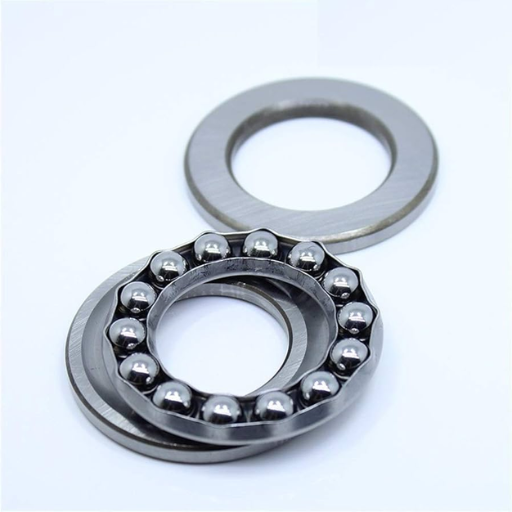
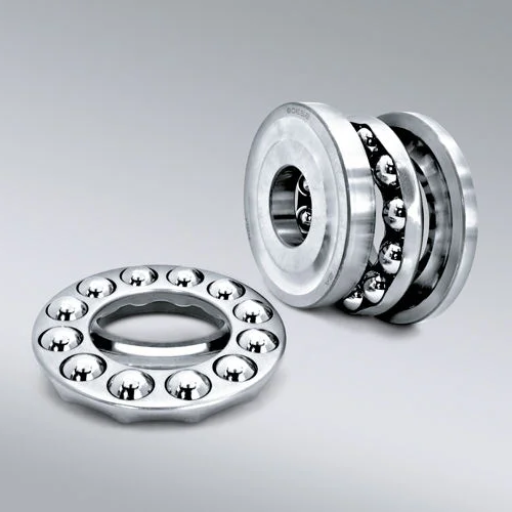
- Thrust Ball Bearings: These types of bearings are mostly used in applications that require the support of axial loads. They are slow-moving devices like turntables or swivel chairs.
Each of these types is used in specific applications, providing maximum operational productivity and dependability.
Common Ball Bearing Design and Their Uses
For effective smooth rotational or linear motion of machines. Ball bearings serve numerous designs owing to their mechanical needs. All of them are integral in minimizing friction. Below is a brief description of the most popular types of ball bearings and their applications.
- Deep Groove Ball Bearings: Some of the most multifunctional and used ball bearings these bearings can efficiently cope to both radial and axial loads. furthermore, the rotary appliances deep groove bearings are used on electric motors, household appliances, and automotive parts. These bearings are reliable and inexpensive. In fact, industry experts predict that they will continue to make up a majority of deep groove ball bearings used across the globe.
- Angular Contact Ball Bearings: These types of bearings are designed ¿ tor dependably cope with combined loads. And have air gaps that may accommodate as much as modified on highly sophisticated equipment like turbines and gearboxes. New materials and lubrication regimens are constantly developed for the more critical cases. Moreover, they transverse axial forces successfully providing great increase in thrust bearing capacity because of the greater contact angles axially inclined as well ad supporting a high snaking of side thrust collided them.
- Self-Aligning Ball Bearings: Self-aligning ball bearings are primarily masters of compensating alignment errors for their users. They cost very much less and increase up times in comparison to their traditional counterparts by a significantly reduced requirement for maintenance. High reliability working precisely in such environments is a must although needing infrequent servicing is crucial while requiring long servicing intervals.
- Thrust Ball Bearings: Primarily used in places where axial load control is important, like in automotive clutches or in the case of low-speed mechanical systems, thrust ball bearings blend simplicity with efficiency. Recent improvement in manufacturing processes has strengthened their load-bearing capabilities while keeping their dimensions small.
- Ceramic Ball Bearings: These are now being used in the aerospace and medical fields because they can withstand high speeds and elevated temperatures. Compared to traditional steel bearings, their lower weight and reduced thermal expansion improve operational efficiency and extend lifespan.
With the use of modern engineering materials and precision manufacturing, the overall performance and lifespan of all icons of ball bearings is greatly improved. Observed trends in the manufacturing industry indicate that there is a growing need for lightweight and energy-saving bearings, which supports the global move towards sustainability for various industries.
Advantages of Deep Groove Ball Bearings
The versatility of deep groove ball bearings is demonstrated by their unmatched ability to support both radial and axial loads simultaneously, making them suitable across various industries. Think of these bearings as the universal joint of rotating machines, their applications spanning from aerospace to automotive industries. The unique design features of deep groove ball bearings allow for low friction which increases energy efficiency in machines, especially in onshi-pared applications. This strengthens the machine’s longevity expectancy.
Deep groove ball bearings compared to other rotating elements offer less maintenance and repairs, a key indicator of their advantage. Specialized seals enable these bearings to prolong their service life even in dusty environments, ensuring dust does not compromise the performance of the ball bearings. Moreover, home appliances as well as electric motors greatly benefit from silent operations thanks to the innovations in seal aid aid noise and vibrations dampening thus broadening the application possible in a world, where less is more.
There are many advantages of deep groove ball bearings, and studies report from 30-35 percent reduction in productivity costs alone with the greater appliance surge. That is possible because of the reduced energy consumption these bearings ensure along with improved output. The availability of deep groove ball bearings in different sizes is not limited to specific fields, making them ideal in an array of industries.
Their performance in high-tech applications has been augmented even further because of their compatibility with modern lubricants and other materials. For example, the ceramic or hybrid versions of deep groove ball bearings possess superior temperature resistance while also being significantly lighter, fulfilling the requirements of contemporary machine design. The combination of versatility, reliability, and low cost offers competitive advantages for these products and will drive their demand across technological and industrial developments down.
Applications of Angular Contact Ball Bearings
Angular contact ball bearings are highly useful in many high-performance applications because they can take both radial and axial loads simultaneously. Their intricate designs enable them to tackle forces acting simultaneously in both directions, so precision is maintained. These bearings find use in the aerospace, automotive, and manufacturing sectors.
- Aerospace Applications
Precision is one of the most important factors in aerospace and angular contact ball bearings provide just that. They are used in the jet engine, the landing gears, and the turbine systems because of their ability to stand up to extreme forces and high rotational speeds. The advancements in the aeronautical field have led to an increased need for ceramic angular contact bearings which are lighter and resist heat better.
- Automotive Industry
In the automotive industry, angular contact bearings are used in wheel hubs, transmission systems, and the motors of electric vehicles. These bearings also find use in high-speed milling and precision assembly machines, diving the stringent requirements of modern vehicles. Reports suggest that the growing market of electric vehicles is creating more and more opportunities for advanced ball angular contact bearings that offer reliability and energy efficiency.
- Machine Tool Industry
Machine tools like lathes and milling or grinding machines need high uniformity and dependability. The smooth functioning and high speed of rotation of these tools must not diminish their accuracy, and hence, they require angular contact ball bearings. These bearings are usually assembled in pairs with specific relations such as back-to-back or face-to-face, so that high axial forces can be absorbed without causing loss of alignment.
- Energy and Wind Turbines
Angular contact ball bearings are crucial for the rapidly growing renewable energy industry, especially for wind turbines. The rotor shafts of wind turbines undergo considerable axial and radial load changes, necessitating the use of powerful bearings. Angular contact ball bearings are now stronger and more dependable for harsh surroundings with rapid temperature changes and dirt exposure owing to advancements in material and lubricant technology.
- Medical Equipment
CT scanners robotic surgery systems, and dental drills are medical devices that depend on smooth motion and reliability, which demands high precision. Angular contact ball bearings provide the accuracy needed to facilitate smooth operations even at high loads and maintain precision during movements.
The strong frame and flexibility of angular contact ball bearings not only meet the existing industry requirements but also serve as a platform for innovation in many technological developments. Industry research anticipates steady growth in their market share, mostly in areas such as electric mobility and renewable energy technologies, as industries focus on performance, efficiency, and service life.
Understanding the Type of Roller Bearing
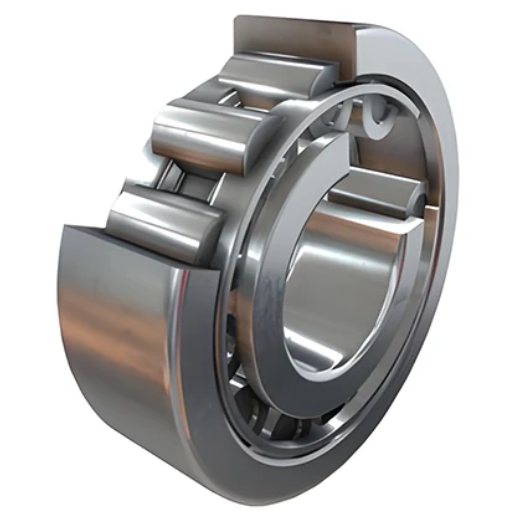
Roller bearings are machine parts that enable the support of radial and axial loads while reducing the friction between the parts in motion. They use rolling parts like cylindrical or tapered rollers to enable the separation of bearing parts. The most common types of roller bearings include:
- Cylindrical Roller Bearings: Used for sustaining electric motors and gearboxes as they enable high radial loads along with needing moderate speed.
- Tapered Roller Bearings: Used to support both radial and axial loads, these bearings are widely used in automobiles and industrial machines.
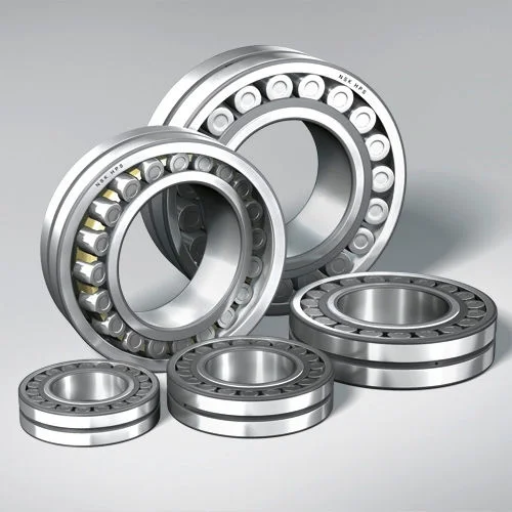
- Spherical Roller Bearings: Perfect for heavy-duty activities like construction and mining as they can compensate for misalignment.
- Needle Roller Bearings: These compact and lightweight bearings are used in space-constrained areas such as automobile transmissions.
With every type intended to fit a specific application, the engineering of the parts ensures that optimal performance alongside durability is achieved.
The Functionality of Cylindrical Roller Bearings
Specifically tailored to be able to sustain heavy radial loads and achieve high speed in operation, cylindrical roller bearings employ rollers as the rolling elements. These rollers are separated by a cage which enhances heat generation and friction. With the design of cylindrical roller bearings, internal stress is kept to a minimum alongside moderate axial loads in one or both directions, depending on the configuration.
The recent breakthroughs in the technology of cylindrical roller bearings have refined their material treatments and precision engineering, which prolongs their service life and increases their load-carrying capacity. For example, through optimized roller profiles and improved surface finishes, these bearings ensure even load distribution as well as a reduction in wear over time. They serve electric motors and gearboxes, turbines, and other heavy machines best because these industries require the utmost reliability and accuracy.
It appears that the performance of cylindrical roller bearings is rated at a few thousand RPMs for some of the most advanced models, and depending on the lubrication method, operational conditions, and many other factors, their performance under load remains good. The shock and vibration resistance of these bearings helps secure their place in ‘tough’ industrial applications. The construction of low-friction seals and some other advanced proprietary cage designs also add to their justification as critical components of modern engineering solutions due to the significantly reduced energy consumption.
When to Use Tapered Roller Bearings
Tapered roller bearings stand out in applications where there is a need to support both radial and axial loads. They perform well in low to high-speed conditions. They are suited for use in machines that undergo high-impact stress such as automotive wheel systems, gearboxes, and heavy industrial equipment. These bearings are best used in applications that require high alignment accuracy due to their capability to control axial loads in one direction.
Recent technology has improved tapered roller bearings by increasing their efficiency and durability. For example, more recent designs include improved internal geometries which according to recent engineering studies can increase the load-carrying capacity by as much as 20%. Also, reductions in frictional losses translate into energy savings of 3-5%. This is crucial in the systems designed to improve sustainability and operational efficiency.
To achieve optimal performance the tapered roller bearings should be applied to positions where the load alignment can be controlled precisely. They are key components in industries like mining, renewable energy, and transportation which require great dependability under heavy and dynamic loading. They also require proper lubrication, frequent maintenance, right fitting, and harsh working condition installation to extend their lifespan.
Benefits of Spherical Roller Bearings in Industry
Because of its requirements in heavy-duty-sustaining rolling workloads along with its rugged working conditions, spherical roller bearings play a vital role in industrial applications. They can carry radial and axial loads simultaneously even in the presence of shaft misalignment which further enhances their versatility and reliability. Due to their great performance coupled with robust construction, these bearings find wider usage in pulp and paper, steel, mining, as well as wind energy industries.
Effectively dealing with heavy impacts and vibrations is one of the most prominent features of spherical roller bearings. Take mining for example; equipment used in this application is highly pressured and more prone to failures but roller bearings reduce equipment downtime as well as maintenance expenses. Studies indicate that proper maintenance and lubrication alongside spherical roller bearings can increase equipment lifespan by 30%.
Furthermore, the evolution of bearing technology has created several new coatings and other materials that are more heat-resistant and offer lower friction. These improvements increase the operational efficiency and service intervals, leading to lower cost of operations. The technologically advanced industries that operate with a focus on sustainability achieve additional benefits of reduced energy consumption of the operations, facilitating environmental targets without hindering productivity.
To conclude, the most distinguishing advantage offered by spherical roller bearings is their strength as well as flexibility which makes these bearings crucial for supporting industries with demanding performance requirements. Their ability to handle heavy loads, misalignment, and long-term dependability ensure that they remain a popular selection across many industries.
How Do Bearings Work in Various Applications?

Bearings enable effortless rotating and Moving parts. delay in motion of components, lowers friction and damage, and Alters effective energy utilization. As demonstrated by bearings supporting shafts, they allow rotation with no restriction. Furthermore, advancing automobiles have made the rotation of wheels and the action of the transmission depend on bearings. They enable effortless movement of rotating components, extend the unit’s lifespan, and improve performance across important domains such as aviation and defense.
Importance of Precision Bearings in High-Speed Applications
Precision bearings are vital in high-speed tasks ranging from different fields of aircraft, automobiles, and industrial machinery. For example, automotive parts that are used in ultra-lightweight cars, DPR D3591U, rely on high speed so its systems are effortlessly maintained. The components bear high aid forces, low vibrations, and less heat produced to allow safe and efficient operation at ultra-high revolutions per minute.
Statistical research emphasizes the more pronounced dependence on precision bearings in modern high-speed applications. Analysis reveals the manufacturing innovation trend alongside the market demand thrust in high-performance machinery will result in exponential growth for the global precision bearing market. For instance, select hybrid ceramic precision bearings achieve unparalleled performance milestones with speeds up to 1.5 million dN (where d is the diameter in mm and N is the RPM), classifying them as highly suitable for strategically important jet engines and high-speed turbines. In addition, new technologies like sophisticated lubrication systems and abrasion-resistant components have further enhanced reliability and service life, decreasing unproductive time and maintenance expenditures.
The importance of precision bearings goes beyond mere high-speed operations, but with the ability to maintain accurate stable operation in highly dynamic environments. Bearings with much tighter tolerances and extreme-condition designs are now available off the shelf. These advancements are crucial to allow industries to increase speed and efficiency while the applicability of high-performance precision bearings remains essential for breakthroughs in high-speed engineering.
The Use of Needle Roller Bearings in Compact Spaces
The engineering field prizes needle roller bearings because of their compact form factor. The needle roller bearings have very thin cylindrical rollers which increase efficiency since they can carry heavy loads while having a small cross-sectional area. One notable benefit of using needle roller bearings is that they help reduce machinery’s overall size and weight without negatively impacting performance.
Modern developments to the design of needle roller bearings include the use of high-grade steel and other coatings that better resist wear and tear to improve longevity. For example, their small size makes them ideal for use in automotive transmission systems since they enhance the compact arrangement of gears without overloading the system. It has also been reported that under certain harsh conditions, needle roller bearings can withstand dynamic loads over 2,000 kN per cm², which is often considered an extreme environment for such systems, indicating remarkable dependability in very tight spaces.
Also, other innovations like sealed needle bearings enhance lubrication retention which minimizes the need for maintenance while protecting against contaminating substances, thereby improving overall performance. This makes needle roller bearings vital for use in applications such as aerospace, robotics, and other industrial equipment where compact design along with the ability to withstand heavy loads is critical.
Applications Requiring Thrust Bearings
Thrust bearings are critical parts in the automotive industry for vehicles that require precise axial load management. Generally, these bearings are employed in steering systems or other components that permit rotation under severe pressure and load. An automotive application is in the transmission of a vehicle, where thrust bearings take care of the axial loading due to gears shifting. Newer thrust bearings, like tapered thrust bearings, the depth of current technology, provide satisfactory support for heavy loads with low friction in automotive transmissions leading to longer life and smoother functioning of the transmission.
Other users include turbines with specific reference to power generation through wind energy. Thrust bearings are critical components where rotating axial loads from the wind turbine are balanced. Compared with other turbines, arguable wind turbines are unique in that they must withstand wind forces while maintaining working axial stability for durability and long life. Industry data points out that employing efficient thrust bearings can dramatically increase reliability in these turbines as they have to sustain continuous operations under many changing circumstances.
The pumps and compressors industry utilizes the utilization of thrust bearings for the alignment of rotating shafts while countering the axial force generated during the movement of fluid. Energy losses and wear in high-speed environments are countered by advanced materials and coatings like ceramic or hybrid options in thrust bearings. Meeting the demands of modern bearings systems, the latest innovations of these bearings are claiming improved durability alongside enhanced load-carrying capacity.
Selecting the Right Bearing for Your Needs
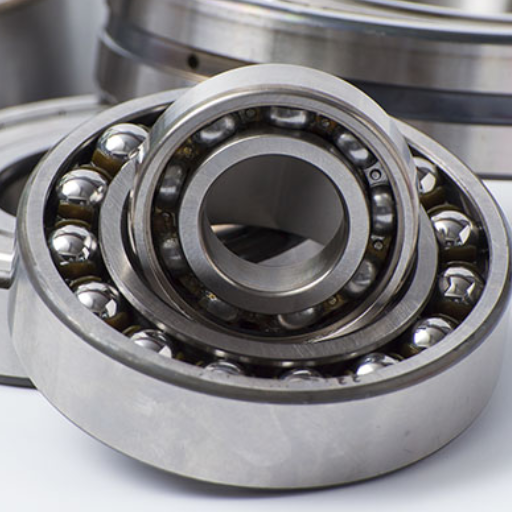
Making the right decision on a bearing depends on several factors that need to be identified first. Determine what load the bearing needs to support first, whether it’s radial, axial, or both. After that, evaluate the speed of operation and the conditions of the environment like temperature, moisture, and other potential contaminants. For applications requiring high speeds, the best choice is often precision ball bearings, while those experiencing heavy-load scenarios may require roller or thrust bearings. Always use materials and lubrications that are durable and perform efficiently to the bearing and its parts. Additional documentation supplied by manufacturers and standards can help with the selection process.
Factors to Consider in Bearing Selection
- Load Capacity
Bearings are made to withstand specific radial, axial, or other supporting loads. For example, spherical roller bearings support heavy radial loads and misalignment better than angular contact ball bearings which are best for axial loads. Dynamic and static load ratings by the manufacturers indicate the capacity of different bearing types. For example, tapered roller bearings endure high axial forces along with some radial loads making them suitable for heavy-duty functionalities in automotive transmissions.
- Operating Speed
When deciding on the right bearing, operational speed greatly influences choice. For high-speed uses, ball bearings are almost always favored because they have less resistance when turning. Roller bearings perform better with moderate speeds. Always check the bearing’s speed rating to ensure no overheating or time-dependent wear occurs. For example, modern ceramic ball bearings can withstand extremely high speeds, especially in aerospace or turbo-machinery industries.
- Environmental Conditions
The external environment, such as extreme temperatures, humidity, corrosive materials, and even the amount of dust can greatly impact design. Damp and corrosive environments demand Stainless steel bearings or bearings with protective seals. For example, hybrid bearings with ceramic balls and steel raceways are best for extreme environments because they resist corrosion and minimize thermal expansion.
- Lubrication and Maintenance
Friction reduction and extending lifespan require proper lubrication of the bearing. Grease lube is typical for sealed bearings because it requires little upkeep, while oil is better suited for high-temperature and high-speed applications. The importance of lubrication to performance cannot be overstated, especially when studies show that 80% of bearing failures stem from poor lubrication.
- Material and Coating
The type of material used in the bearing affects its mechanical properties such as strength, lifetime, and wear resistance. Various requirements are served by readily available materials such as chrome steel, stainless steel, and ceramics. In addition, extreme environment operational factors are catered for by sophisticated coatings and treatments such as titanium coatings and black oxides which improve corrosion resistance and friction modification.
- Misalignment Tolerance
Bearings are always best used when aligned to the manufacturer’s specifications, however, some designs compensate for small misalignments. Self-aligning ball bearings have excellent tolerance for shaft misalignments hence useful in applications where installation troubles are common or dynamic movements are frequently encountered.
Awareness of industry guides drives the correct application of these factors toward improved mechanical system productivity and dependability.
Comparing Ball Bearings and Roller Bearings for Efficiency
Factors that determine the effectiveness of ball versus roller bearings include the bearing’s capacity, speed of rotation, and friction characteristics. Its bearing with spheres as rolling elements, ball bearings are used in situations where speed along with low friction is required, for example, electric motors, fans, and some precision instruments. They perform best when positioned under light or moderate loads since they provide high speeds with low energy expenditure.
Roller bearings that use cylindrical rolling elements have an advantage when it comes to supporting static loads, whether radial or axial. They can resist deformation under heavy pressure because of their larger area of contact along with being capable of taking on static loads without radial support. However, roller bearings do not have as low a friction force as ball bearings, which makes them better used in slower-moving applications where being loaded is key. Other applications are conveyor belts, heavy machinery, and industrial equipment.
Recent benchmarks reveal the average friction coefficient range of ball bearings is between 0.001 and 0.005, while roller bearings are between 0.005 and 0.010, both of which depend on proper lubrication as well as the load applied. Furthermore, testing shows that roller bearings can support loads that are 20-30% greater than similarly sized ball bearings. The mechanical systems where the above bearings are applied need to be operating with optimal efficiency, which is why choosing the right type of bearing most suitable for the task is crucial.
Key Differences Between Rolling Bearings and Plain Bearings
Both rolling and plain bearings are critical in the functioning of machinery; however, each functions on different principles. Striking examples of rolling bearings are ball bearings and roller bearings. They make use of rolling components to decrease friction while supporting both radial and axial loads. The efficiency of these bearings is remarkable since friction is low, generally between 0.001 and 0.010. The exact figure also depends on lubrication and load. In addition to this, rolling bearings have also been noted to be manufactured with high precision and durability, capable of withstanding extreme rotational speeds of 300,000 RPM in select use cases
Plain bearings, however, operate through sliding motion between two surfaces, supported by a thin film of lubricant to lower friction and wear. A significant advantage of these bearings is simplicity of design, paired with excelled performance in specific conditions. Steady friction conditions are recorded at a friction coefficient of 0.01 to 0.05. Though, plain bearings outperform rolling bearings in applications that require heavy loads or oscillating motion and can resist significantly higher loads due to larger contact areas, making them suitable for use in suspensions in automobiles, heavy machinery, and aerospace.
Rolling bearings are more suitable for high-efficiency, high-speed, and precision applications, while plain bearings excel in low-cost, simplicity-oriented, and greater tolerance for misalignment environments. Knowing these distinctions allows engineers to determine which bearing type will best enhance, efficiency, and lifespan in mechanical systems.
Reference Sources
-
- Investigates the impact of internal operational clearance on the lifespan of faulty rolling bearings, including self-aligning ball bearings.
- Highlights the relationship between operational conditions and bearing durability.
- Methodology involves experimental testing of bearings with varying clearances and analyzing their remaining lifetimes.
-
- Focuses on fault diagnosis in rolling element bearings, including tapered roller bearings and ball bearings.
- Utilizes advanced techniques like deep belief networks and principal component analysis for defect detection.
- Methodology includes vibration analysis and machine learning-based fault diagnosis.
-
- Explores fault diagnosis in rolling element bearings using wavelet kernel principal component analysis and hidden Markov models.
- Highlights the application of vibration-based condition assessment for ball bearings with distributed defects.
- Methodology involves advanced signal processing and statistical modeling.
-
Development of a Cryogenic Tester with Air Bearing to Test Sliding-Rolling Contact Friction:
- Examines friction in sliding-rolling contact scenarios, using a ball-on-disc type setup.
- Discusses the principles of friction force measurement and its implications for bearing performance.
- Methodology includes cryogenic testing and friction force analysis.
-
- Analyzes load distribution and equilibrium in ball and roller bearings under multi-degree-of-freedom loading.
- Highlights the stiffness and contact characteristics of tapered roller bearings.
- Methodology involves theoretical modeling and application to various bearing geometries.
- If you are looking for more information about Needle Roller Bearings – Amigo go here right away
Frequently Asked Questions (FAQs)
Q: What is the purpose of bearings in mechanical systems?
A: The purpose of bearings is to support rotating or moving parts and reduce friction between them. Bearings play a vital role in improving efficiency, load capacity, and longevity of machinery by allowing smoother and more controlled motion.
Q: How do ball bearings differ from roller bearings?
A: Ball bearings consist of small spherical balls that reduce friction and support radial and axial loads, while roller bearings are designed with cylindrical rollers and are better suited for handling heavier radial loads, compared to roller bearings.
Q: What are the main applications of ball bearings?
A: Ball bearings are widely used in various applications, including automotive, aerospace, industrial machinery, and consumer electronics. They are integral in applications requiring low friction and high-speed performance.
Q: What are ball screw bearings and where are they used?
A: Ball screw bearings are designed to support the axial loads in ball screw assemblies, which are used in precision motion applications, such as CNC machines and robotics, to convert rotational motion into linear motion efficiently.
Q: How do pillow block bearings differ from other types of bearings?
A: Pillow block bearings are designed to provide support for a rotating shaft with the help of a mounted housing. They are often used in conveyor systems and agricultural machinery due to their ease of installation and adjustment.
Q: What are the advantages of using stainless steel bearings?
A: Stainless steel bearings offer excellent resistance to corrosion, making them ideal for applications in harsh environments or where hygiene is crucial, such as in the food and beverage industry.
Q: What defines super precision bearings, and in what applications are they used?
A: Super precision bearings are designed to provide high accuracy, speed, and rigidity. They are used in applications requiring precise motion control, such as in machine tools, medical equipment, and high-speed spindles.
Q: When should thin section bearings be used?
A: Thin section bearings are used when space and weight are limited but high performance is needed. They are suitable for applications in aerospace, robotics, and medical devices, where compact design is essential.
Q: How do cylindrical roller thrust bearings function?
A: Cylindrical roller thrust bearings are designed to handle high axial loads and provide low friction. They consist of cylindrical rollers arranged perpendicular to the shaft and are commonly used in heavy machinery and industrial equipment.
Q: What factors should be considered when choosing between different types of bearings?
A: When choosing between different types of bearings, consider the application requirements such as load capacity, speed, space constraints, environmental conditions, and cost. Bearings vs each other will vary in suitability based on these factors.