


Bearings ensure seamless functionality, friction control, and load-bearing capacity in many mechanical operations. When selecting a bearing, the options tend to be narrowed down to either needle bearings or roller bearings. This is due to both variants possessing distinct designs, advantages, and preferred applications. In this blog post, we aim to identify the differences between needle and roller bearings to help you determine which option suits your application best. The post will also equip you with the information that takes you one step closer to your target whether it is optimal performance, longevity, or specialized functions. So, let’s dive into the specifics, advantages, and concrete uses of each!
What is a Needle Bearing and How Does it Work?

A needle bearing is a subdivision of a rolling element bearing, and it has loose moving parts in the form of thin and long cylindrical rollers which are used to minimize the friction present between parts in motion. Since the rollers also known as needle rollers, are long and thin, and have a high ratio of their length to diameter, the bearing can support considerable loads while occupying less space. They are used in most modern systems such as automotive, aerospace parts, and industrial machinery, where size and weight saving is a priority. The smooth movement of bearings is achieved by even distribution of the load along the rollers.
Key Components of a Needle Roller Bearing
- Needle Rollers
The major constituents of the bearing are the needle rollers which have a great length-to-diameter ratio. These rollers are made out of chrome steel or stainless steel which are some of the most durable and wear-resistant materials. Furthermore, the smooth and frictionless operation of these rollers is accomplished through precise manufacturing even at extremely high loads.
- Inner and Outer Raceways
Parts of the bearing that guide the needle rollers while maintaining smooth surfaces to evenly distribute the load are called raceways. Inner and outer raceways undergo hardening and grinding to obtain a smooth abrasive finish to increase the bearing performance and lifespan.
- Cage or Retainer
A cage is designed to fix the rollers in a way that they cannot move toward one another which guarantees appropriate distance between the needle rollers. This part is mainly made from lightweight strong materials like steel or polyamide to ensure that there is no movement of the rollers during operation.
- Sealing Components
Seals prevent the ingress of contaminations like dust, dirt, and moisture into the bearing assembly which makes them a paramount consideration for needle roller bearings. Other seal designs have undergone improvement and now utilize new durable materials while incorporating elastomer which improves flexibility and reliability.
- Lubrication System
For needle roller bearings, proper lubrication is essential to reduce friction and wear. Most bearings are either pre-greased or have grooves that facilitate oil flow. Optimal performance is maintained with advanced lubricants designed to withstand high temperatures and heavy loads.
Key Specifications and Data
- Load Capacity: Due to the design and application of the needle roller bearings, they can manage radial loads from a few kilograms to several tons. Heavily-duty supports higher loads due to the elongated rollers which effectively distribute the load.
- Dimensional Range: Needle rollers with ranges of 2 mm in diameter to over 50 mm, can also possess lengths that greatly exceed several times the diameter, allowing freedom of application.
- Speed Ratings: Some specific applications are capable of exceeding 10,000 RPM, making those environments ideal for these types of bearings that require rapid motion.
- Operating Temperature: Needle rollers can endure harsher materials and lubricants while operating in -30°C to over 150°C. Specialized bearings are capable of more extreme temperatures.
By combining all these components and specifications, various industries and demanding applications can achieve highly efficient and reliable operations.
Functionality of Needle Rollers in Load Management
Needle roller bearings are pivotal in the even distribution of loads in mechanical arrangements, particularly where space is at a premium. These bearings can successfully deal with radial and axial loads simultaneously. As the slender, elongated rollers have to be maximized in making contact, the construction helps to minimize comprehensively concentrated stresses and evenly distributed forces over the bearing surface. This feature is very useful for high-speed or high-load applications where the reduction of wear is very important.
One of the foremost advantages of needle rollers is the higher load capacity they can support relative to ball bearings of the same dimensions. For example, in car transmissions, needle bearings perform smooth operating functions by bearing the combined radial and thrust loads that gears tend to rotate usually. They work with very low friction which means lower energy expenditure and higher efficiency. In addition, some models, full-complement needle bearings, for instance, are designed to increase load-carrying capacity by omitting the cage and hence, increasing the number of rollers in the limited space.
Recent developments in technology have made it possible to manufacture bearings that have greater durability and lower noise levels even in severe conditions of operation. Take, for example, the case of needle roller bearings in industrial equipment: they can sustain dynamic loads over 1,000 kN and continue to function for long periods. With the right material selection, advanced lubricants, and these additional features, needle roller bearings perform superbly in modern sophisticated machines, automation systems, and aerospace technology. They help to maintain the structural integrity and mechanical equilibrium in a system by facilitating balanced load distribution of a mechanical system.
Advantages and Limitations of Needle Bearings vs Ball Bearings
Benefits of Needle Bearings
- Space Efficiency:: Compared to ball bearings, needle bearings are slimmer and permit a more compact system.
- Higher Load Capacity: Needle bearings have high radial load-bearing capacity relative to their dimensions. This is especially useful in heavy-duty operations.
- Reduced Weight: Their smaller size and lightweight construction is beneficial in applications that require weight reduction.
Disadvantages of Needle Bearings
- Limited Axial Load Handling: Support for significant axial load is not provided by Needle Bearings.
- Higher Friction: Needle bearings may under some conditions generate more friction than ball bearings.
- Requires Specific Lubrication Guidelines: Needle bearings depend on proper lubrication for optimal performance. Insufficient lubrication can lead to excess wear, which decreases lifespan.
Advantages of Ball Bearings
- Versatile Load Capability: Ball bearings can efficiently handle both radial and axial loads.
- Lower Friction: They operate with reduced friction, making them better suited for high-speed applications.
- Durability: High-quality ball bearings often provide a longer service life with proper maintenance.
Limitations of Ball Bearings
- Bulky Design: Ball bearings take up more space compared to needle bearings of equivalent performance.
- Lower Radial Load Capacity: For the same size, they typically carry lower radial loads compared to needle bearings.
- Weight Factor: Their design often results in additional weight, which may be a drawback in lightweight applications.
Exploring Different Types of Needle Roller Bearings
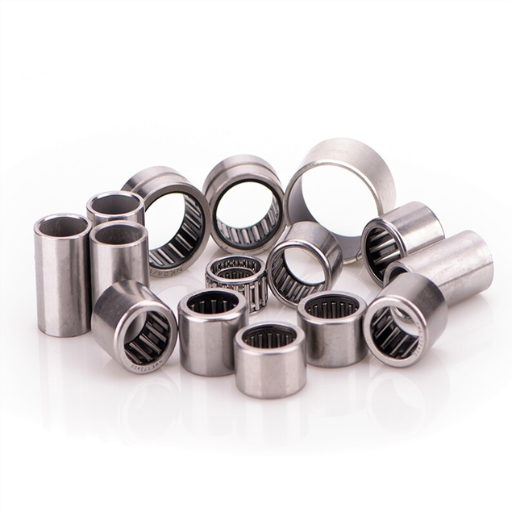
A different form of needle roller bearings exists as each type serves different application needs and performance criteria. Some noted types are:
- Drawn Cup Needle Roller Bearings
Lightweight and space-efficient are qualities of these bearings making them handy for applications with strict spatial constraints. Their thin outer shell and ability to withstand high radial loads enhance their compact structure.
- Needle Roller and Cage Assemblies
The components comprise needle rollers grouped into a singular unit by a cage which offers precision and high load-carrying capability. They find applications in automotive and gearbox transmissions.
- Thrust Needle Roller Bearings
Able to bear axial loads only, these bearings work well for rotary parts in automotive clutches and pumps.
- Radial Needle Roller Bearings
These are employed where confined shaft space and high radial loads are of concern. They are reliable in a variety of industrial systems.
Each type exhibits a blend of performance, size, and durability ensuring their usefulness in different industries.
Understanding Drawn Cup Needle Roller Bearings
Needle roller bearings with a cup are compact and light. They are used in systems that have a high load-bearing capacity and operate under very tight spaces. Bearing outer rings are thin which makes it possible to have a cross-sectional design that is both weak and small. The radial loads accepted by these bearings are exceptionally high and therefore are very suitable for automotive applications such as automotive automatic transmissions, gearboxes, and other automatic machinery that are heavily space-constrained.
Features of Thrust Needle Bearings
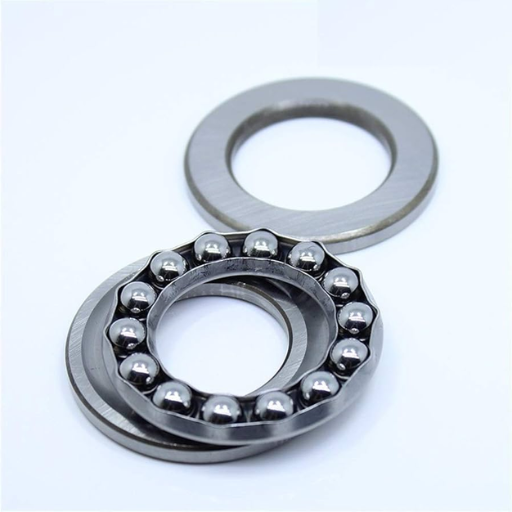
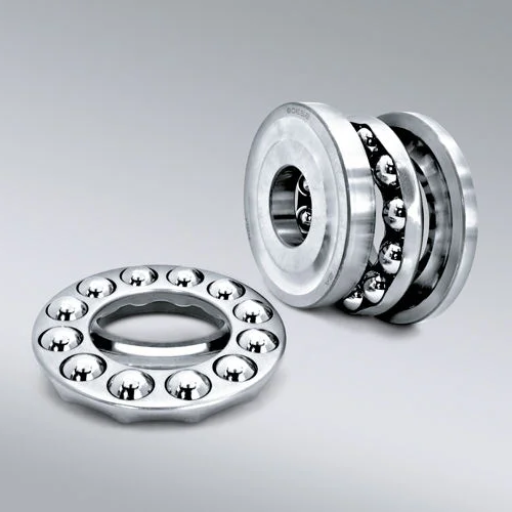
Thrust needle bearings are made to accommodate a high axial load while maintaining a compact, space-saving configuration. The bearings consist of a precisely crafted cage that guides and retains a series of roller needles during operation. Their low axial profile is advantageous in applications that are constrained by available space.
Key Features:
- High Load Capacity: Designed thrust needle bearings have an optimized roller arrangement as well as an increased bearing raceway depth, both of which allow substantial axial loads to be accommodated with ease.
- Compact Design: The low profile of the bearing allows it to be incorporated in designs with limited axial space, thereby expanding the scope of possible engineering solutions.
- Excellent Durability: These bearings are manufactured from quality materials and demonstrate exceptional wear and load deformation resistance, ensuring a long operational life.
- Efficient Lubrication: Designed thrust needle bearings allow for the effective distribution of lubricants to various machine zones, aiding in the reduction of operational friction and improving efficiency in overburdened and high-speed machine modes.
- Customizable Components: Thrust needle bearings can be integrated with washers or fitted on hard-treated surfaces as per operational demands, adjusting to bespoke requirements.
Example Applications:
- Automotive parts, particularly clutches and transmissions, where efficient axial load handling is critical.
- Industrial equipment such as presses or assembly machines necessitates precise force transfer.
- This pertains to home appliances or tools that require dependable and space-saving bearing solutions.
To enable various uses, the thrust needle bearings have unique capabilities that make them indispensable in contemporary technology and mechanical systems.
Applications of Needle Roller and Cage Assemblies
Widely used within various industries, needle rollers, and cage assemblies demonstrate remarkable functionality by effortlessly managing severe radial loads. These versatile components accomplish high-speed operations, even in dynamic, fast-paced environments, which is an added contributor to their flawless reputation. Provided below are additional applications.
Automotive Industry: These components are notable in transmissions, compressors, and even rocker arms. Take modern automotive transmissions for example; these assemblies smoothen shifts and optimize power transfers. Due to their compact design coupled with industrial durability, approximately 30% of automotive gearbox components have adopted needle roller and cage assemblies within these components.
Aerospace Sector: These lightweight assemblies with high-bearing capabilities are pivotal in the construction of aircraft engines, landing gears, and actuator mechanisms. Aviation systems require stringent precision, and these assemblies can confidently meet those precision engineering demands.
Industrial Machinery: Conveyor systems, gear pumps, and material handling equipment also make use of these assemblies. Their tight tolerance combined with high load enables the reliability and longevity of these systems which drastically reduces maintenance costs and system downtime.
Medical Equipment: The assemblies are used in medical imaging systems, surgical instruments, and hospital beds. They are compact yet sturdy, which is critical in medical machinery. Their precision in mechanical construction minimizes vibration and noise, a need for reliable medical equipment.
Construction Equipment: The assemblies are used extensively in cranes, excavators, and compact loaders. An investigation claimed that their strength increases the operational life of construction machinery parts because of the equipment’s harsh load and high-stress working environments.
Their versatility across multiple domains underlines the importance and reliability of needle roller and cage assemblies as key drivers in engineering innovation.
Comparing Ball Bearings and Roller Bearings
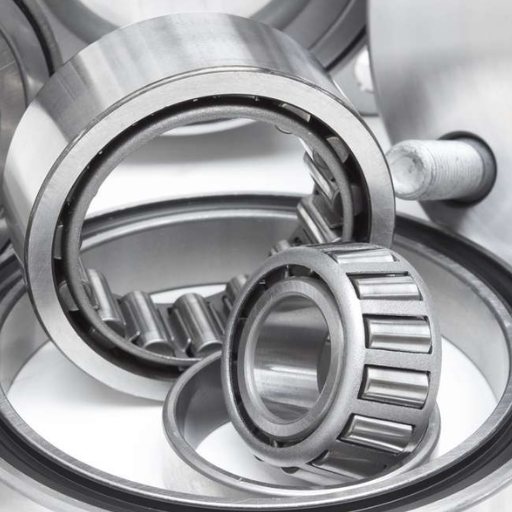
Ball roller bearings and ball bearings fulfill parallel functions, however, their design and performance differ remarkably. In ball bearings, the friction-inducing components are spherical balls, thus, ball bearings are only useful when speeds are high, friction is low, and when lighter loads are present, especially during angular motion.
Roller bearings use cylindrical or tapered rollers, which makes them more useful when it comes to dealing with heavy loads, providing more shock absorption, and are often used when straight or radial motion is dominant.
In either case, load capacity, type of motion, speed, and other operating conditions should be evaluated for efficient performance.
Differences in Friction and Efficiency
Friction is often regarded as one of the most pressing issues along with efficiency for various reasons. When talking about roller bearings and ball bearings, friction is important because it relates to the effectiveness and required power for different functions of work. While ball bearings have less friction, roller bearings have greater friction because energy is lost in the process. The latter is because the balls do spin with the raceways in a ball bearing. Hence they are easier with speed and more favorable with less energy loss for motors and fine-working machinery.
On the other hand, roller bearings have greater friction because the contact between the rollers and the raceways is a line contact. While this design improves load-bearing capacity, it may also lead to a slight increase in inefficiency, when compared to ball bearings, in high-speed operation. Despite this, roller bearings are best suited for heavy load and shock-absorbing applications, such as in industrial equipment and automotive systems.
As per the latest research, ball bearings are known to achieve efficiency ratings between 95% to 98%, based on lubrication, speed, and operating conditions. Roller bearings achieve slightly lower efficiency ratings of 90% to 94%, under the same conditions. Choosing a bearing type involves a well-considered compromise between friction, efficiency, and the requirements of the application.
When to Choose Radial Ball Bearings
For applications where high-speed functionality and low friction are critical, radial ball bearings appear as an optimal solution. They can cope with radial loads efficiently, allowing for their application in electric motors, automotive systems, and industrial machinery. Recent findings suggest that radial ball bearings operate best within a range of moderate loads and rotational speeds anywhere from 1,500 to 20,000 RPM, depending on the size and material of the bearing.
These bearings are especially useful in highly sophisticated applications owing to their ability to minimize energy losses through low rolling resistance. Under optimal lubrication and maintenance conditions, a radial ball bearing can function for well over 10,000 hours, demonstrating reliability and efficiency. Additionally, radial ball bearing’s small dimensions and multifunctionality facilitate their integration into various systems, from intricate machines to small devices. To devise the most advantageous configuration with radial ball bearings, it is crucial to accurately evaluate the bearing’s load limits and conditions of use.
Performance at High Speeds: Ball or Roller?
Both ball and roller bearings have their advantages and limitations when dealing with high speeds. With ball bearings, their sharp contact mechanism tends to make them more frictionless. Hence, they are best suited to extremely high systems. Moreover, ball bearings reduce the amount of heat generated from friction, which avoids unwanted degradation in worn parts as well as preserving dirt-free functions for decades.
In contrast, roller bearings provide line contact that allows them to carry greater loads. This construction has its downsides and loses efficiency at extremely high speeds due to increased friction. For example, cylindrical roller bearings support significant radial loads at intermediate to high rotational speeds, but they do not achieve the same top speed as a precision ball bearing.
The performance data shows that the advanced ceramic ball bearings, which do not contain any steel parts, achieve the world record rotational speed of 1.7 million dN. This makes them extremely useful parts in aerospace or medical engineering. Tapered roller bearings can bear high loads at lower speeds, typical for automotive and industrial heavy-duty applications.
Ultimately, choosing between ball or roller bearings at high speeds requires specific attention to details like axial and radial load requirements, heat dissipation, and lubrication parameters. Their performance in demanding high-speed conditions can be further enhanced by leveraging new material science and design optimization techniques.
Understanding Roller Bearings and Their Applications
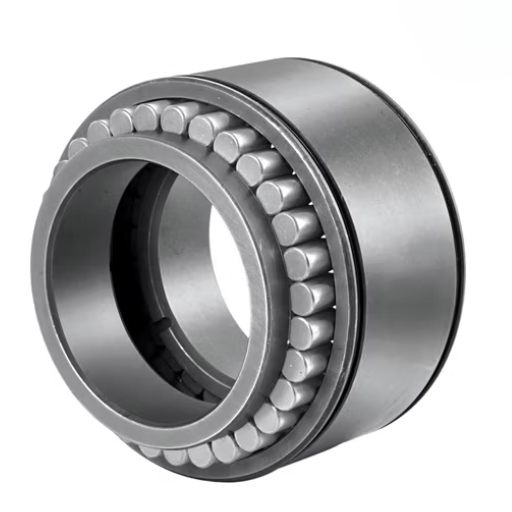
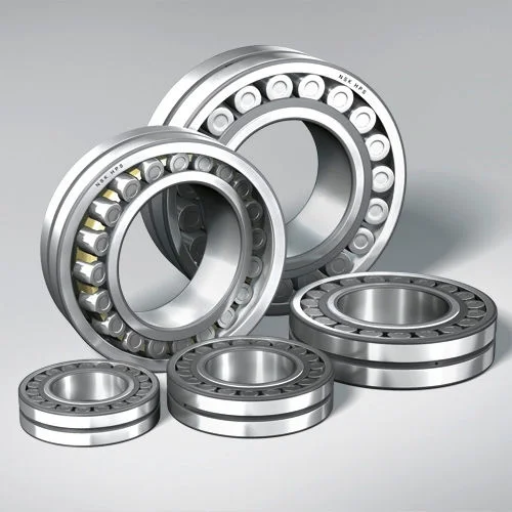
Cylindrical roller bearings can endure heavy operational loads and are common in industrial tasks due to their reliability and durability. This type of bearing is composed of rolling elements in the form of cylinders, which makes them a more favorable option for weight distribution relative to ball bearings. Hence, bearings are efficient in sustaining heavy radial and axial loads.
Cylindrical rollers are integral to both industrial machinery and aerospace applications because they ensure steady operational reliability coupled with high performance during extreme operational stress. This ability, along with low friction characteristics, gives mechanical engineering applications a reason to appreciate its use in the heavy-duty class.
Components of a Cylindrical Roller Bearing
To yield optimum performance while operating under considerable mechanical stress, cylindrical roller bearings have multiple parts that function cohesively. Listed below are the essential parts and their functions:
- Inner and Outer Rings
Rings act as guides through which the cylindrical rollers will move. Inner rings mount onto the shaft while outer rings sit in the bearing housing placed in the bearing seat. These components are meticulously manufactured to maintain even motion and their construction is normally from high-quality steel.
- Cylindrical Rollers
Cylindrical rollers are molded to distribute load uniformly, which is the distinguishing characteristic of this type of bearing. Their length-to-diameter ratio approaches one, minimizing stress and deformation during operation. This allows them to achieve greater radial load capacity than ball bearings.
- Cage (or Retainer)
The cage preserves the integrity of spacing and positions the cylindrical rollers so that contact between adjacent rollers is avoided. Steel, brass, or polymer are common materials for the cage, depending on the purpose. The design of the cage plays a part in determining the maximum speed limit of the bearing and its capability to dissipate heat.
- Raceways
The inner and outer rings have precision ground raceways that steer the rollers while permitting free rotation. Sophisticated manufacturing processes often employed improve surface finish which reduces friction and prolongs the lifetime of bearing.
- Lubrication System
As the friction and wear on the components need to be reduced, lubrication must be done properly. Depending on operating conditions, cylindrical roller bearings are typically lubricated with oil or grease. Revised designs may also incorporate seals or lubrication pockets which makes performance better while maintenance is kept at a bare minimum.
- Seals and Shields (Optional)
Bearings that work in dirty conditions usually have seals or shields fitted to prevent the ingress of dirt, debris, or moisture. This feature aids in prolonging the operational life of the bearing.
The synergy of the described components enables the cylindrical roller bearings to achieve high efficiency, stability and long life. Modifications for specific industrial applications, such as enhancing roller cage dimensions, changing the cage material, and adjusting lubrication methods, may further improve performance.
Role of Radial Load in Bearing Selection
A radial load simply means the force that is applied perpendicular to the rotation axis of a bearing. This factor is very important when choosing the classification of the bearing. Bearings have been built to endure certain loads, and how radial load affects the bearing’s operation must be understood to ensure optimum performance and bearing life.
Cylindrical roller bearings have an uppermost advantage in that they bear high radial loads because of the linear contact between the rollers and the raceway. Studies suggest that these types of bearings outperform ball bearings in radial load-bearing applications such as construction equipment, industrial gearboxes, and high-speed trains. For instance, larger diameter cylindrical roller bearings are capable of supporting radial loads weighing several tons which is useful in many heavy-duty industries.
More recently, improvements in materials science and lubrication have increased the radial load bearings can support. Roller contact stress, the cage materials, alignment, and other radial load and operating environment parameters are also constantly being improved upon. The appropriate radial load needs to be considered too because it has to be lower than the wear-out and failure threshold.
Choosing the Right Rolling Bearing for Your Needs
Selecting the correct rolling bearing is crucial when planning for optimal performance, reliability, and life span. Below are some critical considerations:
- Load Type and Magnitude
Check what type of load it is whether radial, axial, or a mixture of both. Also, examine the load’s magnitude. For example, cylindrical roller bearings are suitable for high radial loads while angular contact ball bearings are good for combined radial and axial loads. Another example is, a deep groove ball bearing can support radial loads up to 5 kN and spherical roller bearings substantially over 100 kN in favorable conditions.
- Speed Requirements
Bearings used in high-speed applications should have low friction and allow for easy dissipation of heat. For extreme rotational speeds, ceramic hybrid bearings or specialized steel bearings are ideal. As an example, even more than 20,000 RPM spindle speed on precision angular contact bearings is classified as low 23.7.
- Operating Environment
Environmental considerations are essential in making a choice. For applications prone to exposure to dust, water, or elevated temperatures, sealed or shielded bearings with heat-resisting lubricants are needed. For instance, bearings made of stainless steel are employed where there is high corrosion while ceramic bearings are used in ultra-high temperatures above 500°F (260°C).
- Durability and Service Life
Take into account the life span of bearings fitted with sophisticated materials and coatings, like case-hardened or through-hardened steel which strongly resist wear and fatigue. Usable service life can be estimated with calculations based on dynamic load ratings (C) and equivalent load considerations. For industrial-grade bearings, L10 life values typically range from 50,000 to 200,000 hours under a normal operational environment.
- Dimension and Space Constraints
Check that the spatial constraints within your system are conformable with the bearing dimensions. When weight and size are of primary importance, thin-section ball bearings provide an effective solution.
- Application-Specific Needs
High-precision CNC machines and automotive systems may require tailored bearings with specific features, such as tighter clearances, higher stiffness, and specialized vibration damping.
Additional Technology Innovations
Smart sensors that monitor temperature, vibration, and operating conditions in real-time have been incorporated into many modern rolling bearings. This allows for maintenance to be scheduled in advance which helps decrease unexpected downtime. For example, alignment or lubrication issues can be detected by some sensor-integrated bearings, improving bearing life by 30%.
Analyzing these factors and other advanced bearing technologies industries enables optimal performance and reliability across various applications.
Why Consider Plain Bearings Over Rolling Elements?
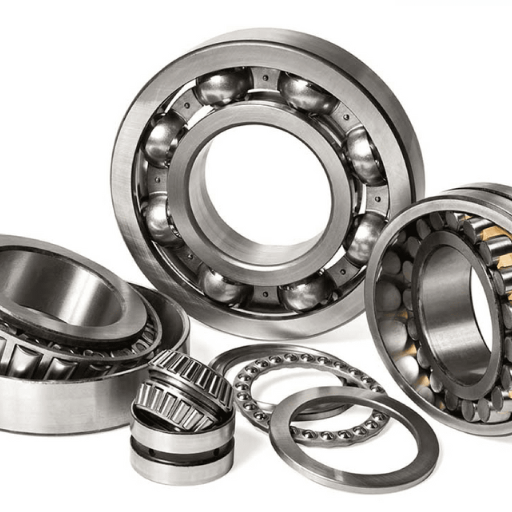
The low-maintenance mechanical engineering components, plain bearings, roll above the rest as they eliminate the burden of constant replacement due to their unmatched reliability and remarkable cost efficiency. The practicality plain bearings possess allows them to easily sustain extreme shocks and vibrations while remaining quieter than other components. This versatility ensures that plain bearings can operate in rudimentary environments devoid of stringent precision or the need for rapid operation and still maintain a high-performance level over extensive durations.
Advantages of Using Plain Bearings
1. Economically Friendly
Used across heavy industries, plain bearings serve as the unrivaled backbone as they are far easier to procure than rolling element bearings. Tiered industries harness the advantages of plain bearings thanks to the simplistic manufacturing designs which reduce costs further. Despite requiring fewer moving parts when it comes to precision tasks, the simple designs aid in reducing maintenance costs, proving proper value over the long term.
2. Performance
The unique advantages low grit thrust bearings possess help them to endure unparalleled levels of weight or load. Perpendicular load positioning helps distribute lower volumetric average contact pressure per unit area contact area leading to less wear. Due to the plain friction bearings used in most industrial machines, they can easily outperform sub-1000 MPa workloads.
3. Plain Bearing Benefits:
Resistant to contaminants like dust or debris and extreme temperatures, plain bearings demonstrate remarkable resistance thanks to their solid structure and lack of rolling elements. Certain materials, bronze, and PTFE for example, are capable of functioning efficiently at extremely low and high temperatures, reaching -200°C and 250°C respectively.
4. Quiet Operation
Medical tools, electric motors, and residential devices require quiet operation which plain bearings can provide due to lacking rolling contact noise. Furthermore, their vibration-dampening properties help protect the machinery and enable seamless operation.
5. Self-Lubricating Polymers
Applications that require regular maintenance become more feasible due to self-lubricating materials like sintered metals and composite polymers which operate without lubrication, enabling use in remote and underwater environments.
6. Endless Customization
The tailor-made options for plain bearings are limitless, with varying shapes, sizes, and materials available, they can meet unique machinery demands for parts ranging from cylindrical bushings to thrust washers.
By providing these advantages collectively, plain bearings are important to various fields such as automotive, aerospace, and industrial manufacturing. Their dependable operation across multiple conditions makes them relevant in today’s highly developed world of technology.
Comparing Plain Bearings vs Rolling-Element Bearings
Assessing plain bearings and rolling-element bearings reveals their primary distinctions to be design, functionality, as well as the specific applications that meet particular operational requirements.
1. Design and Construction
Bushings, or plain bearings, are identified by the sliding motion that occurs between surface interfaces which can be improved through lubrication. Their uncomplicated structure, marked by a lack of moving parts, nullifies the weight and compactness. In contrast, rolling element bearings comprise rolling parts like balls or rollers, which are encased in an inner and outer ring. This minimizes friction by substituting sliding for rolling motion; thus, these components are appropriate for high-speed applications.
2. Load Capacity
Plain bearings tend to manage large areas of radial or axial forces more efficiently than others. This makes them appropriate for heavy-duty construction machinery or hydraulic systems. Rolling element bearings are suited to more precise and faster applications; however, they expose excessive loads or shock due to their smaller contact areas.
3. Maintenance Requirements
The simplified design and fewer moving components within plain bearings results in lower required maintenance. Made of lubricated or self-lubricating materials, these bearings can withstand harsh environments. Maintenance on rolling-element bearings is a given, as they require regular maintenance like relubrication, further extending wear and worsening the chance of bearing failure. This is even more important in high-speed or precision environments.
4. Friction and Efficiency
Rolling-element bearings reduce friction through rolling motion but may face challenges from higher rotational speeds as well as heat and inefficiencies. While plain bearings suffer from greater friction owing to sliding motion, the inclusion of advanced composite or polymers can aid friction to further improve efficiency.
5. Cost Considerations
Because of the simple design and lack of ongoing maintenance, plain bearings are more cost-efficient in comparison to rolling-element bearings. Although they are more expensive up front, rolling-element bearings can prove to be worth the price in instances where high speed and precision are critical.
6. Performance in Extreme Conditions
Due to extreme industrial conditions, plain bearings have an advantage as they are highly durable under extreme temperatures, corrosive environments, and exposition to various contaminants. Rolling-element bearings are less suited because the intricate design is more sensitive to contamination and wear.
7. Typical Applications
- Plain Bearings: Widely used in construction equipment, automotive suspension systems, and high-load industrial setups.
- Rolling-Element Bearings: Commonly found in aerospace systems, motorized machinery, and electrical components requiring high precision.
With these differences in mind, designers and engineers can choose the right bearing for the job based on operational and performance criteria as well as money limits. Both types serve important functions in present-day industries and are more complementary than purely competitive.
Applications Where Plain Bearings Excel
The ease of use, longevity, and economical qualities of plain bearings are attributes recognized across numerous fields. In addition, they are very effective in settings with heavy loads, high temperatures, or frequent oscillating motions. A primary example would be their application in construction and farming equipment as well as industrial presses, which require plain bearings to withstand and absorb hostile shock loads while resisting significant wear.
Outside of heavy industry, plain bearings find use within transport systems such as railroads and subways, where no-maintenance requirements are a big advantage in terms of reduced operational costs and improved downtime. Their contamination-resistant properties make them suitable for mining equipment. Such equipment faces extreme amounts of dirt and debris that would normally render other bearing types useless. Supplementing these benefits, the latest engineering studies indicate that plain bearings can function efficiently at temperatures older than 500°F (260 °C), which is higher than the operating temperature of many rolling-element bearings. Thus, plain bearings are perfect for furnaces and thermal processing systems.
Plain bearings are also widely used in the renewable energy field. For instance, in wind turbines, the ability to support huge rotor shafts without complex lubrication systems smoothens operations and cuts down required maintenance, which enhances plain bearings’ appeal. Their difficult environment operating functionality makes plain bearings relevant throughout countless sectors.
Reference Sources
-
Design of Special Plastic Bearings and Their Application in Renewable Energy Conversion System:
- Discusses the use of ball, roller, and needle bearings in renewable energy systems, with a focus on their material properties and environmental exposure.
- Highlights the differences in performance and durability of needle and roller bearings under specific conditions, such as exposure to seawater.
- Methodology includes material testing and performance evaluation in renewable energy applications.
-
Frictional Power Loss in Solid-Grease-Lubricated Needle Roller Bearing:
- Investigates the frictional power loss in needle roller bearings lubricated with solid grease, comparing it to other lubrication methods.
- Highlights the advantages of needle roller bearings in high-speed oscillating motions and challenging access conditions.
- Methodology involves experimental analysis of frictional power loss under varying operational conditions.
-
Needle Roller Bearing Lubricant Flow CFD Simulations:
- Focuses on the lubricant flow in needle roller bearings, comparing it to other roller bearing types.
- Highlights the critical regions of needle roller bearings in automatic transmissions and their lubrication efficiency.
- Methodology includes computational fluid dynamics (CFD) simulations to analyze lubricant flow and distribution.
- View Needle Roller Bearings Manufacturers in China – Amigo details to get into the details
Frequently Asked Questions (FAQs)
Q: What are the main differences between needle bearings and ball bearings?
A: Needle bearings and ball bearings differ mainly in their design and application. Needle bearings have cylindrical rollers, which are smaller in diameter, allowing them to handle higher loads in a more compact space. Ball bearings, on the other hand, are designed to support both radial and axial loads but generally have a lower load capacity compared to needle bearings.
Q: What are the advantages of using needle bearings over ball bearings?
A: Needle bearings offer several advantages over ball bearings, including a higher load-carrying capacity in a smaller footprint, which makes them suitable for applications where space is limited. They also have a higher stiffness, which can be advantageous in precision applications.
Q: What are the disadvantages of ball bearings compared to roller bearings?
A: The disadvantages of ball bearings compared to roller bearings include a lower load-carrying capacity and a tendency to wear out faster under heavy loads. Roller bearings, such as spherical roller bearings, are designed to handle higher loads and can accommodate more misalignment than ball bearings.
Q: How do you choose the right type of bearing for your application?
A: To choose the right type of bearing for your application, consider the load capacity, speed, alignment, space constraints, and environment. Needle bearings are ideal for high-load, compact spaces, while ball and roller bearings are suited for applications with both radial and axial loads.
Q: What are the types of needle bearings available?
A: Types of needle bearings include radial needle bearings, which are used for radial loads, and heavy-duty needle roller bearings, which are designed for high-load applications. There are also thrust bearings, which handle axial loads.
Q: How do spherical roller bearings differ from other types of roller bearings?
A: Spherical roller bearings are a special type of roller bearing that can accommodate misalignment between the shaft and the housing. They are typically used in applications where there is a risk of shaft deflection or misalignment, offering durability and reliability.
Q: What is the role of the roller clutch in needle bearings?
A: The roller clutch in needle bearings is used to allow free rotation in one direction while preventing motion in the opposite direction. This feature is beneficial in applications where backstopping or indexing is required.
Q: How does the diameter of the needle affect bearing performance?
A: The diameter of the needle in needle bearings affects the load capacity and friction characteristics. A smaller diameter of the needle allows for more needles in the bearing, which can increase the load capacity and improve performance in tight spaces.
Q: Why are thrust bearings important in certain applications?
A: Thrust bearings are important in applications that involve axial loads. They are specifically designed to handle forces parallel to the shaft, providing support and reducing wear in high-load applications.