


Selecting the appropriate bearing type is a crucial choice to make in the mechanical engineering and manufacturing industry. From the broad variety of options, cylindrical roller bearings and deep groove ball bearings stand out as a few of the most common selections. But considering the design, performance traits, and ideal applications of each, how is one supposed to know which is more appropriate? In this article, we will explore the two competing bearing types to identify their most notable differences, benefits, and drawbacks. Whether your goal is to maximize load capacity, operational speed, or service life, we will equip you with the knowledge necessary to support your choice. So, let us examine the most important tips that will guide your selection process for your machines and other related projects.
What Are the Key Differences Between Roller Bearings and Ball Bearings?

Primarily, roller bearings and ball bearings differ in their appearance and operation. Applications that require the rotation of parts with utmost precision employ bearings with balls since they lower friction using spherical balls. These types of bearings are mostly effective in low-friction, high-speed situations and are best suited to handle lighter loads.
On the other hand, roller bearings have an advantage over ball bearings in that they use shaped slices of metal in a cylinder, known as cylindrical rollers, or tapered shapes as their rolling element. The surface contact between the roller and raceways is much higher, thus, the supports greater axial or radial loads. Although roller bearings support greater weight, they generally operate at lower speeds than ball bearings due to their increased back-driving torque.
To better assist your needs, examine the sort of load that your application entails. For lighter high-speed operations, ball bearings are the best option. On the other hand, roller bearings outshine the rest when it comes to supporting complicated tasks and enduring more strenuous conditions.
Understanding the Difference Between Roller and Ball Bearings
Choosing between ball bearings and roller bearings requires an understanding of their unique features and real-life applications. Ball bearings are generally used in systems where the workload is light, and the speed needed is high. Such systems depend on a ball/roller to reduce frictional resistance. Friction and frictional resistance hinder the efficiency and effectiveness of movement. From motors to powerful electric devices and spacecraft systems, electric motors, bicycles, and motorized space equipment, ball bearings increase efficiency and precision with their unique speed features.
For radial and thrust load handling capabilities, roller bearings are optimal. Rollers composed of circles increase the area of coverage with the radial load, increasing the load-bearing capacity. Due to these elements, roller bearings find massive application in reliable industrial machinery systems, automotive hubs, and conveyor belt systems where only the best in reliability under the most arduous working conditions will do.
Data from the industry indicates that general ball bearings allow a very high rotational speed of 10,000 RPM and faster while roller bearings are range bound below 3000 RPM without requiring overheads. Further, the setting conditions including means of lubrication, the means, and constitution of operation such as the range of temperatures during works rates must also be dictated in order for increased achievement and longevity.
Grasping the distinguishing features relating to the structure and capabilities of these bearings along with their application domains aids in making informed decisions for engineers and technicians in diverse industries. Attaching the correct bearing of choice to the specified purpose contributes to efficiency, longevity, and dependability in mechanical systems.
How Roller Bearings Compare to Ball Bearings in Design
There are notable differences between ball bearings and roller bearings that stem from their design as well as their function and various applications. In the case of ball bearings, friction is reduced as a result of the spherical balls and supports both radial and axial loads. Relatively light to moderate load applications are best served by ball bearings since they provide smooth motion–due to their point of contact–due to friction reduced with rotation. Because of restricted contact, smooth rotation is less available for heavy loads.
In roller bearings, an increase in efficiency is enabled due to the use of cylindrical, tapered, or needle-shaped rollers which also allow for easier radial load bearing. Supported radial load from one ball to another is significantly higher when compared with the use of ball bearings. This assists with greater mobility during operational functions of heavy-duty machines and parts. For example, high radial loads are easily managed by cylindrical roller bearings while significant axial loads are sustained by tapered roller bearings effectively. There is also the presence of needle roller bearings which are useful for tight compact designs as a result of bearing heavy loads despite being small.
The differences in each bearing’s structure also affect its performance features. Typically, ball bearings have lower friction which enables them to operate at high speeds, whereas roller bearings, with their increased points of contact, exhibit lower maximum operating speed but last longer under heavy loads. Engineers often make decisions based on these factors and adapt the bearing to fit the needs of an application. Knowing the specifics of these designs helps achieve the required performance and efficiency in mechanical systems.
Impact of Difference Between Ball and Roller Bearings on Performance
The variability of ball bearings and roller bearings affects their functionality in different forms. The design of ball bearings allows them to handle high-speed operations better than heavy loads. Their friction-inducing surface contact is reduced to a bare minimum, making ball bearings the best option for precision equipment such as motors and electric tools used in aerospace, because performance and low energy consumption are a priority. As an illustration, ball bearings are capable of exceeding 100,000 RPM in high-performance settings.
On the upside, roller bearings possess a line contact configuration which allows for greater radial load support as well as tolerating more severe shock and vibrational loading. Such shocking durability makes roller bearings indispensable in construction and mining industries, where heavy equipment like excavators and conveyor belts endure extreme forces. Recent industry standards show that cylindrical roller bearings can support radial loads of over 300,000 pounds without being structurally compromised.
Another aspect that needs consideration is temperature control. The frictionless ball bearings will produce less heat making them useful in places where excess heat is an issue. Roller bearings on the other hand are more durable, but in instances of high speed require further measures to prevent overheating.
These differences highlight why every bearing requires a specially tailored design focusing on dependability, precision, and system life span. Innovations in bearing materials and design propel engineers to optimize bearing performance for contemporary industrial applications.
Why Choose Cylindrical Roller Bearings?
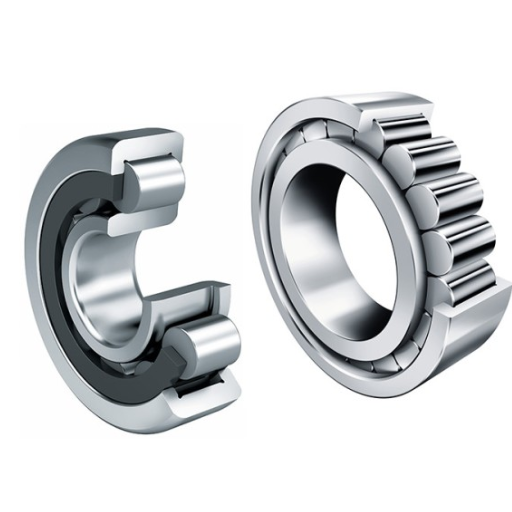
Cylindrical roller bearings are well suited to tasks that require both high load capacity and durability simultaneously. They bear heavy radial loads with relatively low friction and their structure permits a balanced heavy load. These bearings are best suited for high-speed applications as well as for conditions that require precision and stability. Moreover, their uniform distribution of stress helps minimize wear while increasing service life, thus making them a dependable and economical option.
Benefits of Roller Bearings in High Radial Load Applications
Roller bearings, owing to their efficiency and durability, perform best in high radial load functions. One prominent feature of roller bearings is their ability to distribute the total load over the entire circumference of an individual bearing which reduces wear and ensures movement without an intended stiction even if constant load is present. Research indicates modern roller bearings are capable of enduring several thousand pounds of load depending on size and design, which places these bearings at the forefront of the automotive, construction, and heavy-duty machinery industries.
The evolving technologies in material science have been progressive in the efficiency of roller bearings. In addition, the use of high-grade steel or even ceramic materials makes the bearings stronger and adds to their ability to withstand heat, assuring dependable performance in tough environments like ultra-fast and high-temperature settings. In addition, refinements made to the lubrication technologies also help in the reduction of friction while increasing efficiency. Some studies have shown designs perform 30% more efficient than their predecessors.
Precision tasks such as these are the center of focus because they involve maintaining alignment and system stability. The aerospace and robotics industries, for instance, rely on accuracy because even the slightest error in alignment can create serious performance issues. Coupled with minimal maintenance needs and a long service life, roller bearings are an important modern engineering solutions component.
How Cylindrical Roller Bearings Handle Higher Load Capacities
Roller bearings of cylindrical type are explicitly constructed to bear a larger radial load than other types of bearings. This is because their inner structure, which contains cylindrical rollers parallel to the axis of rotation, can distribute load evenly per bearing on multiple points of contact. This expands the area of contact, which reduces stress concentration.
Cylindrical roller bearings of modern design are produced from materials such as chrome steel of the highest quality or ceramic composites which adds to the durability and resistance to fatigue that tend to be associated with heavy loads. The surface of the material undergoes heating for certain periods, and meticulous crafting further enables the part to withstand severe demands during its operation. For example: some designs have certain features that allow the load rating to be several thousand pounds which makes them invaluable in construction equipment, conveyor systems, and large industrial motors.
Along with these, higher rotary speeds are possible because of low friction which reduces heat build-up. Some double-row or multi-row designs significantly improve loading capacity by providing weight over many sets of rollers, thus improving the efficiency and stabilization of loads. This makes them a primary target of mining, construction, and energy where rugged components must be able to survive in hostile conditions.
The Role of Friction of Cylindrical Roller Bearings in Efficiency
The rotary efficiency of cylindrical roller bearings is greatly influenced by friction. These bearings are specially designed to minimize friction in order to conserve energy and sustain an increase in life while reducing wear during operation. Low friction is the result of the proper combination of a cylindrical roller with the raceways which yields smoother motion and less resistance.
Research suggests that the frictional coefficient of cylindrical roller bearings can be as low as 0.001. The friction efficiency not only guarantees a longer life operationally but also reduces energy consumption in heavy-duty machinery. As an example, in fast-moving applications like industrial turbines or automotive systems, the very low friction enhances operational efficiency and minimizes heat production. Also, further improvements of DLC or MS2 surface coatings have been shown to decrease the frictional coefficients even more in high-pressure and temperature situations.
Improved frictional features in cylindrical roller bearings allow for energy savings of up to thirty percent for some applications when compared to older-generation designs. This is shocking in efficiency improvement for businesses striving for more sustainable practices, especially in reducing their carbon footprint or in energy master manufacturing. These cylindrical roller bearings still set the standard for energy-efficient performance by optimizing surfaces, using engineering lubricants, and improving roller-to-raceway contact geometry.
When Are Deep Groove Ball Bearings More Suitable?
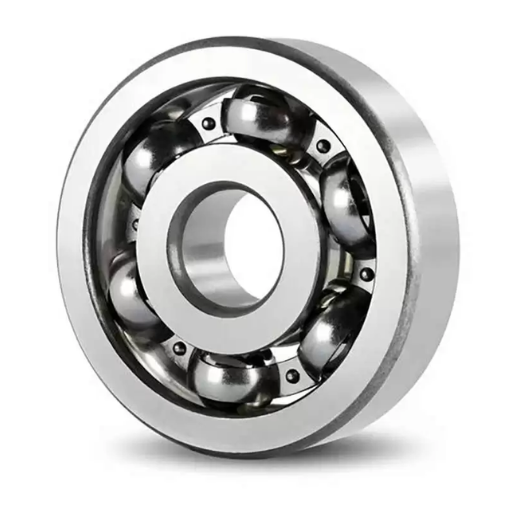
High-speed performance, minimal friction, and quiet operation are the main requirements for a deep groove ball bearing. Hence, they are best suited for handling moderate radial along with axial loads and perform across a variety of sectors like automotive, appliances, and electric motors. Precise deep groove ball bearings require smooth and effortless rotation coupled with simple design as well as efficiency for enhanced versatility.
Advantages of Deep Groove Ball Bearings in Point Contact in Ball Bearings
The versatility of deep groove ball bearings is enhanced with the point contact design due to the ample benefits these bearings provide. Deep groove ball bearings gain an advantage because they effortlessly manage radial and axial loads simultaneously even at high speeds with minimal friction which significantly improves energy efficiency while reducing heat generation therefore, extending the lifespan of the machinery.
Wall and axial load are efficiently managed by deep groove ball bearings which makes them highly advantageous for high-speed operations. The noiselessness and low vibration make them appropriate for precision tasks, including the use of electric motors, household appliances, and industrial equipment. Operational accuracy is ensured at high speeds as well, for example, certain models surpass 20000 RPM.
Durability also plays a pivotal role. They can endure temperature extremes and contamination with the proper sealing systems. Deep groove ball bearings, for example, can be maintained for thousands of hours and still function without significant maintenance when optimized lubrication is provided.
Ultimately, they are inexpensive because they are cost-efficient with standardized dimensions. Their design also allows for assembly, making them readily available in numerous sizes and materials for specific applications. These affordable bearings, along with the previously mentioned factors of efficiency and durability, make them trusted components across many industries.
Applications Where Ball Bearings Are Often Preferred
Automobile Industry
The ball bearing which is the most vital component of any automobile serves multiple purposes vehicle wheels, transmissions, and engines. These devices support movement while reducing friction. For instance, more than 45 percent of ball bearings produced in the globe are consumed in the automotive sector to make vehicles positive tools of modern civilization.
Industrial Machines
Global consumption for ball bearings is dominated by industrial machinery, comprising nearly thirty percent. Ball bearings are crucial components in rotary machinery like helical compressors, industrial pumps, and conveyors, which are heavy-duty. Their application reduces resultant wear and extends the operational longevity of the machinery.
Aerospace
In the aerospace industry, lightweight and durable products are essential as they must endure severe environments. High-performance ball bearings are used in aircraft engines, landing gears, and navigation systems making them crucial in the aerospace industry. Precision and reliability in these components are mandatory.
Medical Instruments
Durable products with precision are equally important in the medical field. The reliability of an MRI machine, either on or off requires the same precision bathed in careful craftsmanship. Work tools such as surgical knives utilize ball bearings enabling ease of handling and reliability, which aids in making the products user-friendly.
Consumer Electronics
In a computer, hard disk drives utilize ball bearings to enable the silent and efficient rotation of the drive’s platter. Likewise, gaming systems and other electronics incorporate cooling fans that also utilize ball bearings. The rapid advancement within the electronics industry continues to strive towards the need for miniature and compact ball bearings.
Energy Sector
Ball bearings are crucial components in wind turbines and electric generators and other energy production devices because they help to reduce mechanical losses while increasing the effectiveness of the system. For example, wind turbines equipped with high-performance ball bearings have extended service life even under heavy loads and with major changes in environmental conditions.
Ball bearings highlight these diverse needs of application and simultaneously demonstrate their unmatched adaptability and everlasting relevance in today’s mechanical systems.
Understanding the Deep Groove Ball Bearing Type for Specific Needs
The versatility and dependability of deep groove ball bearings make them one of the most popular used bearings types. These bearings incorporate an inner ring, an outer ring, a cage, and a set of precision balls which allows them to easily perform radial and axial load-bearing tasks. This makes deepest groove bearings fit for a large spectrum of uses across multiple industries.
The standout feature of balls’ deep groove bearings is the ability to operate at high speeds while sustaining minimal friction. For example, because of the refined accuracy in the precision bearing industries, some are now able to achieve over 10,000 round per minute (rpm) rotational speeds in some industrial applications. This capability is especially valuable for electric motors, automotive elements, and home appliances.
The strongest feature of deep groove ball bearings is their durability. The modern deep groove ball bearings are manufactured from high-grade steel or ceramics and are designed to resist wear, corrosion, as well as deformation under extreme pressure. In fact, many new variants now include seals or shields designed to block entrapped dirt and other harmful substances so these bearings can operate far longer. Results from studies suggest that these sealed deep groove bearings retire almost 50% later than their open counterparts while operating in dirty or dusty environments.
Their space-saving features offer far greater benefits. Lightweight and requiring only a small space, the installation of deep groove ball bearings eliminates many difficulties. They can be easily installed into the small spaces available on drones or precision instruments, as well as robotics, therefore making them the go-to option for such technologies.
In addition to standard designs, modern deep groove ball bearings have numerous specialized versions, such as those meant for ultra-high-speed rotating applications or severe axial-load conditions. For instance, some hybrids are designed with ceramic balls which reduce thermal expansion and increase efficiency in aerospace engineering environments, then there are automotive turbochargers that work at high temperatures.
With protective features and precision engineering, deep groove ball bearings broadened their range of application with every weak deep groove ball bearing. The extreme range deep groove ball bearings are used in various industries where powerful machines are required, but they are also critical in small devices and appliances, which makes them essential for the device’s lightness and compactness.
How Do Thrust Bearings Compare with Ball and Roller Bearings?

In mechanical systems, each component has its specific use. Thrust bearings, friction bearings, and roller bearings serve their own needs. Affiliated with axial bearings, thrust bearings are used in applications that support vertical shafts. These types of bearings are also useful for devices that require vertical stability.
Thrust bearings sustain higher axial loads compared with ball bearings but are less effective in high-speed rotational systems. Roller bearings, on the other hand, are best at axial and radial loads in heavy-duty machinery requiring higher load-bearing capacity and durability. Different types can be selected depending on the load direction and magnitude, working speed, and other requirements of the system.
Exploring Thrust Bearings vs Ball Bearings and Roller Bearings
In analyzing thrust bearings regarding ball and roller bearings, it is critical to emphasize individual applications, features, and performance data in different conditions.
Thrust Bearings:
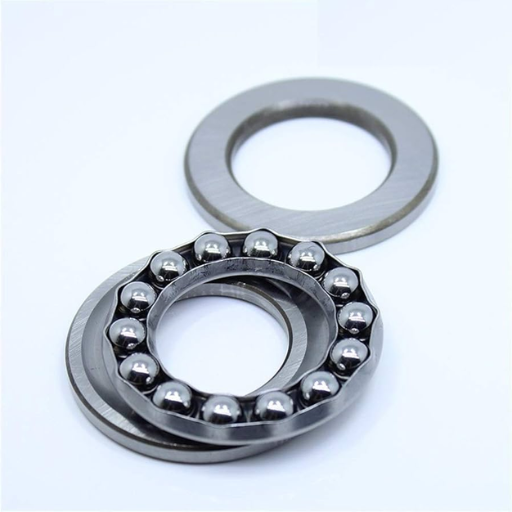
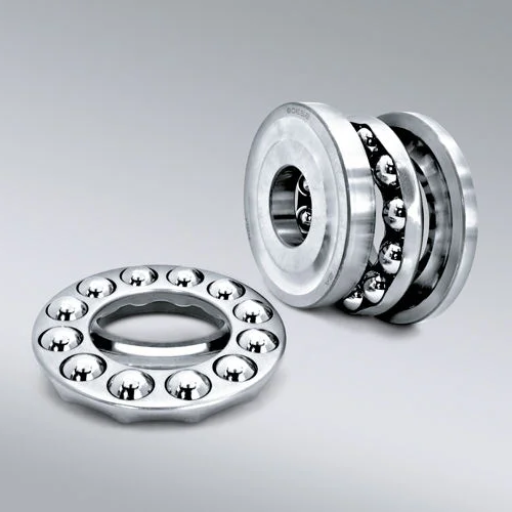
Thrust bearings are best known for axial load applications where mechanical force is applied parallel to the shaft’s axis. With radial force applications, these bearings have minimal efficiency. Automotive gearboxes, industrial equipment, and aerospace systems are some of the common applications where these bearings can be found. Though these types of bearings are efficient with high axial load applications, they are severely limited in radial load handling. Their performance is also highly compromised at very high speeds due to heat and friction. A common example is the use of thrust bearings with pads that can be tilted in turbines due to the ability to sustain great forces while remaining stable.
Ball Bearings:
Ball bearings have a wider sphere of application due to their capacity to take both radial and axial loads, although the latter is best suited for moderate to low in-board torque. Fitted with spherical rolling elements, the design of these parts reduces wear and enhances speed capability. Smooth-running electric drives, fans, precision machining, and other tools also use such ball bears. In more demanding situations like with powerful multi-pole electric motors, ultra-precise rotational shaft components will drive ring-type ball bearings beyond the twenty-thousand revolutions per minute mark; indeed, some good ceramic ball bearings have no qualms achieving those figures.
Roller Bearings:
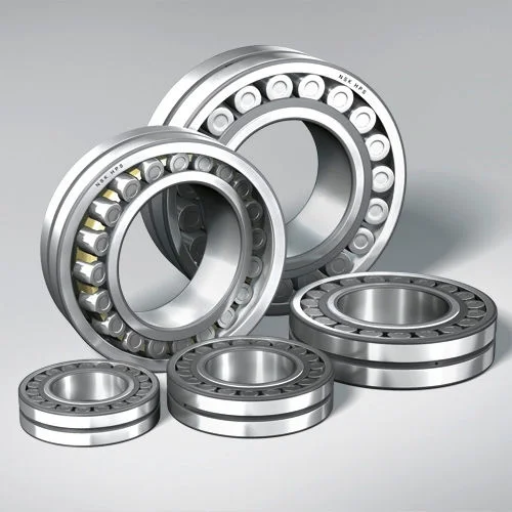
Differing from ball bearings, roller bearings employ cylindrical or tapered blades as rolling elements, which have a larger contact area with the raceways. As a result of this design, they can bear significantly greater radial loads than what is possible with ball bearings. Some variants, like tapered roller bearings, are better at handling radial and axial loads simultaneously. Roller bearings are most useful in industrial applications such as conveyor belts, wind turbines, and heavy industrial machines because of their durability and ability to bear heavy loads. For example, spherical roller bearings can withstand extreme misalignment and continue to operate smoothly over long durations of time.
Applications of Thrust Ball Bearings in Various Industries
Thrust ball bearings are critical in dealing with applications requiring the support of high axial loads while smooth, rotational movement occurs. A prominent sector that makes use of these ball bearings is the automotive industry. They are used in vehicle transmissions and steering systems where the headroom for precise axial load movement is very limited. For instance, in the case of dual-clutch systems, thrust ball bearings function to enable efficient power transmission along with smooth gear shifting.
In the aerospace sector, these bearings also have one more significant application. Aircraft turbines and rotors require exceptional performance and incredible reliability when it comes to high-speed operations. Thus, the thrust ball bearings are the best option. The operational safety and consistency in extreme conditions are ensured by the effective handling of axial stress by these bearings.
A lot of the thrust ball bearings are used in the energy sector with applications that include the design of wind turbines and hydroelectric generators. The high axial load capacity of these bearings limits friction and maintains efficiency over time making them essential in the wind turbine shafts and hydroelectric propellers. Furthermore, the industrial machinery sector often makes use of thrust ball bearings on machine tools, compressors, and processing equipment due to their heavy-duty applications. With regards to thrust bearings, they provide needed support in high-load situations which enhances the durability and longevity of the machine. They optimize the movement of machine parts that operate under heavy axial load during industrial cycles, helping to sustain productivity.
The thrust ball-bearing market is anticipated to grow in value at a steady pace due to these regions heavily relying on it. Estimates suggest that the thrust ball bearing market will further grow at a five-point two percent compound annual growth rate over the coming years which is indicative of the need for advanced bearing systems with enhanced industrial and technological development.
Choosing Between Thrust Bearings and Roller Bearings Are Used
It is important to comprehend the design features and relevant functions of thrust bearings and roller bearings while making a selection between the two. Thrust bearings can handle all axial loads which are forces parallel to the shaft. Therefore, these bearings are preferred in applications such as turbines and automotive systems where there is high-speed rotation and precise axial alignment. Roller bearings are used as these can take both radial and axial loads. Also, due to their cylindrical shape, the rolling elements of roller bearings have a higher load-carrying capacity. These are used extensively in industrial equipment, conveyors and heavy machinery.
There is increasing industrial dependence on both types of bearings as reported recently. The roller bearing industry has seen significant expansion owing to its use in the construction, mining, and aerospace industries because these sectors require efficient load handling. The overseas roller-bearing industry is expected to grow to more than $45 billion by the year 2030 at a compound annual growth rate of 4.8%. At the same time, thrust bearings are gaining popularity in the renewable energy industry, especially in wind turbines due to their ability to withstand dynamic axial loads.
Selecting between the types of bearings depends on the operations needed, such as the load, speed, and working environment. If the task at hand requires high speeds and thrust load handling precision, thrust bearings serve best. On the other hand, roller bearings work best where rough durability is needed with a combination of multi-directional loading.
Which Type of Deep Groove Ball Bearing is Ideal for Your Application?
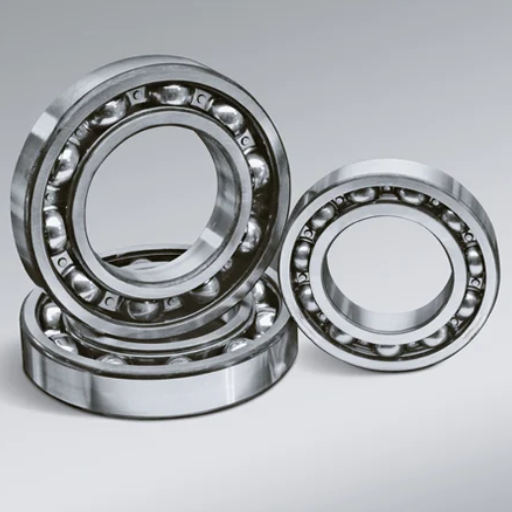
The application of deep groove ball bearings will determine which specific type is needed and will depend on operational parameters such as load, speed, working environment, and temperature. Standard deep groove ball bearings work best in high speed operations with light and moderate radial or axial loads. Contaminated environments can use sealed or shielded variants. Heavily loaded applications can use reinforced design bearings. Taking these into consideration will provide the needed results for efficiency and life span of the bearings.
Factors to Consider When Choosing Deep Groove Ball Bearings Are Ideal
When choosing deep groove ball bearings, keep in mind these critical details:
- Load Capacity: Make sure the bearing you pick has the radial, axial, or combined load capabilities that are expected to be used.
- Speed Requirements: Ensure no overheating or excessive wearing would result from operational speeds while choosing the bearing.
- Environmental Conditions: For places that are exposed to dirt, moisture, or other contaminants, micron shields, seals, and v-ring gaskets need to be incorporated into the design to save the unit from dirt and mud damage.
- Longevity and Maintenance: Decide whether your application prefers low-maintenance options or ones that last longer.
- Size and Fit: The dimensions of the bearing must be confirmed with the shaft and housing dimensions for proper installation.
Custom tailoring these considerations with application needs ensures the selected bearings provide the reliability and optimized functionality required to perform as intended.
Comparing Roller and Ball Bearings for Different Uses
Both roller and ball bearings fulfill an important function in different industries, but each one is made for different purposes based on their construction and how well they perform. Knowing these distinctions helps in selecting the right bearing for the particular application.
1. Load Capacity
Ball bearings’ construction allows for minimal loads to be handled due to the point contact of the balls with the raceways. This is useful in small electric motors and household appliances. In contrast, roller bearings have a line contact surface, permitting them to manage higher radial loads with greater ease and are therefore used in heavy machinery and equipment in construction and manufacturing.
2. Speed Capabilities
In terms of applying greater rotational speeds, ball bearings perform best of all. Their lower operating friction translates favorably into faster speeds which is why they are mounted to Fans, Turbines and High Speed Motors. Roller bearings, on the other hand, operate at a slower but more stable speed under significant loads. This works better for Conveyor systems or Industrial gears.
3. Durability and Longevity
Due to their elongated lines of contact, roller bearings are usually worn easier and last longer under heavy-duty applications than their counterparts. Ball bearings, on the other hand, are quite useful in light-duty situations, but they tend to be replaced frequently in heavy-load scenarios due to rapid wear.
4. Applications in Axial and Radial Load Handling
For maximum radial and axial load combinations, ball bearings are the most efficient, this is the reason why they are widely used in machinery and automobile precision elements. Nevertheless, roller bearings are more efficient in pure radial or pure thrust axial loads, dominating the performance of railway axle bearings and wind turbine shaft bearings.
5. Cost Considerations
In financial terms, ball bearings are the cheapest but their use in heavily loaded or stressed applications will require extra maintenance which makes them expensive in the long run. Roller bearings are more costly but in applications where there is high impact and stress, they are cheaper in the long run because of decreased maintenance and high durability, making them the more economical choice.
Understanding Types of Ball Bearings and Their Applications
The diversity of ball bearings means each type is suitable for a specific application based on the operational requirements. Listed below is an extensive list of types of ball bearings and some of their common applications.
- Deep Groove Ball Bearings
Being the most common type of ball bearings, these are used due to their versatility in a range of applications. They deal with radial and thrust loads simultaneously. Uses include electric motors, household appliances, and gearboxes.
- Angular Contact Ball Bearings
Handle radial and axial loads but are optimized for high-speed and precision applications. Commonly used in machine tools, pumps, and robotics where precision must be maintained.
- Self-Aligning Ball Bearings
These bearings can adjust the alignment of the bearing between the shaft and the housing which makes them useful for shaft deflections and mounting mistakes or errors. These are agricultural machinery, spindle units, and textile machinery.
- Thrust Ball Bearings
Axial load thrust bearings specialize in thrust or axial loads. Used in places where axial force is high such as automotive transmission, cranes, and heavy machinery.
- Miniature Ball Bearings
Best used in compact applications where size and weight need to be low such as in hand precision instruments, medical devices, and small motors.
- Ceramic Ball Bearings
Due to their lightweight, these bearings are built with ceramic balls which are resistant to heat and corrosion. Common applications are in areas where low friction is critical, including aerospace, high-speed machinery, and chemical environments.
- Double-Row Ball Bearings
These bearings are akin to deep groove ball bearings, except they have two rows of balls which increases the load capacity. They are found in heavy-duty machinery like compressors and conveyor belts.
Knowledge of various types of ball bearings and their merits provides an engineer or designer the ability to make the right choice for operational needs while optimizing performance and lifespan.
Reference Sources
-
Friction Properties and Distribution Rule of Lubricant Film of Full Ceramic Ball Bearing:
- Focuses on the friction performance and lubricant film distribution in deep groove ball bearings.
- Highlights the impact of rotational speed and lubrication on bearing performance.
- Methodology includes experimental analysis of ceramic deep groove ball bearings under varying service conditions.
-
A Comparative Experimental Study on Fault Diagnosis of Rolling Element Bearings:
- Compares fault diagnosis techniques for rolling element bearings, including deep groove ball bearings and cylindrical roller bearings (N312 type).
- Focuses on acoustic emission and soft computing techniques for identifying faults.
- Methodology involves experimental testing with concealed deep groove ball bearings and cylindrical roller bearings to evaluate diagnostic methods.
-
Design and Fabrication of a Modified Fish Feed Pelletizing Machine:
- While not directly focused on bearing comparison, it discusses the use of cylindrical steel components in machinery, which may include bearings.
- Provides insights into the application of cylindrical components in mechanical systems.
- View Deep Groove Radial Ball Bearings Manufacturers in China – Amigo details to get into the details
Frequently Asked Questions (FAQs)
Q: What are the main differences between cylindrical roller bearings and deep groove ball bearings?
A: Cylindrical roller bearings have cylindrical rollers that provide a larger contact area for support, while deep groove ball bearings use spherical balls to facilitate smooth motion. Roller bearings are typically designed to handle heavier radial loads, whereas ball bearings are used for lighter loads and higher speed applications.
Q: In which applications are cylindrical roller bearings preferred over deep groove ball bearings?
A: Cylindrical roller bearings are preferred in applications requiring high radial load capacity and low speed. They are widely used in industrial machinery where support for substantial radial loads is necessary.
Q: What are the various types of roller bearings, and how do they compare to ball bearings?
A: Various types of roller bearings include cylindrical, tapered, spherical, and thrust roller bearings. Compared to ball bearings, roller bearings are designed for heavier loads and are typically more durable in high-load situations.
Q: How do thrust roller bearings differ from deep groove ball bearings?
A: Thrust roller bearings are designed specifically to support axial load, whereas deep groove ball bearings can support both radial and axial loads but are more commonly used for lighter applications.
Q: Why might double row ball bearings be chosen over cylindrical roller bearings?
A: Double row ball bearings have two rows of balls, providing greater radial load capacity and stability. They are often chosen over cylindrical roller bearings when higher load capacity is needed without significantly increasing the bearing size.
Q: Are cylindrical roller bearings suitable for high-speed applications?
A: While cylindrical roller bearings are robust and can support heavy loads, they are not typically used for high-speed applications. Ball bearings are preferred in scenarios where speed is a critical factor.
Q: What are the advantages of using self-aligning ball bearings over cylindrical roller bearings?
A: Self-aligning ball bearings can adjust to misalignments between the shaft and the housing, offering smoother operation in situations where alignment errors occur. This feature is not available in cylindrical roller bearings.
Q: How are bearings classified, and why is this important?
A: Bearings are classified as either radial or thrust based on the load they are designed to carry. This classification is critical in numerous applications to ensure the correct bearing type is used for specific load conditions.
Q: What are the benefits of using single row tapered roller bearings in comparison to deep groove ball bearings?
A: Single row tapered roller bearings are designed to handle both radial and axial loads, making them suitable for applications like automotive wheel systems. They provide more load capacity compared to deep groove ball bearings, which are primarily focused on radial loads.
Q: How do various types of ball bearings support different applications?
A: Various types of ball bearings, such as angular contact, thrust, and self-aligning, are engineered to handle different load types and alignments. Each type supports specific applications, ensuring optimal performance and longevity of machinery.