


Balancing radial and axial loads is a salient feature differentiating angular contact ball bearings from other bearing types. These bearings offer a multitude of advantages that ease their use in high-speed and precision settings in the automotive, aerospace, and manufacturing industries. What exactly ascertains the design features of angular contact ball bearings? The discussion will help formulate the distinct features of the bearings alongside their specific application to uncover their benefits. This guide has been designed for engineers as well as to interested individuals looking for information on mechanical parts.
What is an Angular Contact Ball Bearing?
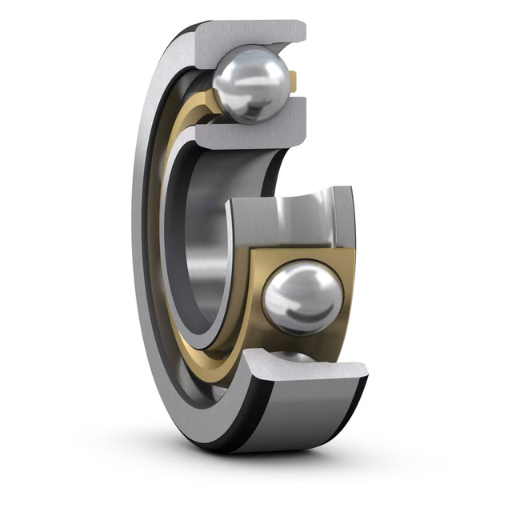
An angular contact ball bearing is a subtype of rolling-element bearing that is configured to carry both radial and axial loads simultaneously. Unlike standard ball bearings where the races are horizontal to each other, angular contact bearings have races that are inclined to each other. This allows them to bear thrust loads in both the axial and radial directions, rendering them useful in applications with high rotational speeds. Their precision engineering makes them popular in the automotive, aerospace, and manufacturing sectors.
How do Angular Contact Ball Bearings differ from other bearings?
The other type of bearings differ from angular contact ball bearings due to the support of combined loads, or a mix of radial and axial forces. Deep groove ball bearings only accommodate primarily radial loads; whereas, angular contact bearings have their inner and outer races shifted about one another along the bearing axis, which achieves radial and axial loading simultaneously due to the shift. This also enables these bearings to respond to simultaneous forces more effectively.
The contact angle is one of the distinguishing factors, and it varies based on design, lying between 15° and 40°. A higher contact angle increases the capacity of thrust or axial load and reduces speed limits in the process. For example, angular contact bearings with greater capacity at a 40° contact angle perform better compared to those with a 15° angle, making them suitable for applications where high precision is required when put under a combination of stresses, such as machine tool spindles, pumps, and gearboxes.
Another aspect is their operational limitations. Angular contact bearings are specially designed to operate at very high speeds because of their reduced friction Inadequate data from industry sources suggests some angular contact ball bearings are capable of exceeding 10,000 RPM in optimal conditions. Furthermore, hybrid designs that incorporate ceramic balls offer lower weight and friction, improving performance even further under extreme conditions.
Along with the other features, these bearings are often used in matched pairs, set either in tandem, back-to-back, or face-to-face with one another, or other arrangements depending on the application’s load requirements and need for stability. Compared to standard bearings, these structures along with their diverse adaptability and strain-resisting ability make angular contact bearings more advantageous for rigorous industrial functions.
What is the significance of the contact angle?
The contact angle in angular contact bearings is crucial because it determines the bearings’ ability to support axial and radial loads. The angle formed between the contact points of the rolling elements per the races and the bearing axis determines how forces will be distributed under operational loads.
With higher contact angles of 25° or 40°, the bearings can thrust greater axial loads, thus favorable for machine tools or turbines that need significant thrust-force handling. A reduced contact angle, for example, 15°, indicates better performance under combined radial and axial loads while maintaining high speeds. This flexibility ensures that the bearings can be adapted to specific load requirements.
Modern precision bearings made using, optimally set contact angles, newer materials, and advanced geometry technology result in lower life-cycle costs due to reduced need for maintenance. A few high-performance bearings claim to oscillate under axial loads of a few thousand Newtons which load is significantly dependent on the configuration, lubrication quality, and using a matrix of sharp-edged wells to set liquid lubricant reservoirs, which vividly illustrates the importance of contact angle choice for different devices. Also, operational alignment, lubrication, and load distribution increase the effectiveness and lifetime of the bearings which describes the critical importance of contact angle to the overall performance of the bearing.
Why are angular contact bearings used in high-speed applications?
Angular contact bearings’ efficiency in performing radial and axial load operations makes these bearings suitable for use in high-speed applications as long as there are encountered challenges. This type of bearing comes with a contact angle that permits better load balance, which provides constancy even with greater rotational speeds. In contexts where performance together with accuracy is vital, turbines, machine tool spindles, and jet engines serve as best examples.
Modern materials and new concepts put these bearings in a better position when it comes to use in high-speed applications. Hybrid angular contact bearings especially have ceramic balls which are added to lighten the mass thus reducing centrifugal forces which lowers the operating temperatures of the bearing and enhances its service life. Furthermore, contemporary lubrication methods alongside improved raceway shapes result in much lower friction so that the bearings can be operated faster than 1.5 million dN. Such values render angular contact bearings critical components in industries that depend on accuracy and absolute trust at high speed.
How does a double-row angular Contact Ball Bearing function?
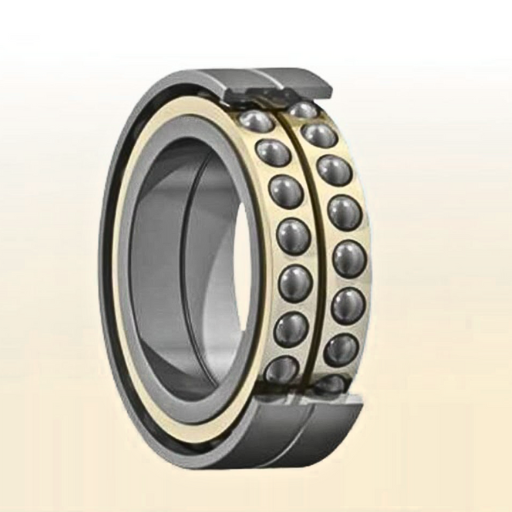
A double-row angular Contact Ball Bearing operates by supporting combined radial and axial loads in both directions. It is composed of two rows of rolling elements that are arranged in a back-to-back manner which increases load-carrying capacity as well as stability. It is ideal for use in situations that need tight spaces, high rigidity, and dependable operation. Furthermore, the tilting moments possible are proficiently managed smoothly due to the dual-row configuration.
What are the advantages of double-row angular contact bearings?
Double-row angular contact bearings are highly advantageous because of their wide range of applications. First, the dual-row structure greatly increases the load carrying capacity, aiding radial and axial loads in both directions. This becomes particularly beneficial in machine tools, automotive systems, gearboxes, and other applications with high static or dynamic forces.
These compact bearings eliminate the need for supplementary components, saving space while minimizing complexity within the system. In addition, their high stiffness enhances the precision, stability, and performance of the machinery. The ability of the bearings to handle tilting moments makes them popular for applications where alignment and deflection issues are problematic.
Through precise construction with high-grade materials, coatings, and lubricants, modern double-row angular contact bearings are designed for low friction and enhanced durability, increasing their service life as well. The superior axial and radial load-carrying capacity of these bearings enables them to outperform single-row bearings of similar dimensions by 1.5 to 1.8 times. The ability to relieve rolling element stress by two rows increases load distribution and makes these bearings reliable under harsh conditions.
Due to their dependable performance in a compact design, double-row angular contact bearings are advantageous economically in industries that require efficiency along with high durability.
How do double-row bearings support axial loads in both directions?
Double-row angular contact bearings support axial loads in both directions due to their specific design and geometry. These bearings consist of two rows of rolling elements that are set at angles to each other within the same outer and inner ring. This configuration enables the bearing to support axial loads coming from either direction and radial loads at the same time. The contact angle which normally ranges from 25° to 45° is very important to this dual capability of load bearing. Take, for example, those bearings with steep contact angles, they can withstand high axial force, thus great for demanding applications such as machine tool spindles and automotive gearboxes.
With the recent innovations in material science and lubrication, performance attributes have improved even more under axial stresses. Certain tests indicate that high-quality double row angular contact bearings withstand axial loading up to 2.5 times more than a single row bearing of the same size. These bearings maintain lower misalignment, better load distribution, smooth operational performance, and greater service life when mechanically designed in compact spaces. These features render them crucial for systems subject to oscillating loads and those that require operational dependability.
Where are double-row angular contact bearings typically used?
The versatility and radial/axial load-handling ability of double-row angular contact bearings have allowed their use in numerous industries. They are common in the spindles of machine tools as well as in electric motors and pumps which require precision and reliability to a great extent. For example, in machine tools double row angular contact bearings provide required stiffness and high-speed performance during machining.
These double-row angular contact bearings are also widely used in the automotive industry such as in gearboxes, transmissions, and wheel hubs. For instance, in the wheel hubs their compact geometry combined with a great load-carrying ability gives support to the vehicle’s weight while also performing dynamic driving forces during operation. In modern performance vehicles, these bearings are shown to enhance the lifespan of the systems due to their ability to sustain greater thrust (axial load) compared to single-row bearings.
Double-row angular contact bearings are also used for agricultural machinery, conveying devices, and wind turbines. Their strong construction helps them to function reliably in difficult environmental conditions like exposure to dirt and moisture and temperature changes. These features are critical for maintaining heavy-duty systems as well as precision-engineering systems ensuring productivity and minimal downtime.
Choosing the Right Bearing Types for Your Application
Each application may serve a unique purpose, like the specific scenario that best helps a particular type of bearing. Here are some primary characteristics to think about:
Load Type And Load Direction – Identify if the application needs support for radial, axial, or both types of loads. For axially offset combined loads, double row angular contact bearings work great as they provide support for radial and axial loads in both directions.
Operating Speed – What is the operation speed needed in your application? Ball bearings work best in high-speed environments, while slower alternating with greater loads prefer roller bearings.
Available Space – What is the spacing available to mount the bearing? Space-saving designs are double-row bearings that have limited spacing but require maintaining load capacity.
Surrounding Conditions – What are the temperature ranges, lubrication needs, and level of contamination to be dealt with? These conditions make it more favorable to use bearings with seals or shields in extreme weather conditions especially that are dusty or wet.
Reliability And Service – what do the service interval and lifespan expectations look like? These conditions require low-maintenance sealed bearings which can be easier to upkeep in tough-to-reach locations.
Following these pointers will help assist the accuracy and dependability of the specific task. For unique suggestions, it is ideal to follow manufacturer recommendations or contact a bearing consultant.
What factors should you consider when choosing the right bearing?
- Load and Speed Requirements
Bearings are made to withstand differing amounts of load in radial and axial directions. For applications that require large load capacities, roller bearings are usually well-suited because of their greater contact area. On the other hand, ball bearings are appropriate for high-speed applications owing to their lower friction and smoother rotation. For example, some configurations of deep groove ball bearings can reach around 25,000 RPM which makes them ideal in precision machines.
- Operating Temperature
Bearings should be able to work within the defined boundaries for temperature useful for your application. Bearings used in high-temperature applications need to be made from heat-resistant materials such as ceramic or stainless steel that can sustain operating temperatures above 500°F (260°C). Moreover, many other factors have a critical bearing on performance in extreme temperature, like lubrication, which ensure the system doesn’t overheat and suffers from wear and tear.
- Material Compatibility
The environment and application requirements determine what the bearing material should be made from. For instance, ceramic bearings have better corrosion resistance than standard steel, so they perform best in chemically aggressive or submerged conditions. Also, stainless steel bearings are ideal for applications like food processing and marine, where they confront moisture and oxidation.
- Noise and Vibration Levels
In medical devices and electric motors, low noise levels and vibration are key requirements. Super precision bearings, for instance, have tighter tolerances which enhance noise-sensitive operations by providing quiet functionality and smooth precision. It also aids in super-sensitive environments that require low noise levels.
- Seals and Shields
Open and shielded designs are preferable when maintenance and cleaning are regular. However, sealed bearings work optimally in preventing the entry of dirt and debris in surrounding environments like mining and agriculture. Therefore, depending on the climatic conditions the bearings can have shields or seals.
Your equipment, as well as its efficiency with noise and vibration levels, makes informed decisions when these technologies are applied. Getting an understanding of these advanced technologies is crucial but consulting with a specialist is more advisable to get the appropriate results.
How do radial ball bearings and angular contact bearings compare?
It is important to note the differences between radial ball bearings and angular contact bearings, as they both serve different purposes and take on particular types of loads.
As the name suggests, radial ball bearings best support radial loads, but they can also bear some axial load. Radial ball bearings are used in cheaper and less complex pieces of machinery such as electric motors, fans, and pumps. They can be used in myriad machines because their performance is unrivaled, they are affordable, and they can withstand a lot of wear and tear. Furthermore, their design permits very swift rotational movement coupled with very low friction, which is essential in many industrial and mechanical applications. For example, standard radial ball bearings can operate at speeds up to approximately 30,000 RPM, depending also on model and lubrication.
Noticeably different from other types, angular contact bearings are designed to accommodate simultaneous radial and axial loads, especially where a certain degree of accuracy and stiffness is needed. The main difference is the contact angle which gives these bearings the ability to support axial loads in one direction. Some examples include spindles in machine tools, gearboxes in automobiles and turbines where high-performance is required. Depending on configuration one, two rows, or paired assembly, these bearings exceed expectations when it comes to load-bearing requirements. Though angular contact bearings are slightly slower than radial bearings in terms of speed, their capability to resist increased axial loads is vital in situations where steadiness and precision are necessary.
In considering decisions such as type of the bearing to use, load kind, speed, accuracy, and working conditions should be considered foremost. For example, in industrial equipment such as high-speed spindle systems where axial forces are high, angular contact bearings are better while in general-purpose machines with radial loads, radial ball bearings are more suitable.
When should you opt for sealed angular contact bearings?
If the application requires protection from contamination or the leakage of lubricants, sealed angular contact bearings would be the best fit. Angular contact bearings with seals have protective barriers to prevent the entry of dust, debris, and moisture. This makes the bearing ideal for harsh and challenging conditions. Sealed bearings also come pre-packed with grease, reducing maintenance upkeep and prolonging the life of operations. For instance, automotive gearboxes, machine tools, and high-performance electric motors widely use these bearings because they need reliable lubrication and protective seals for flawless operations. Unlike open bearings, studies suggest that sealed versions greatly reduce maintenance costs and downtime because most of them do not require relubrication during their service life. In addition, removing external sealing systems allows a more compact design which improves the overall system efficiency.
Exploring Single Row Angular Contact Ball Bearings

Single row angular contact ball bearings are engineered to handle radial and axial loads simultaneously, with axial preferentially dominating. Common uses include machine tools and motors which require high precision and speed. One directional axial force handling capability means these bearings must be correctly positioned to achieve the best performance. For the support of axial loads in both directions, these bearings are usually utilized in paired arrangements.
What are the main uses of single-row angular contact ball bearings?
Single-row angular contact ball bearings are commonly used where high precision is required along with graded tolerances that involve both radial and axial loads. Strictly controlled operating conditions are required for optimal performance. With the integration into machine tool spindles, pumps, and compressors, these bearings are frequently used because their design permits high-speed rotation with minimal vibrations.
Moreover, these bearings are important in car parts like the transmission and wheels, as their accuracy and robust reliability is crucial. They are also commonly used in electric motors and gearboxes due to their high efficiency and resistance to thermal and mechanical stress. In the case of these bearings, research shows they can reach and maintain up to 30 % increased efficiency in high-speed systems which makes them ideal in applications where energy needs to be conserved. Single-row angular contact ball bearings are vital in the evolution of many industries and technologies due to their sophisticated design and unparalleled multi-purpose functionality.
How do these bearings handle axial and radial loads?
Single row angular contact ball bearings assist in the axial and radial load tasks simultaneously with combination of both. The reason why they can handle such loads simultaneously is because the contact angle between the ball, raceway, and bearing axis is usually between 15\u00b0 to 40\u00b0 depending on the requirements and specifications of the design.
To withstand a larger amount of load, these bearings are constructed out of high-precision materials and their geometries are altered internally to improve performance. These bearings are also placed to use with advanced lubricating systems to further increase performance under stress alongside heat-resistant materials to improve longevity. Studies show that 40\u00b0 contact angle bearings outperform in carrying loads in comparison to their lower counterpart due to the increase in the axial capacity.
Further studies show that they can get up to 120,000 RPM with preserved integrity in certain tasks like the spindles of electric motors. Single-row angular contact ball bearings have a reputation for maintaining high reliability and precision while boasting adaptability to change in operational parameters which makes them a popular choice when it comes to robotics, aerospace elements, and high torque machinery.
What is the impact of preload on bearing performance?
In high-speed and high-precision scenarios, preload almost always impacts the lifetime and operational efficiency of the bearings. This is done by applying a controlled axial or radial load onto the bearing which essentially cancels the internal slack and ensures optimal stiffness, shedding the vibration levels. This effectively improves tracking and positioning accuracy in the case of bearings robots and aerospace applications.
On the downside, the degree of preload exerted must also be managed to ensure that there are no negative outcomes. Preload that is too high might result in friction, thermal wastage, worn parts, and damage to the bearing, all of which reduce the lifespan of the bearing. At the same time, too little preload results in a lossy system suffering from excessive vibration leading to poor precision. Some studies claim bearings with ‘some’ level of preload suffer from almost 30% lesser vibrations compared to when there is no preload making them more efficient.
Thermal variations will also affect the preload, one-way being material expansion altering the load. Adequate mechanical design in the context of thermal effects is done by careful selection of materials such as applying thermal gaskets and certain geometrical designs, all of which achieve consistent preload under a vast scope of conditions. Balancing preload is essential because in doing so one achieves the desired bearing efficiency, sturdiness, and long life.
Applications and Benefits of Angular Contact Bearings

Angular contact bearings are generally applied in areas where both radial and axial loads have to be supported simultaneously. Their applications span the aerospace, automotive, and manufacturing industries, being critical for the functioning of equipment such as pumps, turbines, gearboxes, and machine tool spindles.
These bearings are capable of sustaining combined loads; they have a high rotational speed and increased rigidity. With preloading, these bearings’ axial stiffness and accuracy—beneficial in the case of precision machinery—are heightened. Their design guarantees reliability and durability, making these bearings a favorite for harsh operational environments.
Why are these Angular Contact Bearings ideal for machine tools and gearboxes?
With their construction and performance features, angular contact bearings are tailor-made for machine tools and gearboxes, offering excellence for mechanical systems. Complex loading conditions characterize most mechanical systems, and these bearings support radar and axial loads at the same time which makes their operation efficient. This adaptability is important for machine tools since accuracy is key. These bearings considerably reduce deflection, markedly improving precision for machining operations.
The data suggests that angular contact bearings with high-speed capabilities can achieve rotational speeds of up to 720,000 mn (bearing diameter in millimeters multiplied by the speed in RPM. Performance of this magnitude is critical in modern CNC machines and high-speed gearboxes, where rapid speed and precision simultaneously are critical. Furthermore, the stiffness of angular contact bearings, which is obtained by preloading, can reduce vibration and improve the system’s stability.
Also, their construction and increased reliability. Bearings made with ceramic rolling elements like silicon nitride offer unparalleled heat resistance over their steel counterparts and are thus applicable in places with high thermal loads. Also, such bearings are often constructed to have optimized lubrication grooves and channels which provide reliable operation while increasing the lifespan of the bearing.
As well, angular contact bearings are economical in power consumption since minimal power loss due to friction at the contact points is essential for industrial efficiency. Alongside the longevity from wear under heavy load conditions, these bearings serve well for the exacting and modern machine tools and gearboxes.
How do they improve Angular Contact Bearing life and efficiency?
The lifespan and effectiveness of angular contact bearings rely on the right amount of lubrication, careful installation, and ongoing maintenance. Using quality lubricants helps reduce both friction and wear which allows smooth movement for different loads. Proper alignment during installation helps avoid excess force being applied to the bearings. Routine inspections help repairs get done early by finding damage or wear quickly. Also, new materials like ceramic hybrids and advanced steel alloys strengthen performance by better enduring heat, corrosion, and fatigue which makes them more durable. Following these recommendations makes it possible for manufacturers to improve the operational lifespan and performance of angular contact bearings.
What role does the outer ring play in these Angular Contact Bearings?
The angular contact bearing outer ring is essential to the structure and function of the bearing since it absorbs some of the load. The outer ring also has another purpose. It is the raceway from which the rolling elements obtain rotation. Also, It must withstand high radial and axial loads which makes it capable of distributing the forces dependably to the rolling elements. The outer ring geometric features like the angle of contact affect the bearing’s efficiency hence its load-bearing capacity.
The data indicates that angular contact bearings with optimized outer ring features, which are often created using ultra-precise machining outer diameter processes or produced with case-hardened steel, can support axial thrust loads almost 1.5 times greater than standard designs of similar bearings. For example, in rotating equipment such as turbines or high-speed machine tool spindles, the turbine and spindle outer rings supporting the bearings inhibiting radial expansion guarantee the bearing is thermally balanced and performs optimally in extreme operating conditions. Furthermore, selective coatings or treatments of the outer ring serve to improve the bearing’s resistance to wear and corrosion, augmenting dependability and durability. This component, in conjunction with the inner ring and rolling elements, ensures the bearing can respond to variable loads with a minimum of friction over a rotating body and elongated life cycle.
Reference Sources
-
Complete Analytical Expression of the Stiffness Matrix of Angular Contact Ball Bearings:
- Focuses on the stiffness characteristics of angular contact ball bearings, which are crucial for high-speed rotor applications.
- Develops a dynamic model to derive a complete analytical expression for the stiffness matrix.
- Methodology involves mathematical modeling and dynamic analysis of bearing behavior under operational conditions.
-
Film Stiffness Analysis for Angular Contact Ball Bearings Considering Thermal Effect:
- Investigates the impact of thermal effects on the film stiffness of angular contact ball bearings.
- Aims to improve the accuracy of film stiffness calculations for better performance predictions.
- Methodology includes thermal modeling and analysis of lubrication film behavior under varying temperatures.
-
Development of Measuring System for the Non-Repetitive Run-Out (NRRO) of Ball Bearing:
- Develops a system to measure the non-repetitive run-out (NRRO) of angular contact ball bearings.
- Focuses on improving the dynamic performance of bearings at high speeds.
- Methodology involves experimental testing and development of a specialized measuring system.
- If you are looking for more information about Angular Contact Ball Bearings – Amigo go here right away
Frequently Asked Questions (FAQs)
Q: What are angular contact ball bearings and how do they differ from deep groove ball bearings?
A: Angular contact ball bearings are designed to handle both radial and significant axial loads in one direction. The main difference from deep groove ball bearings is the angle of contact between the ball and raceways, allowing them to support higher axial load-carrying capacity.
Q: How do angular contact ball bearings handle radial and axial loads?
A: Angular contact ball bearings are used to accommodate both radial and axial loads due to their design. The action of the load is such that these bearings can only support axial loads in one direction, although they can handle radial loads simultaneously.
Q: What are the advantages of using angular contact ball bearings vs radial bearings?
A: The advantage of using angular contact ball bearings over radial bearings lies in their ability to handle heavy axial loads, which radial bearings cannot. This makes angular contact bearings ideal for applications with significant axial loading requirements.
Q: In what applications are angular contact ball bearings used?
A: Angular contact ball bearings are used in various applications, including gearboxes, pumps, and machine tool spindles, where both radial and axial loads need to be accommodated. Their design makes them suitable for high-speed operations and precision applications.
Q: What is the significance of using angular contact ball bearings in pairs?
A: Using angular contact ball bearings in pairs allows them to support axial loads in either direction, enhancing their axial load-carrying capacity. This configuration is particularly useful in applications where bidirectional axial loads need to be balanced.
Q: How do the raceways in angular contact ball bearings affect their performance?
A: The raceways in angular contact ball bearings are designed with a specific angle of contact, which affects their ability to handle axial loads. This angle allows the bearings to support higher axial loads compared to other types of bearings.
Q: Why are angular contact ball bearings preferred in certain machine tool applications?
A: Angular contact ball bearings are preferred in machine tool applications because they can accommodate both radial and axial loads, providing stability and precision. Their ability to handle high-speed operations and sustain significant axial loads makes them ideal for such environments.
Q: Can angular contact ball bearings be used to handle only axial loads?
A: While angular contact ball bearings can handle significant axial loads in one direction, they are not designed to support only axial loads. They are typically used in applications where both radial and axial loads are present.
Q: How do the different sizes and configurations of angular contact ball bearings affect their application?
A: The sizes and configurations of angular contact ball bearings determine their suitability for various applications. Larger sizes and specific configurations can handle heavier loads and higher speeds, making them adaptable to different operational demands.
Q: What is the point of contact in angular contact ball bearings, and why is it important?
A: The point of contact in angular contact ball bearings refers to where the ball meets the raceway. This point is crucial as it determines the angle of contact and influences the bearing’s load-carrying capacity and performance, particularly under axial loads.