


Ball bearings are critical components in various mechanical systems, supporting rotational or linear motion while minimizing friction. Among the diverse types of ball bearings, thrust ball bearings exhibit unique characteristics that distinguish them from their counterparts. This blog post aims to provide a comprehensive understanding of thrust ball bearings by focusing on their design, functionality, and specific use cases. Furthermore, we will explore how they compare to other ball bearing types, such as deep groove ball bearings and angular contact ball bearings, to highlight their specialized role in managing axial loads effectively. By the end of this article, readers will have a thorough grasp of what sets thrust ball bearings apart and an awareness of their applications in industrial and engineering contexts.
What Is a Ball Bearing and How Does It Work?
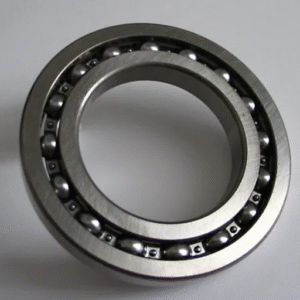
A ball bearing is a mechanical component designed to reduce friction between moving parts while supporting radial and axial loads. It consists of a series of spherical balls housed between inner and outer rings (races). The balls roll within the tracks of the rings, minimizing contact surface area and enabling smooth rotational or linear motion. This mechanism reduces wear and energy loss, making ball bearings essential in numerous applications such as machinery, automotive systems, and aerospace technologies. Their efficiency and durability depend on precise engineering and material selection. If you are looking for more information about the difference between thrust ball bearings and other types of ball bearings go here right away
Understanding the Ball Bearing Mechanism
Components and Functionality of Ball Bearings
Ball bearings primarily consist of four critical components: the inner ring, the outer ring, the rolling elements (balls), and the cage. The inner and outer rings provide grooves, or raceways, for the balls to roll, while the cage maintains uniform spacing between the balls to prevent contact and reduce friction. This design allows the bearing to handle both radial and axial loads efficiently by minimizing direct metal-on-metal contact, which could otherwise lead to increased wear and energy dissipation.
Key Applications Across Industries
Due to their ability to support high speeds and reduce energy loss, ball bearings are integral to various industries. For example, in the automotive sector, they are utilized in transmissions, wheel hubs, and steering systems to enhance vehicle performance. Similarly, in aerospace technology, their precision and durability tackle extreme conditions like high altitudes and temperature fluctuations. Manufacturing and industrial machinery rely on ball bearings for seamless motion in conveyors, motors, and machine tools, ensuring reliability and operational efficiency.
Material Considerations in Ball Bearing Design
The performance and longevity of ball bearings heavily depend on the materials used. Common choices include high-grade steel, which offers a balance of strength and wear resistance, or ceramic, which provides low weight and enhanced temperature resistance. Lubricants also play a vital role in reducing friction and protecting against corrosion, further extending the lifespan of the bearing system. By combining advanced engineering processes with material science, ball bearings achieve the precision and reliability required for modern applications.
Common Types of Bearings and Their Uses
Ball bearings are among the most versatile types, widely used in applications like electric motors, fans, and hard drives due to their ability to handle both radial and axial loads with precision. Roller bearings, on the other hand, are designed for heavier radial loads and are commonly utilized in conveyors, gearboxes, and industrial machinery. Needle bearings, a subset of roller bearings, feature slender rollers that allow for high load capacity in compact spaces, making them ideal for automotive components such as transmissions or gear pumps. Additionally, spherical bearings excel in accommodating misalignment and are frequently used in heavy-duty applications like mining or construction equipment. Each bearing type is specifically engineered to meet distinct operational demands, ensuring optimal performance and longevity across various industries.
How Do Ball Bearings Reduce Friction?
Ball bearings reduce friction by minimizing surface contact between the moving parts within a mechanism. They achieve this by using small, hardened steel spheres (or balls) that are arranged between an inner and outer race. When in operation, the balls roll rather than slide, transforming sliding friction into rolling friction, which is significantly lower. Key technical parameters influencing the performance of ball bearings include:
- Coefficient of friction: Typically ranges from 0.001 to 0.005 for well-lubricated ball bearings, which is much lower than plain bearings.
- Load capacity: Defined as the maximum radial and axial load the bearing can support, often measured in Newtons (N).
- Rotational speed (RPM): Denoted as the maximum allowable revolutions per minute, commonly depending on the bearing design and lubrication quality.
- Material properties: Hardened steel or ceramic materials are often used to enhance wear resistance and performance under extreme conditions.
Through their precise engineering and reduced frictional forces, ball bearings enhance efficiency, minimize heat generation, and extend the service life of mechanical systems.
Exploring Thrust Ball Bearings: What Sets Them Apart?
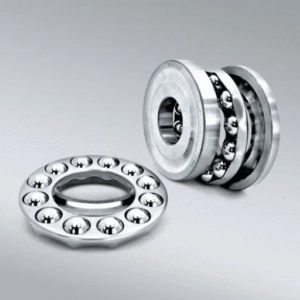
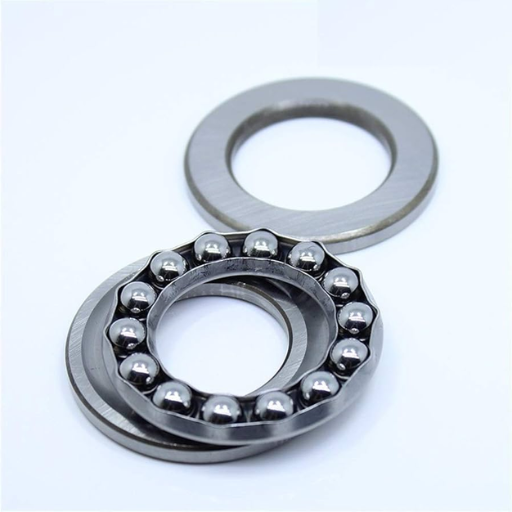
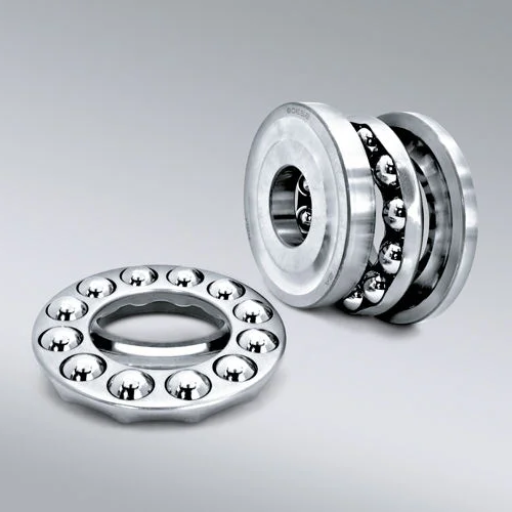
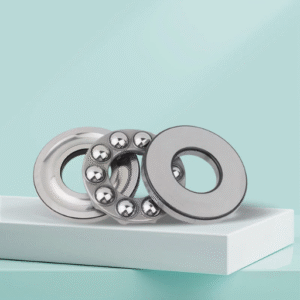
Thrust ball bearings are specifically designed to support axial loads while operating at moderate speeds. Their construction typically consists of two raceways and a set of balls arranged between them, allowing smooth rotational motion under load. These bearings are ideal for applications where axial force is predominant, such as in turntables, automotive clutches, and industrial machinery. The materials used, such as high-grade steel or ceramics, provide excellent durability and resistance to wear. Additionally, their design ensures minimal friction and efficient load distribution, making them a reliable choice for maintaining performance and longevity in axial load applications.
How Thrust Ball Bearings Differ from Other Types
Thrust ball bearings differ from other types primarily in their ability to handle purely axial loads rather than radial loads or a combination of the two. Unlike deep groove ball bearings or angular contact bearings, thrust ball bearings are specifically designed to support high axial forces without accommodating radial pressure. Their unique construction includes a ball and raceway configuration arranged to minimize friction in axial applications, ensuring smooth rotation under load. Additionally, their design optimizes load distribution over the ball set, a feature not typically present in radial bearings, allowing for precision and longevity in applications that exclusively demand axial load management.
Understanding Axial Load in Thrust Bearings
Understanding axial load in thrust bearings is fundamentally about managing force that is applied parallel to the axis of rotation. Thrust bearings are specifically designed to handle these axial loads with high efficiency due to their unique configuration, which minimizes friction and maximizes load distribution. Typically, these bearings are used in systems like automotive transmissions, propeller shafts, and industrial machinery where axial forces are prominent.
From a technical parameter perspective:
- Load Capacity: Thrust bearings can handle axial loads ranging from a few Newtons (N) in small systems to hundreds of kilonewtons (kN) in industrial applications, depending on the bearing type and size.
- Speed Limitations: Maximum allowable speeds generally range from 1,500 RPM for larger thrust bearings to over 10,000 RPM in smaller, high-precision applications.
- Operating Temperature: Most thrust bearings are designed to operate effectively within a range of -30°C to 120°C (-22°F to 248°F), with some specialty designs allowing for wider ranges.
- Material Strength: High-grade steel or ceramic materials are often used to ensure durability against repeated axial stress.
Understanding and selecting the correct thrust bearing involves assessing these parameters in line with the operational demands to ensure long-term performance and system reliability.
The Role of Thrust Load in Bearing Selection
Thrust load plays a critical role in the selection of a suitable bearing, as it directly impacts the bearing’s ability to perform under axial forces. When determining the right bearing for an application, the magnitude and direction of the thrust load must be precisely calculated. Key technical parameters to consider include:
- Axial Load Capacity: This indicates the maximum load the bearing can support along its axis. Typical values depend on the bearing type, with standard designs supporting loads up to several thousand Newtons (N), while specialized bearings can handle significantly higher loads.
- Speed Limit: Bearings designed for higher thrust loads often operate at reduced rotational speeds to prevent overheating or wear. For example, standard thrust ball bearings may have speed limits ranging from 2,000 to 10,000 RPM, depending on size and lubrication.
- Operating Temperature: Bearings must remain functional within specific temperature ranges. Standard designs usually tolerate -30°C to 120°C (-22°F to 248°F), while high-performance materials may extend those limits.
- Material Properties: The strength and resistance of materials such as steel and ceramics are crucial for durability under repeated axial loading. High-grade alloys or composites with yield strengths exceeding 500 MPa are commonly recommended.
Selecting a thrust bearing requires aligning these parameters with the application’s operational conditions to maximize efficiency and reliability.
Choosing the Right Bearing: Radial Vs Thrust
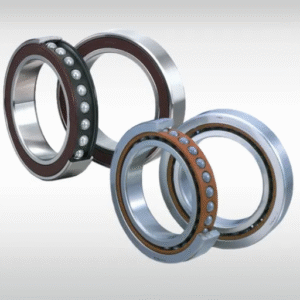
The selection between radial and thrust bearings hinges on the type of load and the application’s specific requirements. Radial bearings are designed to handle loads perpendicular to the shaft, making them ideal for applications involving high-speed rotation and lateral forces, such as electric motors or conveyor systems. Conversely, thrust bearings are engineered to accommodate axial loads parallel to the shaft, which are common in applications like automotive suspensions or propeller shafts. When determining the appropriate bearing, consider the load’s direction, magnitude, and the operational environment to ensure optimal performance and longevity.
When to Use Radial Ball Bearings
Radial ball bearings are designed to support primarily radial loads, which act perpendicular to the shaft. They are highly versatile and suitable for high-speed applications due to their low friction and efficient design. These bearings are commonly used in electric motors, gearboxes, and industrial fans. Additionally, they offer limited axial load support, making them ideal for applications with combined loading scenarios. Factors such as load intensity, rotational speed, and operational temperature should be carefully analyzed to confirm their suitability for specific use cases.
Benefits of Thrust Bearings for Axial Loads
Thrust bearings are specifically designed to handle high axial loads, offering superior performance in applications where such forces dominate. These bearings exhibit excellent load-carrying capacity within compact designs, making them an optimal choice for space-constrained systems. Some notable benefits include:
- High Axial Load Capacity: Thrust bearings can manage axial loads effectively, with typical capacity ranging from 2,000 to 250,000 N, depending on the bearing type and dimensions.
- Reduced Friction: The design minimizes friction, enhancing energy efficiency and reducing heat generation during operation.
- Durability: Made with high-grade materials like hardened steel, thrust bearings resist deformation and wear, even under extreme pressure.
- Operational Versatility: Suitable for axial loads in both static and dynamic conditions, with operational speeds varying between 1,200 and 8,000 RPM, depending on the size and lubrication.
- Temperature Tolerance: Can operate in temperatures ranging from -30°C to 120°C, providing reliability in demanding environments.
When choosing thrust bearings, correct alignment, adequate lubrication, and a full analysis of axial load intensities are essential to ensure optimal performance and longevity.
Comparing Load Capacities of Different Bearings
When comparing the load capacities of different bearings, I find that they vary primarily based on their design and application. For instance, ball bearings are ideal for handling lighter radial and axial loads due to their point contact but may not suit heavy-duty applications. On the other hand, roller bearings, with their line contact, offer superior performance under high radial loads. Thrust bearings, specifically engineered for axial loads, provide robust support in applications requiring rotational force but need precise alignment for efficiency. Ultimately, matching bearing type to the specific load and operational conditions ensures optimal performance.
The Role of Rolling Element in Different Bearing Types
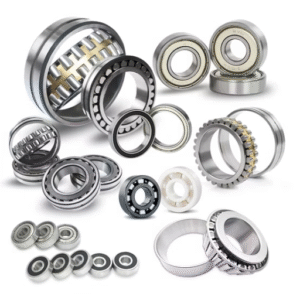
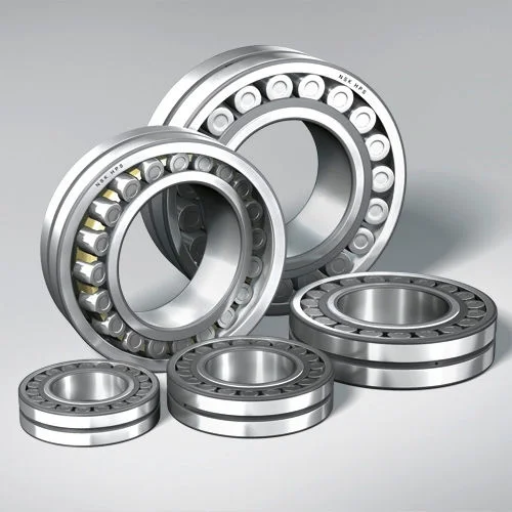
The rolling element is a critical component in determining the performance and application of various bearing types. Ball bearings, for instance, use spherical rolling elements to minimize friction and support both radial and axial loads effectively, making them versatile for general-purpose applications. Conversely, roller bearings utilize cylindrical or tapered rolling elements, which enhance their ability to handle higher radial loads and some axial loads, depending on the design. Needle bearings, a subtype of roller bearings, incorporate long, thin rolling elements to maximize load-carrying capacity in compact spaces. Each variation of rolling element is specifically engineered to suit particular operational demands, ensuring that loads are distributed efficiently while reducing wear and energy consumption.
How Rolling Elements Influence Performance
Rolling elements significantly influence the performance of bearings by determining load capacity, friction levels, and durability under specific operating conditions. Through their shape, size, and material composition, rolling elements reduce friction between moving parts, enabling smooth rotation. Spherical rolling elements, for instance, are better suited for managing misalignment, while cylindrical rollers provide high radial load capacity. Needle bearings excel in compact spaces, as their elongated design distributes loads more uniformly, accommodating higher stress. The characteristics of rolling elements—combined with the precision of their alignment, lubrication, and material strength—directly affect the bearing’s efficiency, service life, and resistance to operational wear in demanding applications.
Differences Between Ball and Roller Bearings
Although both ball and roller bearings serve the fundamental purpose of reducing friction and supporting loads, their design characteristics and applications differ significantly.
1. Load Capacity and Distribution
Ball bearings use spherical rolling elements and are ideal for handling smaller loads, primarily radial loads, with some capability for axial loads. Conversely, roller bearings, which use cylindrical, tapered, or spherical rolling elements, have a greater surface contact area, enabling them to support higher radial loads and moderate axial loads. For example, cylindrical roller bearings can sustain radial loads up to hundreds of kilonewtons, depending on the size and material composition.
2. Contact Type and Friction
Ball bearings create point contact between the rolling elements and the raceway, which results in lower friction but limits load capacity. Roller bearings create line contact, distributing the load over a larger area, which increases their load capacity but also results in slightly higher frictional forces.
3. Rotational Speed
Ball bearings are suitable for high-speed applications due to their lower friction and point contact geometry. They can achieve speeds exceeding 50,000 RPM depending on the size and lubrication. Roller bearings, on the other hand, are generally used in applications where moderate speed is acceptable, typically up to 10,000-20,000 RPM, as their line contact generates more heat at high speeds.
4. Misalignment Tolerance
While ball bearings have moderate tolerance for misalignment, spherical roller bearings excel in this domain due to their design, which allows for self-alignment and compensation for shaft deflection or mounting errors.
5. Applications
- Ball Bearings: Commonly found in applications such as electric motors, automotive wheels, and consumer appliances, where high rotation speed and moderate load are critical.
- Roller Bearings: Typically used in heavy-duty industrial applications such as conveyors, gearboxes, and wind turbines, where heavy radial loads or combined loads are present.
6. Material and Lubrication
Both types typically use hardened steel or ceramic for their rolling elements, ensuring durability and resistance to wear. Selection of lubrication (oil or grease) depends on the operational speed, load, and thermal conditions, with roller bearings often requiring more robust lubrication solutions due to their high load-bearing applications.
By considering specific operational parameters such as load type, rotational speed, and alignment requirements, the selection between ball and roller bearings can be optimized for efficiency and longevity in engineering systems.
Understanding Friction in Bearing Mechanics
Friction in bearing mechanics can be understood as the resistance encountered when one surface moves over another, affecting the efficiency and lifespan of the system. From my research, I learned that friction in bearings primarily originates from two sources—sliding friction and rolling friction. Sliding friction occurs in plain bearings where surfaces move directly against each other, while rolling friction is more prominent in rolling-element bearings, such as ball and roller bearings. Minimizing this friction requires precise lubrication to reduce contact resistance, proper alignment to ensure even distribution of loads, and selecting appropriate bearing types based on operational requirements like speed, load, and temperature.
Common Questions: Thrust Ball Bearings vs Roller Bearings
- What are thrust ball bearings used for?
Thrust ball bearings are designed to handle axial loads exclusively and are commonly used in applications where high axial force is present, such as in automotive steering assemblies, pumps, and machine tool spindles.
- How do roller bearings differ from thrust ball bearings?
Roller bearings can accommodate both radial and axial loads, depending on their design. Unlike thrust ball bearings, they are better suited for dealing with higher load capacities and are ideal for applications like conveyor belt rollers, gearboxes, and heavy machinery.
- Which bearing type is better for high-speed applications?
Thrust ball bearings are generally more efficient in high-speed applications due to their ability to maintain low friction under axial loads. Roller bearings may generate more heat at high speeds due to increased contact area.
- How do I choose between the two?
The decision depends on your application’s specific requirements. If the primary load is axial and speed is a factor, thrust ball bearings are more appropriate. For applications involving heavier loads or combined radial and axial forces, roller bearings are a better choice.
By carefully analyzing operational conditions, including load type, direction, and speed, the suitable bearing type can be selected for optimal performance.
Why Choose Thrust Ball Bearings Over Roller Bearings?
I prefer thrust ball bearings over roller bearings when the application involves primarily axial loads and requires high rotational speeds. Thrust ball bearings are specifically designed to handle axial loads efficiently while maintaining precision and smooth movement, making them ideal for lighter-duty operations. Additionally, these bearings exhibit lower friction compared to roller bearings, which enhances energy efficiency and reduces heat generation during operation.
Key Technical Parameters:
- Load Type: Axial (light to moderate loads).
- Rotational Speed: Up to 8,000 RPM or higher, depending on the design.
- Friction Coefficient: Lower compared to roller bearings, ensuring efficient energy transfer.
- Temperature Range: Typically -30°C to 120°C, depending on material composition.
- Bearing Material: Often chrome steel or stainless steel for durability and corrosion resistance.
By optimizing bearing selection based on these parameters, thrust ball bearings provide reliable performance in applications such as machine tools, pumps, and turntables.
Applications of Roller Bearings in Industry
Roller bearings are vital components in various industrial applications due to their ability to support high radial loads and occasionally moderate axial loads. Below are some key applications and corresponding technical parameters:
- Heavy Machinery: Roller bearings are employed in equipment such as excavators, cranes, and mining machinery, offering a high load capacity and durability.
-
- Load Capacity: Up to several tons, depending on bearing size.
- Operating Speed: Typically around 1,000-2,000 RPM.
- Material: Case-hardened steel or alloy steel for high load resilience.
- Automotive Industry: Integral to transmissions, wheel hubs, and differential systems, roller bearings ensure smooth operation and longevity in vehicles.
-
- Load Range: Typically supports medium to high dynamic loads.
- Temperature Range: -40°C to 150°C to accommodate automotive conditions.
- Friction Coefficient: Optimized for minimal energy loss in high-speed applications.
- Industrial Gearboxes: Used to enhance performance and efficiency by reducing friction under heavy loads.
-
- Radial Load: Up to 50,000 N for larger gearboxes.
- Lubrication: Oil-based lubrication recommended for optimal performance.
- Life Expectancy: L10 life of 20,000+ hours depending on load conditions.
- Conveyor Systems: Enables efficient motion in material handling industries like logistics and manufacturing.
-
- Load Ratings: Moderate to high radial loads based on conveyor belt weight.
- Speed Range: Typically under 1,000 RPM for stable operation.
- Sealing: Sealed or shielded designs to prevent contamination from dust and debris.
By tailoring roller bearing selections to these applications and their respective technical requirements, industries can achieve enhanced reliability, extended service life, and optimal system performance.
Key Differences in Radial and Thrust Loads
Radial and thrust loads are distinct forces that influence bearing performance. Radial loads act perpendicular to the axis of rotation and are primarily supported by bearings designed to handle weight or pressure applied laterally. These are common in applications such as conveyor rollers or pulleys. Conversely, thrust loads act parallel to the axis of rotation and are typically borne by specialized bearings like thrust bearings. These forces result from axial stress, as seen in screw-mounted shafts or vertical turbines. While many bearings are designed to handle a combination of both radial and thrust loads, the proportions and load capacity vary based on the bearing type and design, with angular contact bearings often suited for managing combined loads efficiently. Selecting the right bearing requires precise analysis of operational force directions and magnitudes.
Reference Sources
- Ball bearing vs thrust bearing, which is better?
- Thrust vs. ball bearings: What’s the difference?
- What Is the Difference between a Radial Ball Bearing and a Thrust Ball Bearing?
- What are the differences between thrust bearings and ball bearings?
- Thrust Bearings: An Introduction to the Features of Each Type
Frequently Asked Questions (FAQs)
Q: What is a thrust ball bearing and how does it differ from other types of ball bearings?
A: Thrust ball bearings are a type of bearing designed to handle axial thrust loads. Unlike other ball bearings, they are specifically used for applications where axial loads are predominant. These bearings are typically not suitable for radial loads, which differentiates them from other ball bearings that can handle both axial and radial loads.
Q: How do thrust ball bearings compare to tapered roller bearings?
A: Thrust ball bearings are designed for axial loads, while tapered roller bearings can handle both axial and radial loads. Tapered rollers provide greater load capacity and are more suitable for applications where high thrust loads and radial loads are present.
Q: Can thrust ball bearings handle radial loads?
A: Thrust ball bearings are primarily designed for axial thrust and are not suitable for handling significant radial loads. For applications requiring both types of load handling, other bearings like tapered roller bearings or radial load bearings may be more appropriate.
Q: What are the main applications for thrust ball bearings?
A: Thrust ball bearings are used in applications where high axial thrust loads need to be supported. They are commonly used in automotive, aerospace, and marine industries, where the primary focus is on managing axial loads.
Q: How do needle roller bearings differ from thrust ball bearings?
A: Needle roller bearings use long, thin rollers to handle loads and provide a compact design. They are suitable for applications with limited radial space, whereas thrust ball bearings are used specifically for axial loads and are not designed for radial load applications.
Q: What are the advantages of using self-aligning ball bearings over thrust ball bearings?
A: Self-aligning ball bearings can accommodate misalignment between the shaft and the housing, which thrust ball bearings cannot. This makes them advantageous in applications where alignment issues are a concern and both radial and axial loads need to be managed.
Q: Are thrust ball bearings capable of handling high speed applications?
A: Thrust ball bearings can handle high speeds, but their ability to do so depends on the specific design and lubrication. They are generally not as suitable for high-speed applications as other types like cylindrical roller thrust bearings or tapered roller thrust bearings.
Q: What is the difference between roller thrust bearings and thrust ball bearings?
A: Roller thrust bearings use cylindrical or tapered rollers to handle thrust loads, providing a greater load capacity than thrust ball bearings. They are more suitable for applications where high thrust loads and rigidity are required.
Q: What are some common types of thrust bearings aside from thrust ball bearings?
A: Common types of thrust bearings include tapered roller thrust bearings, cylindrical roller thrust bearings, and needle roller thrust bearings. Each type is designed for specific applications and load capacities.
Q: How does the 6203 bearing compare to thrust ball bearings in terms of load handling?
A: The 6203 bearing is a radial ball bearing, typically used for applications requiring the handling of radial loads. In contrast, thrust ball bearings are used specifically for axial loads and are not designed for significant radial load applications.