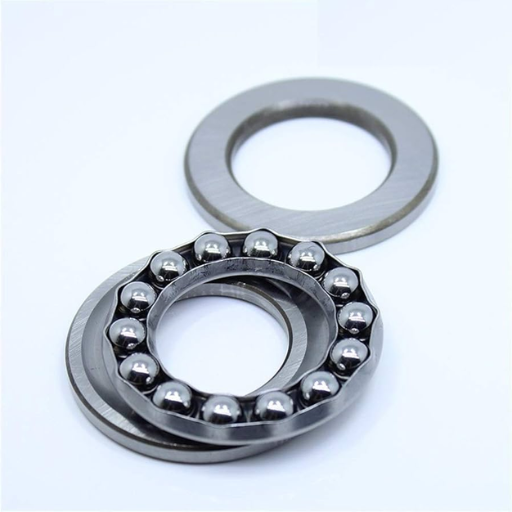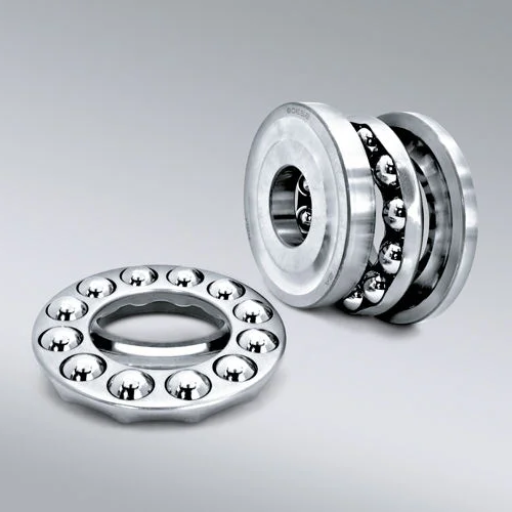
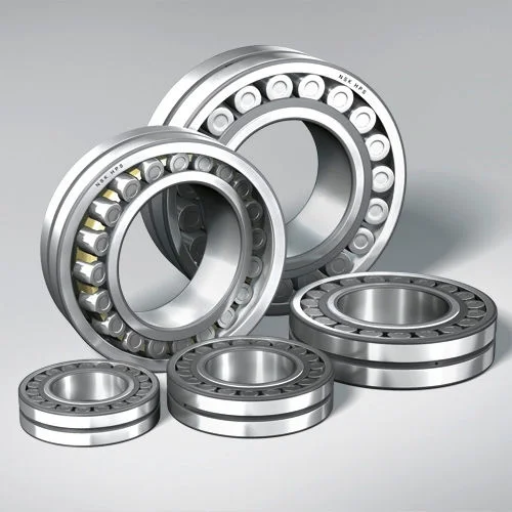



From automotive systems to industrial machinery, angular contact ball bearings are integral in different applications. If you are an engineer, a technician, or just want to learn how these bearings work, knowing the differences between single row and double row angular contact ball bearings is important for choosing the right solution tailored to your requirements. While both types of bearings share a similar name, the differences in their performance, load capacity, and ideal use cases set them apart. In this article, we will expose the most important differences between single row and double row angular contact ball bearings. We invite you to analyze with us their design as well as their benefits and real-world uses.
What is a Single Row Angular Contact Ball Bearing?
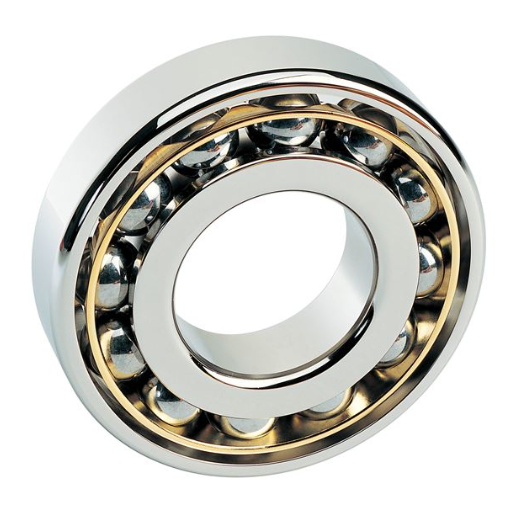
The single row angular contact ball bearing is a sophisticated part that is capable of supporting radial and axial loads simultaneously in a given direction. Its configuration is radically different from other bearings since it has a contact angle allowing for higher speeds and greater precision. Bearings of this type are common among equipment that need high precision and reliability such as automotive parts, industrial machines, and components used in the aerospace industry. Knowing its features and particulars about construction, capacity, and practical applications are fundamental in making the right choice for a bearing to achieve the desired results in specific engineering tasks, projects, or processes.
Structure and Design of a Single Row Angular Contact Ball
Single row angular contact ball bearings are specially manufactured to endure different combinations of forces such as radial and axial forces simultaneously. Their distinguishing feature is the angular contact which is the result of the inner and outer rings sliding along the axis of the bearing toward the inner and outer parts. The angled arrangement permits the bearing to support an axial load in a single direction and a radial load concurrently to a degree of tilt.
The contact angle refers to the angle made by the line joining the ball and the raceways with the nipple bearing axis; this is the contact angle and design criteria simultaneously. The standard preset values are usually 15°, 25°, or 40°, each suited for different operational scenarios. Contact angle plays an important part in the speed vs capacity tradeoff. A smaller angle favors speed and increases some capacity, while a larger angle increases resistance to axial drives.
The bearing rings feature high-grade parts; considering the overall performance these components are manufactured from chromium steel or ceramic hybrids for improved performance, with the balls precisely engineered to minimize friction and wear. For the cage, a wide range of materials and designs is available; pressed steel, polyamide, and machined brass are the most common depending how harsh the environment is. Lubrication also plays a vital role in their performance; grease or oil is used to guarantee smooth action of the geared parts and lessen the heat to lower wear on the surrounding parts.
These bearings are classified into grades of precision by ISO or ABEC standards; from reports they dealt with high-speed use or working in the exacting environment increasing the bearing grade resulted in narrower tolerances. Newer methods of the last years started adding specialized coatings and heat treatments to improve durability, corrosive resistance, and overall life span.
Applications for Single Row Ball Bearings
Single-row ball bearings are adaptable and common as they can manage radial and axial loads. Their applications include:
- Automotive Industry
In the automotive industry, these ball bearings are widely used in wheels, motors, engines, and alternators, offering dependability and superior efficiency auguring the load and speed variations.
- Industrial Machinery
They are essential within industrial equipment containing conveyor belts, pumps, compressors, and gearboxes, managing the dynamic loads smoothly.
- Aerospace
With their precision and durability, they are used in aerospace applications, including jet engines and control mechanisms, where reliability under extreme conditions is critical.
- Medical Devices
They are employed in medical equipment such as imaging devices, dental drills, and surgical instruments, where compactness and precision are essential.
- Home Appliances
Used in household devices like washing machines and vacuum cleaners, these bearings help in noise reduction and efficient operation of the devices.
- Agriculture Equipment
These bearings support and manage the weight of agricultural equipment, such as tractors and combine harvesters, with mastery of heavy load handling and outstanding dependability in harsh conditions.
- Construction Equipment
Single-row ball bearings are very reliable in high combined loads, which allows their use in cranes, excavators, and hydraulic systems.
Because of their versatility in many fields and applications, single-row ball bearings are one of the most important parts in many mechanical systems because they aid in efficiency and operational stability.
Advantages of Single Row Bearings Over Other Types
1. Sleek and Lightweight Construction
Single row ball bearings are Single-row ball bearings are one of the most lightweight and compact bearing types available in the market. They are space efficient and easy to work with which greatly helps in reducing the sizes and machinery design without affecting the performance.
2. Effortless High-Speed Movement
The single row ball bearings perform much better than other bearings in high-speed applications. The design and mechanical configuration of these bearings ensure that they perform with the least possible energy input. This gives these bearings flawless operational efficiency even in harsh conditions.
3. Wide Range of Application
Single row ball bearings can serve almost every industry as they are flexible enough to deal with radial and axial loads. Some examples of this kind of machinery include automotive gearboxes, consumer electronics, and conveyor systems.
4. Longevity and Maintenance Life Span
Single row ball bearings are known to be highly efficient in beating fatigue and sustaining abrasion. Studies show that regular servicing extends the lifespan of the single row ball and lowers maintenance responses along with the demand met for machinery furious.
5. Low Price Offer
Manufacturing single row ball bearings is much simpler than with other types of bearings. Therefore there is an affordable single price offered while also keeping the grade guaranteeed. This makes for good solutions to economic needs in industries and mechanical sectors.
6. Lower Energy Usage
Because of their unique advantages in lower friction and noise reduction, these bearings affect energy usage in all machines. Better energy saving contributes to the global sustainability campaign while providing lower operational costs.
Single row ball bearings still prove to excel over other bearing types in standard and specialized applications because of their performance, dependability, and low price, which make it the best option in many industries.
Exploring the Double Row Angular Contact Ball Bearing

The efficiency of double-row angular contact ball bearings is best illustrated in their ability to manage both radial and axial loads simultaneously which increases their versatility in demanding tasks. The bearing has two rows of balls locked in back-to-back formation which access heightened load bearings in comparison to single-row bearings. This also increases rigidity and stability useful for machine tools, pumps, and gearboxes where precise operation is paramount. Its compact construction also saves space, making it ideal for tasks with size limitations.
How Does a Double Row Angular Contact Ball Work?
Double row angular contact ball bearings allow radial and axial loads in both directions simultaneously which is the defining characteristic of their functioning. The bearing encompasses inner and outer races with angle cuts on the sides and points of contact which allow more efficient force application in comparison to regular bearings and handle combined loads much better. The use of two rows of rolling balls improves the stability and distribution of the loads.
The axial load capacity is influenced by the contact angles, which are typically defined at 30° or 40°. Higher angles mean greater axial load handling capability. This allows the bearing to withstand high-stress applications requiring high durability and precision. In machine tools, for instance, these bearings allow smooth rotational movement while preventing alignment and vibration disturbances.
Some performance metrics show that double-row angular contact ball bearings usually have a dynamic load rating even 25% greater than single-row load brakes. Bore diameters can usually be 10 mm to more than 100 mm depending on the usage, and these bearings can operate at more than 10,000 RPM which is suitable for high-speed machinery. The sophisticated design provides frictionless functioning which is critical in temperature-sensitive situations. The combination of these features renders double-row angular contact ball bearings crucial in multidimensional applications in industries.
Benefits of Using Double Row Bearings
Double row angular contact ball bearings have multiple benefits that allow them to perform well in industrial settings. Their main benefit is accommodating combined loads, which include both axial and radial forces. This helps improve efficiency when operating the bearing. Double row bearings, unlike single-row bearings, have greater structural strength which makes them useful in heavily vibrated or loaded situations.
Another key advantage these bearings have is their compact design which helps reduce the width compared to employing two single-row bearings that work together. This attribute helps in machines with space restrictions. These bearings also have a high load-carrying capacity because the dual rows of rolling elements help distribute forces and enhance durability.
Reliability is another area in which double-row bearings excel. For example, reduced friction and heat generation due to the optimal design enhances the bearing’s life along with providing support for long operations. Research suggests that the addition of high-quality double-row bearings can increase the performance of the entire machine by 20% to 30%, depending on what the machine is used for. Also, advancements in the production processes such as steel refinement add to wear resistance and reliable performance at high speeds. The operational needs of industries including automotive, aerospace, and heavy equipment manufacturing are serviced by double-row bearings. The increased performance and load capacity they offer help with the stability and efficiency of high-performance mechanical systems. As such, their importance to modern engineering solutions is demonstrated through their characteristics, which make double-row angular contact ball bearings indispensable components.
Common Applications for Double Row Ball Bearings
The capacity of double-row angular contact ball bearings to manage both radial and axial loads simultaneously makes them important parts across many industries. Until now, these are some of their most popular uses:
- Automotive Industry
Double-row angular contact ball bearings are used in transmission systems and wheel hubs where they enable free rotation while sustaining high radial and axial forces during high-speed operations. For example, automobiles rely heavily on prepacked double-row wheel hub bearings that extend reliability and reduce servicing needs.
- Aerospace Engineering
In aerospace machinery, double-row angular contact ball bearings are essential parts where dependability and accuracy are of utmost importance. They are placed in jet engines, gearboxes, and control mechanisms, performing exceptionally well in harsh environments. Their capability to endure temperature fluctuations and fast rotations makes them key components in aerospace infrastructures.
- Heavy Equipment and Machinery
Mobile construction machinery like excavators, loaders, and conveyor auger systems often contain double-row ball bearings because of their competitive advantage of withstanding vigorous duty cycles. Their strength can decrease downtime during extensive operations which, in turn, increases efficiency and productivity.
- Renewable Energy Applications
Wind turbines and solar trackers benefit significantly from double-row ball bearings. These systems require components that can tolerate considerable stress and differing load directions. For instance, in wind turbines, these bearings support the rotary motion of turbine blades, ensuring optimal energy generation even under fluctuating wind conditions.
- Medical Sector
Advanced equipment like MRI machines, CT scanners, and even robotic surgical instruments depend on double-row angular contact ball bearings to achieve effortless, quiet, and dependable operation. Space limitations add to the demands on modern medical instruments, thus their compact design paired with exceptional load-bearing capacity is invaluable.
Modern advancements adopt innovations to improve double-row ball bearings. The need for efficiency, precision, and reliability makes these bearings ideal to be used in multiple industries.
What are the Main Differences Between Single Row and Double Row Angular Contact Bearings?

Single-row angular contact bearings can support thrust and radial loads in one direction, needing a second bearing to counteract the opposite directional forces. Because they are lighter in weight as well as smaller, these types of single-row angular contacts might be best when space is limited or only unidirectional load is applied.
Double-row angular contact bearings from the other side can do the work of two single row bearings in a more compact space. Along with radial loads, they can support thrust loads in both directions which means a secondary bearing is not needed for most cases. This also increases the efficiency of bearings with combined loads as well as making them suitable for applications where space is critical and stability is more sought after.
Load Capacity: Single Row vs. Double Row Angular Contact Ball Bearings
As with any other machine component, the load capacity of single-row and double-row angular contact ball bearings also depends on the design features in question. Single-row angular contact ball bearings are intended for unidirectional axial load as well as significant radial loads, requiring space on both sides to support the bearing configuration. Restricting the axial space means two single-row bearings paired together will need to be employed.
On the bright side, double-row angular contact ball bearings have even greater load-bearing capabilities than single-row bearings while still maintaining a similar design footprint. Schematic 1 depicts how these bearings can support radial loads and axial loads in both directions as a result of dual rows of rolling elements which aid in force distribution. For robust performance in tightly constrained spaces, double-row designs tend to be the go-to solution, substantial increase featured. These include gearboxes, pumps, electric motors, and machine spindles.
Typically, a double-row angular contact ball bearing would outperform a single-row bearing of the same size by 1.5x in axial load capacity. The additional efficiency can be explained by how the load is distributed across balls in two rows compared to one. Other than that, machines, spindles, or any equipment that experiences high-speed operation combined with radial and axial loads would greatly benefit from the additional stability and high rigidity double row configurations offered.
Choosing between a single row and a double row must take application space requirements and the magnitude, direction, and dynamics of loading into consideration.
Space and Size Considerations for Row Bearings
To evaluate space and size requirements for row bearings, it is very important to look at the assembly and skeleton’s overall design boundaries. Because of their compact design, single-row bearings usually occupy less space. This makes them ideal for use in applications with strict size and weight requirements. Such bearings find a lot of application in lightweight machinery and devices with limited space.
Rotating equipment needs double-row bearings which have greater load-carrying capacities, but less compact arrangements. Heavy industrial machines use these bearings quite often; here, the ability to deal with radial and axial loads is more valuable than an efficient use of space. Double-row angular contact ball bearings are used in many automotive gear systems or pumps, as they can take loads on both axes.
Numerous sources indicate that space constitutes a vital space consideration in robotics, aerospace, and automotive engineering which require compact and high-efficiency designs. Other engineering fields also make the latest design and industry standards more applicable. Engineering also allows for the design of small and lightweight bearings that are durable, thus increasing their performance when not needed in line. It is important to balance meeting the bearing requirements with the system efficiency of the whole setting to guarantee the operational speed and the reliability of the whole system.
Cost Implications of Single Row and Double Row Ball Bearings
The differences in cost between single-row and double row ball bearings start with an increase of factors. Single row ball bearings are more affordable because of their less complex structure and lower material usage. These bearings are utilized in conventional situations where the moderate load capacities are adequate. This feature makes these bearings advantageous for industries that operate under stringent financial limitations.
As a result, double row ball bearings are more expensive because of their sophisticated structure along with the greater amount of materials needed. These, however, have remarkable benefits such as superior load-carrying capacity and better radial and axial performance. This makes them a more popular option in heavy-duty applications where high efficiency justifies the higher investment.
Take construction and heavy machinery as an example. These industries prefer double row configurations due to their precision and stability, even if they come with increased expenses. Recent market research indicates that double row ball bearings may reach or surpass a cost range of 30to100 depending on material quality, brand, and performance specifications. Comparatively, single row ball bearings are priced between 10and50 per unit. Operational needs and price considerations always go hand in hand.
As for the double row ball bearings, their higher price quote may be justifiable in the long run. With lower maintenance demands and extended service life, the initial purchase costs could be offset over time.
How Do Load Capacities Vary Between These Bearings?
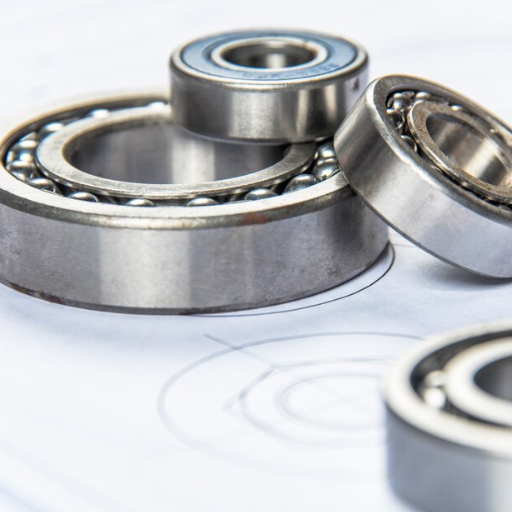
Single row angular contact ball bearings are engineered to withstand moderate radial and unidirectional axial loads. This makes them appropriate for applications where the demand placed upon them is moderate. In contrast, double row angular contact ball bearings offer greater radial and axial load support in both directions due to their dual-row design. This increased capacity makes double row bearings ideal for more demanding applications that require enhanced stability and durability. Nevertheless, the decision on which of these bearings to install requires consideration of the operational load parameters and conditions of the application.
Understanding Radial and Axial Loads in Angular Contact Ball Bearings
Angular contact ball bearings are specially made to accommodate combinations of radial and axial loads to cope with the unique internal structure. The contact angle as the angle between the line joining the points of contact of the balls and the raceway to the axis of the bearing has a significant influence on the bearing’s performance on axial loads. A bearing with larger contact angles is capable of supporting higher values of axial load but would tend to decrease the radial load capacity.
Consider the 15° angular contact bearings; they are ideal for high-speed applications with moderate axial load, like electric motors and turbines. Bearings with 40° contact angles are optimized for some of the heavier axial loads, in machine tools and pumps. Some manufacturers go as far as providing detailed specifications alongside bearings, including load ratings to make selection easier for different applications.
Manufacturers provide static or dynamic ratings to mark the performance of bearings. Dynamic load rating is the measurement of the bearing’s capacity for continuous operation, while static load rating is the measurement of the bearing’s capacity under stationary conditions without permanent deformation. Take for example a bearing with a basic dynamic load rating of 10,000 N, it should be able to work continuously under that limit if properly installed, lubricated, and aligned.
These factors are important when designing systems utilizing angular contact ball bearings. An incorrect bearing specification can cause premature bearing failure, raising maintenance expenses and system downtime. An analysis of the load conditions greatly determines the failure of bearing selection against the reliability of meeting requirements.
Why High Load Capacity Matters in Angular Contact Ball Bearing Selection
When angular contact ball bearings are selected, the operational load limits play a particularly critical role in applications involving high radial and axial loads. These bearings incorporate features that make them effective for combined loads including unique angular raceway construction which channels forces through the contact points of the bearing. It is a well-accepted fact that bearings with higher load ratings have greater operational reliability which enhances performance for industrial machinery, automotive components, and aerospace engineering systems.
Recent advancements in material technology and other areas of manufacturing have further enhanced these attributes. The use of high-purity steel, better lubrication, and high speed machining has raised these bearings’ accepted loads by 30% more than conventional design. Also, for faster-moving applications, high load-bearing capacity reduces fatigue while increasing service life, thus decreasing operational expenses and downtime.
Data analytics have proven that choosing the proper load capacity has a direct bearing on system reliability. In applications like wind energy and heavy-duty construction, bearings that can perform under sustained stress are a must. Example: some modern bearings have dynamic load ratings of more than 300,000 N. Analyzing the load profile of a system makes bearing selection much easier, achieving efficiency while greatly reducing failure chances within the system.
When to Choose a Single Row Ball Bearing Over a Double Row?

Single-row ball bearings are best suited in situations where light-weight, simplicity and compact size are favored. They can withstand lower to mid-range loads, rotational speeds and less stringent centering, making them versatile. Single-row ball bearings are also perfect for low-cost applications where work needs to be done. Their simple design often means they require less material than double-row options, which drives down their cost. Single-row is not suitable for high-load or high-stability requirements.
Factors Influencing Bearing Selection
Choosing a bearing for a particular use case is critical and hinges on several factors, such as load capacity, speed, environment of operation, and lifespan of the equipment. Listed below are these considerations explained in depth:
- Load Capacity and Direction
Bearings are meant to take different kinds of loads and in some cases require axial and radial loads. Single row bearings are suitable for moderate loads while double row or tapered roller bearings do better in high and combined load settings. An example of this concept is the cylindrical roller bearings which are used in industrial machinery because they can take heavy radial loads.
- Speed Requirements
Each of the bearing types is most effective within a certain speed range. For high-speed needs, like with turbines or precision devices, ball bearings or angular contact bearings are often preferred for their low friction and heat production. According to some reports, these types of bearings can achieve up to 300,000 RPM under certain circumstances.
- Operating Environment
Harsh conditions such as high temperature, moisture, and presence of contaminants, pose challenge and require specialized bearings. For instance, sealed or shielded bearings are protective against dust and debris, whereas ceramic or hybrid bearings can endure extreme temperatures. Studies have shown these specialized bearings significantly enhance performance in demanding conditions.
- Lifespan and Maintenance
A bearing’s expected lifespan must align with the application’s criteria. Maintenance of bearings, especially those with advanced lubrication systems or self-lubricating properties, is often minimal due to increased operational life. Research indicates that proper lubrication can extend bearing life by 40%, illustrating the importance of the right type of lubrication selection.
- Cost vs. Performance Trade-off
In cost versus cost effectivity, performance also becomes a deciding factor. While high-precision bearings may come with additional upfront costs, the long-term savings due to reduced maintenance, increased efficiency, and long-term durability, offset the cost manifold.
Flexibility in meeting these factors helps customize the application which enhances the performance, reliability, and cost-effectiveness of the machinery.
Comparing Reliability and Longevity
When considering the reliability and lifespan of various components such as bearings, it is essential to establish their operational requirements as well as the context in which they will be used. Reliability captures the ability of a component to function without failing over some time, while longevity is the total life span of the component until deterioration renders it inoperable.
Newer studies and statistics show that material selection, the quality of lubricants used, as well as the working environment contribute most to both reliability and longevity. For instance, bearings manufactured using newer materials like ceramic or high-grade steel have significantly better wear resistance and stive life up to 60% longer than conventional steel bearings. Innovations in lubrication technology have also had a significant impact on friction and heat generation, with reports claiming that systems with proper lubrication can reduce failure rates by over 40%.
The bearings, also, can be affected externally in terms of exposure to contaminants or extreme environmental temperatures. Sealed or shielded models exhibit far greater protection against debris and moisture; therefore reliability is enhanced and life span extended. In industrial scenarios in which high levels of contamination can be detrimental, some documented cases show that the use of sealed bearings halved the downtime events.
Incorporating improvements in materials science and engineering practices makes sure that the components fulfill requirements for reliability and longevity, which reduces maintenance expenses and maximizes system efficiency over time.
Reference Sources
-
Complete Analytical Expression of the Stiffness Matrix of Angular Contact Ball Bearings:
- Focuses on the stiffness characteristics of angular contact ball bearings, which are critical for high-speed applications.
- While primarily addressing single-row bearings, it provides insights into the impact of kinematic hypotheses on stiffness.
- Methodology involves dynamic modeling and analytical derivation of stiffness matrices.
-
Analysis of Impact of Shaft Speed and External Load on the Radial Ball Bearing Lubrication Regimes:
- Examines lubrication regimes in ball bearings, including angular contact types, under varying shaft speeds and external loads.
- Discusses the effects of bearing construction parameters, which can differ between single-row and double-row designs.
- Methodology includes experimental analysis of lubrication behavior and its impact on bearing performance.
-
- Investigates the nonlinear stiffness characteristics of double-row angular contact ball bearings (DR-ACBB).
- Derives an explicit stiffness matrix for double-row bearings and compares it with single-row designs under various working conditions.
- Methodology includes analytical modeling and experimental validation of stiffness behavior.
- View Angular Contact Ball Bearings for sale – Amigo for More Details
Frequently Asked Questions (FAQs)
Q: What are the main differences between single row and double row angular contact ball bearings?
A: The main differences between double row and single row angular contact ball bearings lie in their design and load-bearing capabilities. Single row bearings consist of a single row of balls and are suitable for applications where only moderate axial loads need to be supported. In contrast, double row ball bearings are designed to support higher axial and radial loads, making them more suitable for heavy-duty applications.
Q: How do single row angular contact ball bearings support axial loads?
A: Single row angular contact ball bearings are designed to support axial loads in one direction due to the angle at which the balls contact the inner and outer rings. This design enables them to handle moderate axial loads while also supporting radial loads.
Q: Can double row angular contact ball bearings be used in various applications?
A: Yes, double row angular contact ball bearings are widely used in various applications, especially where higher axial and radial load capacities are required. They are often used in applications such as pumps, gearboxes, and motors.
Q: What materials are angular contact ball bearings typically made from?
A: Angular contact ball bearings are typically made from high-quality steel or ceramic materials. The balls and cage are usually made from hardened steel or ceramics to ensure durability and performance under loads.
Q: Why are deep groove ball bearings also available as angular contact bearings?
A: Deep groove ball bearings are a common type of ball bearing and are also available in angular contact configurations to provide different load-handling capabilities. This versatility allows them to be used in various applications depending on the specific load requirements.
Q: What is the function of the ball and cage in angular contact ball bearings?
A: The ball and cage in angular contact ball bearings help maintain the position of the balls relative to each other and the raceways. This arrangement ensures smooth operation and efficient load distribution between the shaft and housing.
Q: How does the inertial force of the ball affect the performance of angular contact ball bearings?
A: In angular contact ball bearings, the inertial force of the ball can affect performance by influencing the speed and stability of the bearing. Proper lubrication and design adjustments can help manage these forces to maintain optimal performance.
Q: Are angular contact ball bearings suitable for industrial applications?
A: Yes, angular contact ball bearings are widely used in industrial applications due to their ability to support high axial and radial loads. They are suitable for heavy-duty applications and are essential in machinery requiring precise and reliable bearing performance.
Q: What are the advantages of using a second bearing with non-separable rings in some applications?
A: Using a second bearing with non-separable rings in combination with angular contact ball bearings can enhance stability and load-carrying capacity. This configuration is beneficial in applications requiring support for combined loads and improved alignment.